
Wildlife Removal in Keller TX With Inspection and Prevention
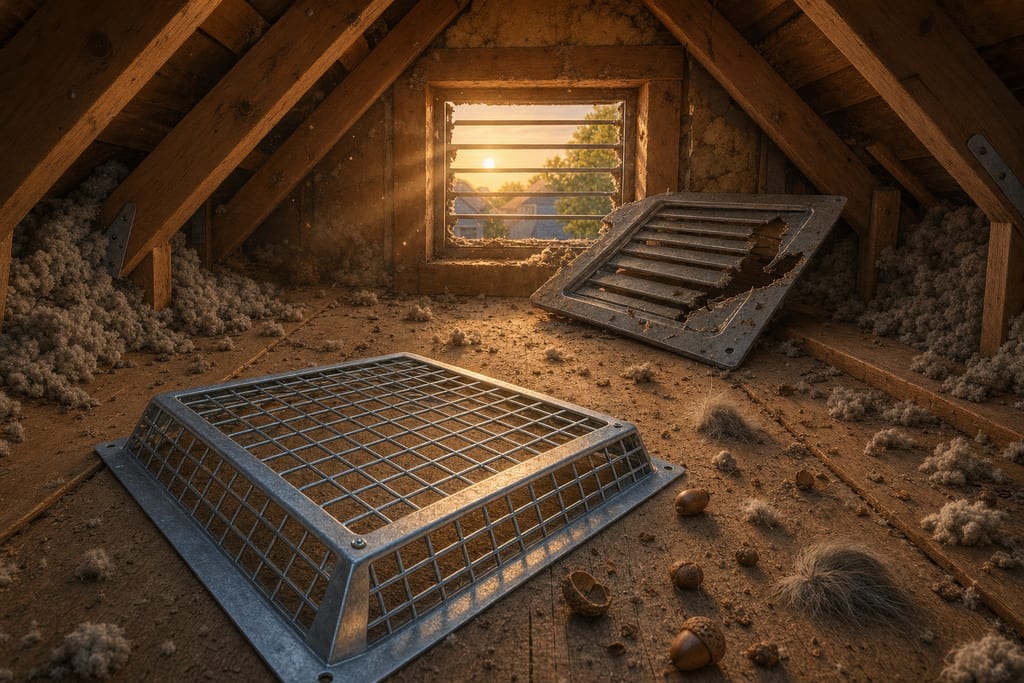
If you need wildlife removal in Keller TX, the short answer is a trained team can get a raccoon or squirrel out of your attic, find how it got in, and close that gap in a single visit. Attics and crawl spaces across Fort Worth area homes are the most common entry points, especially where rooflines meet soffits or where old vent covers have rusted through. Raccoons tear at weak spots to build dens, and squirrels chew gaps wide enough to fit through near power lines and tree branches. Once one animal finds a way in, the opening rarely stays empty for long.
Wildlife X Team is based right in Keller, TX and handles inspection, removal, and prevention work together instead of sending you to three different companies. That means the same visit that gets the animal out also covers sealing the hole it used and checking the rest of the property for other weak spots. Call (817) 799-8686 to get someone out to look at the problem and tell you what it will take to fix it for good.
Table of Contents
Service Areas We Cover Near Keller
The crew works out of 11833 Katy Rd, Keller, TX 76244, and covers the towns around it on a regular basis. That includes Southlake, Grapevine, Colleyville, North Richland Hills, Roanoke, Trophy Club, Flower Mound, Azle, Saginaw, Haslet, Watauga, and Argyle. Further out, they also handle calls in Denton, Granbury, Glen Rose, Weatherford, and Possum Kingdom Lake.
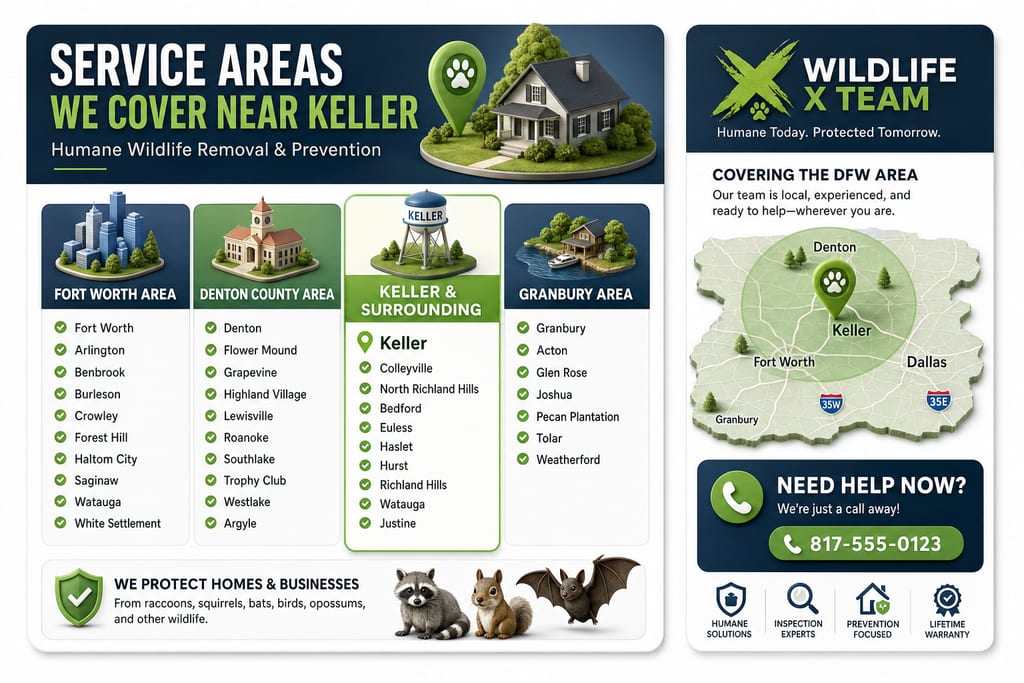
A raccoon in your attic in Trophy Club gets the same inspection and sealing work as one in Southlake or Colleyville. Distance from Keller changes drive time, not the quality of the job or how thorough the inspection is.
Here's how the coverage breaks down from Keller:
- Close in: Southlake, Grapevine, Colleyville, North Richland Hills, Watauga, Haslet, Saginaw, Roanoke
- Mid-range: Flower Mound, Trophy Club, Argyle, Azle, Fort Worth, Denton
- Farther out: Granbury, Glen Rose, Weatherford, Possum Kingdom Lake
Call (817) 799-8686 for an inspection anywhere on that list. One of the owners talks about how this kind of local, hands-on approach got built over time.
Call Now for a Free Wildlife Inspection
A technician walks the property before touching a tool, checking rooflines, soffit vents, chimney caps, and foundation gaps for anything an animal could widen. That walkthrough becomes the Wildlife Inspection Report, a written record of every weak point on the house, not just the one hole the homeowner already found.
Jesse Bernard called about squirrel noise in his attic and figured he knew the one gap they used. The crew found that spot plus two more entry points he never would have spotted on his own, and closed all three before leaving. That's the value of the report: it catches the openings a homeowner's eye skips past because they're not at ground level or don't look like a problem yet.
- Roofline and soffit intersections, where boards warp and pull apart
- Vent covers and screens, checked for rust holes or missing mesh
- Chimney caps, a common raccoon den entry in the Keller area
- Foundation vents and crawl space gaps near grade level
Every inspection ends with a plan the homeowner sees before any work starts, not a surprise bill after the fact.
Get Humane Removal Without the Guesswork
Raccoons, squirrels, and possums come out through live capture and relocation, a method that keeps the animal unharmed and keeps people in the house away from bites or scratches during the process. The work covers attics, wall voids, and crawl spaces, since those are the three spots wildlife nests most in homes around Fort Worth and Denton.
A technician doesn't call the job done after the first capture. A follow-up visit confirms the space is fully clear before any sealing work begins, because closing an entry point with an animal still inside creates a worse problem than the one that started it.
- Set traps based on species behavior, not a single generic approach
- Check attics, wall cavities, and crawl spaces for nesting activity
- Confirm the space is empty on a return visit
- Hold off on sealing until that confirmation happens
That order of operations, capture first and confirm empty before closing anything, is what keeps the job from needing a second call.
Seal Your Home With Exclusion Repairs That Last
Exclusion work is the part that actually stops the next animal from getting in, and it's built around the exact gaps the inspection found, not a generic patch job. Foundation repair closes ground-level openings, chimney caps block the most common raccoon den spot, and caulking plus vent guards handle the smaller gaps around trim and roof vents.
None of that repair work is guesswork since it maps directly to the inspection report line by line. Repairs are backed by a renewable lifetime warranty, so the seal work is treated as ongoing protection, not a one-time fix.
- Chimney caps to block the top entry point for raccoons
- Vent guards over soffit and roof vents
- Caulking along trim, siding seams, and small roofline gaps
- Foundation repair for ground-level and crawl space openings
Homeowner Sheryl Graham had foundation-level repairs done specifically to keep possums from coming back, which is the kind of targeted fix exclusion work is meant to deliver.
Restore Your Attic and Protect Your Business Too
Once an animal is gone, the attic usually needs more than a seal. Contaminated insulation gets pulled out, the area gets disinfected, and new insulation goes in before entry points are closed for good, since old nesting material left in place can carry odor and bacteria long after the animal is gone.
Commercial properties get the same process scaled to the building, whether that's a warehouse loading dock, an office roofline, or a retail stockroom. Preventing damage on a commercial site also protects health and safety for employees and customers, which matters as much as the property repair itself.
- Remove and discard contaminated insulation
- Disinfect the affected attic or crawl space area
- Install new insulation after cleanup is complete
- Seal entry points specific to the building type
A warehouse with a gap near a loading dock needs a different fix than a home attic vent, and the crew builds the repair plan around whichever one is in front of them.
Removal Alone or Removal With a Seal, Pick One
A homeowner can ask for removal only and skip the repair work. That costs less upfront, but it leaves the same gap open for the next raccoon or squirrel that finds it, often within a few months.
Mark Thompson's raccoons and David Lee's squirrels both came back as repeat problems the first time, then got resolved for good once removal was paired with sealing the entry points. That pattern is the real comparison here: one visit that handles the animal, or one visit that handles the animal and the hole it used.
The inspection report matters most for anyone who wants proof, not just a verbal assurance. It lists every spot checked and every repair made, so a homeowner selling the house or dealing with an insurance question has something in writing instead of a memory of what got fixed.
Skipping exclusion makes sense only if the budget is tight and the homeowner is willing to call back later. For anyone who wants the job done once, removal and sealing together is the choice that holds up.
Book Your Inspection Before the Next Animal Finds the Gap
An open entry point doesn't stay open for long before something moves in. If you've got noise in the attic, a chewed vent, or just want the property checked before that happens, call (817) 799-8686 and book an inspection at 11833 Katy Rd, Keller, TX 76244. Wildlife X Team covers Keller, Fort Worth, Denton, Granbury, and the surrounding towns, and every exclusion repair they install is backed by a renewable lifetime warranty, so the fix stays a fix instead of a repeat call six months out. That's the decision in front of you: wait for the next animal, or get the property checked now.
Wildlife Removal Questions in Keller
How soon can someone come out to inspect my Keller property?
Most calls get a technician out within a day or two, sometimes sooner if an animal is actively inside the attic or walls. Call (817) 799-8686 and describe what you're hearing or seeing, since noise location and time of day help the office schedule the right person for the job.
Will the inspection report tell me exactly what repairs I need, or just the problem?
It lists both. Every weak point found during the walkthrough gets paired with the fix for it, whether that's a vent guard, caulking, or a chimney cap, so you see the full plan before anyone starts work. You're not left guessing what a line item means or why it's on the list.
Does the warranty transfer if I sell my house after the repairs are done?
Warranty transfer terms get set at the time of service, so ask the technician to put that in writing when the repair work is scheduled. Having it documented matters if a buyer or inspector asks about prior wildlife issues during a home sale.
What happens if wildlife gets in again at a spot that wasn't part of the original report?
Call the same number and explain that it's a new location, not a repeat of the original problem. A new entry point usually means something changed on the property, like storm damage or a tree branch now resting on the roofline, and that gets inspected and sealed the same way the first one did.