Wildlife Removal Cost Guide by Animal, Damage, and Entry Point

A raccoon in your attic can cost anywhere from $300 to over $1,500 to remove, and that's before fixing the damage they left behind. Most homeowners in Fort Worth, Denton, and surrounding areas don't realize how quickly wildlife removal costs add up until they're facing chewed wires, contaminated insulation, and multiple entry points that need sealing. Understanding what you'll actually pay helps you budget for the problem and avoid getting caught off guard by hidden expenses.
Table of Contents
How Wildlife Removal Pricing Works
Most homeowners spend between $300 and $600 for wildlife removal services, but that number can swing wildly depending on what's living in your walls. The wildlife removal cost isn't just about catching an animal and driving it somewhere else. Professional services involve inspection, removal, cleanup, and prevention work to make sure the critters don't come back next week. Understanding how these costs break down helps you avoid surprise bills and makes it easier to spot when a quote seems way off.
What Goes Into the Initial Inspection
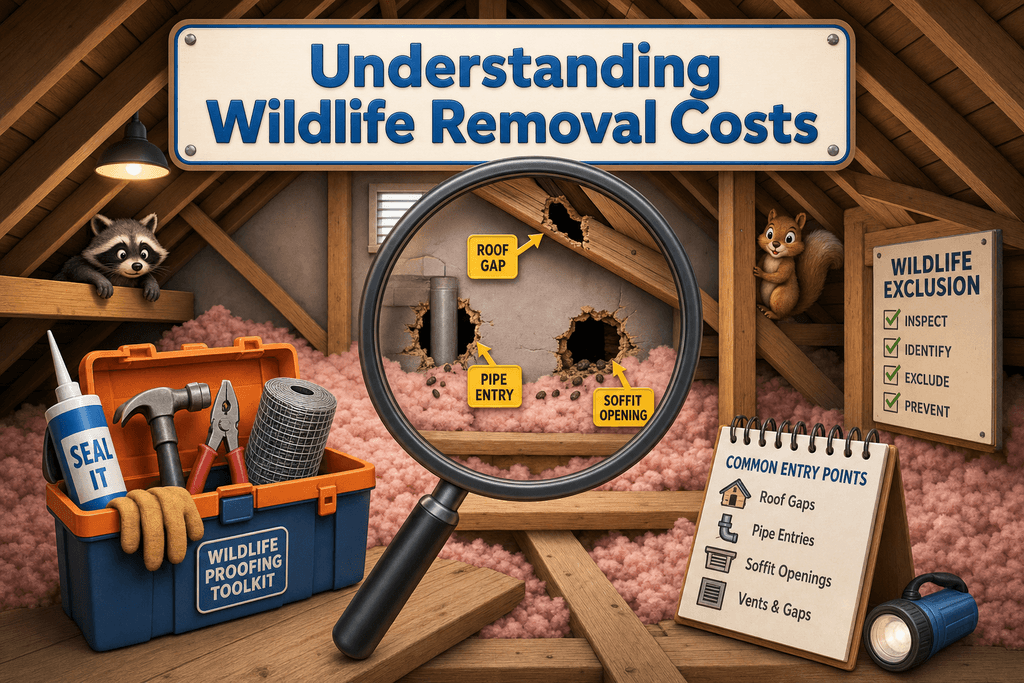
Before any traps get set or repairs get made, a wildlife expert needs to figure out what you're dealing with. Most companies charge between $100 and $250 for this first visit, though some roll it into the total project cost if you hire them. During this inspection, the technician looks for entry points, identifies the animal species, checks for damage, and counts how many animals might be living there.
Here's what professionals examine during a typical inspection:
- Roof vents, soffits, and fascia boards where animals commonly enter
- Foundation cracks and gaps around utility lines
- Attic spaces for nests, droppings, and insulation damage
- Signs of multiple animals or breeding activity
- Structural damage that needs repair to prevent re-entry
This video breaks down the main factors that affect wildlife removal pricing from a professional's perspective.
Factors That Change Your Final Bill
The wildlife removal cost depends on way more than just the type of animal. Location matters a lot because animals in hard-to-reach spots like chimneys or crawl spaces take more time and specialized equipment to remove. The number of animals makes a huge difference too. One raccoon costs less to remove than a mother raccoon with five babies.
Other cost factors include:
- How much damage the animals caused to insulation, wiring, or wood
- Whether the animals left behind contaminated materials that need professional cleanup
- The time of year, since some animals are protected during breeding seasons
- How many entry points need to be sealed to prevent future problems
Average Wildlife Removal Costs: Initial inspection runs $100-$250, basic removal services cost $300-$600, and full exclusion work with repairs can reach $1,500-$3,000 for extensive projects.
Why DIY Usually Costs More
Plenty of homeowners try to handle wildlife problems themselves to save money. They buy traps at the hardware store, watch some YouTube videos, and figure they'll knock it out over the weekend. The problem is that most DIY attempts miss hidden entry points, which means the animals come right back. You end up buying more traps, more materials, and wasting more weekends while the animals keep causing damage.
Professional services like Wildlife X Team include a comprehensive approach that covers removal, exclusion, and cleanup in one go. When companies offer warranties on their work, you're protected if animals find a way back in. That peace of mind is hard to put a price on, especially when you're trying to sleep and hearing scratching sounds above your bedroom.
Common DIY mistakes that increase costs:
- Sealing entry points before all animals are removed, trapping babies inside
- Using wrong trap types that don't work for the specific animal
- Missing secondary entry points that animals use to get back in
- Failing to clean contaminated areas properly, leading to health risks and odor problems
- Not addressing the damage that makes your home attractive to wildlife
Getting a professional quote upfront helps you understand the real wildlife removal cost instead of discovering it piece by piece as your DIY project grows.
Wildlife Removal Costs by Animal Type
A raccoon in your attic can cost anywhere from $300 to $600 to remove, but that's just the starting point. The actual wildlife removal cost depends on how many animals you're dealing with, where they've nested, and how much damage they've already caused. Different animals require different approaches, and some are way more complicated to remove than others. Understanding what drives these costs helps you budget properly and avoid surprises when you get that first estimate.
Raccoons are typically the most expensive animals to remove because they're smart, strong, and often travel in family groups. A mother raccoon with babies requires extra care and multiple visits to ensure all animals are safely removed. The process usually involves setting humane traps, checking them daily, and then sealing entry points once everyone's out.
- Raccoon removal: $300-$600 for initial removal, more if babies are involved
- Squirrel removal: $200-$500 depending on colony size
- Bat removal: $400-$1,500 due to legal protections and specialized exclusion methods
- Opossum removal: $150-$400 for straightforward cases
- Rodent removal: $200-$500 based on infestation severity
Squirrels might seem less threatening, but an attic full of them creates its own headaches. These animals chew through electrical wiring, destroy insulation, and can squeeze through holes the size of a golf ball. Most squirrel jobs in the Fort Worth and Denton areas involve sealing multiple entry points since they rarely use just one way in and out.
Bat removal costs more than you'd expect because these animals are protected by law in Texas during certain times of the year. You can't just remove them whenever you want. The process requires one-way exclusion devices that let bats leave but not return, and the whole operation needs to happen outside of maternity season when baby bats are present.
Opossums and rodents generally fall on the lower end of the pricing scale, but that doesn't mean they're simple jobs. Rodents especially can require extensive trapping programs and multiple visits. The real cost comes from figuring out how they got in and making sure they can't come back.
Damage Repair and Cleanup Costs
Here's what most homeowners don't realize until it's too late. The animal removal itself is often the cheapest part of the whole project. Once the wildlife is gone, you're left looking at contaminated insulation, chewed wires, damaged drywall, and sometimes structural issues that need immediate attention. A raccoon family living in your attic for just a few months can create thousands of dollars in damage that goes way beyond the initial removal cost.
Attic insulation replacement runs between $1.50 and $3.50 per square foot, and most attics need at least partial replacement after a wildlife infestation. The animals compress the insulation, reducing its effectiveness, but the bigger problem is the contamination from urine and feces. This stuff doesn't just smell bad, it creates serious health risks.
Structural repairs vary wildly based on what the animals damaged. Squirrels love chewing on wooden beams and roof edges. Raccoons tear through soffit vents and roof shingles like they're made of paper. Some jobs require replacing entire sections of soffit, repairing roof decking, or fixing foundation vents that got ripped apart.
- Insulation removal and replacement: $1,500-$4,000 for average attic
- Contamination cleanup and disinfection: $500-$2,000
- Drywall repair: $200-$800 per damaged area
- Electrical wiring repair: $300-$1,500 depending on extent
- Structural wood replacement: $500-$3,000 for serious damage
Contamination cleanup involves more than just sweeping up droppings. Professional services include removing all contaminated materials, treating the area with antimicrobial solutions, and sometimes fogging the entire space to eliminate pathogens. Wildlife X Team handles this as part of their attic cleanup and restoration services, making sure your home is safe again.
Sometimes the damage repair costs exceed the removal costs by three or four times. A $400 squirrel removal can turn into a $3,000 project once you factor in insulation replacement, soffit repairs, and electrical work. That's why catching these problems early matters so much.
Entry Point Sealing and Prevention Costs
Getting the animals out is only half the battle. If you don't seal up how they got in, you're just inviting the next family of raccoons or squirrels to move in. Entry point sealing and prevention work is where you actually solve the problem for good. Most homes in areas like Southlake, Grapevine, and Colleyville have multiple vulnerable spots that wildlife can exploit, and finding all of them takes experience.
Professional exclusion work typically costs between $75 and $300 per entry point, depending on the location and complexity. A simple gap in the soffit might only need some heavy-gauge screening and caulk. A damaged foundation vent or compromised chimney requires more extensive work and materials.
- Basic entry point sealing: $75-$150 per location
- Chimney cap installation: $200-$500
- Foundation vent repair: $150-$400 per vent
- Roof and soffit sealing: $300-$1,200 depending on access
- Comprehensive property exclusion: $800-$2,500 for whole-home protection
Chimney caps are one of the best investments you can make. Raccoons and squirrels love chimneys because they're protected from weather and predators. A quality chimney cap with heavy mesh prevents entry while still allowing proper ventilation. The same goes for vent guards on your roof, foundation, and gable vents.
The Wildlife Inspection Report that Wildlife X Team provides identifies every potential entry point on your property. This detailed assessment shows you exactly what needs attention and helps prioritize repairs based on risk. Some entry points need immediate sealing, while others can wait.
Long-term prevention services and warranties change the whole equation. Instead of paying for removal every time a new animal finds its way in, you get ongoing protection. Wildlife X Team offers a Renewable Lifetime Warranty that covers future invasions, which means if something does get back in through a sealed area, they come back and fix it at no additional charge.
The upfront cost of comprehensive exclusion work might seem high, but compare it to paying for removal and repairs every couple of years. Most homeowners in the Fort Worth and Denton areas who invest in proper prevention save money within the first few years. Plus, you get peace of mind knowing your home is actually protected, not just temporarily cleared out.
What Affects Your Final Wildlife Removal Bill
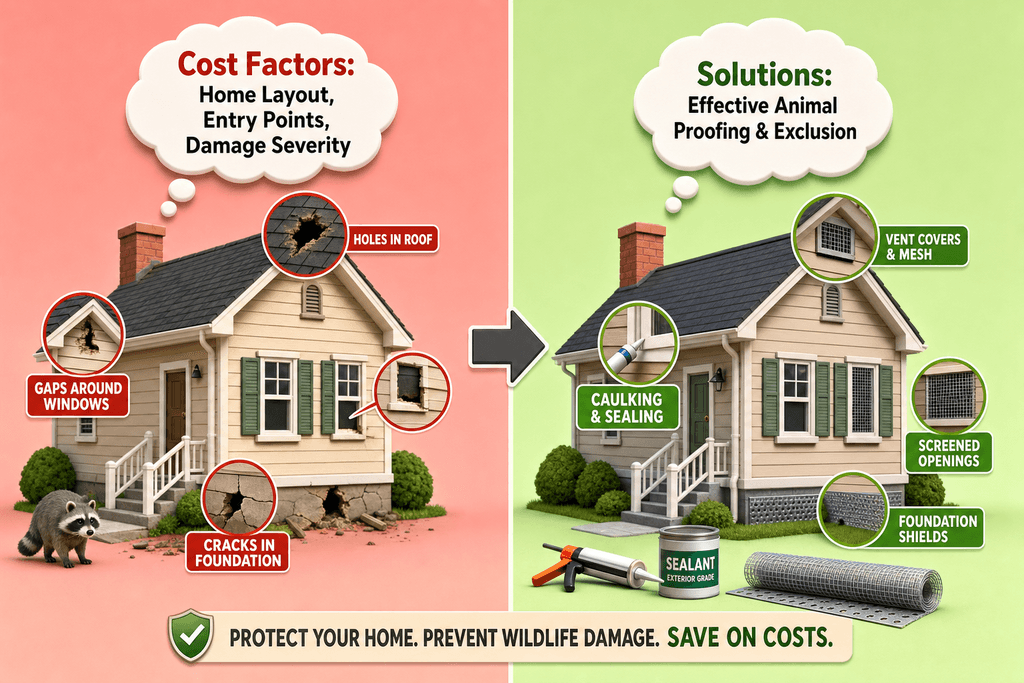
Most homeowners get sticker shock when they receive wildlife removal quotes that vary by hundreds or even thousands of dollars. The truth is that wildlife removal cost depends on way more factors than just the type of animal in your attic. Understanding these variables helps you spot fair pricing and avoid getting overcharged for services you might not actually need.
Property Factors That Drive Up Costs
Your home's layout plays a huge role in determining the final bill. A single-story ranch with easy attic access costs far less to service than a three-story Victorian with tight crawlspaces and multiple entry points.
- Larger properties require more inspection time and materials for exclusion work
- Hard-to-reach areas like high rooflines or narrow crawlspaces increase labor costs
- Older homes often need more extensive repairs to seal entry points properly
- Properties with complex roofing or multiple structures require additional service time
Infestation Severity Matters More Than You Think
A single raccoon that wandered in last week costs dramatically less to remove than a family of raccoons that's been nesting for months. The duration of the infestation directly impacts both removal difficulty and cleanup requirements.
- Active nesting situations with babies require specialized removal techniques
- Long-term infestations cause more structural damage and contamination
- Multiple animals mean more trapping visits and extended service timelines
- Severe contamination requires professional attic restoration beyond basic cleanup
Timing and Service Type Pricing
Emergency calls at midnight cost more than scheduled appointments, but that's just the start. Wildlife removal companies like Wildlife X Team see seasonal demand spikes that affect pricing across the board.
- Spring breeding season increases demand as animals seek nesting sites
- Fall sees another spike as wildlife looks for warm winter shelter
- Emergency same-day service typically adds 50-100% to standard rates
- Scheduled preventive work during slow seasons often comes with discounts
DIY Versus Professional Service Comparison
Many homeowners consider DIY removal to save money, but this approach rarely works out as planned. Here's what actually happens with each option.
- DIY attempts often miss hidden entry points, leading to repeat infestations within weeks
- Store-bought traps and materials cost $100-300 but lack professional-grade effectiveness
- Professional services include warranties and guaranteed results that DIY can't match
- Incomplete removal leaves contamination and health risks that cost more to fix later
- Wildlife X Team's comprehensive approach addresses root causes, not just symptoms
The cheapest quote isn't always the best value. Companies offering comprehensive inspection, removal, exclusion, and cleanup in one package typically cost less overall than piecing together separate services. Wildlife X Team's renewable lifetime warranty means you're not paying for the same problem twice, which makes the upfront wildlife removal cost an investment rather than a recurring expense.
Getting the Best Value for Wildlife Removal
Understanding wildlife removal cost helps you plan your budget and avoid surprises when you get that first quote. Most homeowners in the Fort Worth area spend anywhere from a few hundred to several thousand dollars depending on the animal, the damage, and how many entry points need sealing. The real trick is knowing what you're actually paying for and whether the company will fix the problem for good or just chase the critter out your front door.
When you call around for quotes, ask about what's included in the price. Some companies just remove the animal and leave you to deal with the mess and open holes. Others, like Wildlife X Team at 11833 Katy Rd in Keller, TX, handle everything from removal to cleanup to sealing every possible entry point so you don't end up with round two next month.
The cheapest option usually isn't the best value. A company that charges less might skip the inspection or use quick fixes that don't last. Then you're paying twice when the raccoons come back or when you discover they missed three other holes in your roof.
Questions worth asking before you hire anyone:
- Do you provide a written inspection report showing all entry points
- What does your warranty cover and for how long
- Will you clean and disinfect contaminated areas
- Do you repair the damage animals caused
- Are your removal methods humane
The companies serving Keller, Southlake, Grapevine, and surrounding areas all have different approaches. What matters most is finding someone who treats wildlife removal as a complete solution rather than a quick fix.
If you're dealing with unwanted visitors in your attic or walls, you can reach Wildlife X Team at (817) 799-8686 for an inspection. They serve the entire Fort Worth, Denton, and Granbury area with services that cover everything from the first inspection to long-term prevention. Sometimes the best investment is the one that actually solves the problem the first time.
Common Questions About Wildlife Removal Costs
Most homeowners have similar questions when they first start looking into wildlife removal services. The costs can vary quite a bit depending on what kind of animal you're dealing with and how bad the problem has gotten. Here are the answers to the most common questions we hear from property owners trying to figure out their wildlife removal cost and what to expect during the process.
Does homeowners insurance cover wildlife removal?
It depends on your specific policy and how the damage happened. Most standard homeowners insurance policies will cover sudden damage caused by wildlife, like if a raccoon tears through your roof to get inside. However, they typically won't cover the actual removal of the animals or damage that happened over time because of neglect. Some policies also exclude certain animals entirely, so you'll want to check your coverage before assuming anything. The best approach is to call your insurance company and ask specifically about wildlife damage and removal coverage.
What's included in a typical wildlife removal quote?
A complete quote should break down several different services. Most professional companies include the initial inspection, animal removal, entry point sealing, and a follow-up visit to make sure the problem is solved. Wildlife X Team provides a detailed Wildlife Inspection Report that identifies all the vulnerable spots on your property. Some quotes might also include attic cleanup, insulation replacement, or sanitization if there's contamination from droppings or urine. Always ask what's included upfront so you're not surprised by extra charges later.
Are there payment plans available for larger projects?
Many wildlife removal companies offer financing options for bigger jobs that involve extensive repairs or restoration work. If you're looking at a project that includes attic restoration, insulation replacement, and multiple entry point repairs, the total wildlife removal cost can add up quickly. It's worth asking about payment plans during your initial consultation. Some companies work with third-party financing, while others might offer their own in-house payment arrangements for qualified customers.
How much does emergency wildlife removal cost?
Emergency services typically cost 50-100% more than standard appointments because you're paying for immediate response outside of normal business hours. If you have an aggressive animal in your living space or a situation that poses immediate danger, the extra cost is usually worth it for your safety. However, if the animal is contained in your attic or another separate area, waiting until regular business hours can save you a significant amount of money without putting anyone at risk.
What warranties or guarantees come with the service?
Professional wildlife removal companies should stand behind their work with some type of warranty. Wildlife X Team offers a Renewable Lifetime Warranty on their exclusion work, which means if animals get back in through the areas they sealed, they'll come back and fix it. The length and terms of warranties vary between companies, so make sure you understand exactly what's covered. Some warranties only cover the exclusion work, while others might include additional removal if needed.
When is the best time to schedule removal to save money?
The sooner you address a wildlife problem, the less it will cost overall. Waiting allows animals to cause more damage, have babies, and attract more wildlife to your property. That said, some companies offer seasonal discounts during their slower months, typically in late winter or early summer. The real savings come from preventing extensive damage rather than trying to time the market for a discount. If you're hearing noises in your attic or seeing signs of wildlife activity, getting an inspection now will almost always be cheaper than waiting.