Wildlife Removal Consultation: What Questions Should You Ask?

Nearly 60% of homeowners who hire a wildlife removal company end up calling someone else within six months because the problem comes back. The difference between a one-time fix and a recurring nightmare usually comes down to the questions you ask before signing any contract. Most people focus on price alone, but knowing what to ask about inspection methods, removal techniques, and long-term prevention can save you thousands in repeat services and protect your home from future invasions.
Table of Contents
- Understanding What Makes a Quality Wildlife Consultation
- Questions About Their Inspection and Assessment Process
- Questions About Removal Methods and Animal Safety
- Questions About Prevention and Long-Term Solutions
- Questions About Costs, Warranties, and Guarantees
- Getting the Answers You Need for Peace of Mind
- Common Questions About Wildlife Removal Consultations
Understanding What Makes a Quality Wildlife Consultation
Most homeowners don't realize they're getting a rushed consultation until after they've paid for incomplete work. A proper wildlife removal consultation should take at least 45 minutes to an hour, not the quick 15-minute walkthrough many companies offer. The difference between these approaches can mean the gap between solving your problem once or dealing with the same animals coming back through different entry points. Understanding what separates a thorough consultation from a basic one helps you avoid wasting money on temporary fixes.
What a Complete Consultation Includes
A comprehensive wildlife consultation goes way beyond just looking at the obvious problem area. Professional companies like Wildlife X Team conduct detailed inspections that cover your entire property, not just where you heard scratching sounds last night. This thorough approach finds all the vulnerabilities before animals exploit them.
Here's what should happen during a quality consultation:
- Full exterior inspection of your roof, soffits, vents, and foundation
- Interior assessment of attics, crawl spaces, and wall cavities
- Identification of all current and potential entry points
- Documentation with photos and detailed notes
- Written report explaining findings and recommended solutions
Why Many Companies Skip Important Steps
Some wildlife removal companies rush through consultations because they're focused on volume over quality. They want to get in, quote you a price for the obvious problem, and move to the next job. This approach might seem efficient, but it leaves you vulnerable to repeat invasions through entry points they never bothered to find.
The problems with rushed consultations include:
- Missing secondary entry points that animals will use after the main one is sealed
- Failing to identify the full extent of damage or contamination
- Not explaining why animals chose your property in the first place
- Providing vague estimates without detailed breakdowns
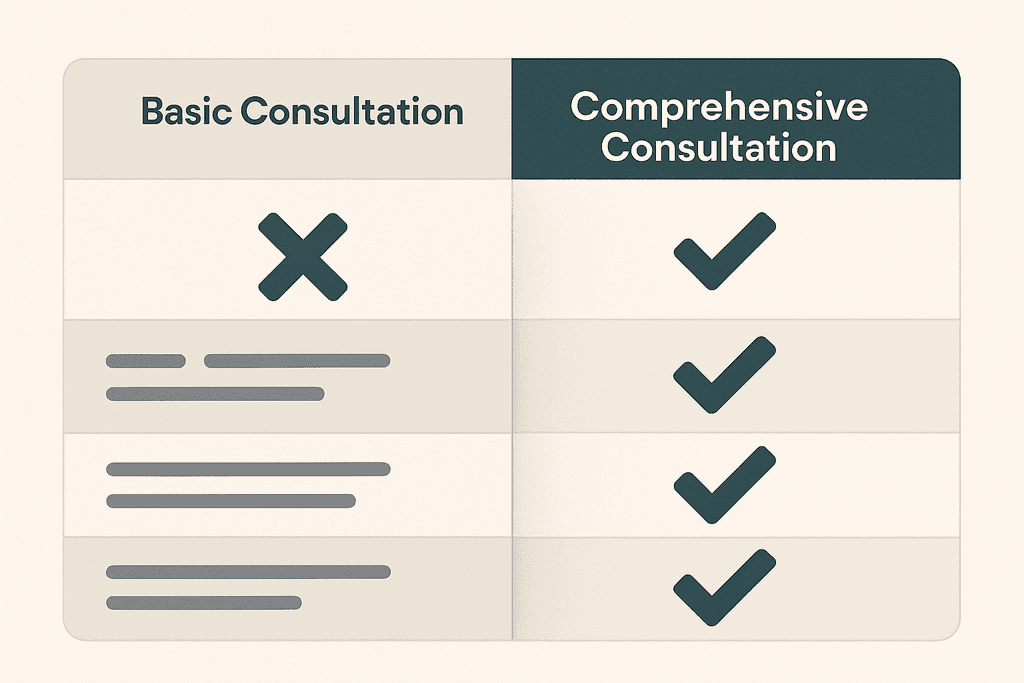
Basic Versus Comprehensive Consultation Comparison
The gap between basic and comprehensive consultations is huge. Companies offering quick consultations might charge less upfront, but you'll likely pay more in the long run when animals return. Here's how different consultation approaches stack up against each other.
Basic consultations typically focus only on the immediate problem. The technician looks at where you're hearing noises, gives you a rough estimate, and leaves. You don't get much information about what's actually happening or why.
Comprehensive consultations treat your property as a complete system. The inspector examines everything, explains what they find in plain language, and provides a detailed written report. Wildlife X Team's Wildlife Inspection Report® is a good example of this thorough approach, documenting every vulnerability and explaining the recommended solutions.
Key differences you'll notice:
- Time spent on property (15 minutes vs 45-60 minutes)
- Areas inspected (problem spot only vs entire property)
- Documentation provided (verbal estimate vs written report with photos)
- Education offered (minimal vs detailed explanation of issues and solutions)
- Follow-up plan (none vs scheduled monitoring and warranty)
The Education and Transparency Factor
A quality consultation should leave you feeling informed, not confused or pressured. Professional wildlife removal experts take time to explain what's happening with your property and why their recommended approach makes sense. They answer your questions without using scare tactics or pushing you toward unnecessary services.
Look for these signs of a transparent consultation:
- Clear explanations of what animals are present and how they got in
- Honest assessment of damage severity without exaggeration
- Detailed breakdown of costs for each service component
- Discussion of prevention strategies to avoid future problems
- Written documentation you can review before making decisions
Companies in the Dallas-Fort Worth area like Critter Control and Terminix offer wildlife services, but the depth of their consultations varies widely. Some focus on quick treatments while others provide more comprehensive assessments. The consultation quality often reflects the company's overall approach to wildlife management.
Questions About Their Inspection and Assessment Process
Most wildlife problems start small and grow into expensive nightmares because homeowners don't catch them early enough. When you call a wildlife removal company, the inspection is where everything begins. A thorough inspection can mean the difference between solving your problem once or dealing with the same raccoons coming back next month. You need to know exactly what you're getting before anyone sets foot on your property.

Questions About Their Inspection and Assessment Process
The first thing to ask about is their Wildlife Inspection Report and what it actually includes. Some companies just walk around your house for ten minutes and give you a price. That's not good enough. Wildlife X Team provides a detailed Wildlife Inspection Report that documents everything they find, which becomes your roadmap for solving the problem.
- Do they inspect your attic, crawl spaces, and foundation areas?
- Will they check both the interior and exterior of your property?
- Do they identify all entry points or just the obvious ones?
- Will you receive photo documentation of problem areas?
- Do they assess damage to insulation, wiring, and structural elements?
Here's something most people don't think about until it's too late. Ask how long the inspection takes and what specific areas they cover. A proper inspection should take at least 30 to 45 minutes for an average home. If someone shows up and gives you a quote in fifteen minutes, they probably missed something important.
One customer, Jesse Bernard, mentioned that Wildlife X Team found multiple entry points he never would have discovered himself. That's the kind of thoroughness you're looking for. The obvious hole in your soffit might not be the only way those squirrels are getting in.
Questions About Removal Methods and Animal Safety
Not all wildlife removal companies use the same methods, and some of those methods can create bigger problems than you started with. You need to understand exactly how they plan to remove animals from your property. This matters for legal reasons, ethical reasons, and practical reasons that affect whether your problem actually gets solved.

Questions About Removal Methods and Animal Safety
Start by asking if they use humane, live-capture methods or lethal traps. Wildlife X Team focuses on humane removal because it's not just about being kind to animals. It's also about following local regulations and avoiding situations where dead animals decompose in your walls.
Here's a question that separates experienced companies from amateurs. Ask how they handle babies and nursing mothers. If someone removes a mother raccoon but leaves babies in your attic, you've got a whole new set of problems. The babies will die, create terrible odors, and you'll still need someone to come back and clean up the mess.
- What experience do they have with your specific wildlife problem?
- How do they handle relocation and what are the local regulations?
- What safety protocols protect your family and pets during removal?
- Do they have proper licensing and certifications for wildlife handling?
Different animals require different approaches. Squirrels behave differently than raccoons, and opossums need different handling than bats. Make sure the company has specific experience with whatever is currently living in your attic.
Questions About Prevention and Long-Term Solutions
Removing the animals is only half the job, and honestly, it's the easier half. The real value comes from making sure they can't come back. This is where many homeowners get burned by companies that remove the wildlife but don't properly seal entry points. Three months later, you've got new tenants in your attic and you're paying for removal all over again.
Ask specifically what animal proofing and exclusion services they provide. Wildlife X Team offers comprehensive exclusion work including foundation repair, chimney caps, vent guards, and sealing all potential entry points. But not every company does this, and some charge extra for each service.
- Do they seal all entry points or just the main ones?
- What materials do they use for repairs and how long do they last?
- Is foundation repair, chimney protection, and vent installation included?
- What attic cleanup and restoration services do they offer?
- Is prevention work included in the price or does it cost extra?
The materials matter more than you might think. Some companies use cheap screening that squirrels can chew through in a few weeks. Others use heavy-gauge steel mesh and professional-grade sealants that actually last. You want to know exactly what they're installing on your home.
Don't forget to ask about attic cleanup and restoration. Wildlife leaves behind contaminated insulation, droppings, and urine that can cause health problems and odors. A complete solution includes cleaning and disinfecting these areas, not just removing the animals.
Questions About Costs, Warranties, and Guarantees
Here's where things get tricky, because wildlife removal pricing varies wildly between companies. Some give you a low quote upfront and then add charges for every little thing. Others include everything in one price. You need to ask the right questions to understand what you're actually paying for and what happens if the problem comes back.
Always request a detailed written estimate that breaks down all costs. Ask what's included in the base price versus what costs extra. Some companies charge separately for inspection, removal, exclusion work, cleanup, and follow-up visits. That cheap quote might not look so cheap once everything is added up.
- What exactly is included in the base price?
- What are the warranty terms and what does it cover?
- Do they offer a renewable lifetime warranty?
- Are payment options or financing available?
- What happens if wildlife returns after service?
- Are follow-up inspections included in the price?
The warranty question is huge. Wildlife X Team offers a Renewable Lifetime Warranty on their work, which means long-term protection against future invasions. Many companies only warranty their work for 30 or 90 days. If animals get back in after that, you're paying full price again.
Ask specifically what happens if wildlife returns after the service is complete. Will they come back for free? Is there a service charge? Do you have to pay for the whole job again? These questions protect you from unexpected costs down the road and help you compare companies fairly.
Getting the Answers You Need for Peace of Mind
The questions you ask during a wildlife removal consultation tell you everything you need to know about who you're hiring. Companies that give vague answers or rush through the conversation are usually the same ones that provide temporary fixes instead of permanent solutions. The ones who take time to explain their process, show you their inspection methods, and walk you through prevention strategies are the ones who actually care about solving your problem for good. It's really that simple.
A thorough consultation should cover inspection methods, removal techniques, prevention plans, and warranty details. If a company can't confidently answer questions about any of these areas, that's a red flag. You're not just paying someone to remove an animal from your attic. You're paying for expertise that keeps wildlife out permanently.
Wildlife X Team's approach includes a detailed Wildlife Inspection Report to find every entry point, humane removal that follows ethical standards, animal proofing to seal vulnerabilities, and a Renewable Lifetime Warranty that backs up the work. This comprehensive method addresses the root cause instead of just treating symptoms. Other companies might remove the raccoon but leave the holes that let it in.
Don't settle for companies that dodge questions about their methods or can't explain what happens after the animal is removed. The right wildlife removal service should make you feel confident that your home will stay protected long after they leave. That confidence comes from asking the right questions and getting answers that actually make sense.
Common Questions About Wildlife Removal Consultations
Getting a wildlife removal consultation can feel like stepping into unknown territory, especially if you've never dealt with critters in your attic before. Most homeowners have similar questions when they're trying to figure out what happens next. Here are the answers to the most common questions we hear from people just like you who are dealing with unwanted wildlife guests.
How long does a wildlife removal consultation take?
Most consultations take between 45 minutes to an hour and a half, depending on the size of your property and how many potential problem areas need checking. The technician will inspect your attic, crawl spaces, foundation, roof line, and any other spots where animals might be getting in. Wildlife X Team's Wildlife Inspection Report® is thorough because finding every entry point matters more than rushing through the job.
Should I pay for a consultation or are they free?
This varies by company, and some larger national chains like Terminix may charge inspection fees while local specialists often provide free estimates. Many wildlife removal companies offer free consultations because they know you're comparing options and want to earn your business. It's worth asking upfront so there are no surprises when the technician shows up at your door.
What should I prepare before the consultation?
Make sure the technician can access your attic, crawl space, and the outside perimeter of your home without obstacles in the way. Write down when you first noticed the problem and what sounds or signs you've observed because these details help identify which animal you're dealing with. If you have pets, plan to keep them secured during the inspection so the technician can work safely.
How soon can removal start after the consultation?
Many companies can start work the same day or within 24 to 48 hours if you approve the estimate. Wildlife X Team often begins work immediately if the situation is urgent and their schedule allows. The timeline depends on the severity of your problem and whether specialized equipment or materials need to be ordered for your specific situation.
What if the company finds more problems than expected?
A good wildlife removal company will walk you through any additional issues they discover and explain why they matter before adding costs to your estimate. Sometimes animals create multiple entry points or cause damage that wasn't visible from the outside. Reputable companies will give you options and priorities so you can decide what needs immediate attention versus what can wait.
How do I know if a company's estimate is fair?
Get at least two or three estimates from different companies to compare pricing and approaches. The cheapest option isn't always the best because quality wildlife removal includes prevention work and warranties that save you money long-term. Look for detailed written estimates that break down exactly what work will be done, what materials will be used, and whether the company offers any guarantees like Wildlife X Team's Renewable Lifetime Warranty.