Wildlife Damage Repair: Restoring Your Home After Animal Intrusion

Table of Contents
Common Wildlife Damage in Texas Homes
A single raccoon can tear through roof shingles in less than an hour when it's determined to find shelter. In the Dallas-Fort Worth area, homeowners face constant pressure from wildlife looking for warm places to nest, especially during breeding seasons. The urban sprawl has pushed animals like raccoons, squirrels, and possums closer to residential areas, making wildlife intrusions more common than ever. These animals don't just move in quietly either - they cause serious damage that can cost thousands of dollars to repair.
Different Animals, Different Problems
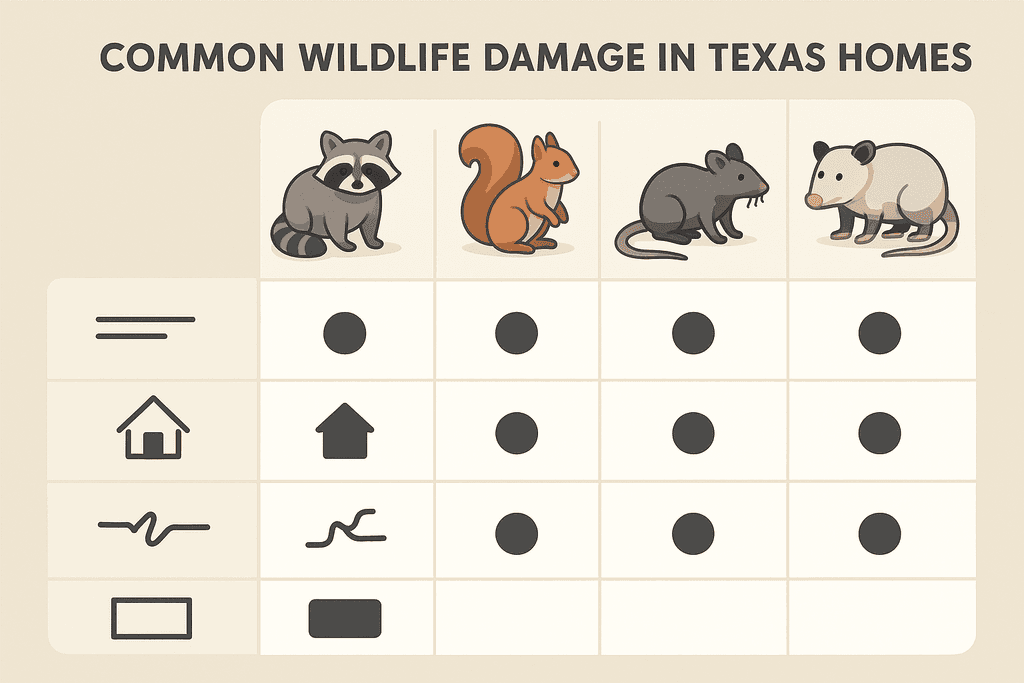
Each type of animal creates its own unique set of problems when it invades your home. Raccoons are the heavy hitters - they rip apart roof vents, tear through soffits, and can even peel back shingles to create entry points. Once inside, they shred insulation to make nests and leave behind large amounts of waste that can contaminate your entire attic space.
Squirrels might be smaller, but they're just as destructive in different ways. Their teeth never stop growing, so they constantly chew on everything from electrical wiring to wooden beams. This chewing habit creates serious fire hazards and structural damage that many homeowners don't discover until it's too late.
Here's how different animals stack up when it comes to the damage they cause:
Raccoons
- Tear through roof shingles and soffits
- Destroy insulation for nesting material
- Leave large amounts of contaminated waste
- Can cause structural damage to wooden beams
Squirrels
- Chew through electrical wiring (fire hazard)
- Gnaw on wooden structures and support beams
- Create multiple entry holes in siding
- Contaminate insulation with urine and droppings
Possums
- Damage ductwork and ventilation systems
- Compress and soil insulation
- Create strong odors from waste and scent marking
- Attract parasites like fleas and ticks
Where Animals Hide in Your Home
Wildlife doesn't just pick random spots to invade. They target specific areas of your home that offer warmth, protection, and easy access. Attics are the number one target because they're warm, dark, and usually undisturbed for long periods. Animals can live up there for weeks before homeowners even notice the scratching sounds or smell the waste.
Wall cavities come in second place for animal hideouts. Squirrels and rats love these tight spaces because they feel safe from predators. The problem is that once they're in your walls, they can travel throughout your entire house using the spaces between studs as highways.
- Attics provide warmth and shelter from weather
- Wall cavities offer protection and travel routes
- Crawl spaces give ground-level access and moisture
- Chimneys serve as natural entry points from the roof
- Vents and soffits are easy to tear through or squeeze into
When Wildlife Problems Get Worse
Texas weather patterns create predictable times when wildlife intrusions spike. Spring brings the biggest problems as animals search for safe places to have their babies. Mother raccoons become especially aggressive during this time and will tear through almost anything to create a den for their young.
Fall is the second busy season as animals prepare for winter. Even though Texas winters are mild, animals still seek out warm attics and crawl spaces to ride out the cold months. This is when squirrels really ramp up their activity, gathering food and creating nests.
- Spring (March-May) sees peak breeding activity and nest building
- Summer (June-August) brings young animals exploring new territories
- Fall (September-November) triggers preparation and food storage behaviors
- Winter (December-February) pushes animals to seek warm shelter
Health Risks You Can't Ignore
The damage to your home is just part of the problem. Animal waste in your attic or walls creates serious health hazards that can affect your family for months after the animals are gone. Raccoon droppings can carry roundworm eggs that remain infectious for years, and breathing in dust contaminated with animal waste can cause respiratory problems.
Insulation soaked with urine loses its effectiveness and becomes a breeding ground for bacteria and mold. Many homeowners try to clean this up themselves, but that often makes things worse by stirring up contaminated dust particles. Wildlife X Team handles attic cleanup and restoration as part of their comprehensive approach, removing contaminated materials and replacing damaged insulation to protect your family's health.
- Raccoon roundworm can cause serious neurological damage in humans
- Histoplasmosis from bird and bat droppings affects the lungs
- Leptospirosis spreads through contact with animal urine
- Contaminated insulation reduces air quality throughout your home
Assessing the Full Extent of Wildlife Damage
A single raccoon can cause thousands of dollars in damage to your home in just a few weeks. Most homeowners only notice the obvious signs like scratching sounds or droppings, but the real destruction often hides behind walls and under insulation. When animals move into your attic or crawl space, they don't just make a mess. They chew through electrical wiring, tear apart ductwork, and leave behind contamination that can make your family sick.

Assessing the Full Extent of Wildlife Damage
The tricky part is that most damage happens in places you can't easily see. You might spot a hole in your soffit where squirrels got in, but miss the three other entry points they created as backup routes. Animals are smart about finding weak spots in your home's structure.
What Professional Inspections Uncover
- Hidden entry points in roof valleys, foundation gaps, and behind gutters
- Chewed electrical wires that create serious fire hazards
- Damaged HVAC systems where animals nested in ductwork
- Contaminated insulation soaked with urine and droppings
- Structural wood damage from gnawing and nesting activities
Our Wildlife Inspection Report® process maps out every vulnerability in your property. We check areas that most people never think to look, like the space where your chimney meets the roofline or gaps around plumbing vents. This detailed assessment shows you exactly what needs fixing and why.
Damage Homeowners Typically Miss
Attic contamination is one of the biggest problems that goes unnoticed. Animal waste doesn't just smell bad. It carries diseases and attracts insects that create their own set of problems. The contamination can spread through your HVAC system, circulating harmful particles throughout your home.
Electrical damage is another silent threat. Rodents and squirrels love chewing on wires because it helps keep their teeth trimmed. One customer we worked with had no idea squirrels had stripped the coating off several electrical lines in his attic until we pointed it out during inspection.
Professional Repair and Restoration Services
Once you know what's damaged, the real work begins. Cleaning up after wildlife isn't like regular housekeeping. You're dealing with biohazards that require proper protective equipment and disposal methods. The contaminated insulation needs to come out completely, not just the visibly soiled sections. Animals leave scent markers throughout the space that will attract new wildlife if not properly removed.

Professional Repair and Restoration Services
The cleanup process starts with removing all contaminated materials and waste. Then comes thorough decontamination using professional-grade disinfectants that eliminate bacteria, viruses, and parasites. Only after the space is completely clean can repairs begin.
Here's what proper restoration involves. New insulation gets installed to the correct R-value for your climate zone. Damaged wood gets replaced or reinforced. Any chewed wiring needs repair by a licensed electrician. Ductwork repairs prevent energy loss and keep contaminated air out of your living space.
Why DIY Repairs Fall Short
Many homeowners try to handle repairs themselves to save money. They seal up the obvious holes and maybe throw some new insulation over the damaged stuff. But this approach almost always fails within months.
The problem is that animals return to places where they've successfully lived before. If you don't remove all traces of their presence and seal every possible entry point with the right materials, they'll be back. We've seen countless cases where someone used spray foam or chicken wire to block an entry, only to have determined raccoons tear right through it.
Repair Timeline Expectations
- Basic attic cleanup and decontamination: 1-2 days
- Insulation replacement: 1-3 days depending on attic size
- Structural repairs to wood and roofing: 2-5 days
- Electrical and HVAC repairs: 1-2 days with licensed contractors
- Complete restoration projects: 1-2 weeks for extensive damage
The timeline varies based on how long animals lived in your home and how much destruction they caused. A squirrel that spent two weeks in your attic creates far less damage than a family of raccoons that nested there for six months.
Prevention Through Animal Proofing and Exclusion
Repairs only solve half the problem. Without proper exclusion work, you're just inviting the next animal to move in. Prevention means making your home physically impossible for wildlife to enter. This requires the right materials installed correctly in every vulnerable spot. Many companies in the Dallas-Fort Worth area offer basic sealing, but the quality of materials and installation technique makes all the difference.
Durable exclusion materials withstand determined animals trying to chew or claw their way back inside. We use heavy-gauge steel mesh for foundation gaps, professional-grade chimney caps that raccoons can't remove, and properly fitted vent guards that allow airflow while blocking entry.
Critical Exclusion Points
- Roof-to-wall junctions where different building materials meet
- Soffit and fascia boards that animals commonly tear open
- Chimney openings without proper caps or damaged flashing
- Foundation gaps and cracks larger than a quarter inch
- Plumbing and electrical penetrations with gaps around pipes and wires
- Attic vents and gable vents with missing or damaged screens
Property modifications also play a role in prevention. Tree branches that hang over your roof create highways for squirrels and raccoons. Trimming them back at least six feet removes easy access routes. Removing outdoor food sources like unsecured garbage makes your property less attractive to wildlife in the first place.
Long-Term Protection and Maintenance
Even the best exclusion work needs occasional inspection. Weather, settling, and normal wear can create new vulnerabilities over time. That's why our Renewable Lifetime Warranty matters. It covers you if animals find a way back in through the areas we've secured.
Regular maintenance checks catch small problems before they become big ones. A loose vent screen or small gap in caulking might seem minor, but animals are experts at exploiting any weakness. Annual inspections ensure your home stays protected year after year.
The True Cost of Waiting vs Acting Now
Most homeowners who discover wildlife damage think they can put off repairs for a few weeks or months. That delay usually ends up costing them three to five times more than if they had acted right away. The problem is that wildlife damage doesn't stay the same. It gets worse every single day, and what starts as a small hole in your soffit can turn into thousands of dollars in structural repairs, contaminated insulation, and health hazards.
The financial math is pretty straightforward when you break it down. A typical immediate repair might cost between $500 and $2,000 depending on the entry points and minor damage. Wait six months, and you're looking at $3,000 to $8,000 or more once you factor in insulation replacement, extensive wood rot, electrical damage, and professional attic restoration.
Immediate Repair Costs Versus Delayed Damage
The difference between acting now and waiting becomes clear when you look at what happens over time. Wildlife damage spreads like a slow-moving disaster through your home's structure.
- Initial entry point repairs typically run $300-$800 for sealing and minor fixes
- Delayed repairs often require replacing entire sections of soffit, fascia, or roofing at $2,000-$5,000
- Contaminated insulation removal and replacement adds another $1,500-$4,000 to delayed projects
- Structural wood damage from urine and feces can cost $1,000-$3,000 in carpentry work
Health Risks Multiply With Time
The money part is just one side of the equation. Animal waste and contamination create serious health problems that get worse the longer they sit in your attic or walls. Raccoon roundworm, histoplasmosis from bat droppings, and hantavirus from rodent urine don't just disappear on their own.
- Airborne pathogens from dried feces can spread through your HVAC system within weeks
- Parasites like fleas, ticks, and mites migrate into living spaces as animal populations grow
- Mold develops in urine-soaked insulation, triggering respiratory issues and allergies
- Children and elderly family members face the highest risk from prolonged exposure
Wildlife X Team's inspection process identifies these health hazards early, before they become serious medical concerns for your family.
Property Value Takes a Hit
Unrepaired wildlife damage shows up during home inspections and appraisals. Buyers will either walk away or demand major price reductions when they see evidence of animal intrusion that wasn't properly addressed.
- Visible staining on ceilings from urine leaks can reduce offers by $5,000-$15,000
- Odor problems from animal waste are nearly impossible to hide during showings
- Home inspectors flag wildlife entry points as major defects requiring immediate attention
- Insurance companies may deny coverage for homes with known, unaddressed wildlife issues
Insurance Coverage Complications
Here's something most people don't realize until it's too late. Standard homeowners insurance typically doesn't cover wildlife damage or the repairs needed after an infestation. Some policies might cover sudden damage from animals breaking through, but they won't pay for the gradual deterioration that happens when you ignore the problem.
- Most policies exclude damage from rodents, birds, and insects entirely
- Delayed claims often get denied because insurers view it as maintenance neglect
- Some companies will drop your coverage if you report multiple wildlife incidents
This makes the decision to act quickly even more important since you'll be paying out of pocket either way.
DIY Repairs Versus Professional Restoration
A lot of homeowners consider handling wildlife damage repairs themselves to save money. While that might work for very minor issues, most animal intrusions require expertise that goes beyond basic handyman skills. The comparison between DIY attempts and professional work reveals some important differences.
DIY Wildlife Damage Repairs
Pros of DIY Approach:
- Lower upfront material costs for basic supplies and hardware store items
- Immediate action without waiting for appointment scheduling
- Sense of accomplishment from handling your own home repairs
Cons of DIY Approach:
- Missing hidden entry points that animals will use again within days or weeks
- Improper sealing techniques that fail during the next storm or season change
- Exposure to dangerous pathogens without proper safety equipment or training
- No warranty or guarantee if animals return or damage worsens
- Potential code violations that create problems during future home sales
Professional Wildlife Restoration
Pros of Professional Service:
- Complete property inspection identifies all current and potential entry points
- Proper contamination cleanup with commercial-grade disinfectants and equipment
- Warranty protection like Wildlife X Team's renewable lifetime guarantee
- Code-compliant repairs that won't cause issues with inspections or insurance
- Prevention strategies that stop future intrusions before they start
Cons of Professional Service:
- Higher initial investment compared to basic DIY materials
- Scheduling required for inspection and repair work
The reality is that most DIY repairs end up costing more in the long run. Homeowners spend money on materials, miss critical entry points, and then have to call professionals anyway when animals return. Starting with expert service saves both time and money while protecting your family's health.
Long Term Savings From Prevention
The smartest financial move is investing in prevention after the initial damage gets repaired. Professional exclusion work pays for itself by eliminating the cycle of repeated infestations and emergency repairs.
- Proper exclusion work lasts 10-20 years with minimal maintenance
- Prevention costs 60-70% less than dealing with another full infestation
- Protected homes maintain higher resale values and pass inspections easily
- Renewable warranties provide peace of mind without additional service calls
Wildlife X Team's approach combines immediate damage repair with comprehensive prevention strategies. This means you're not just fixing today's problem but stopping next year's headache before it starts. The upfront investment in quality work and materials creates long-term value that far exceeds the initial cost.
Protecting Your Home Investment
Dealing with wildlife damage isn't something most homeowners can tackle on their own. The repairs go way beyond just patching a hole in your roof or replacing some insulation. You need someone who understands how animals think, where they hide, and most importantly, how to make sure they don't come back. That's where professional expertise makes all the difference between a quick fix and a real solution.
Complete restoration is the only way to prevent the same animals from returning next season. Wildlife X Team handles everything from attic cleanup and disinfection to sealing every possible entry point around your property. We've seen too many homeowners in the Dallas-Fort Worth area pay for repairs twice because the first company missed hidden entry points or didn't address the contamination properly.
Here's something most people don't realize until it's too late. Prevention costs a fraction of what you'll spend dealing with repeated invasions. One thorough job that includes proper exclusion work and our Renewable Lifetime Warranty means you're done worrying about it.
Local knowledge matters more than you might think. The raccoons in Granbury behave differently than the squirrels in Denton, and knowing these patterns helps us do the job right the first time. Our team knows exactly which species are active in your neighborhood and what damage patterns to look for.
You probably still have questions about the repair process, costs, and what to expect. That's completely normal when you're dealing with something this important to your home's safety and value.
Common Questions About Wildlife Damage Repair
Dealing with wildlife damage can feel overwhelming, especially when you're not sure what to expect from the repair process. Most homeowners have similar concerns about costs, timelines, and whether they can handle repairs themselves. These questions come up in almost every conversation we have with property owners who've dealt with animal intrusions. Understanding what's involved in professional wildlife damage repair helps you make better decisions about protecting your home and your family.
How long does wildlife damage repair take?
Most wildlife damage repairs take between one to three days, depending on the extent of the damage. Simple repairs like sealing entry points and replacing insulation can often be completed in a single day. More extensive damage involving structural repairs, attic restoration, and multiple entry points might take several days to complete properly.
Is wildlife damage covered by homeowners insurance?
Insurance coverage for wildlife damage varies significantly between policies and situations. Many standard homeowners policies exclude damage caused by rodents, birds, and insects, but may cover damage from larger animals like raccoons if it happens suddenly. The best approach is to review your specific policy and contact your insurance agent before starting repairs, as some companies require documentation of the damage and removal process.
Can I repair wildlife damage myself?
While minor repairs might seem manageable, DIY wildlife damage repair often creates more problems than it solves. Animals leave behind contaminated insulation, droppings, and urine that can carry diseases like histoplasmosis and leptospirosis. Professional services like Wildlife X Team's attic cleanup and restoration include proper disinfection and safety protocols that protect your health. Plus, if you miss hidden entry points, animals will just come back.
How do I prevent animals from returning?
Prevention requires identifying and sealing all potential entry points, not just the obvious ones. Animals can squeeze through surprisingly small openings, so professional exclusion services examine your entire property for vulnerabilities. This includes installing vent guards, chimney caps, foundation repairs, and sealing gaps in soffits and rooflines. Wildlife X Team offers a renewable lifetime warranty on their exclusion work, which means they stand behind their prevention methods long-term.
What's included in attic restoration?
Complete attic restoration involves removing contaminated insulation, disinfecting all surfaces, repairing damaged wood and wiring, and installing new insulation. The process also includes sealing entry points and installing barriers to prevent future intrusions. Many companies skip the disinfection step, but it's essential for eliminating parasites and pathogens that animals leave behind.
How much does professional wildlife repair cost?
Repair costs vary widely based on damage severity, ranging from a few hundred dollars for simple exclusion work to several thousand for complete attic restoration. Getting multiple estimates helps you understand fair pricing, but the cheapest option often means incomplete work. Companies that offer detailed inspection reports, like Wildlife X Team's Wildlife Inspection Report, give you a clear picture of what needs fixing before you commit to any repairs.