
When Squirrels Are Harmful to Homes, Pets, and People
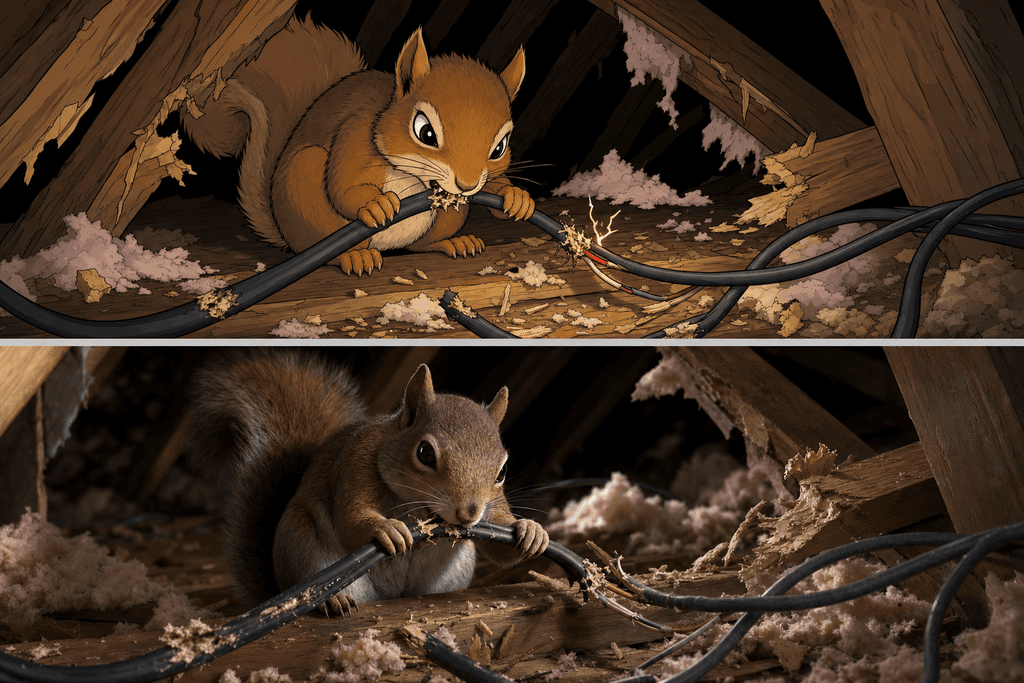
That scratching sound in your attic might seem harmless, but squirrels cause over $300 million in property damage across the United States every year. These seemingly innocent rodents chew through electrical wiring, contaminate insulation, and carry diseases that put your family and pets at risk. Understanding whether squirrels are harmful to your home is the first step toward protecting your property, and Wildlife X Team in Fort Worth specializes in humane removal before minor issues become costly disasters.
Table of Contents
Understanding Squirrel Behavior and Why They Invade
Squirrels can chew through wood, plastic, and even some metals in just a few hours when they're determined to get inside your home. These furry acrobats aren't trying to be pests on purpose, they're just looking for what any animal needs: shelter, warmth, and a safe place to raise their babies. Your attic happens to check all those boxes perfectly. The problem is that what works great for squirrels can spell disaster for your home, your family, and even your pets.
Why Your Attic Looks Like a Five-Star Hotel to Squirrels
Squirrels naturally live in tree cavities where it's dark, dry, and protected from predators and weather. Your attic mimics these conditions almost perfectly. It's warm in winter, dry year-round, and offers plenty of insulation material they can shred for nesting. Wildlife X Team sees this pattern constantly in the Dallas-Fort Worth area, where homeowners discover entire squirrel families have moved in without invitation.
The most common entry points aren't always obvious to homeowners. Squirrels are surprisingly small when they squeeze through tight spaces, and they can make small openings much bigger with their powerful teeth.
- Roof vents and exhaust fans with damaged or missing screens
- Gaps in soffits and fascia boards where wood has rotted or separated
- Uncapped chimneys that provide direct access to your home
- Construction gaps where different building materials meet
- Damaged or loose roof shingles near the roofline
Seasonal Patterns That Make Squirrel Problems Worse
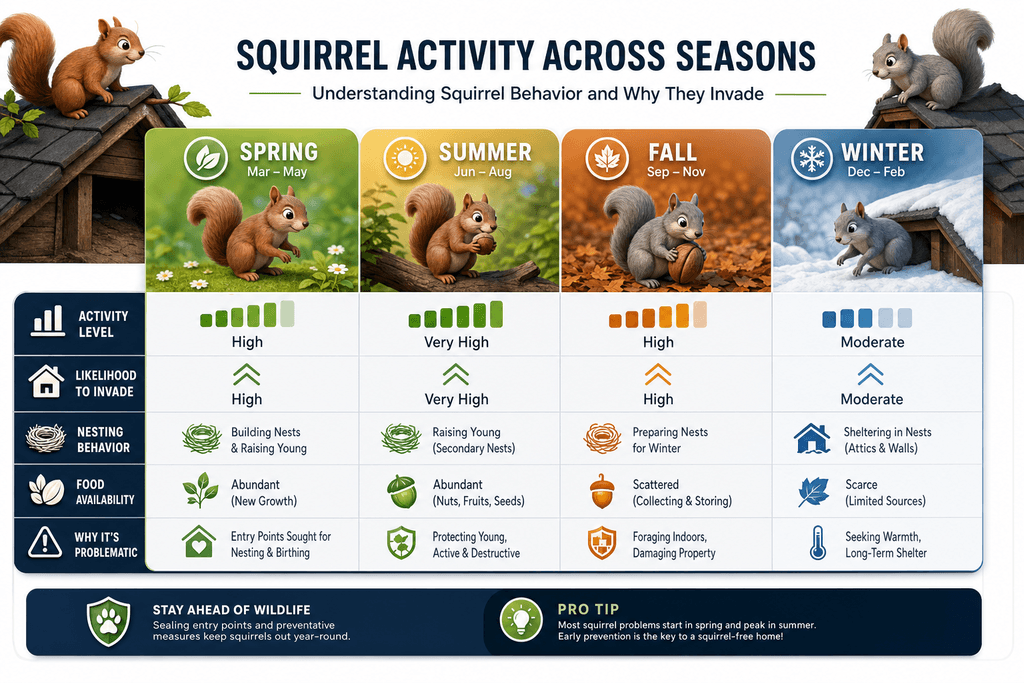
Understanding when squirrels are most likely to invade your home helps explain why some months bring more wildlife removal calls than others. Female squirrels become especially aggressive and determined when they're pregnant or protecting their young, which happens twice a year during their breeding seasons.
This video shows exactly why keeping squirrels as pets or allowing them to stay in your home is a terrible idea. Their natural behaviors don't change just because they're indoors, and those behaviors can cause serious problems for your property and safety.
Squirrel Activity Levels Throughout the Year
Spring (March-May): High activity. First breeding season means pregnant females desperately seek nesting sites. Baby squirrels are born and need 8-10 weeks of care. Mothers are extremely protective and aggressive during this time.
Summer (June-August): Moderate activity. Young squirrels from spring are now exploring and learning. Less invasion pressure but existing residents remain active. Food is abundant outside so less motivation to enter homes.
Fall (September-November): Very high activity. Second breeding season begins. Squirrels also prepare for winter by seeking warm shelter and storing food. This is peak season for attic invasions in the Fort Worth and Denton areas.
Winter (December-February): High activity indoors. Cold weather drives squirrels to stay inside established nests. They're less likely to leave voluntarily. Attic insulation gets shredded for additional warmth and nesting material.
What Makes Female Squirrels So Determined
Mother squirrels don't mess around when it comes to protecting their babies. They'll fight off predators much larger than themselves and will chew through almost anything to reach their nest. This protective instinct makes them particularly dangerous if you or your pets accidentally corner them or get between a mother and her young.
A female squirrel can have two litters per year, with 2-4 babies each time. That means a single squirrel that enters your attic in March could turn into a family of six by summer. The babies stay with their mother for about three months, and during that time, the whole family is eating, chewing, and leaving waste throughout your attic space.
- Mother squirrels will attack if they feel their babies are threatened
- They create multiple nest sites as backup locations
- Nursing mothers rarely leave the attic for more than short feeding trips
- Baby squirrels make high-pitched noises that attract predators to your home
Many homeowners in Granbury and surrounding areas don't realize they have a squirrel problem until they hear scratching sounds or notice damage. By that point, the question isn't just are squirrels harmful, but how much damage have they already done. Companies like Wildlife X Team offer detailed Wildlife Inspection Reports that identify not just current invasions but also the vulnerabilities that allowed squirrels to enter in the first place.
Property Damage Squirrels Cause to Your Home
Squirrels might look cute when they're scampering around your yard, but once they get inside your home, they become destructive little machines. These rodents have teeth that never stop growing, which means they need to chew constantly to keep them filed down. Unfortunately, your home becomes their personal chew toy. The damage starts small but can quickly spiral into thousands of dollars in repairs if left unchecked.
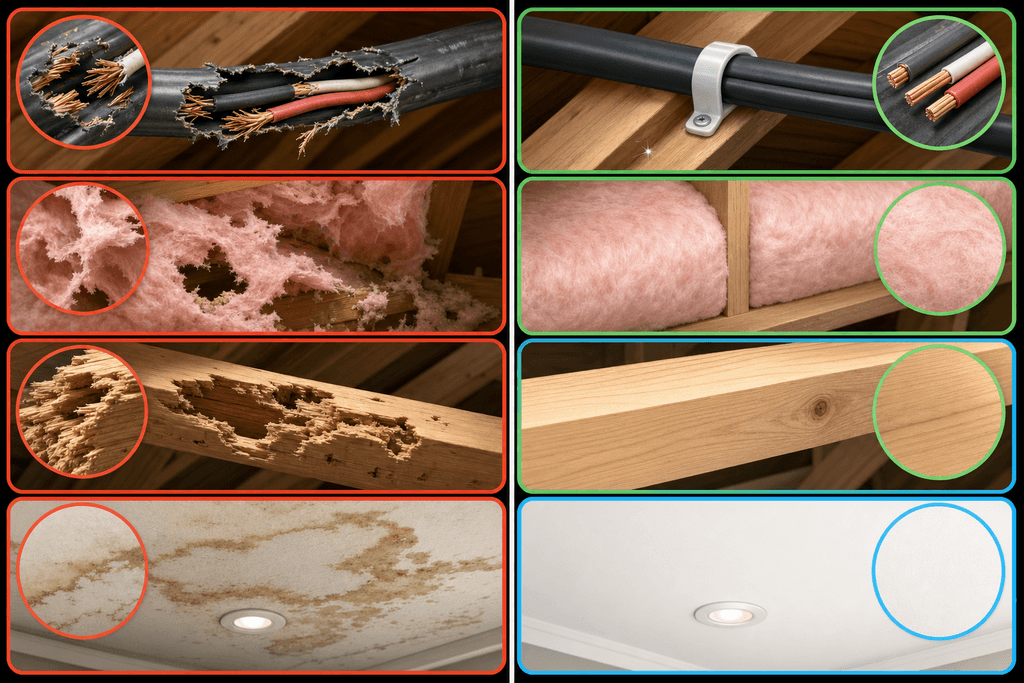
Electrical wiring is one of the first things squirrels target, and this creates serious fire hazards throughout your home. When they gnaw through the protective coating on wires, it can cause short circuits, power outages, and even electrical fires. Fire departments across the country report that rodents cause thousands of house fires each year.
The destruction doesn't stop at wiring. Squirrels tear apart insulation to build nests, which reduces your home's energy efficiency and sends your utility bills climbing. They also chew on wooden beams and structural supports, weakening the very bones of your house over time.
- Chewed electrical wiring creates fire risks and costly repairs
- Damaged insulation means higher heating and cooling costs
- Compromised structural supports threaten your home's integrity
- Contaminated attics need professional cleanup services
- Total repair costs typically range from $1,500 to $5,000 or more
One homeowner we worked with, Jesse Bernard, discovered what he called a "squirrel party" happening in his attic. He thought he could handle it himself by closing up one obvious entry point, but our team found several others he never would have spotted. That's the thing about squirrels - they're sneaky and persistent.
Health Risks Squirrels Pose to Your Family
The question "are squirrels harmful" goes way beyond property damage. These animals carry diseases that can make your family seriously sick. When squirrels move into your attic or walls, they bring along bacteria, viruses, and parasites that spread through their droppings, urine, and even their fur. The worst part is that you don't even need direct contact with a squirrel to get sick from one living in your home.
Leptospirosis, salmonella, and tularemia are just a few of the diseases squirrels carry. These infections can cause fever, muscle pain, vomiting, and in severe cases, organ damage. Children and elderly family members face the highest risk because their immune systems can't fight off these pathogens as effectively.
The droppings and urine squirrels leave behind create respiratory hazards that get worse over time. As the waste accumulates in your attic, it dries out and becomes airborne dust. Your HVAC system then circulates these contaminated particles throughout your entire home, meaning everyone breathes in potentially harmful allergens and pathogens.
- Watch for unexplained respiratory issues or allergies in family members
- Notice any strange odors coming from vents or ceiling areas
- Check for visible droppings in attic spaces or along walls
- Look for staining on ceilings from urine seepage
- Pay attention to scratching sounds, especially at dawn and dusk
Fleas, ticks, and mites hitch rides on squirrels and quickly spread throughout your home once they're inside. These parasites don't care whether they bite animals or humans - they just want blood. While rabies in squirrels is less common than in raccoons or bats, it still poses a risk that shouldn't be ignored.
Dangers Squirrels Present to Household Pets
Your dog or cat probably goes crazy when they spot a squirrel outside, but that natural hunting instinct can lead to serious problems when squirrels invade your home. A cornered squirrel becomes aggressive and desperate, using its sharp teeth and claws to defend itself. These confrontations rarely end well for your pets, even if they're bigger than the squirrel.
Bite wounds from squirrels often become infected because their mouths harbor all sorts of bacteria. Even a small scratch can turn into a painful abscess that requires antibiotics or surgical drainage. Some pets need emergency vet visits after tangling with a squirrel in the attic or crawl space.
The diseases squirrels carry don't just affect humans - they make pets sick too. Dogs and cats can contract leptospirosis, salmonella, and other infections from sniffing or stepping in squirrel droppings. Curious pets sometimes find dead squirrels in walls or attics, and contact with these carcasses spreads disease even faster.
- Squirrel bites and scratches cause painful infections in pets
- Diseases transfer through droppings and contaminated areas
- Fleas and ticks jump from squirrels to dogs and cats
- Pets become stressed and anxious with squirrels in the home
- Vet bills from squirrel encounters often exceed $500
The parasites squirrels bring inside don't stay on the squirrels. Fleas and ticks jump onto your pets, starting infestations that spread throughout your home. These parasites carry their own diseases like Lyme disease and tapeworms, creating a whole new set of health problems for your furry family members.
At Wildlife X Team, we've seen how stressful squirrel invasions are for both pets and their owners. Our humane removal process gets rid of the squirrels while our exclusion services make sure they can't come back. We serve Fort Worth, Denton, Granbury, and surrounding areas with comprehensive solutions that protect your home, your family, and your pets from the real dangers squirrels bring.
Protecting Your Home from Squirrel Damage
So are squirrels harmful to your home and family? The short answer is yes, more than most people realize. These furry little creatures can chew through electrical wiring, damage insulation, contaminate your attic with droppings and urine, and even pose health risks through parasites and diseases. If you have pets, squirrels can also create dangerous situations through territorial aggression or by attracting fleas and ticks into your living spaces.
The tricky part is that most homeowners only see the obvious signs. You might spot one entry point and think you can handle it yourself, but squirrels are sneaky. They often have multiple ways in and out of your attic that aren't easy to find without experience.
That's where professional help makes a real difference. Wildlife X Team handles squirrel removal across Fort Worth, Denton, Granbury, and surrounding areas with humane methods that actually work long-term. The service includes finding all those hidden entry points, cleaning up contamination that DIY methods miss, and making sure the problem doesn't come back next season.
The damage squirrels cause doesn't stop when they leave. Without proper cleanup and exclusion work, you're just waiting for the next animal to move in. Professional services address the whole problem, not just the furry part of it.
If you're dealing with squirrels in your attic or walls, you can reach Wildlife X Team at (817) 799-8686. They're located at 11833 Katy Rd Keller, TX 76244 and cover the entire Dallas-Fort Worth region. Getting ahead of the problem now saves you from bigger headaches down the road.
Common Questions About Squirrel Problems
Dealing with squirrels in your home brings up a lot of questions, especially when you're trying to figure out if the situation is serious or just a minor annoyance. Most homeowners don't realize how much damage these small animals can actually cause until they're facing expensive repairs. The good news is that understanding squirrel behavior and knowing when to take action can save you a lot of headaches down the road. Here are the most common questions we hear from homeowners dealing with squirrel problems.
Can squirrels really cause house fires?
Yes, squirrels can absolutely cause house fires, and it happens more often than you'd think. These rodents have teeth that never stop growing, so they constantly chew on things to keep them filed down. When they get into your attic, they'll gnaw on electrical wiring, which can spark and ignite the insulation or wood around it. Fire departments across the country have documented cases where squirrel damage to wiring led to serious house fires.
How do I know if squirrels are in my attic?
The most obvious sign is hearing scratching, scurrying, or thumping sounds in your ceiling, especially during early morning or late afternoon when squirrels are most active. You might also notice chew marks around your roofline, damaged soffits or vents, or see squirrels climbing on your roof. Inside the attic, you'll find droppings that look like small brown pellets, torn insulation, and possibly nesting materials made from shredded insulation and leaves.
Is it safe to remove squirrels myself?
Removing squirrels yourself isn't recommended for several reasons. Squirrels can bite and scratch when cornered, potentially exposing you to diseases and parasites they carry. You also risk separating mother squirrels from their babies, which creates an even bigger problem when the babies die in your walls. Wildlife X Team uses humane removal methods that safely relocate squirrels while identifying all entry points you might miss on your own, preventing them from just coming right back in.
What time of year do squirrels cause the most problems?
Squirrel activity peaks during two main seasons. In late winter and early spring (February through April), pregnant females look for warm, safe places to have their babies, making your attic an ideal nursery. Then in fall (September through November), squirrels frantically search for winter shelter and food storage areas. These are the times when you're most likely to notice new squirrel activity in your home.
How can I prevent squirrels from coming back?
Prevention requires sealing every possible entry point, which is trickier than it sounds because squirrels only need a hole about two inches wide to squeeze through. Trim tree branches that hang within eight feet of your roof, repair damaged soffits and fascia boards, and install vent guards over all openings. Professional exclusion services, like those offered by Wildlife X Team, include a detailed inspection to find vulnerabilities you might overlook and come with warranties to ensure squirrels stay out for good.
Do squirrels carry rabies?
While it's technically possible for squirrels to carry rabies, it's extremely rare. The bigger health concerns with squirrels are the parasites they bring into your home, including fleas, ticks, and mites that can spread to your family and pets. Their droppings and urine can also contain harmful bacteria and pathogens that become airborne when disturbed. This is why professional attic cleanup and disinfection is so important after a squirrel infestation, not just removing the animals themselves.