
What Sounds Do Squirrels Make in Attics and Walls
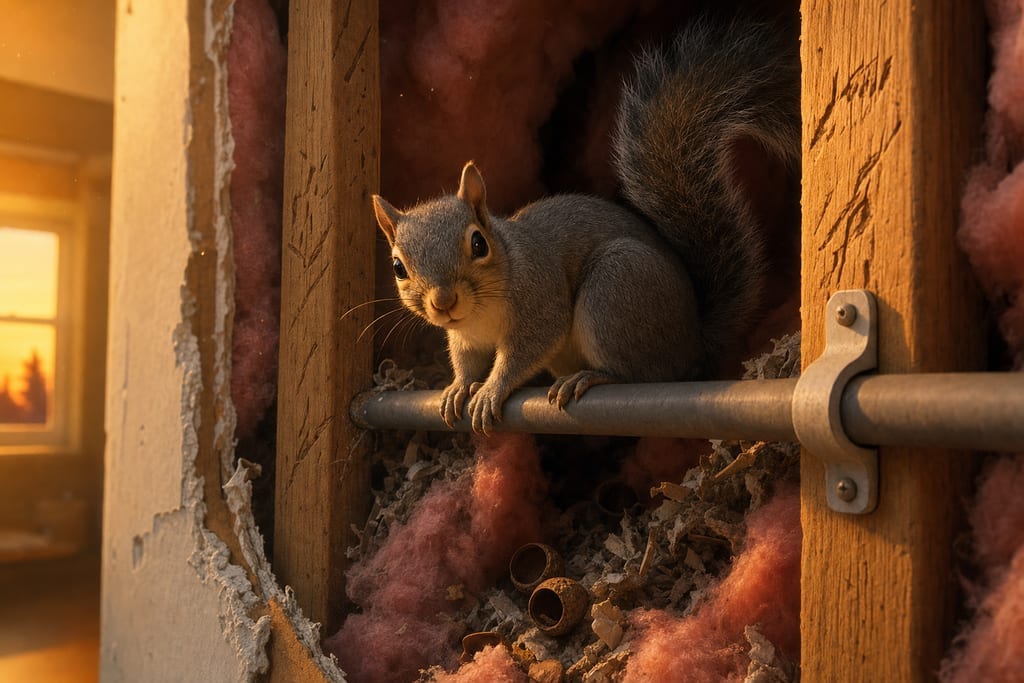
What sounds do squirrels make in an attic or wall? Mostly scratching, scurrying, rolling, and short chirping noises, and you'll hear them most around sunrise and sunset. That timing isn't random. Squirrels are most active at dawn and dusk, so those are the hours they're moving around, building nests, and checking in with each other.
The scratching is usually claws on wood or drywall as they dig at insulation or widen a gap to get in. The scurrying and rolling sounds come from them dragging nesting material, nuts, or their own bodies across the ceiling as they move between spots. Chirping and chattering are how they talk to each other, especially a mother with young ones nearby. Catching these sounds early matters, because a single squirrel can turn into a nest of them fast, and every day they stay adds more chewed wire, torn insulation, and waste to clean up later.
Table of Contents
Why Attics Attract Noisy Squirrel Activity
An attic feels like a hollow tree to a squirrel. It's dark, dry, raised off the ground, and shaped like the cavities they already nest in out in the wild, so once they find a gap, moving in takes almost no adjustment on their part.
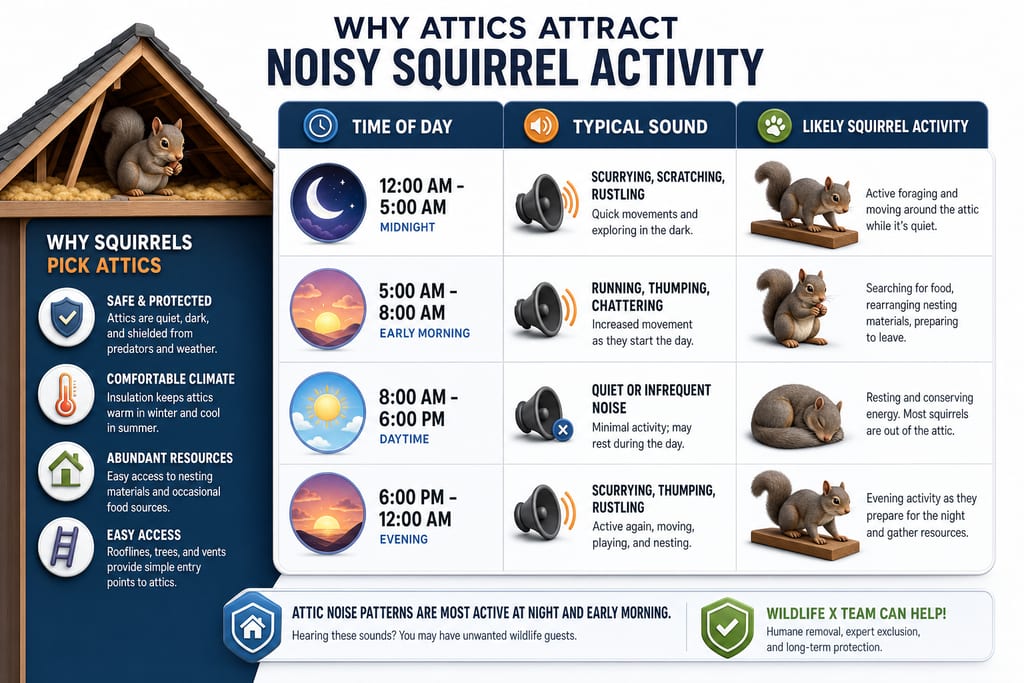
Fall and spring bring the most new arrivals. In fall, squirrels look for a warm, dry spot to ride out the cold months, and in spring, females look for a safe place to raise a litter away from predators.
Unlike rats or raccoons, squirrels are not nighttime animals, so their noise follows a different clock.
Here's how the timing usually breaks down, based on what's driving the noise:
- Early morning, right around sunrise: light scratching and quick footsteps, usually a squirrel leaving the nest to forage.
- Midday, mostly quiet: squirrels are out feeding or resting, so this is the slowest stretch.
- Late afternoon into dusk: heavier scurrying and rolling sounds, from squirrels returning with food or nesting material.
- Any time of day, short bursts of chirping: a mother squirrel communicating with young in the nest.
Scratching and Scurrying Along the Ceiling
That quick, dry scratching sound overhead is almost always claws gripping wood or drywall as a squirrel runs. It's sharper and faster than a footstep, more like fingernails on a chalkboard in short bursts rather than one long drag.
Scurrying tends to follow a straight line, the same path back and forth, because squirrels reuse the same routes between their nest and the entry point. One thing that separates them from rats right away is timing, since squirrels are daytime animals and almost all of this noise happens between sunrise and sunset, not overnight. If you track where the sound is loudest, it usually leads back to a corner near the eaves where nesting material has piled up.
A few quick checks before calling anyone out:
- Note the time of day you hear the noise, since daylight points to squirrels
- Listen for a repeated path rather than random movement across the whole attic
- Check the eaves and roofline for chewed wood or a gap wider than a golf ball
- Watch for insulation pushed into a mound in one corner
Chirping, Barking, and Chattering Noises
Vocal sounds tell you more about what's happening than scratching does. Chirping and chattering is communication, most often between a mother and her young, and it's soft and repetitive rather than one sharp noise.
A sharp, single bark is different, that's an alarm call or a warning to another squirrel that's gotten too close to the nest. If you hear high-pitched squeaking coming from inside a wall cavity and it doesn't move, that squirrel is likely stuck and can't get out on its own. These sounds all get louder and more frequent in spring, when litters are born and mothers are actively tending young.
Here's how to read the main vocal sounds:
- Soft chirping or chattering: mother communicating with young nearby
- One sharp bark: warning to another animal, not distress
- Steady squeaking from a fixed spot: likely a trapped or injured squirrel
- Noise that spikes in spring: a litter has probably arrived
This video breaks down how mouse sounds differ from squirrel sounds, which helps if you're not sure what's moving through your walls.
Rolling and Thumping Sounds From Nesting
Rolling noises come from nuts, acorns, or loose debris being pushed and stored, usually against a joist or along the attic floor. It's a lower, heavier sound than scratching, more like something being nudged than claws gripping a surface.
Thumping happens when a squirrel drags leaves, shredded insulation, or scraps of fabric to build or repair a nest. These sounds are heavier and more irregular than the steady gnaw-gnaw-gnaw of a rodent chewing through wood. Unlike scurrying, which covers a travel path across the whole attic, rolling and thumping usually stay concentrated in one spot where the nest sits. A few ways to tell nesting sounds apart:
- Low rolling thuds: food or debris being pushed into storage
- Heavier dragging sounds: nesting material being hauled into place
- Noise stuck in one corner: a nest is likely already built there
- Irregular timing with pauses: separates it from steady rodent gnawing
Telling Squirrel Sounds Apart From Other Pests
The clearest clue is timing. Squirrels are active mostly during the day, while raccoons move in at night, so a 2 a.m. thump overhead points away from a squirrel.
Rat scratching is faster and lighter than a squirrel's, and it often comes paired with gnawing sounds that continue year-round rather than peaking in spring and fall. Birds that get into a soffit or vent produce fluttering and tapping, short and irregular, not the steady back-and-forth scurrying squirrels make along a travel path. Matching the sound to the time of day narrows the list fast, before you even see the animal.
A quick comparison to work from:
- Daytime scratching and scurrying in a straight path: squirrel
- Fast, light scratching with gnawing any time of night: rat
- Heavy thumping and growling after dark: raccoon
- Fluttering and tapping near a vent or soffit: bird
If the sounds don't match cleanly to one pattern, that's usually a sign of more than one animal, and Wildlife X Team's inspection process is built to sort out exactly which one is in the attic before any work starts.
How Long to Wait Before Calling Someone In
A single night or two of noise during migration season often means a squirrel passed through or settled briefly and moved on, especially if the sound stops within a few days. That kind of short, one-off activity doesn't always need a professional. It's the pattern that matters more than the one-time event.
Scratching that returns to the same spot for several days straight is a different story. That repetition usually means a nest is already built, not a squirrel testing the space. At that point the animal has settled in, and the longer it stays, the more material gets pulled apart to build and maintain that nest.
A proper inspection finds what a homeowner usually can't from the ground. In the Jesse Bernard case, the obvious hole wasn't the only way in, and a thorough look turned up a couple more entry points that would have let squirrels back in even after the first one was sealed.
Putting it off costs more than time. Wiring gets chewed, insulation gets soiled, and what starts as a small repair turns into a cleanup and restoration job.
What to Do Once You've Matched the Sound
Naming the noise only tells you what's moving around up there, not how far it's already gotten into your insulation or wiring. If the pattern keeps repeating in the same spot after a few days, that's your signal to get eyes on it rather than keep listening. Wildlife X Team covers Fort Worth, Denton, Granbury, and the surrounding towns, and a call to (817) 799-8686 gets someone out to check the attic, find every entry point, and handle removal before the nest grows. A quick inspection now is a lot less work than a cleanup after wires and insulation take the damage.
Squirrel Noise Questions People Still Ask
Can squirrel sounds stop suddenly and then come back weeks later?
Yes, and it usually means a second squirrel moved into the same spot, or the first one left temporarily to find food and came back. A nest site that worked once tends to get reused, so quiet weeks don't always mean the problem is gone. If the noise returns in the same corner, treat it as the same issue, not a new one.
Is it normal to hear squirrel noises even in winter?
Yes, squirrels don't hibernate, so they stay active through winter and keep using an attic as shelter from the cold. The noise may sound lighter since they move less in freezing weather, but scratching and nesting sounds can still show up any month. Winter activity usually means a squirrel settled in for the season rather than just passing through.
Can loud music or noise inside the house scare squirrels away permanently?
No, loud noise or bright lights might push a squirrel out of the attic for a day or two, but it comes right back once things quiet down. A nest with young in it almost never gets abandoned this way, since the mother won't leave her litter behind. Sealing the entry point is the only thing that keeps them out for good.
Why do I only hear the sound from one specific room and nowhere else?
That usually means the nest sits directly above that room, often near a corner of the attic where insulation has been pulled into a pile. Sound also travels differently through different parts of a ceiling, so a thinner section carries noise more clearly than a thicker one nearby. Wildlife X Team's inspection process traces the sound back to the exact spot and checks for entry points near it before starting any repair work.