
Weatherford Snake Removal Guide for Houses, Sheds, and Yards

A snake slithering across your patio or coiled up near your back door isn't just startling—it's a clear sign that your Weatherford property offers exactly what snakes are looking for. The mix of open grasslands, rocky terrain, and residential development around Weatherford creates the perfect environment for several snake species to thrive year-round. Understanding what draws these reptiles to your yard is the first step toward keeping them away for good.
Why Weatherford Homes Attract Snakes
Weatherford sits in a unique geographic zone where the Texas Hill Country meets the North Texas plains, creating an ideal habitat for both venomous and non-venomous snakes. The area's limestone outcroppings, creek beds, and mix of native grasses provide natural shelter and hunting grounds that snakes have used for centuries. When residential neighborhoods expand into these areas, homes essentially become extensions of the snakes' existing territory. Properties with rock walls, wood piles, overgrown vegetation, or rodent problems become especially attractive because they offer food sources, shelter, and protection from predators all in one convenient location.
Snake activity in Weatherford peaks dramatically during spring and summer months when temperatures rise and snakes become more active in their search for food and mates. April through September sees the highest number of snake encounters around homes, with many homeowners spotting snakes near foundations, in garages, or around outdoor living spaces during early morning or evening hours. The warm concrete of driveways and patios retains heat that attracts snakes looking to regulate their body temperature, while irrigation systems create moisture that draws in the insects and small animals snakes prey on.
The presence of prey animals is perhaps the biggest factor that keeps snakes returning to Weatherford properties. Mice, rats, frogs, lizards, and insects all thrive around residential areas, and where these creatures gather, snakes will follow. If you've noticed increased rodent activity around your property, there's a strong chance snakes have noticed too. Wildlife X Team's approach to snake removal in Weatherford TX addresses not just the snakes themselves but also the underlying conditions that attract them, which is why their exclusion services focus on eliminating food sources and entry points simultaneously.
Water features, whether intentional like ponds and fountains or unintentional like leaky sprinklers and poor drainage, create another major draw for snakes in the Weatherford area. Snakes need regular access to water, and properties with consistent moisture become regular stops on their hunting routes. Even something as simple as a dripping outdoor faucet or a low spot in your yard that collects rainwater can make your property more appealing than your neighbor's. Understanding these attraction factors helps explain why some homes experience repeated snake visits while others nearby remain relatively snake-free.
Table of Contents
- Why Weatherford Homes Attract Snakes
- Common Snakes Found in Weatherford Properties
- Where Snakes Hide in Your Home and Yard
- Safe Snake Removal Methods That Actually Work
- Keeping Snakes Away From Your Property Long-Term
- When to Call Professional Snake Removal Services
- Your Next Steps for Snake Free Living
- Common Questions About Snake Removal in Weatherford
Common Snakes Found in Weatherford Properties
Texas hosts more than 70 different snake species, and quite a few of them call Parker County home. If you live in Weatherford, chances are you've spotted a snake slithering through your yard or even found one near your house. Most of these snakes are completely harmless and actually help control rodent populations, but that doesn't make them any less scary when you stumble upon one. The real challenge is knowing which snakes pose a genuine threat and which ones are just unwelcome visitors.

Venomous Snakes That Require Immediate Attention
Four venomous snake species live in the Weatherford area, and these are the ones you need to watch out for. Copperheads are the most commonly encountered venomous snakes in Parker County, often hiding in woodpiles, rock gardens, and overgrown vegetation. Cottonmouths prefer areas near water sources, while coral snakes are rare but extremely dangerous with their distinctive red, yellow, and black bands. Rattlesnakes, including the Western Diamondback, are also present and usually give you a warning with their distinctive rattle before striking.
- Copperheads have hourglass-shaped bands and copper-colored heads
- Cottonmouths display white mouths when threatened
- Coral snakes feature red bands touching yellow bands
- Rattlesnakes carry segmented rattles on their tails
When you spot any of these venomous species, professional snake removal in Weatherford TX becomes essential. Wildlife X Team provides safe removal services that protect both you and the snake, ensuring the situation is handled properly without putting anyone at risk.
Harmless Snakes That Still Cause Concern
Non-venomous snakes make up the majority of snake encounters in Weatherford. Rat snakes are probably the most common, growing up to six feet long and often found in attics, barns, and sheds where they hunt for rodents. Texas brown snakes, garter snakes, and rough green snakes also frequent residential areas. These snakes won't hurt you, but finding a five-foot rat snake in your garage can still be pretty alarming.
- Rat snakes help control rodent populations but can enter homes
- Garter snakes prefer gardens and areas with moisture
- Rough green snakes live in trees and shrubs
- Texas brown snakes stay small and hide under debris
Identifying the Difference Matters
Knowing whether you're dealing with a venomous or non-venomous snake changes everything about how urgently you need help. Venomous snakes typically have triangular heads, vertical pupils like a cat's eye, and heat-sensing pits between their eyes and nostrils. Non-venomous snakes usually have rounded heads, round pupils, and no pits. That said, getting close enough to check these features isn't recommended.
- Venomous snakes have triangular-shaped heads
- Non-venomous snakes typically have rounded heads
- Pupil shape differs between venomous (vertical) and non-venomous (round)
- Body patterns can help with identification from a safe distance
The safest approach is to keep your distance and call for professional snake removal in Weatherford TX. Some companies like Critter Control and Omega Animal Removal offer snake services, but Wildlife X Team specializes in humane removal with detailed property inspections to prevent future snake problems. Understanding what type of snake you're dealing with helps professionals respond appropriately, whether that means immediate removal of a dangerous species or relocating a beneficial but unwanted visitor.
Where Snakes Hide in Your Home and Yard
Weatherford homeowners often discover snakes in the most unexpected places, and it's usually because these reptiles are just looking for two things: shelter and food. During the scorching Texas summers, snakes actively seek out cool, dark spaces where they can escape the heat and wait for their next meal. Your property probably has more of these hiding spots than you realize. The problem gets worse when you consider that a single gap in your foundation or an open vent can turn into a snake highway leading straight into your living space.
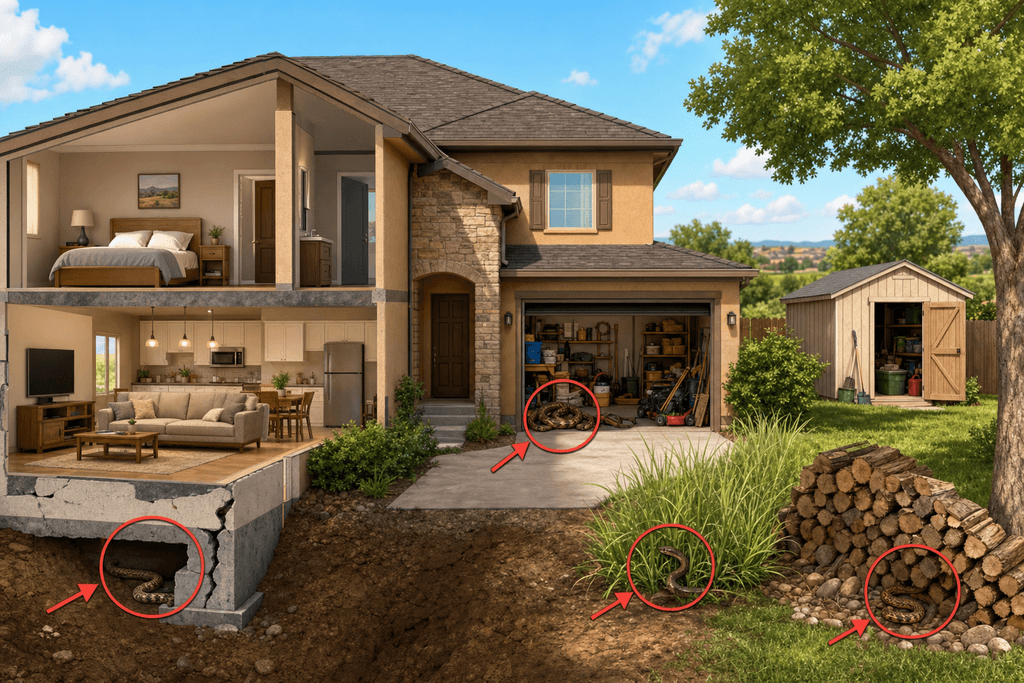
Outside your home, wood piles and storage sheds are like five-star hotels for snakes. These areas stay shaded, hold moisture, and often attract rodents, which means dinner is served. Foundation gaps around your home create perfect entry points, especially since snakes can squeeze through openings as small as a quarter inch.
- Wood piles and lumber stacks near the house
- Storage sheds with gaps under doors
- Foundation cracks and expansion joints
- Overgrown vegetation and tall grass
- Rock piles and decorative stone features
- Compost bins and garden debris
Inside your home, the situation can get even more concerning. Garages and attics provide everything a snake needs: shelter from predators, stable temperatures, and access to mice or rats that might already be living there. Crawl spaces under homes are particularly attractive because they stay cool and damp. Snakes don't need a wide-open door to get inside either.
They'll slip through gaps around pipes, damaged weather stripping, or torn window screens. Once inside, they tend to stay hidden in places you don't check often, which is why many homeowners don't realize they have a snake problem until they come face-to-face with one.
Safe Snake Removal Methods That Actually Work
Trying to remove a snake yourself might seem simple until you're actually standing there with a broom, wondering if that's a harmless rat snake or a venomous copperhead. The truth is, professional removal ensures safety for everyone involved, including the snake. Wildlife X Team uses humane trapping and relocation methods that don't harm the animal while getting it off your property for good. The team at 11833 Katy Rd in Keller serves Weatherford with same-day response because they understand that finding a snake in your home isn't something you want to deal with for days.

Here's what most people don't consider: even non-venomous snakes will bite when they feel threatened, and those bites can lead to infections or allergic reactions. Attempting DIY removal of venomous snakes like copperheads or cottonmouths risks serious injury or worse. Texas has several venomous species, and unless you're trained in snake identification, you're basically guessing.
This video shows some practical methods for keeping snakes away from your yard, which can help reduce the chances of needing removal in the first place.
Proper identification is critical before any removal attempt, and that's where professional services make the biggest difference. Wildlife X Team doesn't just remove the snake you saw. They conduct a full inspection to find all entry points and identify whether you have one snake or a bigger problem. Their approach includes checking your attic, crawl spaces, and foundation for signs of snake activity or the rodents that attract them.
Keeping Snakes Away From Your Property Long-Term
Getting rid of one snake doesn't solve the problem if your property still looks like an all-you-can-eat buffet to the next one passing through. Habitat modification removes what attracts snakes in the first place, and it's more effective than any repellent spray you'll find at the hardware store. The goal is to make your yard and home as uninviting as possible to these reptiles. This means changing the environment so snakes choose your neighbor's property instead of yours.
Start by addressing the food source. Snakes don't care about your garden or your kids' toys. They care about mice, rats, and other small animals. Removing food sources like rodents eliminates the main reason snakes stick around. If you've seen snakes, you probably have a rodent problem too, even if you haven't noticed it yet.
- Clear away wood piles, debris, and tall grass within 10 feet of your home
- Seal all foundation cracks and gaps larger than a quarter inch
- Install door sweeps on garage doors and shed entrances
- Keep your lawn mowed short and remove hiding spots
- Address any rodent problems immediately
- Trim tree branches away from your roof and walls
Landscape changes make a bigger difference than most people expect. Snakes prefer areas with cover where they can move without being exposed to predators. By keeping grass short, removing rock piles, and clearing dense vegetation, you create an environment where snakes feel vulnerable and exposed.
For guaranteed long-term protection, professional exclusion services provide the kind of thorough sealing that's hard to achieve on your own. Wildlife X Team's prevention services include foundation sealing and vent guards that stop snakes from entering your home through the small gaps you might not even know exist. They also offer a renewable lifetime warranty, which means if a snake finds a way in after their work is done, they'll come back and fix it. That's the kind of peace of mind you can't get from a DIY approach or a one-time snake removal without follow-up prevention.
When to Call Professional Snake Removal Services
Most Texans who spot a snake in their yard face the same question: handle it yourself or call someone who knows what they're doing? The answer isn't always obvious, especially when you're staring at a reptile you can't identify from a safe distance. Understanding when a situation crosses from manageable to dangerous can literally save your life. Texas sees over 1,000 venomous snake bites each year, and many happen when people try DIY removal without proper training. The difference between a harmless rat snake and a copperhead isn't always clear to the untrained eye, which is exactly why knowing your limits matters.
Situations Requiring Immediate Professional Help
Some scenarios don't leave room for guesswork. If you're dealing with any of these situations, professional snake removal in Weatherford TX should be your first call, not your last resort.
- Any snake with triangular-shaped heads, heat-sensing pits, or rattles needs expert handling
- Snakes found inside your home, garage, or any enclosed living space
- Multiple snake sightings within a short timeframe around your property
- Snakes near children's play areas or high-traffic zones
- Any situation where you cannot maintain a safe distance of at least six feet
The real problem often isn't the snake you see but what attracted it to your property in the first place. Wildlife X Team's Wildlife Inspection Report identifies these underlying issues that most homeowners miss completely.
The Hidden Costs of Waiting
Delaying professional intervention might seem like saving money, but it usually costs more in the long run. A single snake sighting could indicate rodent problems, structural vulnerabilities, or habitat conditions that will keep bringing snakes back.
- Venomous snake bites in Texas cost an average of $25,000 to treat medically
- Property damage from attempting DIY exclusion often exceeds professional service costs
- Violating protected species laws can result in fines up to $10,000 in Texas
Professional services provide warranties that DIY methods simply cannot match. When Wildlife X Team handles snake removal in Weatherford TX, their Renewable Lifetime Warranty means you're protected long after the initial visit.
Legal Considerations Most Homeowners Ignore
Texas law protects certain snake species, and killing or relocating them without proper permits can land you in legal trouble. The Texas indigo snake and several other species carry legal protections that require specific handling protocols.
- Protected species require licensed professionals for legal removal
- Improper relocation can spread diseases to new snake populations
- Some municipalities have specific ordinances about wildlife handling
- Professional services maintain proper licensing and insurance coverage
Companies like Wildlife X Team understand these regulations and handle everything according to state and local requirements. Their approach goes beyond just removing the snake you see today.
Your Next Steps for Snake Free Living
Dealing with snakes around your Weatherford property isn't something you should handle alone. Whether you've spotted a venomous copperhead near your back door or found a rat snake in your garage, professional help makes all the difference. The risks of trying to remove snakes yourself are real, and misidentifying a harmless snake from a dangerous one happens more often than you'd think.
The good news is that snake removal weatherford tx services don't have to be complicated or stressful. Wildlife X Team handles everything from the initial inspection to long-term prevention, so you're not just solving today's problem but stopping future ones too. Our team serves Weatherford and surrounding areas from our location at 11833 Katy Rd, Keller, TX, and we've seen just about every snake situation you can imagine.
Prevention really is the best strategy once the immediate threat is gone. Sealing entry points, removing attractants like rodent populations, and making your property less appealing to snakes saves you from repeat visits. That's where our comprehensive approach comes in, including our Renewable Lifetime Warranty that gives you actual peace of mind instead of just temporary relief.
If you're dealing with snakes right now or want to prevent them before they become a problem, give us a call at (817) 799-8686. The sooner you address the issue, the less likely it is to get worse. And if you're still wondering about specific situations or have questions about what to expect, the answers below should help clear things up.
Common Questions About Snake Removal in Weatherford
Finding a snake in your home or yard brings up a lot of questions fast. Most Weatherford homeowners want to know what happens next, how much it costs, and whether the problem will come back. Here are the answers to the most common questions we hear about snake removal weatherford tx services.
How quickly can someone respond to a snake in my house?
Wildlife X Team typically responds to snake calls within a few hours during business hours, and we offer emergency services for urgent situations. If you find a snake inside your home, we understand that waiting isn't really an option. Our team serves the Weatherford area and can usually get someone to your property the same day you call, especially during peak snake season in spring and summer.
What's the cost of professional snake removal in Weatherford?
The cost varies depending on the situation, like whether it's a single snake removal or if you need exclusion work to prevent future problems. Most companies in the area charge a service call fee plus removal costs. Wildlife X Team provides detailed estimates before starting any work, so you know exactly what you're paying for. Prevention services like sealing entry points cost more upfront but save money in the long run compared to repeated removal calls.
Are the snakes relocated or killed?
We use humane removal methods and relocate snakes away from residential areas whenever possible. The snakes are captured safely and released in appropriate habitats where they won't pose a threat to people or pets. This approach protects both the homeowner and the local ecosystem, since most snakes in Texas actually help control rodent populations.
How do I know if a snake is venomous?
Texas has several venomous species including copperheads, cottonmouths, coral snakes, and rattlesnakes. Venomous snakes often have triangular heads, vertical pupils, and heat-sensing pits between their eyes and nostrils. That said, identifying snakes from a distance is tricky and mistakes happen all the time. The safest approach is to treat every snake as potentially dangerous and call professionals for identification and removal rather than getting close enough to check.
Can you guarantee snakes won't come back?
Wildlife X Team offers a Renewable Lifetime Warranty on our exclusion work, which means we stand behind our prevention methods. While we can't control what happens in your yard, we can seal your home against entry and remove attractants like rodent populations that draw snakes in. Our Wildlife Inspection Report identifies all the vulnerabilities in your property so we can address them properly.
What should I do if I see a snake right now?
Keep your distance and keep pets and children away from the area. Don't try to catch, kill, or corner the snake, as that's when most bites happen. If it's inside your house, close the door to that room if possible and call for professional help. If it's outside, just give it space and monitor it from a safe distance until help arrives. Most snakes will move along on their own if left alone, but it's better to have a professional confirm the species and check for others nearby.