
Texas' Most Poisonous Snake and Where You May Find It
Table of Contents
Understanding the Texas Coral Snake
The Texas coral snake holds a unique place among venomous snakes because it's the only member of the Elapidae family found in the state. While most people think of rattlesnakes when they picture dangerous Texas snakes, coral snakes are actually quite different. They're related to cobras and sea snakes, which means they have fixed fangs that stay in place instead of folding back like a rattlesnake's. Their venom works differently too, attacking the nervous system rather than destroying tissue. This makes them the most poisonous snake in Texas from a venom potency standpoint, even though bites are rare.
What Makes Coral Snakes Different
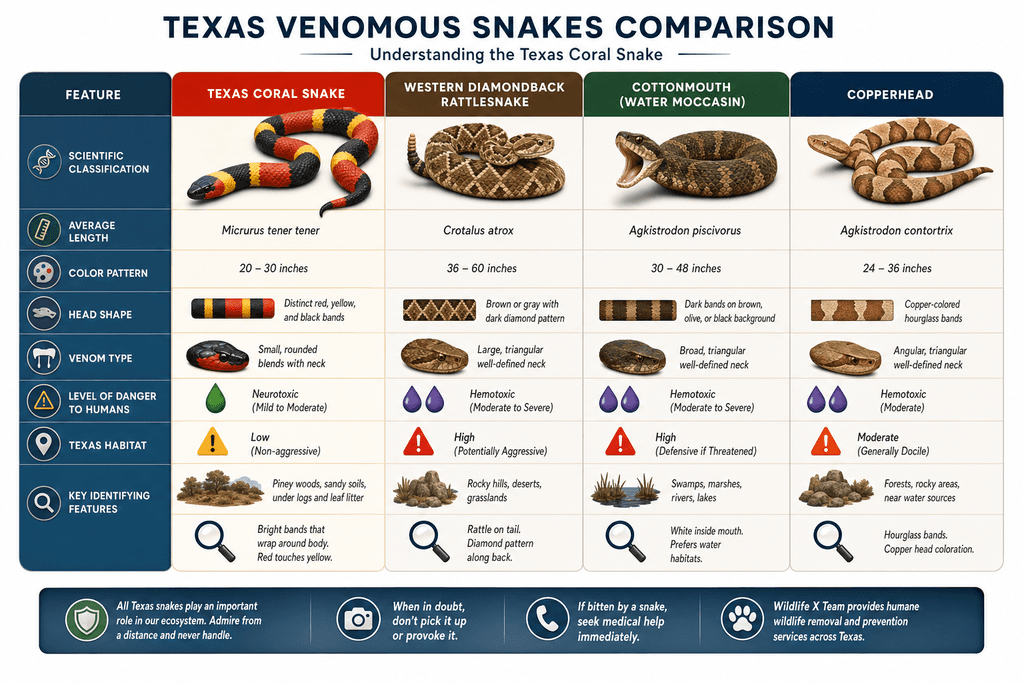
Coral snakes don't look or act like other venomous snakes in Texas. They're small, shy, and spend most of their time underground or hiding under leaves and logs. Most Texas venomous snakes are pit vipers with heat-sensing pits, triangular heads, and vertical pupils. Coral snakes have none of these features.
Here's what sets them apart:
- They have round pupils instead of the cat-like slits you see on rattlesnakes
- Their heads are barely wider than their bodies, not the distinctive triangle shape
- They lack the heat-sensing pits that pit vipers use to hunt warm-blooded prey
- Their fangs stay fixed in position and are much shorter than a rattlesnake's
Identifying the Real Deal
Texas has only one species of coral snake, but several harmless snakes have evolved to look similar. The scarlet kingsnake, scarlet snake, and milk snake all sport red, black, and yellow bands. The famous rhyme "red touches yellow, kill a fellow" exists for a reason. On a real coral snake, the red bands touch the yellow bands directly.
Physical traits that help identify coral snakes include:
- Bright bands of red, yellow, and black that circle completely around the body
- A black snout and head (mimics have red or light-colored snouts)
- Small size, usually 20 to 30 inches long
- Smooth, shiny scales that look almost polished
- A blunt, rounded tail that looks similar to the head
Venom That Works Differently
Unlike rattlesnakes and copperheads that have hemotoxic venom, coral snakes produce neurotoxic venom that attacks the nervous system. This means their bites don't cause immediate pain or swelling like pit viper bites do. Instead, symptoms can take hours to appear, which makes them particularly dangerous if someone doesn't realize they've been bitten.
The venom affects the body by:
- Blocking signals between nerves and muscles
- Causing difficulty breathing as chest muscles stop working properly
- Creating drowsiness, slurred speech, and confusion
- Potentially leading to paralysis if left untreated
Wildlife X Team often gets calls from homeowners who've spotted colorful banded snakes in their yards. While many turn out to be harmless mimics, it's always better to keep your distance and call professionals who can safely identify and relocate any snake that's causing concern. Our team knows the difference between coral snakes and their look-alikes, and we handle all wildlife removal humanely.
Where Coral Snakes Hide Around Your Property
The coral snake might be small, but it packs the most potent venom of any snake in Texas. These secretive reptiles rarely show themselves in the open, which makes knowing their favorite hiding spots crucial for property owners. Unlike rattlesnakes that bask in the sun, coral snakes spend most of their time underground or tucked beneath objects where moisture stays trapped. They're not aggressive by nature, but accidental encounters happen when people reach into areas where these snakes feel safe and hidden.
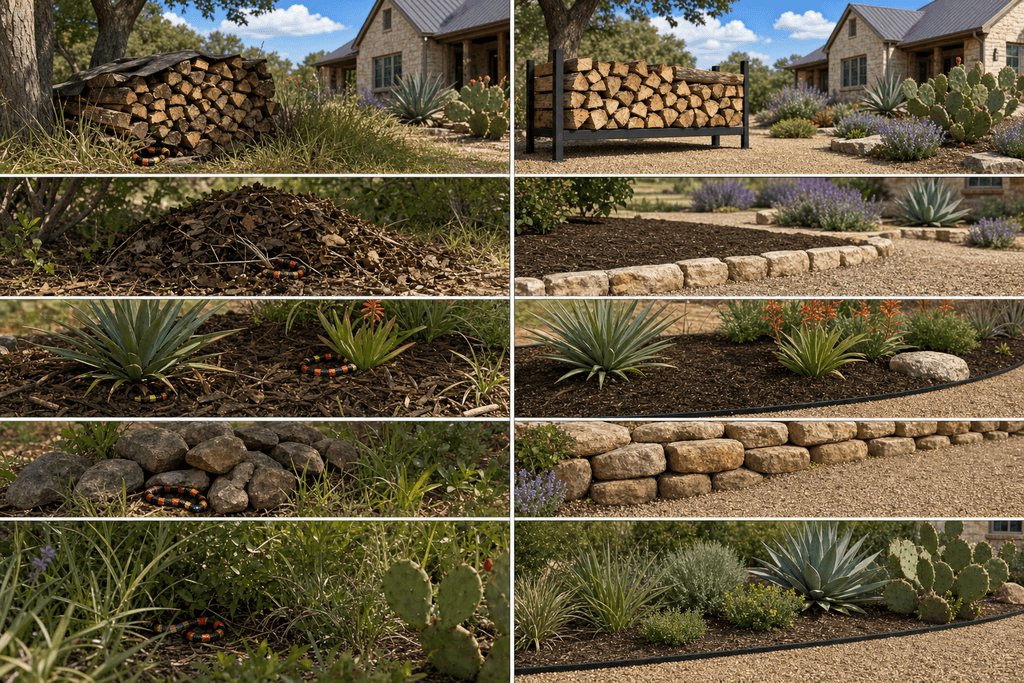
Coral snakes love moist, shaded environments where the temperature stays cool and the ground cover provides protection. Your property likely has several spots that fit this description perfectly.
- Woodpiles and stacked lumber create ideal coral snake habitat
- Leaf litter and mulch beds offer both moisture and cover
- Garden debris like old flower pots and discarded materials
- Rock piles and decorative stone features in landscaping
- Compost bins and areas with decomposing organic matter
The snakes burrow beneath these materials or use existing spaces created by other animals. During spring and fall, when temperatures moderate, coral snakes become more active and visible around properties in Fort Worth, Denton, and surrounding areas. Summer heat drives them deeper underground, while winter sends them into brumation in protected spots.
Around the Dallas-Fort Worth region, coral snakes appear more frequently in properties with mature landscaping and natural areas nearby. They follow their prey, which includes other small snakes and lizards, into yards that provide good hunting grounds.
How to Identify a Coral Snake Correctly
You've probably heard the rhyme about red touching yellow, but relying on memory tricks during a snake encounter can be dangerous. The Texas coral snake has specific physical features that set it apart from harmless mimics like the scarlet kingsnake and milk snake. Understanding these differences could prevent a serious medical emergency, since coral snake venom affects the nervous system differently than the hemotoxic venom of pit vipers. The challenge is that several non-venomous snakes have evolved to look similar to coral snakes as a defense mechanism.
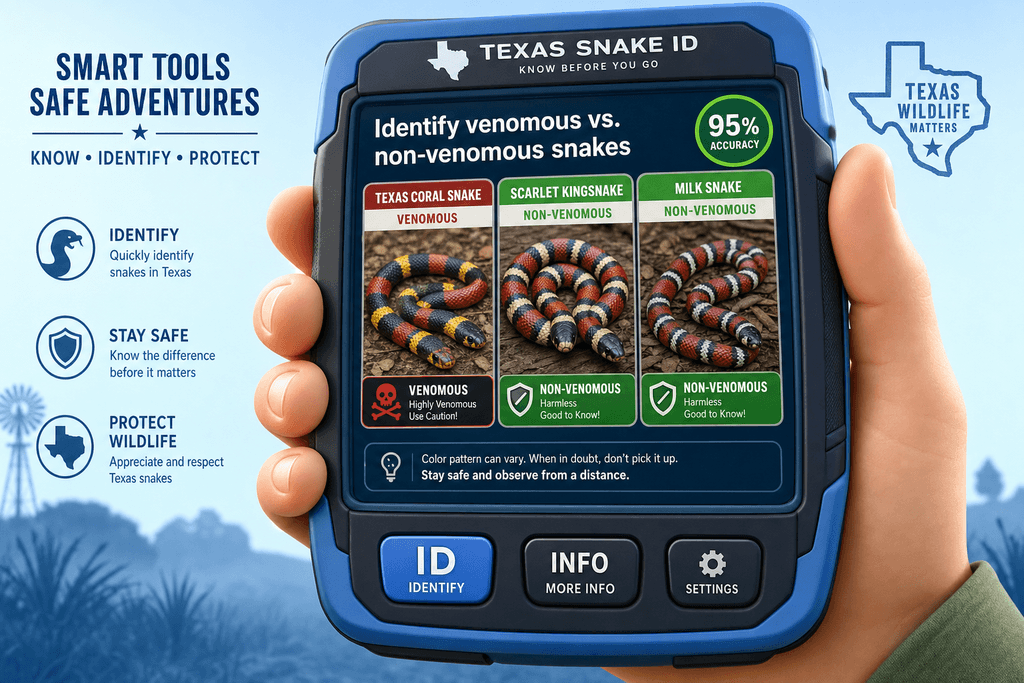
The color pattern matters, but so does the order. A true coral snake displays red bands bordered by yellow bands, with black bands separating the pattern. The colors wrap completely around the body in clean, distinct rings.
Beyond colors, coral snakes have a few other telltale signs:
- A black snout and head, unlike mimics with red snouts
- Round pupils instead of the elliptical pupils of pit vipers
- A small, rounded head that's barely wider than the neck
- Smooth, shiny scales without the keeled texture of water snakes
- A tendency to hide their head and raise their tail when threatened
The most common mistake people make is trying to get close enough for a detailed look. Coral snakes have small mouths and short fangs, which means they typically bite fingers, toes, or other small body parts during handling attempts. They don't strike from a distance like rattlesnakes.
In low light conditions or when a snake is moving quickly, identification becomes nearly impossible for untrained observers. The safest approach is to treat any banded red, yellow, and black snake as potentially dangerous and keep your distance.
What to Do When You Find a Coral Snake
Finding a coral snake on your property requires immediate but calm action. The first priority is creating distance between the snake and anyone who might accidentally encounter it, especially children and pets. Coral snakes don't chase people or act territorially, but they will defend themselves if stepped on or grabbed. Most bites happen when someone tries to kill or relocate the snake themselves, which is both dangerous and illegal in many situations since coral snakes play important ecological roles.
Keep everyone away from the area and mark the snake's location if possible without getting close. If the snake is inside a building, confine it to one room by closing doors.
Understanding proper snakebite treatment can make a critical difference in an emergency situation, though the best strategy is always prevention and professional removal.
Here's what you should never do when you find a coral snake:
- Don't attempt to catch or kill the snake yourself
- Don't use tools like shovels or sticks to move it
- Don't assume it will leave on its own quickly
- Don't let curiosity override safety concerns
Professional removal is the only safe option for venomous snakes. At Wildlife X Team, we handle coral snake situations with specialized equipment and training that protects both people and the snake. Our team understands coral snake behavior and can locate hidden snakes that might pose ongoing risks.
The removal process involves safely capturing the snake, inspecting your property for additional snakes or attractive habitat features, and providing recommendations for prevention. We also look for entry points into structures, since coral snakes sometimes follow prey into crawl spaces or garages.
Long-term prevention means making your property less attractive to coral snakes and their food sources. This includes removing debris piles, managing moisture around foundations, and sealing gaps where snakes might enter buildings. Texas law protects many snake species, and killing snakes can result in fines, so professional removal ensures you stay compliant while protecting your family.
Our approach at Wildlife X Team includes habitat modification advice specific to properties in Southlake, Grapevine, Colleyville, and throughout the service area. We've seen how small changes to landscaping and yard maintenance can dramatically reduce snake encounters without harming the local ecosystem.
Why Coral Snake Encounters Are Increasing
Coral snake sightings in North Texas neighborhoods have jumped by nearly 40% over the past five years, and the reasons behind this trend paint a clear picture of how human expansion affects wildlife patterns. As the Dallas-Fort Worth metroplex continues to grow outward, new housing developments are being built directly on top of what used to be prime coral snake territory. These snakes don't just disappear when bulldozers arrive. They adapt, moving into the green spaces, gardens, and landscaped yards that homeowners create around their new properties.
Development Patterns Driving Snake Displacement
The most poisonous snake in Texas doesn't need much space to survive, which makes suburban yards surprisingly attractive. When natural habitats get carved up by roads and buildings, coral snakes squeeze into whatever green corridors remain.
- New construction in previously undeveloped areas forces snakes into adjacent residential zones
- Fragmented habitats create higher snake density in remaining natural areas
- Retention ponds and drainage systems provide unexpected shelter for displaced wildlife
- Golf courses and parks become wildlife highways connecting isolated populations
Climate and Seasonal Activity Shifts
Texas weather patterns have become less predictable, and coral snakes respond to these changes in ways that increase human encounters. Warmer winters mean coral snakes stay active longer into the year, extending the traditional danger season from spring and fall into what used to be quiet months.
- Extended breeding seasons result in larger coral snake populations
- Unusual warm spells in winter bring snakes out when homeowners least expect them
- Spring rains drive snakes to higher ground, often near home foundations
- Summer droughts push snakes toward irrigated lawns and gardens seeking prey
Landscaping Choices That Attract Snakes
Modern landscaping trends accidentally create perfect coral snake habitat. Rock gardens, mulch beds, and decorative stone borders provide exactly the kind of cover these snakes prefer. Wildlife X Team's inspection reports frequently identify these features as contributing factors in snake presence around homes.
- Heavy mulch layers create ideal hiding spots and maintain moisture snakes need
- Decorative rock piles offer temperature-regulated shelter
- Dense ground cover plants provide hunting grounds for snake prey
- Wood piles and landscape timbers serve as ready-made snake dens
Property maintenance plays a bigger role than most homeowners realize. Overgrown vegetation, accumulated debris, and neglected yard areas don't just look messy. They create the exact conditions that make the most poisonous snake in Texas feel right at home.
Wrap-up
The most poisonous snake in texas is the coral snake, and knowing how to spot it can literally save your life. Remember the red-yellow-black pattern and that rhyme about red touching yellow. These snakes like to hide in leaf piles, under logs, and in woodpiles around your property, especially in the Fort Worth and surrounding areas where they're more common than most people think.
If you see a coral snake on your property, the smart move is to keep your distance and call someone who knows what they're doing. Wildlife X Team handles snake removal throughout Fort Worth, Denton, Granbury, and nearby areas, and we know exactly how to deal with venomous snakes safely. Trying to remove one yourself just isn't worth the risk when one bite can send you to the hospital.
Simple steps to keep coral snakes away from your home include:
- Clear away leaf piles and yard debris regularly
- Keep woodpiles away from your house
- Seal gaps under doors and in your foundation
- Trim bushes and grass short near your home
Most snake problems start small but can get worse if you ignore them. The good news is that professional help is available right here in the Fort Worth area, and prevention work now can save you from a scary situation later.
Common Questions About Texas Coral Snakes
Coral snakes raise a lot of questions for Texas homeowners, especially when one shows up in the yard or near the house. These snakes look different from other venomous species in the state, and their behavior can be confusing if you're not familiar with them. Understanding how they act and what risks they pose helps you make smart decisions about your property and family's safety. Here are the most common questions people ask about the most poisonous snake in Texas.
Are coral snakes aggressive toward humans?
No, coral snakes are actually pretty shy and will avoid people whenever possible. They only bite when they're stepped on, grabbed, or cornered with no escape route. Most bites happen when someone tries to pick one up or doesn't see it while working in the yard.
How deadly is a coral snake bite?
Coral snake venom is extremely potent and affects the nervous system, which can lead to respiratory failure if untreated. However, deaths are rare because bites don't happen often and medical treatment is usually effective. The small mouth and short fangs of coral snakes mean they often can't get a good grip to inject much venom, but any bite should be treated as a medical emergency.
What time of year are coral snakes most active?
You'll see coral snakes most often during spring and fall when temperatures are mild. They tend to hide during the hottest summer months and become inactive during winter. Early morning and late evening are their preferred hunting times during active seasons.
Can coral snakes climb or enter homes?
Coral snakes are ground dwellers and don't climb like some other snake species. They can enter homes through gaps under doors, foundation cracks, or openings around pipes and utilities. Wildlife X Team's animal proofing services seal these entry points to keep coral snakes and other wildlife out of your living spaces.
How much does professional coral snake removal cost?
Removal costs vary based on the situation, property size, and whether exclusion work is needed to prevent future visits. Getting a professional inspection is the best way to understand what your specific property needs. Many companies in the Dallas-Fort Worth area offer free estimates, though pricing depends on the scope of work required.
Will coral snakes return after removal?
Snakes can return if the conditions that attracted them remain unchanged. Food sources like insects and small lizards, plus hiding spots in debris or overgrown areas, will continue to draw them in. Proper exclusion work and habitat modification are essential to keep them from coming back after removal.