
Squirrel Scat Identification Guide With Key Differences
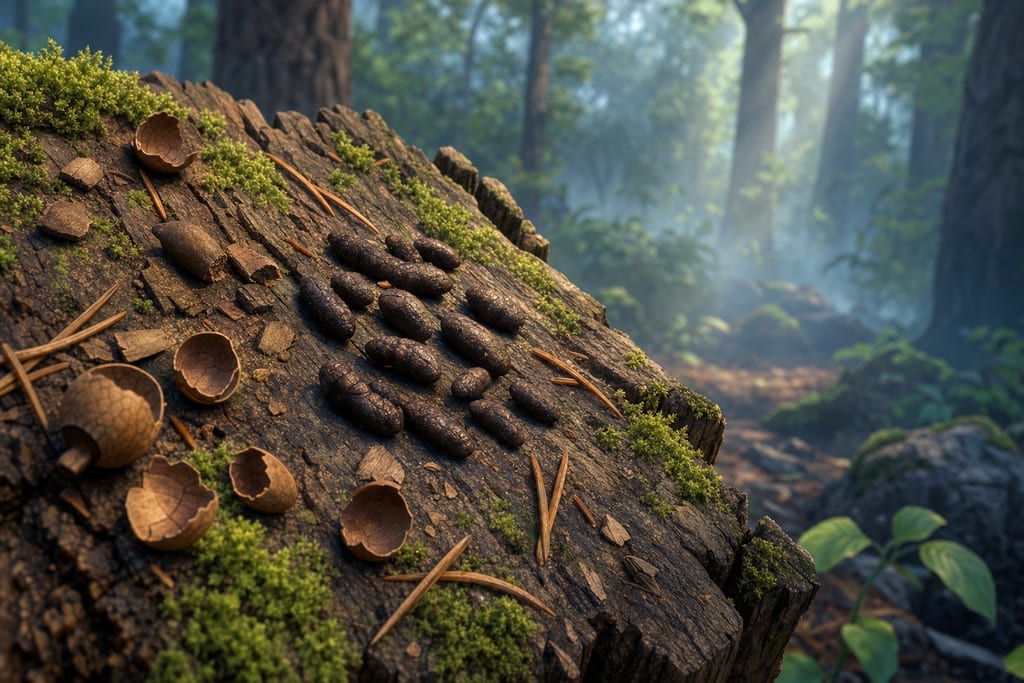
Squirrel scat is small, pellet shaped, and rounded on the ends, usually about the size of a grain of rice or a little bigger. Pest control crews say homeowners mix it up with rat droppings more often than any other mistake in attic inspections, because both are dark, both show up in clusters, and both turn up in the same corners of an attic. The mix up matters because the two animals need different removal plans, and guessing wrong can waste a weekend.
Fresh squirrel droppings are brown and soft, and they turn gray and crumbly as they dry out over a few days. Rat droppings tend to have pointed tips instead of rounded ones, and mouse droppings are much smaller, closer to the size of a grain of rice cut in half. Color, shape, and size together tell you more than any one trait alone, and comparing scat to the other signs an animal leaves behind, like gnaw marks or nesting material, makes the call a lot easier.
Table of Contents
Why Droppings Are the Fastest Way to ID an Animal
You can live in a house for weeks and never see the animal causing trouble, but it leaves scat behind every single day. Sounds come and go, and most wildlife only moves at night, so droppings end up being the one piece of evidence that's always sitting there waiting for you.
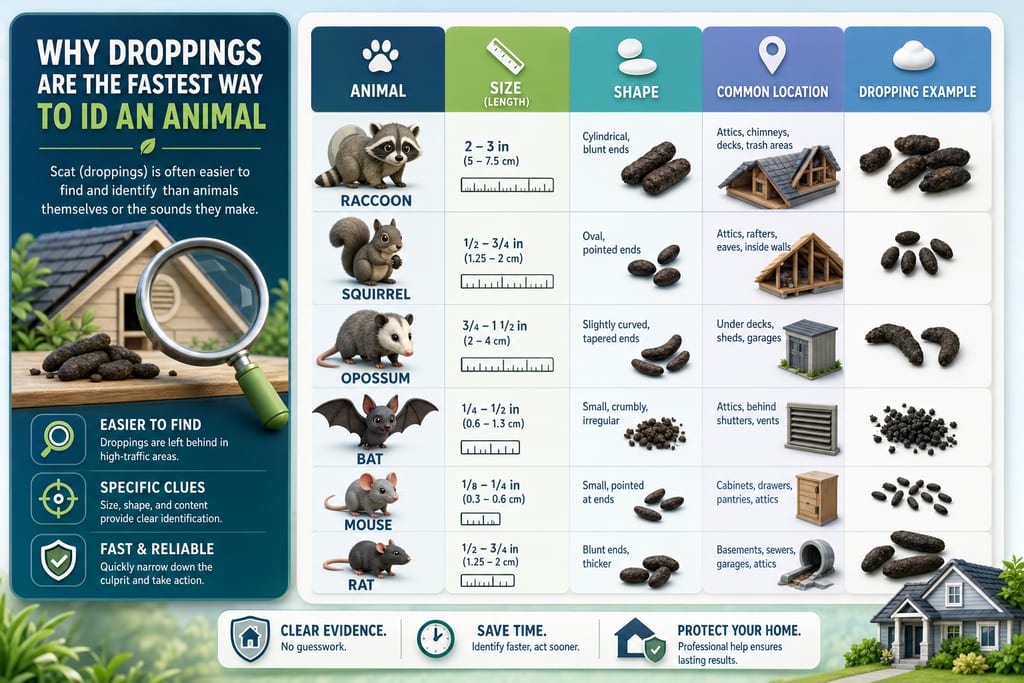
Here's a quick reference for what you're likely to find around a home or yard:
- Squirrel: pellet shaped, rounded ends, found in attic corners and along beams
- Rat: pointed ends, found along walls and near food sources
- Mouse: tiny rods, scattered in drawers, cabinets, and pantry shelves
- Raccoon: tube shaped, often broken into segments, found at the base of trees or on roofs
- Bat: crumbly and shiny with insect parts, piles up directly below roosts
- Bird: white and chalky, splattered rather than pellet shaped, found under perches and nests
Location tells you as much as the dropping itself. Bat guano crumbles into powder when you touch it, while squirrel pellets hold their shape, and raccoon droppings showing up in one steady pile near an attic vent points to a latrine site rather than a passing visit. Size narrows things down fast, but where you find the pile, and whether it's scattered or stacked, often settles the question before color ever comes into play.
What Squirrel Scat Actually Looks Like
Squirrel droppings run about 3/8 to 1/2 inch long, oval shaped with rounded ends on both sides, not just one. That size and shape combination is the first thing to check before you look at anything else.
Color shifts with diet and age. Fresh pellets range from brown to a reddish tint if the animal has been eating a lot of bark or acorns, and they fade to a lighter tan or gray the longer they sit outside. Texture matters too: squirrel scat feels firm and dry once it's a day or two old, never sticky or soft like fresher rat droppings can be.
One more detail people miss is the spread pattern. Squirrels don't build a single latrine pile the way raccoons do, so you'll usually find pellets scattered across a few feet of insulation or along a beam rather than stacked in one spot.
- Length between 3/8 and 1/2 inch, oval, not round
- Both ends rounded, no tapering points
- Dry and firm, crumbles slightly when pressed, not sticky
- Color brown to reddish when fresh, graying with age
- Spread over an area rather than piled in one place
Squirrel Versus Rat and Mouse Droppings
The rounded ends on squirrel scat are the quickest way to rule out rats, since rat droppings taper to a point on at least one end. Rat pellets also run larger overall, closer to 1/2 to 3/4 inch, which puts them at the upper edge of or past squirrel size.
Mouse droppings are a different story entirely. They're much smaller, about 1/8 to 1/4 inch, and shaped like tiny rods rather than ovals, so size alone usually settles that comparison.
Location backs up the shape check. Rats and mice tend to leave droppings near food sources, baseboards, and walls where they travel close to cover, while squirrels drop scat out in the open along the paths they actually use to move through an attic.
- Check the ends first: rounded means squirrel, pointed means rat
- Measure if you can: under 1/4 inch rules out squirrel in favor of mouse
- Look at placement: wall lines and pantries suggest rodents, not squirrels
- Note the travel path: rafters and open insulation point to squirrel activity
Squirrel Versus Raccoon, Bat, and Bird Droppings
Raccoon droppings are the easiest of these to separate from squirrel scat just by size. They run several inches long, tube shaped, and often have visible seeds or undigested food bits mixed in, which squirrel pellets never show.
Bat guano looks closer to squirrel scat at a glance, dark and pellet sized, but it crumbles to dust the moment you touch it and often has a shiny look from leftover insect parts. Squirrel droppings hold their shape instead of falling apart in your hand, which is the fastest field test between the two.
Bird droppings don't look like pellets at all. They're splattered and whitish from uric acid, usually found directly under a perch or nest rather than scattered along a travel path.
- Size and shape: raccoon droppings are tube shaped and several times larger
- Touch test: bat guano crumbles to powder, squirrel scat stays intact
- Appearance: bird droppings are white and splattered, not pellet shaped
- Location: bat piles sit under roosts, bird mess sits under perches
Where You Find It Changes What It Means
Location tells you whether you're dealing with an animal still living in the space or one that passed through weeks ago. Fresh squirrel scat clustered tight near an entry point or along a joist usually means active nesting close by, while droppings scattered loosely along a wider path suggest the animal is just passing through on its way somewhere else.
Droppings mixed in with chewed wood, stripped insulation, or shredded nesting material back up a squirrel diagnosis over a rodent one, since squirrels do more structural damage while they're building a den. Old, sun-bleached, or crumbly pellets usually mean the animal has already moved out, which changes the job from removal to cleanup and sealing entry points, something crews at Wildlife X Team handle as part of their attic restoration work.
- Tight cluster near an entry point means active den nearby
- Scattered pellets along a wide path mean passing traffic, not a nest
- Chewed wood or insulation mixed in supports squirrel over rodent
- Faded, bleached droppings suggest the animal already left
Confirm the Scat, Then Decide Your Next Step
Once you're confident the pellets are squirrel, the real decision isn't about identification anymore. It's whether to treat this as a one-time nuisance or an active den that needs attention now. A confirmed squirrel ID almost always means something is living or recently lived in that space, not a single animal that wandered through once.
The scat itself won't tell you how the squirrel got in, and that's the gap between knowing what animal you have and knowing what to do about it. You can clean up pellets all weekend and still have a new batch next month if the entry point stays open. A proper inspection, like the Wildlife Inspection Report Wildlife X Team uses, walks the roofline, vents, and soffits to find the gaps scat alone can't point to.
Waiting costs you more than a repeat visit. Squirrels compress and soil insulation fast, and a den that sits for a few extra weeks usually means replacing material instead of just cleaning it. Acting while the scat is fresh, rather than after it's gray and crumbly, is the difference between a quick seal-up and a bigger repair bill.
When to Stop Checking and Call Someone
If you've matched the pellets to squirrel and found a cluster near an entry point, your next move is a physical check of the attic, not another round of photos or comparisons. Look for nesting material, chewed beams, or a soiled patch of insulation near the scat, since any of those confirm a den rather than a one-time visitor. Homeowners around Fort Worth, Denton, and Granbury who reach that point usually call in a crew like Wildlife X Team to trace the entry points and seal them before another animal finds the same gap. Acting this week, while the scat is still soft and fresh, costs a lot less than replacing insulation after a den sits through the winter.
Squirrel Droppings Common Questions
Can old dried squirrel droppings still make me or my pet sick?
Yes. Dried scat can still carry salmonella and other bacteria, and once it crumbles, dust from it can get into the air you breathe. Pets that sniff or lick old droppings face the same risk. Wear gloves and a mask when cleaning any pile, even one that looks completely dried out and harmless.
Why do I keep finding droppings in the same corner of my attic every week?
That corner is likely a regular travel path or a spot close to the nest, not a random drop point. Squirrels tend to use the same beams and joists on their way in and out, so scat builds up in one area even without a single pile forming. New droppings each week mean the animal is still coming back, not just passing through once.
Is it possible for squirrel droppings to look different between baby and adult squirrels?
Yes, juvenile droppings run smaller and softer than adult scat, sometimes closer to a mouse size, which can throw off an ID. If you find a mix of small, soft pellets alongside standard-sized squirrel scat in the same spot, that usually means a mother and her young are denning there, not two separate animals passing through.
What should I do if I find droppings but no other signs of squirrels?
Scat with no gnaw marks, nesting material, or noise usually means the droppings are old and the animal already moved on. Clean the area and keep checking that spot for a week or two. If fresh pellets show up again, call a crew like Wildlife X Team at (817) 799-8686 to check for an entry point before it turns into a repeat den.