
Squirrel Removal Methods: Effective Strategies for Granbury Homeowners

That scratching sound in your attic at dawn isn't your imagination—it's likely squirrels setting up camp in your Granbury home. These persistent rodents can chew through electrical wiring and destroy insulation within weeks, turning a minor nuisance into a costly repair nightmare. Understanding the right removal methods now can save you thousands in damage and protect your family from the health risks squirrels bring with them.
Table of Contents
Why Granbury Homes Attract Squirrels
Granbury sits right in the middle of prime squirrel territory, with its mix of old neighborhoods and natural areas creating the perfect setup for these bushy-tailed critters. The city's mature trees and older homes give squirrels everything they need to thrive and multiply. If you've noticed more squirrel activity around your property lately, you're not alone. The combination of food sources and shelter options makes Granbury properties especially attractive to two main species that cause most of the problems homeowners face.
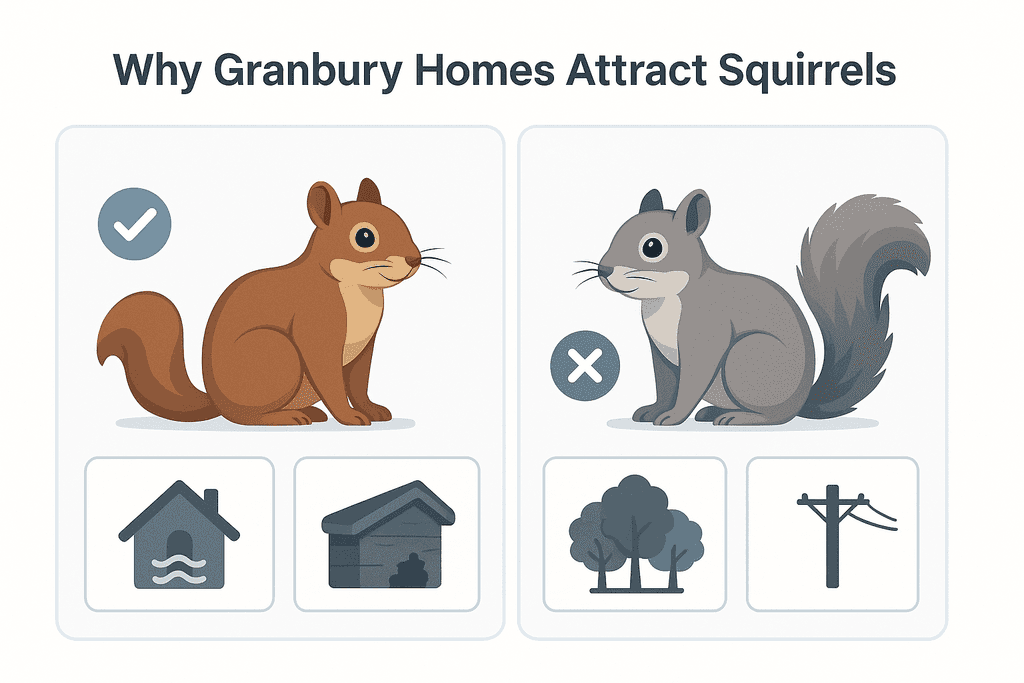
Common Squirrel Species in Granbury
Two types of squirrels cause most of the headaches for Granbury homeowners. Fox squirrels are the larger of the two, weighing up to two pounds and showing off their rusty-orange bellies. Gray squirrels are smaller and quicker, with their trademark gray coats and white undersides. Both species have adapted really well to living near humans, which means they've gotten pretty bold about moving into attics and crawl spaces.
The differences between these two species matter when it comes to dealing with them. Fox squirrels tend to be more aggressive and territorial, often causing more visible damage to roof lines and vents. Gray squirrels are sneakier and can squeeze through smaller openings, making them harder to keep out once they've found a way in.
| Characteristic | Fox Squirrels | Gray Squirrels |
|---|---|---|
| Size | 18-27 inches long, up to 2 lbs | 15-20 inches long, up to 1.5 lbs |
| Entry Point Size | Need 3-4 inch openings | Can fit through 2 inch gaps |
| Behavior | More aggressive, territorial | Faster, more cautious |
| Damage Type | Visible chewing on wood, shingles | Insulation damage, wire chewing |
| Nesting Season | December-February, May-June | January-April, July-August |
What Draws Squirrels to Your Property
Granbury's landscape is basically a squirrel buffet. The area's abundance of oak and pecan trees means there's always food available, especially in fall when nuts are dropping. These trees often hang over rooflines, giving squirrels easy access to your roof. Once they're up there, it's just a matter of time before they start looking for a way inside.
Your attic looks like a five-star hotel to a squirrel. It's warm, dry, and safe from predators like hawks and coyotes. During breeding seasons, female squirrels get desperate to find secure nesting spots, which is when most homeowners first notice they have unwanted guests. The scratching and scurrying sounds usually start early in the morning or right before sunset.
Vulnerable Spots Squirrels Target
Squirrels don't need much of an invitation to move in. They're looking for any weakness in your home's exterior, and older Granbury homes often have plenty of options. Roof vents are one of the most common entry points because the plastic or thin metal is easy for squirrels to chew through. Many homeowners don't realize there's a problem until they hear noises or notice droppings in the attic.
Here are the spots where squirrels typically break in:
- Roof vents and turbine vents with damaged screens or covers
- Soffit and fascia boards that have rotted or separated from the roofline
- Chimney caps that are missing or have gaps in the mesh
- Gable vents with broken or missing louvers
- Gaps where different roofing materials meet or around dormers
The construction style of many Granbury homes makes them especially vulnerable. Homes built in the 1970s and 1980s often have wood soffits that deteriorate over time. Once the wood gets soft from weather exposure, squirrels can chew right through it in less than an hour. Wildlife X Team's inspection process identifies these weak points before they become major problems.
Weather plays a bigger role than most people think. After storms or high winds, small gaps can open up in your roofline. Squirrels are constantly testing these spots, and they remember which houses have easy access. That's why you might see the same squirrel checking out your roof day after day.
The breeding seasons create extra urgency for squirrels to find shelter. Female squirrels need safe, warm spaces to raise their young, and your attic checks all the boxes. Understanding when these peak times occur helps homeowners stay alert for signs of intrusion:
- Late winter (January-February) when fox squirrels start nesting
- Early spring (March-April) during gray squirrel breeding season
- Late spring (May-June) for second fox squirrel litters
- Summer (July-August) when gray squirrels have their second breeding cycle
Once squirrels establish a nest in your attic, they rarely leave on their own. They'll keep coming back year after year, often bringing more family members with them. The damage adds up quickly, from chewed wiring that creates fire hazards to destroyed insulation that drives up your energy bills.
Spotting the Signs of Squirrel Activity
Squirrels can live in your attic for weeks before you even realize they're there. These furry intruders are surprisingly sneaky, but they always leave behind clues. The earlier you catch the problem, the less damage you'll deal with later. Most Granbury homeowners first notice something's wrong when they hear strange noises coming from above their heads.
Scratching and scurrying sounds are usually the first giveaway. You'll hear them most often during early morning hours or right before sunset when squirrels are most active. These aren't the light pitter-patter sounds of mice either. Squirrels are bigger and make more obvious thumping noises as they run across your attic floor.
- Check your roofline for chewed holes in soffits, fascia boards, or roof edges where squirrels create entry points
- Look for droppings in attic spaces that resemble small brown pellets scattered near nesting areas
- Watch for insulation damage where squirrels have torn up material to build nests
- Notice visible squirrels entering and exiting the same spot on your roof repeatedly
- Find nesting materials like leaves and twigs piled in attic corners or between rafters
The damage patterns tell you a lot about how long squirrels have been living rent-free in your home. Fresh chew marks look lighter in color compared to the surrounding wood. If you spot these signs, it's time to take action before the problem gets worse.
Quick Inspection Checklist
- Walk around your home's exterior and look up at the roofline for holes or damage
- Listen carefully in rooms below your attic during dawn and dusk hours
- Check your attic with a flashlight for droppings, nesting materials, or chewed wires
- Look for greasy rub marks along entry points where squirrels repeatedly enter
- Inspect insulation for compressed or torn areas that indicate nesting activity
Humane Removal Techniques That Work
Getting squirrels out of your attic isn't as simple as setting a trap and calling it done. The wrong approach can actually make things worse, especially if you accidentally separate a mother from her babies. Professional removal focuses on getting the entire family out safely without causing harm to the animals or your property. Wildlife X Team uses proven methods that work with squirrel behavior instead of against it.
One-way exclusion doors are one of the most effective tools for squirrel removal. These devices let squirrels leave your attic to search for food but prevent them from getting back inside. The beauty of this method is that it works with the squirrels' natural routine rather than trying to force them out.
This video shows practical techniques that professionals use to keep squirrels from returning once they've been removed. Live trapping is another option, but it requires proper bait placement and daily monitoring to ensure trapped animals don't suffer. You can't just set a trap and forget about it.
DIY Removal vs Professional Removal
DIY Approach: Lower upfront cost, but risks incomplete removal, potential for trapping babies inside, no warranty on work, and possible code violations with improper animal handling.
Professional Removal: Higher initial investment, but includes complete family extraction, proper licensing and insurance, guaranteed results with warranty coverage, and saves time and stress.
Here's something many homeowners don't realize until it's too late. Never seal entry points while squirrels are inside. This seems obvious, but it happens more often than you'd think. Trapped squirrels will cause massive damage trying to escape, and if babies are involved, the situation becomes even more complicated.
Baby squirrels require special handling during spring and fall when breeding seasons peak. Mother squirrels are extremely protective and will do whatever it takes to reach their young. That's why professional removal ensures the complete family unit gets extracted together. We've seen cases where DIY attempts left babies behind, and the mother squirrel tore through new repairs to get back to them.
Exclusion and Prevention Strategies
Removing squirrels is only half the battle. Without proper prevention measures, new squirrels will move into your attic within weeks of the original tenants leaving. The good news is that effective exclusion work creates a permanent barrier that keeps wildlife out for years. It's not about making your home squirrel-proof for a season, it's about long-term protection that actually lasts.
Install heavy-gauge mesh screens over all roof vents and openings as your first line of defense. Regular window screen material won't cut it because squirrels can chew through thin metal in minutes. You need commercial-grade materials that can withstand determined gnawing.
- Add chimney caps with proper sizing and secure mounting to prevent entry from above
- Repair damaged soffits and fascia boards with chew-resistant materials that squirrels can't penetrate
- Trim tree branches at least 8-10 feet away from your roofline to eliminate jumping access
- Seal foundation cracks and gaps larger than a quarter-inch where squirrels can squeeze through
The distance between tree branches and your roof matters more than most people think. Squirrels can jump surprisingly far, and overhanging branches basically serve as highways directly to your attic. That 8-10 foot clearance isn't a suggestion, it's the minimum distance needed to actually stop them.
Prevention Success Rate: Homes with professional exclusion work see a 95% reduction in wildlife re-entry compared to DIY repairs.
Cost Savings: Proper prevention costs 60-70% less than dealing with repeated infestations and ongoing damage repairs.
Energy Impact: Sealed entry points can reduce heating and cooling costs by 15-20% annually.
Wildlife X Team offers a renewable lifetime warranty on exclusion work, which means if squirrels find a way back in through our repairs, we come back and fix it at no additional cost. Most competitors in the Granbury area don't stand behind their work like that. Companies like Critter Control and Terminix typically offer shorter warranty periods that leave you vulnerable after the first year.
Attic Cleanup and Damage Restoration
Once the squirrels are gone, you're left with the mess they created during their stay. This isn't just about cleaning up a few droppings and calling it done. Squirrel infestations create serious health hazards that require professional attention. The contamination goes deeper than what you can see on the surface, and ignoring it puts your family at risk.
Squirrel urine and droppings create health hazards and odors that permeate your insulation and wooden structures. The smell alone can be overwhelming, but the real danger comes from the bacteria and parasites living in the waste. These pathogens can become airborne and circulate through your home's ventilation system.
- Damaged insulation loses R-value and increases your energy costs by 20-30% or more
- Chewed wiring poses serious fire risks that need immediate repair by licensed electricians
- Professional sanitization eliminates parasites and bacteria that DIY cleaning can't address
- Insulation replacement restores energy efficiency to pre-infestation levels
The fire risk from chewed wiring is something insurance companies take very seriously. Squirrels gnaw on electrical cables because their teeth never stop growing, and they need to wear them down constantly. One exposed wire is all it takes to start an attic fire that can destroy your entire home.
Real Results from a Granbury Homeowner
"We had a squirrel party in our attic. They came out to give an estimate and got to work on the spot. One entry point was obvious and I'd considered closing it up myself, but they found a couple of others I never would have. Great, quick work, and no squirrels, now months later!" - Jesse Bernard
Complete restoration prevents attracting new wildlife to your property. Animals can smell the scent markers left behind by previous occupants, and these odors actually attract new squirrels looking for a place to nest. Professional cleanup removes these biological signals completely, making your attic less appealing to future invaders. Our attic restoration service includes full insulation replacement, sanitization, and sealing of all entry points to give you a fresh start.
Protecting Your Granbury Home Long-Term
Dealing with squirrels in your attic isn't something you want to put off. The longer they stay, the more damage they cause to your insulation, wiring, and wood structures. Catching the problem early means you'll spend less money on repairs and avoid the health risks that come with squirrel droppings and urine. Most homeowners don't realize how much damage can happen in just a few weeks.
The best approach combines humane removal with professional exclusion work. Just getting the squirrels out doesn't solve anything if they can walk right back in through the same holes. That's where proper sealing and animal-proofing makes all the difference.
Wildlife X Team handles both parts for Granbury homeowners. We remove the squirrels safely, then seal up every entry point so they can't return. Our Wildlife Inspection Report identifies weak spots you probably didn't know existed, like gaps in your roof line or damaged vents.
Regular inspections catch problems before they turn into full-blown infestations. A small gap in your soffit today could mean a family of squirrels next month. The homes that stay squirrel-free are the ones that get ahead of the problem.
Professional help costs less than you'd think, especially compared to the damage squirrels cause when left alone. Our renewable lifetime warranty means you're covered long after the initial work is done. You probably have questions about how the whole process works, what it costs, and how long it takes.
Common Questions About Squirrel Removal
Granbury homeowners dealing with squirrels often have similar concerns about the removal process. Getting straight answers helps you make better decisions about protecting your home. Here are the questions we hear most often from property owners in the area, along with honest answers that cut through the confusion.
How much does professional squirrel removal cost?
Professional squirrel removal in Granbury typically ranges from $300 to $1,500 depending on the severity of the infestation and how many entry points need sealing. The cost includes inspection, humane removal, and exclusion work to prevent future problems. Wildlife X Team provides detailed estimates after inspecting your property, so you know exactly what you're paying for before any work begins.
Can I remove squirrels myself safely?
While it's technically possible to attempt DIY squirrel removal, it comes with serious risks most homeowners don't consider. Squirrels can bite when cornered, potentially transmitting diseases like rabies or leptospirosis. You also need to identify every entry point, which professionals find much easier since they know exactly what to look for. Missing even one hole means the squirrels will return within days.
How long does the removal process take?
Most squirrel removal projects take between 1 to 3 days from start to finish. The timeline depends on how many squirrels are present and the complexity of sealing entry points. Some companies drag out the process, but Wildlife X Team often starts work the same day as the inspection if the situation allows it.
Will squirrels come back after removal?
Squirrels will absolutely return if entry points aren't properly sealed with durable materials. That's why exclusion work matters just as much as removal itself. Wildlife X Team offers a renewable lifetime warranty on their work, which means if squirrels find a way back in through a sealed area, they'll fix it at no additional cost.
What time of year do squirrels invade attics?
Squirrels typically invade attics during two peak seasons: late winter through early spring when females need nesting sites for babies, and fall when they're preparing for winter. However, squirrels can move into your attic any time of year if they find an opening. The warmer months just see more activity overall.
Are squirrels dangerous to humans or pets?
Squirrels pose several health risks beyond just property damage. They carry parasites like fleas, ticks, and mites that can spread to pets and humans. Their droppings contain harmful bacteria and fungi that become airborne when disturbed. Squirrels also chew through electrical wiring, which causes house fires more often than most people realize. The combination of health hazards and fire risk makes professional removal worth the investment.