
Squirrel Removal in Keller TX for Attics and Entry Point Sealing
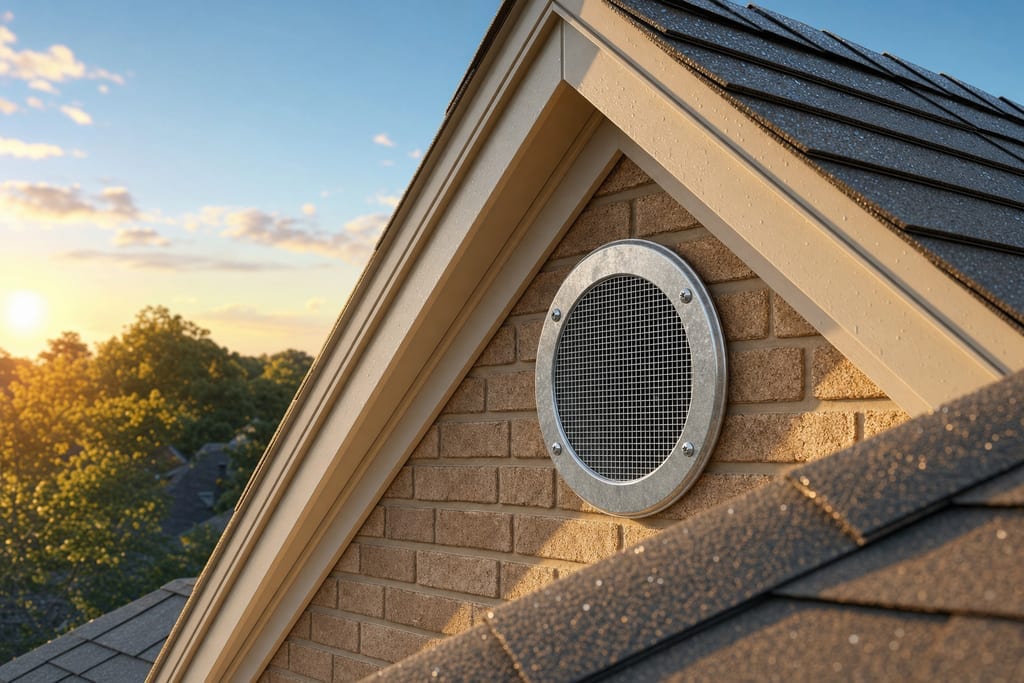
A squirrel can chew a brand new hole into a roofline in under an hour, which is why squirrel removal in Keller TX almost always comes with a story about a gap nobody noticed last week. Keller's mature trees are part of the problem. Thick oak and pecan canopies put roof edges and eaves within easy jumping distance, so a squirrel never has to touch the ground to get from branch to attic.
Once they're in, they chew insulation, wiring, and soffit boards to build a nest, and a mother squirrel will keep using that same opening to come and go all season. Trapping or removing the animals helps for a day or two, but if the entry point stays open, another squirrel usually finds it within weeks. The hole has to be sealed, and sealed well, or the whole cycle starts over.
Table of Contents
Why Keller Attics Attract Nesting Squirrels
Neighborhoods across Keller, Southlake, and Colleyville share one trait that keeps squirrels interested: mature oak canopies that shade whole streets. Those branches put a squirrel within a few feet of a roofline for blocks at a stretch, so there's rarely a shortage of jumping points even on homes set back from the tree line.
Timing matters too. Squirrels build two litters a year in North Texas, one in late winter and one in early fall, and both periods push females to find warm, dry spots fast. An attic that's been quiet all summer can get a new tenant within days once that search starts.
Roof vents are the weak spot most owners miss, since the plastic louvers crack or warp and squirrels pry them open without much effort. Gaps along the fascia board, where it meets the roof decking, give a similar opening, and loose or uncapped chimneys work the same way from the top down.
Not every entry point carries the same risk. Roof vents and fascia gaps near large trees see the most repeat activity, while chimney caps and dryer vents tend to get used once a squirrel has already exhausted the easier spots.
Signs Squirrels Have Already Moved In
Squirrels are active during the day, so scratching, rolling, or thumping sounds overhead in daylight almost always point to squirrels rather than rats or mice. Rats move at night and stay quiet by comparison. A pattern of noise right around sunrise and again near sunset usually means a mother is leaving to forage and coming back to a nest.
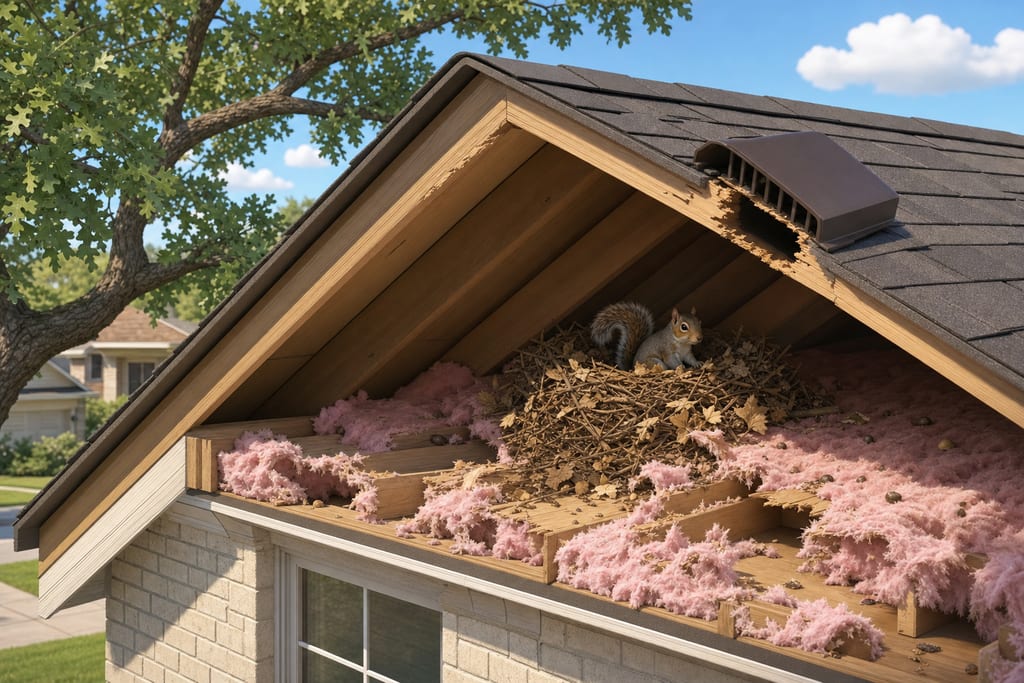
Chewed wiring, shredded insulation pulled into a loose pile, and droppings near the attic hatch are the physical signs that back up the sound. Squirrels gather soft material for bedding, so insulation often looks torn apart rather than just compressed. A few things worth checking against each other before calling anyone out:
- Noise timing: daytime activity points to squirrels, nighttime points to rats
- Insulation condition: shredded and piled versus flattened and intact
- Wiring: chew marks near the hatch or along joists
- Droppings: clustered near one entry versus scattered
A Wildlife Inspection Report maps every active and potential opening on the roofline, not just the one that's obvious from the ground. Missing even one entry point means the problem comes back within weeks, so the inspection matters as much as the removal itself.
How Humane Removal and Attic Cleanup Work
Removal starts with one-way doors fitted over active openings, which let squirrels leave to forage but block them from getting back in. Technicians check for a litter of babies before any door goes up or any gap gets closed, since sealing a nest with young squirrels inside creates a bigger problem than the one being solved.
Once the attic is confirmed empty, cleanup follows a set order:
- Remove contaminated insulation and nesting material
- Disinfect the space to clear droppings and urine odor
- Install new insulation to restore R-value
- Seal the opening once the space is confirmed clear
The sequence matters because sealing before the attic is disinfected just traps the smell and the health risk behind new material. No opening gets closed until technicians confirm no young squirrels remain inside, which keeps the removal humane on both ends of the job.
Why Keller Homeowners Trust This Sealing Process
Sealing holds up when the materials match what a squirrel can actually chew through. Steel mesh, hardware cloth, and sealed vent guards replace the foam, wood scraps, or wire screen that homeowners often try first and that squirrels work through in days.
A zoologist-trained team also looks past the obvious hole, since squirrels rarely use just one way in once a home is established as a nesting site. One Keller customer, Jesse Bernard, described exactly this: the team found a couple of extra entry points beyond the one he'd already planned to patch himself, and months later the attic was still squirrel-free. That kind of check matters because a single missed gap undoes the rest of the repair:
- Steel mesh over vents and gable openings
- Hardware cloth across larger gaps in fascia or soffit
- Sealed caps on chimneys and uncapped flues
- A secondary inspection pass for openings the first pass missed
A renewable lifetime warranty backs every repaired area, so if a new gap opens up years later from weather or wear, the fix is covered going forward.
What Squirrel Removal Costs and How to Book It
Cost comes down to three things: how many entry points are found, how large the attic is, and how much insulation needs to be replaced. A single vent repair runs far less than a job with three or four openings and a fully contaminated attic floor.
A free inspection gives an itemized plan before any work starts, so the cost is tied to what's actually found rather than a flat estimate. Before booking, it helps to have a few answers ready:
- How long the noise or damage has been noticed
- Whether droppings or chew marks are visible from the attic hatch
- Roughly how old the roof and vents are
Trapping alone without sealing the entry point means paying for the same job again within a season, while trapping paired with full exclusion repair closes that cycle for good. Call Wildlife X Team at (817) 799-8686, or stop by 11833 Katy Rd in Keller, to get the inspection scheduled.
Trap Only or Trap and Seal
Hiring someone to trap and leave is a choice, and it's a cheaper one up front. But a squirrel that lost its den doesn't give up on the roofline, it comes back to the same gap within days if the hole is still open, often before the first trap is even picked up.
Outfits that only trap tend to get called back to the same house within a season. Companies that pair removal with exclusion work see far fewer repeat visits, because the animal physically can't get back to the spot it already knew.
That matters more in neighborhoods with heavy tree cover, which is most of this area. Keller, Southlake, Grapevine, Colleyville, North Richland Hills, and Roanoke all share the same oak and pecan canopies that make a roofline an easy jump, so the exclusion work carries the same weight across every one of those streets.
The trade-off is cost and time on day one. Sealing takes longer than setting a trap and costs more at the start, but it's the only version of the job that doesn't need repeating.
When to Pick Up the Phone About That Attic Noise
Every week a gap stays open is another week of chewed wiring and torn insulation, and that damage doesn't slow down on its own. Winter nesting season is coming, and openings that go unsealed now are the ones a female squirrel finds first when she's hunting for a warm spot in a few months. Technicians who work Keller streets already know which vents, fascia gaps, and chimney caps give way first on these roofs, so an inspection moves faster than guessing at it alone. Call Wildlife X Team at (817) 799-8686 and get a date on the calendar before the noise overhead turns into a second litter in the insulation.
Squirrel Removal Questions Keller Homeowners Ask
Can squirrels chew through a metal vent guard once it's installed?
A properly fitted steel mesh or hardware cloth guard holds up against squirrel teeth, which is why those materials replace foam and wire screen in the first place. The risk isn't the metal failing, it's a guard that was cut too small or not anchored well. That's why a secondary inspection pass matters before the job is called done.
What happens if a mother squirrel keeps returning after her babies are removed?
She won't find a way back in if the opening is sealed correctly, but she will stay close and search the roofline for days first. That's normal and expected. One-way doors and a confirmed empty attic before sealing are what stop her from finding a new gap to use instead.
Will the repair work match the color of my existing roofline or siding?
Sealed vent guards, fascia patches, and chimney caps are installed to blend with the surrounding material, not stand out as a visible patch. Wildlife X Team technicians match materials to the existing roofline during the repair, so the fix doesn't look like a separate project bolted onto the house.
How long does a typical squirrel removal and sealing job take from start to finish?
Most jobs run one to two visits, depending on how many entry points turn up and whether a litter needs time to leave through a one-way door before sealing. A single vent repair can close out in one visit. A fully contaminated attic with multiple openings and insulation replacement takes longer to finish properly.