
Squirrel Attic Removal in Fort Worth That Stops Repeat Entry
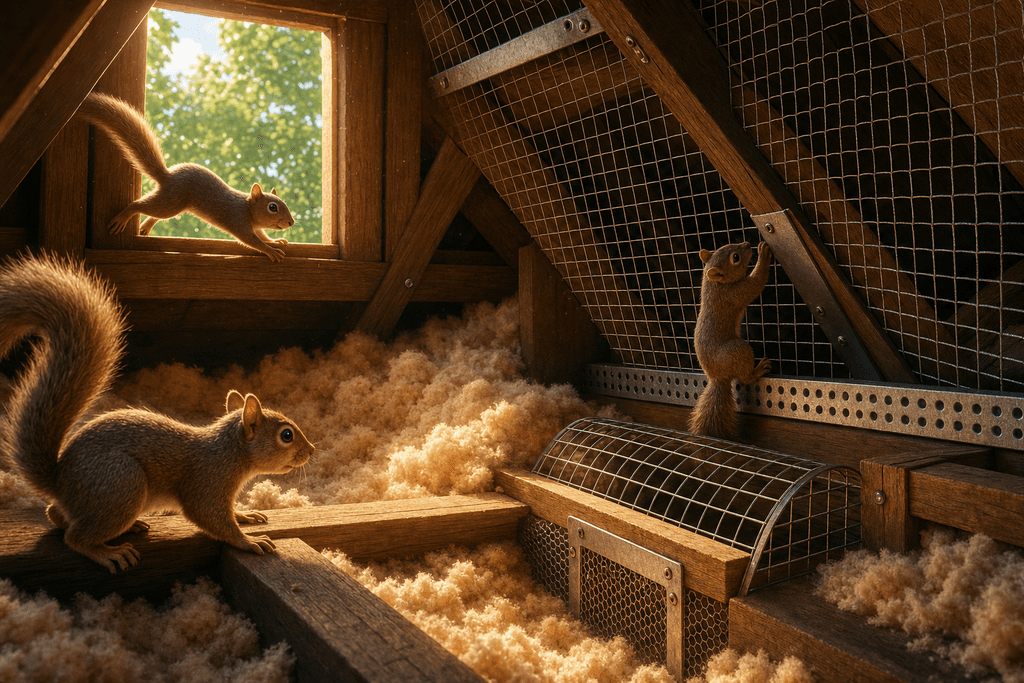
You finally trap that squirrel scratching around in your attic, release it a few miles away, and feel relieved. Two weeks later, you hear the same scurrying sounds because squirrels can squeeze through openings as small as a golf ball, and sealing those entry points is what actually stops them from coming back. Most Fort Worth homeowners discover that eliminating squirrels in the attic requires more than just removal—it demands professional exclusion work that addresses every vulnerable spot in your roofline, vents, and soffits.
Table of Contents
- The Fort Worth Squirrel Problem
- How Professional Squirrel Removal Actually Works
- Exclusion Work That Prevents Future Invasions
- Attic Cleanup and Damage Restoration
- Why DIY Squirrel Removal Fails Most Homeowners
- Getting Squirrels Out and Keeping Them Out
- Common Questions About Squirrel Removal in Fort Worth
The Fort Worth Squirrel Problem
Fort Worth homeowners deal with more squirrel invasions than almost any other Texas city, and it's not just bad luck. The city's layout creates a perfect storm for these furry intruders. With thousands of mature oak and pecan trees lining residential streets, combined with older homes built before modern wildlife exclusion standards, squirrels have everything they need to thrive and break into your attic.
The problem gets worse during specific times of year. Spring and fall are peak nesting seasons, when female squirrels desperately search for warm, safe places to raise their babies. Your attic checks every box on their wish list.
Why Fort Worth Homes Are Squirrel Magnets
The typical Fort Worth home was built between the 1950s and 1980s, and these houses have specific weak points that squirrels exploit. Most homeowners don't even know these entry points exist until they hear scratching sounds above their bedroom ceiling.
67% of Fort Worth homes have at least one vulnerable entry point that squirrels can exploit within 15 minutes of trying.
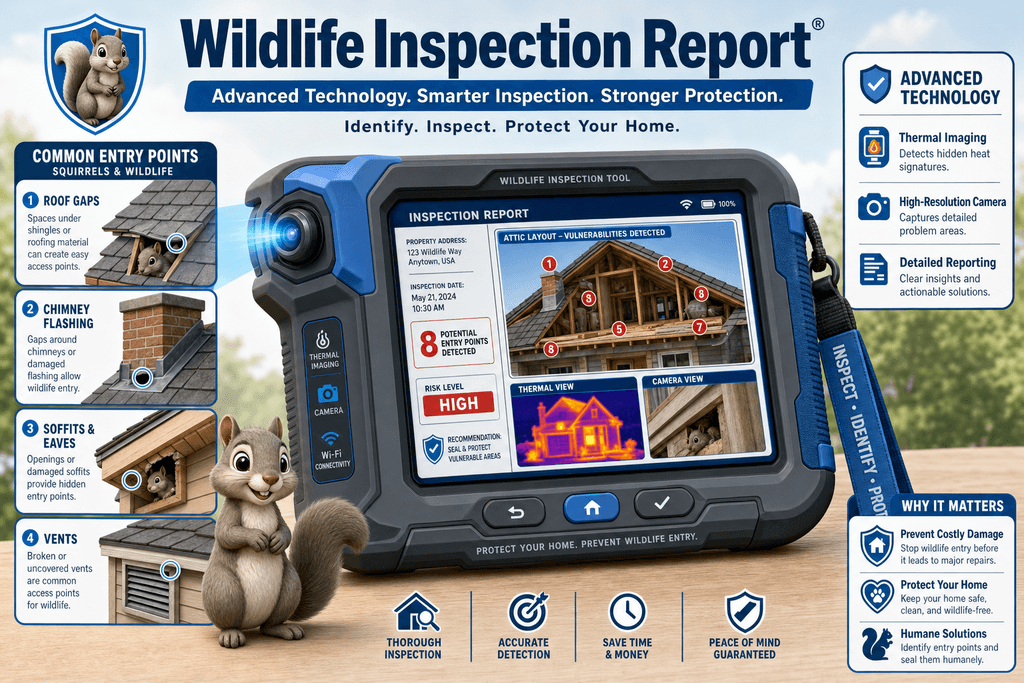
Common entry points include:
- Roof vents with damaged or missing screens
- Soffit intersections where two roof lines meet
- Fascia boards weakened by Texas heat and weather
- Gable vents with decorative openings
- Chimney caps that have rusted or fallen off
Understanding how squirrels get inside is the first step to eliminating squirrels in the attic for good. This video shows exactly what you're dealing with:
The Damage Timeline
Once squirrels move in, the clock starts ticking on serious damage. They don't just nest quietly in a corner. These animals chew constantly because their teeth never stop growing.
A single squirrel family can cause $3,000 to $8,000 in attic damage within just 3-6 months.
What they destroy:
- Electrical wiring that can create fire hazards
- Insulation that gets compressed and contaminated
- HVAC ducts that leak conditioned air
- Wooden support beams and roof decking
Why DIY Methods Fail in Fort Worth
Many Fort Worth homeowners try to handle squirrel removal themselves after finding advice online or from big-box pest control companies like Terminix. The problem is that eliminating squirrels in the attic requires finding every single entry point, not just the obvious ones. Wildlife X Team's inspection process identifies vulnerabilities that untrained eyes miss completely.
Most DIY attempts fail because:
- Homeowners seal the main entry but miss secondary holes
- Squirrels get trapped inside and cause even more damage trying to escape
- Baby squirrels are left behind and die in the walls
- The same squirrels return within weeks through new entry points
82% of DIY squirrel removal attempts result in the squirrels returning within 30 days.
The Fort Worth climate makes the problem unique too. Hot summers drive squirrels to seek cooler attic spaces during the day, while mild winters mean they stay active year-round instead of hibernating like in northern states. This means there's never really an "off season" for squirrel invasions in North Texas.
How Professional Squirrel Removal Actually Works
Squirrels can chew through wood, vinyl, and even some metals to get into your attic, and once they're in, they rarely leave on their own. The scratching sounds you hear at dawn aren't just annoying—they're a sign of an infestation that's probably worse than you think. Most homeowners only notice the obvious entry point, like a hole near the roofline, but squirrels typically create multiple access routes. That's where professional removal makes all the difference.
The inspection process reveals what you can't see from the ground. Wildlife X Team's Wildlife Inspection Report® documents every vulnerability in your home's exterior, from tiny gaps in soffit vents to damaged fascia boards. This isn't a quick walk-around. It's a detailed assessment that identifies active entry points, potential weak spots, and signs of squirrel activity you might have missed.
- Technicians check the entire roofline, not just where you've seen squirrels
- Thermal imaging can detect hidden nests inside walls
- Droppings and chew marks reveal how long squirrels have been present
- Entry points are measured and photographed for the exclusion plan
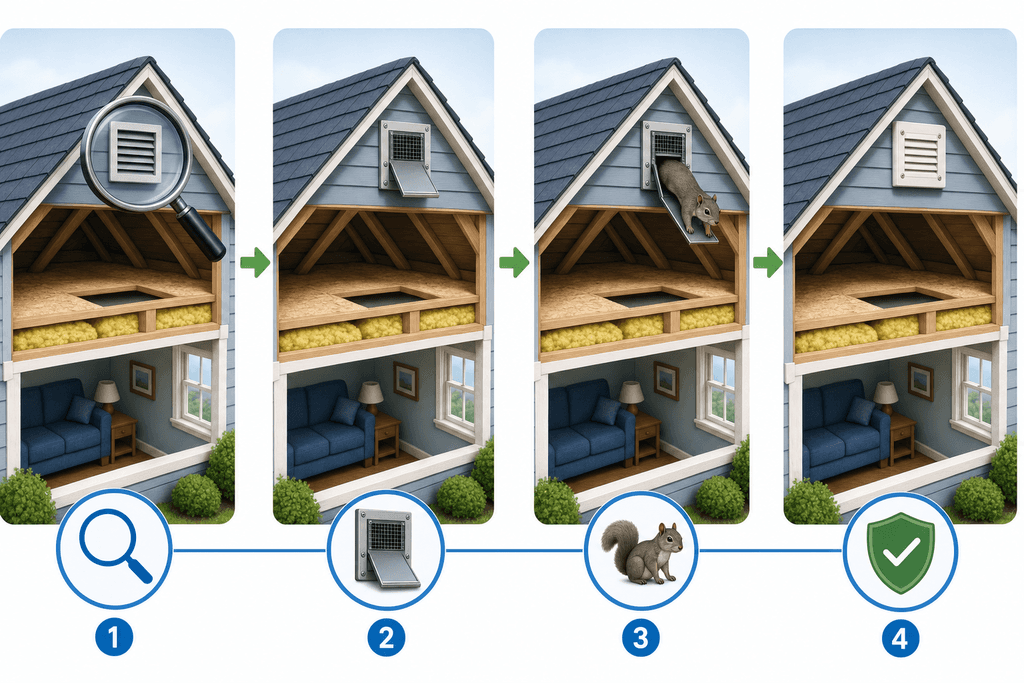
One-way exclusion doors are the humane solution for eliminating squirrels in the attic. These devices let squirrels exit through their usual routes but prevent them from getting back in. Timing matters more than most people realize. Baby squirrels can't leave on their own, so removal during breeding season requires different handling to avoid trapping young animals inside.
The video above shows proven methods for keeping squirrels out once they've been removed. But removal is only half the job. Without proper exclusion work, you'll be dealing with the same problem in a few months.
Exclusion Work That Prevents Future Invasions
Here's what separates professional exclusion from a DIY attempt: professionals seal every potential entry point, not just the active ones. Squirrels are persistent, and they'll test your home's defenses until they find a way back in. A gap as small as two inches is all they need. The materials matter just as much as the technique. Hardware cloth works for some areas, but roof edges need metal flashing, and small cracks require specialized caulking that squirrels can't chew through.
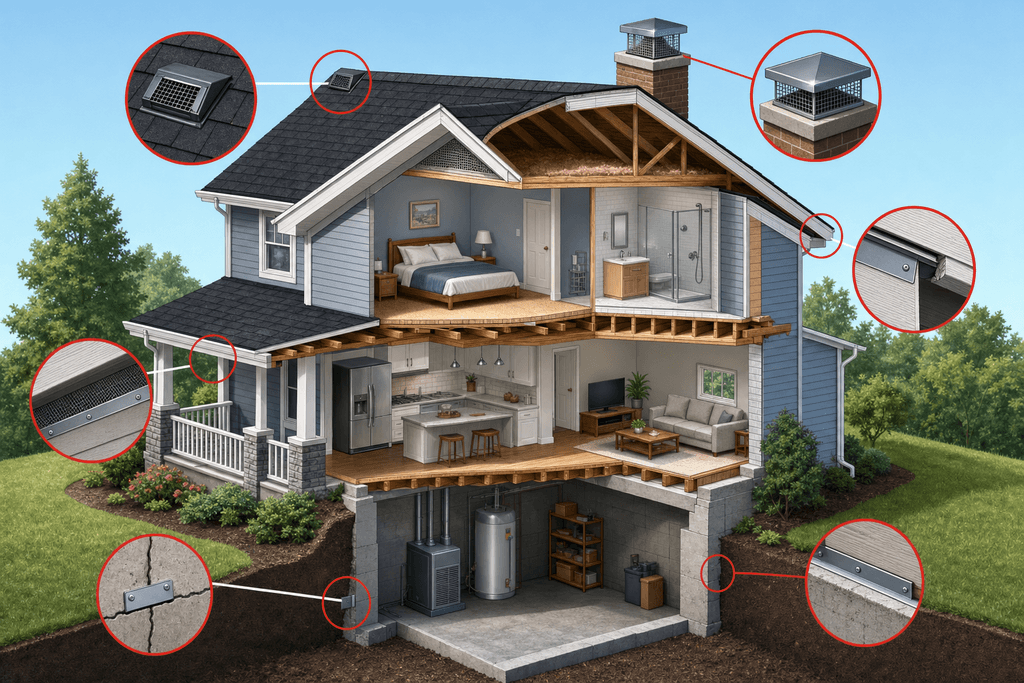
Roof repairs often become necessary because squirrels don't just use existing holes—they create them. They'll chew through wooden trim, enlarge small gaps in siding, and tear away damaged shingles. Wildlife X Team's exclusion services cover everything from foundation vents to chimney caps, creating a complete barrier against re-entry.
- All active entry points are sealed after squirrels have left
- Vulnerable areas get reinforced with chew-proof materials
- Vent guards are installed on all roof and gable vents
- Chimney caps prevent access through the flue
- Fascia boards and soffits are repaired where damaged
Most homeowners underestimate how many weak spots their home has. What looks like solid construction from the ground often has gaps where different materials meet. The junction between brick and siding, the space around utility lines, and the edges of roof vents are all common entry points that need attention.
Companies like Critter Control and Terminix offer wildlife removal, but the quality of exclusion work varies widely. Some services focus on quick fixes rather than comprehensive protection. The difference shows up months later when squirrels find their way back in through an unsealed gap.
Attic Cleanup and Damage Restoration
The mess squirrels leave behind isn't just unpleasant—it's a health hazard and an invitation for more wildlife. Squirrel droppings and urine create odors that attract other animals, and the pheromone trails they leave act like a roadmap for future invaders. Damaged insulation loses its effectiveness, which means higher energy bills even after the squirrels are gone. But the real concern is what you can't see.
Chewed wiring is surprisingly common in squirrel-infested attics. These exposed wires create fire risks that most homeowners don't discover until an inspection. Professional attic cleanup includes assessment of all potential damage, not just the visible mess.
- All contaminated insulation is removed and disposed of properly
- Attic surfaces are disinfected to eliminate disease-causing bacteria
- Odor-neutralizing treatments break down pheromone trails
- New insulation is installed to restore energy efficiency
- Electrical wiring is inspected for damage
The cleanup phase is where many wildlife removal companies cut corners. They'll remove the animals and seal the holes, but skip the sanitation work that prevents future problems. Wildlife X Team's attic cleanup and restoration service addresses the complete problem, from removing contaminated materials to replacing damaged insulation.
Energy costs can increase by 20-30% when attic insulation is compressed or contaminated by wildlife waste. That's money you're losing every month until the problem gets fixed. The restoration process brings your attic back to proper condition, which means lower utility bills and better protection against the elements.
Jesse Bernard's experience shows why comprehensive service matters. After Wildlife X Team worked on his home, he found entry points he never would have discovered on his own. Months later, still no squirrels. That's the result of thorough inspection, complete exclusion, and proper cleanup working together.
Why DIY Squirrel Removal Fails Most Homeowners
Most homeowners who attempt eliminating squirrels in the attic on their own end up spending more money and time than if they'd called a professional from the start. The problem isn't that people are lazy or incapable. It's that squirrels are way better at finding entry points than we are at spotting them. What looks like a simple fix from the ground level is usually just the tip of the iceberg when it comes to actual access points these animals use.
The Entry Point Problem
Jesse Bernard's experience with Wildlife X Team perfectly illustrates this issue. He spotted one obvious entry point and almost sealed it himself. But the professionals found several others he never would have discovered. This isn't unusual at all.
- Average homeowners typically find 1-2 entry points during their inspection
- Professional wildlife technicians routinely discover 5-8 access points on the same property
- Hidden entry points under soffits, behind fascia boards, and in roof valleys go unnoticed
- Squirrels only need a hole the size of a golf ball to squeeze through
When you miss even one entry point, the squirrels come right back. You've wasted money on materials and your weekend on a temporary fix that doesn't last.
Timing Mistakes That Make Things Worse
Sealing up holes at the wrong time creates a nightmare scenario that most DIYers don't consider. Baby squirrels are born twice a year, and if you trap them inside your attic, they'll die there. The smell alone is unbearable, but you've also created a situation where the mother squirrel will tear through your roof to get back to her babies.
- Spring litters arrive between March and April
- Fall litters come between August and September
- Trapped babies create odor problems and attract other pests
- Mother squirrels cause additional damage trying to reach sealed-in offspring
Why Store-Bought Solutions Don't Work
Walk into any hardware store and you'll find shelves full of squirrel repellents, ultrasonic devices, and deterrent sprays. Companies like Terminix and others sell these products knowing they provide minimal long-term results. Squirrels adapt quickly to smells and sounds, especially when your warm attic is the best shelter option available.
- Chemical repellents wash away with rain and lose effectiveness within days
- Ultrasonic devices work for a week or two before squirrels ignore them
- Mothballs and ammonia-soaked rags are temporary at best
Wildlife X Team's approach focuses on physical exclusion and structural repairs rather than gimmicks. Their Wildlife Inspection Report identifies every vulnerability, and their Renewable Lifetime Warranty means if squirrels find a way back in, they'll fix it. That's protection no DIY method can match.
Getting Squirrels Out and Keeping Them Out
Eliminating squirrels in the attic isn't just about getting them out of your house. The real challenge is making sure they can't get back in, which is where most homeowners run into trouble. You can patch the obvious hole yourself, but squirrels are smart enough to find the entry points you didn't even know existed. That's why professional inspection matters more than most people realize.
Wildlife X Team handles both parts of the equation for Fort Worth area homeowners. We remove the squirrels that are already living in your attic and then seal up every possible way they could return. Our team serves Fort Worth, Keller, Southlake, and surrounding areas with inspections that find the hidden gaps most people miss.
The difference between a temporary fix and a permanent solution comes down to how thorough the exclusion work is. Our Renewable Lifetime Warranty backs up the work because we know the entry points stay sealed when done right.
If you're hearing scratching sounds above your ceiling or finding chewed wires in your attic, those problems only get worse with time. You can call (817) 799-8686 to schedule an inspection, and we often have same-day service available for urgent situations.
The questions below cover what most homeowners want to know about the removal process and what happens after the squirrels are gone.
Common Questions About Squirrel Removal in Fort Worth
Most homeowners dealing with squirrels in their attic have similar concerns about the removal process. The questions below cover everything from timing and costs to long-term prevention. Understanding what to expect helps you make better decisions about eliminating squirrels in the attic and keeping them out for good.
How long does squirrel removal take?
The actual removal process typically takes one to three days, depending on how many squirrels are present and how many entry points need to be sealed. Wildlife X Team starts by installing one-way doors that let squirrels exit but not re-enter, then waits to confirm all animals have left before sealing everything permanently. The entire process from inspection to final exclusion usually wraps up within a week.
What's the best time of year for squirrel removal?
Late fall and winter are ideal for eliminating squirrels in the attic because babies aren't present during these months. Spring and early summer can be tricky since mother squirrels often have young in nests, which requires extra care to reunite families before exclusion. That said, squirrel problems shouldn't wait if they're causing damage, and professionals can handle removal safely year-round.
Can squirrels chew through exclusion materials?
Squirrels can chew through wood, plastic, and even some metals if the material is thin enough. Professional exclusion work uses heavy-gauge steel mesh and metal flashing that squirrels can't penetrate. Wildlife X Team installs materials specifically designed to withstand gnawing, which is why their exclusion work comes with a renewable lifetime warranty.
How much does professional squirrel removal cost?
Costs vary based on the severity of the infestation and how many entry points need sealing. Most Fort Worth homeowners pay between a few hundred to over a thousand dollars for complete removal and exclusion. While some companies like Critter Stop or Omega Animal Removal may quote different rates, the investment prevents ongoing damage that costs far more to repair later.
Will squirrels come back after removal?
Squirrels will absolutely try to return if entry points aren't properly sealed. They have strong homing instincts and remember where they found shelter before. This is why exclusion work matters more than just trapping and relocating the animals. Wildlife X Team's approach focuses on permanent barriers that stop repeat entry, not just temporary fixes.
Do you offer warranties on exclusion work?
Yes, Wildlife X Team provides a renewable lifetime warranty on their exclusion services. This means if squirrels find a way back in through the areas they've sealed, they'll return to fix the problem at no additional cost. Most competitors offer shorter warranty periods, but long-term protection requires backing up the work with guarantees that last.