
Snake Removal in Granbury TX for Homes, Yards, and Garages

Finding a snake coiled in your garage or slithering across your backyard isn't just startling—it's a safety concern that needs immediate attention. Granbury's proximity to the Brazos River and surrounding natural areas creates perfect conditions for snakes seeking food, water, and shelter, often leading them straight into residential properties. While some homeowners attempt DIY removal, professional snake removal Granbury TX services like Wildlife X Team ensure both your family's safety and humane handling of these often misunderstood creatures.
Table of Contents
Understanding Granbury's Snake Population
Granbury sits right in the heart of North Texas, where snakes have lived for thousands of years before any houses showed up. The area around Lake Granbury and the Brazos River creates perfect conditions for these reptiles to thrive. Most homeowners don't realize that their yards might be home to several different snake species, some harmless and others potentially dangerous. Understanding which snakes live in your area and why they're attracted to your property is the first step in dealing with them safely.
Common Snake Species in Granbury
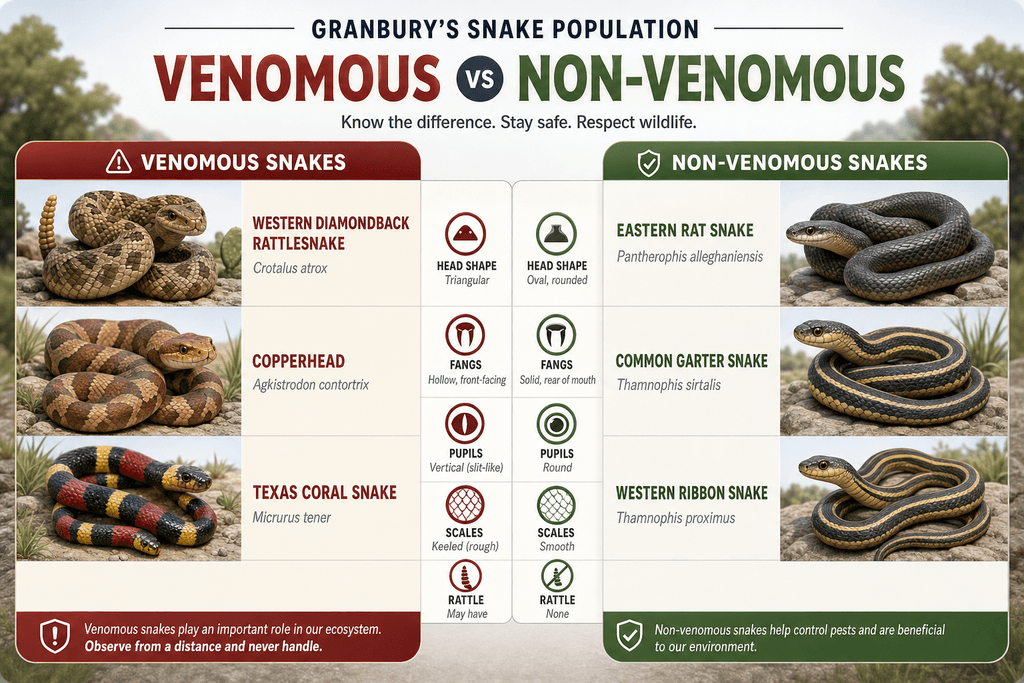
The Granbury area hosts about a dozen different snake species that regularly show up in yards and homes. Rat snakes are probably the most common visitors, often found in attics and garages hunting for mice. These black or gray snakes can grow pretty long, sometimes reaching six feet, which scares people even though they're completely harmless.
Water snakes love the areas near Lake Granbury and local creeks. They're often mistaken for the dangerous water moccasin, but most water snakes around here aren't venomous. The real concern comes from the venomous species that also call Granbury home.
- Texas rat snakes (non-venomous, excellent climbers)
- Western diamondback rattlesnakes (venomous, distinctive rattle)
- Copperheads (venomous, tan and brown bands)
- Rough green snakes (non-venomous, bright green color)
- Blotched water snakes (non-venomous, often near water)
When Snakes Are Most Active
Snake activity in Granbury follows a pretty predictable pattern throughout the year. Spring and fall are when you'll see the most snakes, as they're out hunting and looking for mates. Summer heat drives them to be more active at night, which is when many homeowners accidentally encounter them on evening walks or when taking out the trash.
Winter brings a slowdown, but don't think snakes disappear completely. They look for warm spots to hide, and your home's foundation, crawl space, or attic can be exactly what they need. Professional snake removal in Granbury TX becomes especially important during spring when snakes emerge hungry and more aggressive than usual.
- March through May: Peak activity as snakes emerge from winter hiding
- June through August: Nocturnal activity increases due to heat
- September through November: Second peak as snakes prepare for winter
- December through February: Reduced activity but snakes seek warm shelter
Why Your Property Attracts Snakes
Snakes don't randomly show up in your yard. They're following food sources, mainly rodents like mice and rats. If you've got a rodent problem, you're basically setting out a buffet sign for snakes. Bird feeders attract rodents, which then attract snakes, creating a chain reaction most homeowners never consider.
Water sources are another major draw. Leaky outdoor faucets, pet water bowls, and decorative ponds all bring snakes closer to your home. They need to drink regularly, especially during hot Texas summers. Shelter matters too, and most yards offer plenty of it without homeowners realizing.
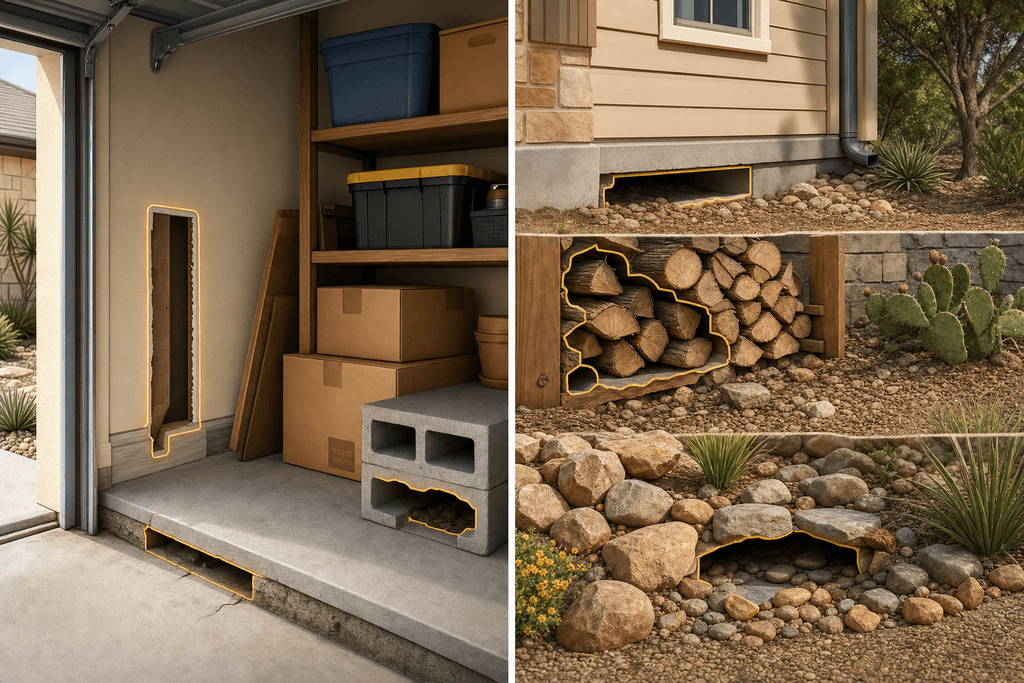
- Wood piles and debris stacks provide perfect hiding spots
- Overgrown vegetation creates cool, shaded areas snakes love
- Rock gardens and stone walls offer crevices for shelter
- Gaps under sheds and decks make ideal snake dens
Wildlife X Team's inspection process identifies these attractants during their Wildlife Inspection Report, helping homeowners understand exactly why snakes keep showing up. The company's approach goes beyond just removing the snake you see today.
Venomous vs Non-Venomous Identification
Knowing the difference between dangerous and harmless snakes can literally save your life. Texas has four venomous snake species, and two of them live right here in Granbury. The problem is that many harmless snakes have developed patterns and behaviors that mimic venomous ones as a defense mechanism, which confuses people.
The shape of a snake's head is often mentioned as a way to identify venomous species, but this method isn't reliable. Some non-venomous snakes flatten their heads when threatened, making them look triangular like a venomous snake. Eye shape is better, but you'd need to get dangerously close to check.
| Feature | Venomous Snakes | Non-Venomous Snakes |
|---|---|---|
| Eye Pupils | Vertical slits (like cat eyes) | Round pupils |
| Heat Sensing Pits | Present between eye and nostril | Not present |
| Tail | Rattlesnakes have rattles, others taper quickly | Gradually tapers to point |
| Common Local Species | Copperheads, Western Diamondback Rattlesnakes | Rat Snakes, Water Snakes, Rough Green Snakes |
| Behavior When Threatened | Often stand ground, may rattle or hiss loudly | Usually try to escape quickly |
The safest approach is simple. Treat every snake as potentially dangerous and call for professional snake removal in Granbury TX instead of trying to handle it yourself. Even non-venomous snakes can bite when cornered, and their bites can get infected. Companies like Wildlife X Team have trained specialists who can identify species from a safe distance and remove them using humane methods that protect both you and the snake.
Signs You Have a Snake Problem
Finding a snake skin draped across your garage floor is one of those moments that makes your heart skip a beat. Snakes shed their skin as they grow, and discovering these translucent casings around your Granbury property is a clear sign you've got unwelcome visitors. These skins often show up in quiet, undisturbed areas like under decks, in crawl spaces, or tucked behind storage boxes. The presence of shed skin means a snake has been living close to your home long enough to outgrow its old skin, which happens several times a year for most species.
Your pets often know about snake problems before you do. Dogs and cats will act strangely around certain areas of your yard, barking at seemingly nothing or refusing to go near specific spots. This behavior isn't random.
Common Warning Signs
- Shed snake skins in garages, sheds, or under porches and decks
- Unusual pet behavior like excessive barking or avoiding certain yard areas
- Snake tracks or trails visible in dusty areas of your property
- Actual sightings of snakes near foundations, in flower beds, or around water features
- Increased rodent activity which serves as a food source that attracts snakes
- Small holes or gaps around your foundation that snakes use as entry points
Granbury homes near Lake Granbury or wooded areas see more snake activity, but even properties in developed neighborhoods aren't immune. Snakes love hiding in wood piles, rock gardens, tall grass, and areas with dense ground cover. They're also drawn to cool, damp spaces during hot Texas summers, which is why you might spot them near air conditioning units or irrigation systems.
If you're seeing more mice or rats around your property, snakes won't be far behind. Rodents are a primary food source, and where prey goes, predators follow. This creates a cycle that's hard to break without professional help.
Safe Snake Removal Methods That Work
Trying to remove a snake yourself might seem simple until you're face-to-face with one and realize you can't tell if it's venomous. Texas is home to several venomous species including copperheads, cottonmouths, and rattlesnakes, all of which are found in the Granbury area. The wrong move can result in a dangerous bite that sends you to the emergency room. Even non-venomous snakes will defend themselves when cornered, and their bites can cause painful wounds and infections.
Professional snake removal starts with proper identification. Wildlife X Team technicians are trained to recognize different species on sight, which determines the handling approach. Venomous snakes require specialized equipment and techniques that keep both the handler and the snake safe during removal. Non-venomous species can be handled more directly but still need careful management to prevent injury.
Professional vs DIY Removal
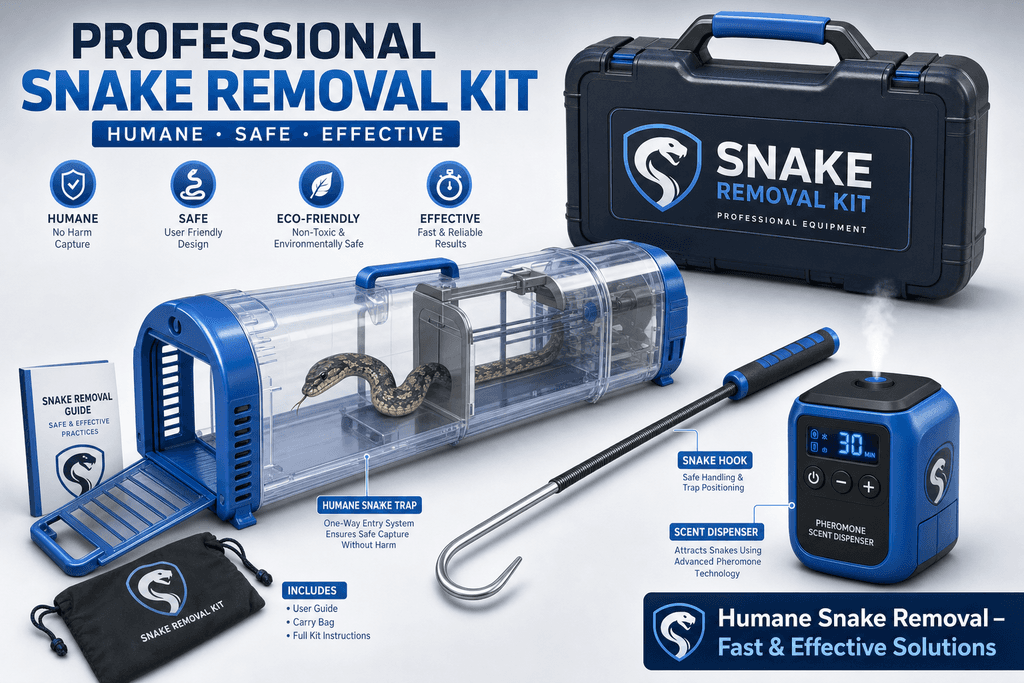
The humane trapping methods used by professionals involve understanding snake behavior and biology. Snakes follow scent trails and temperature gradients, so traps are positioned based on these patterns rather than random placement. Wildlife X Team offers same-day removal services in Granbury because we know that having a snake on your property isn't something you want to deal with for days.
DIY attempts often make the situation worse. Homeowners who try to catch snakes with shovels, brooms, or makeshift tools usually just drive the snake into hiding deeper in the property. Some people get bitten trying to identify whether a snake is dangerous by getting too close. Others use harmful methods that are illegal in Texas or create additional safety hazards.
Professional handlers use snake hooks, tongs, and secure transport containers designed specifically for safe capture. The snakes are then relocated to appropriate habitats away from residential areas, following Texas Parks and Wildlife guidelines. This approach protects both your family and the local ecosystem.
Keeping Snakes Out for Good
Removing a snake solves today's problem, but preventing the next one requires a different approach. Snakes can squeeze through gaps as small as a quarter inch, which means your foundation, doors, and vents all present potential entry points. Sealing these vulnerabilities is the first step in long-term prevention. Wildlife X Team's exclusion services include a thorough inspection of your property to identify every possible access point, then installing barriers and making repairs that actually keep snakes out.
The biggest mistake Granbury homeowners make is focusing only on the snakes and ignoring what attracts them. If you have rodents, you'll have snakes. If you have standing water, dense vegetation, and cluttered yards, you're creating perfect snake habitat right next to your home.
Effective Prevention Strategies
- Seal foundation cracks and install door sweeps on all exterior doors
- Address rodent problems through professional control services
- Keep grass cut short and remove brush piles and debris
- Install hardware cloth barriers around vulnerable areas
- Eliminate standing water sources and fix drainage issues
- Trim tree branches and shrubs away from the house
- Store firewood at least 20 feet from your home and elevated off the ground
Yard maintenance plays a bigger role than most people realize. Snakes avoid open areas where they're exposed to predators, so keeping your lawn trimmed and removing hiding spots makes your property less appealing. Rock gardens and decorative stone features look nice but create ideal snake habitat unless properly maintained.
Wildlife X Team's exclusion work comes with a renewable lifetime warranty because we use methods that actually work long-term. This isn't about temporary fixes or products that need constant reapplication. Proper exclusion means installing physical barriers that snakes simply cannot bypass, combined with habitat modification that removes the reasons they'd want to be there in the first place.
Regular property inspections catch new vulnerabilities before they become problems. Foundations settle, weather strips wear out, and new gaps appear over time. The team at our Keller location serves the entire Granbury area and can schedule periodic checks to make sure your protection stays intact. When you're dealing with something as persistent as snake pressure in Texas, ongoing prevention beats repeated emergency removals every time.
Your Next Steps for a Snake Free Property
Dealing with snakes around your Granbury home isn't something you should put off or try to handle alone. The risks of getting bitten or just making the problem worse are real, and most DIY methods only move the snake temporarily without fixing why it showed up in the first place. Professional snake removal granbury tx services handle both the immediate problem and the long-term prevention, which is what actually keeps your property safe.
Wildlife X Team serves Granbury from our location at 11833 Katy Rd in Keller, and we've seen just about every snake situation you can imagine. Our approach covers removal, exclusion work to seal up entry points, and habitat changes that make your yard less attractive to snakes down the road.
The most important thing is acting quickly when you spot a snake. The longer you wait, the more comfortable they get and the harder they are to remove. Plus, if you're seeing one snake, there's a decent chance others are nearby or that your property has conditions drawing them in.
If you're in Granbury, Glen Rose, Weatherford, or anywhere in our service area, you can reach us at (817) 799-8686. We'll come out for an inspection and give you a clear picture of what's going on and what needs to happen to fix it. Most people have questions about the process, costs, and what to expect, which is exactly what we'll cover next.
Common Questions About Snake Removal
Finding a snake in your home or yard brings up a lot of questions fast. Most people want to know if they're in danger, how much it'll cost to fix the problem, and whether the snake will come back. Here are the answers to the most common questions we hear from homeowners in Granbury dealing with snake issues.
How quickly can someone respond to a snake call?
Most professional wildlife removal services can respond to snake calls within a few hours, especially during business hours. Wildlife X Team offers prompt response times for snake removal in Granbury TX, understanding that having a snake in your home is stressful. Emergency situations involving venomous snakes typically get priority scheduling.
Are all snakes in Granbury dangerous?
No, most snakes you'll find around Granbury are harmless. Common species like rat snakes, garter snakes, and rough green snakes pose no threat to people or pets. However, Granbury is also home to venomous species including copperheads, cottonmouths, and rattlesnakes. Since it's hard to tell the difference if you're not trained, it's best to keep your distance and call a professional for identification and removal.
What happens to snakes after removal?
Reputable wildlife removal companies use humane methods and relocate snakes to appropriate habitats away from residential areas. The snakes are released in locations where they can survive without posing a risk to people. Wildlife X Team follows ethical practices that prioritize both human safety and animal welfare during the removal process.
How much does professional snake removal cost?
Snake removal costs vary based on the situation, location of the snake, and whether exclusion work is needed. A simple removal might cost between $150 and $300, while comprehensive services that include sealing entry points and prevention measures can run higher. Getting a detailed inspection helps identify exactly what's needed for your specific situation.
Can snakes return after removal?
Snakes can return if the conditions that attracted them remain unchanged. This is why removal alone isn't enough for a long-term solution. Professional exclusion services seal entry points and address attractants like rodent populations to prevent future snake problems. Wildlife X Team's approach includes both removal and prevention strategies to keep snakes from coming back.
Do snake repellents actually work?
Most over-the-counter snake repellents don't work as advertised, despite what the packaging claims. Studies have shown that commercial repellents have little to no effect on snake behavior. The most effective prevention involves physical barriers, habitat modification, and eliminating food sources like rodents and insects that attract snakes to your property in the first place.