
Snake Removal Experts: Identifying Venomous Snakes in North Texas

A sudden rustling in your garden or a slithering shape near your patio can send your heart racing, especially when you're not sure if that snake is harmless or dangerous. North Texas is home to four venomous snake species that regularly show up in residential areas, and knowing the difference between a harmless garden snake and a venomous copperhead can protect your family and pets from serious harm. While some homeowners panic at every snake sighting and others dangerously underestimate the risks, proper identification helps you respond appropriately and know when to call professionals like Wildlife X Team for safe, humane removal.
Table of Contents
- Venomous Snakes Found in the Dallas-Fort Worth Area
- Copperheads: The Most Common Venomous Snake
- Cottonmouths and Rattlesnakes: Recognizing Aggressive Defenders
- Coral Snakes and Harmless Look-Alikes
- What to Do When You Find a Snake on Your Property
- Why Professional Snake Removal Protects Your Family
- Stay Safe with Expert Snake Identification and Removal
- Common Questions About Venomous Snakes in North Texas
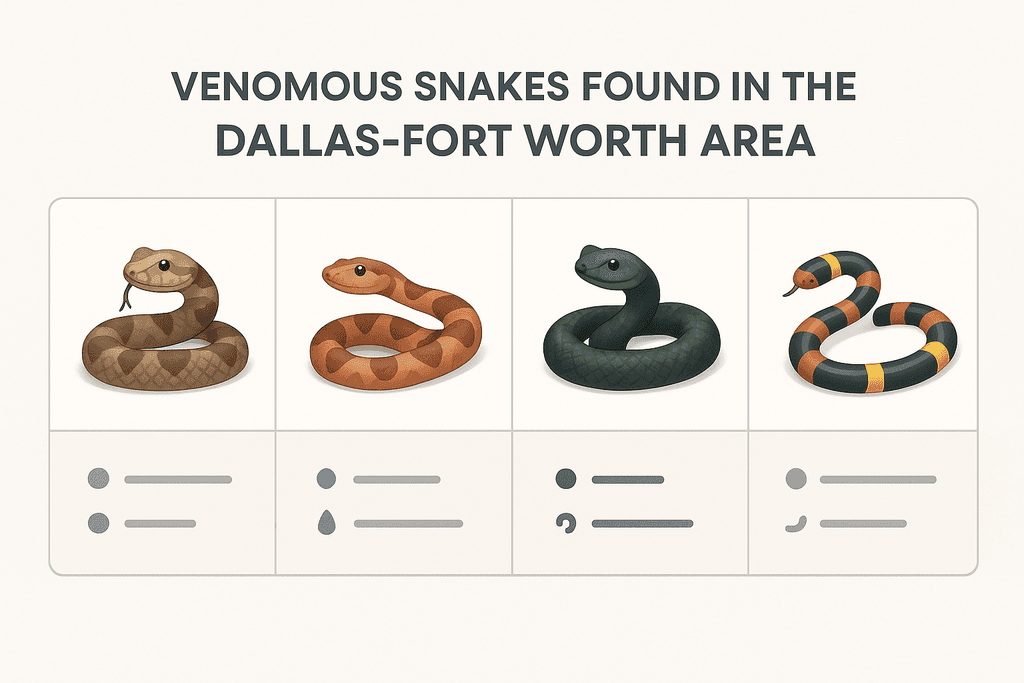
Venomous Snakes Found in the Dallas-Fort Worth Area
North Texas is home to four types of venomous snakes that can show up in your yard, garage, or even inside your home. Copperheads, cottonmouths (also called water moccasins), rattlesnakes, and coral snakes all live in the Dallas-Fort Worth region, and each one has its own favorite spots to hang out. While these snakes usually prefer to avoid people, they sometimes end up in residential areas when we build homes and businesses where they used to live. Understanding which venomous snakes live near you is the first step to staying safe and knowing when to call for professional help like Wildlife X Team's humane wildlife removal services.
When Snakes Are Most Active
Snake encounters spike during certain times of the year, and knowing when to be extra careful can help you avoid a scary surprise. Spring and fall bring the most snake activity because temperatures hit that sweet spot where snakes feel comfortable moving around. During the blazing hot Texas summers, snakes often hide during the day and come out at night when it's cooler.
- Spring (March through May) is when snakes emerge from winter hiding spots and start looking for food
- Fall (September through November) sees increased movement as snakes search for warm places to spend winter
- Summer nights can bring snakes closer to homes as they hunt for rodents and seek cooler temperatures
- Rainy periods push snakes to higher ground, which often means your yard or porch
Why Snakes End Up Near Homes
The Dallas-Fort Worth area keeps growing, and all that new construction means natural snake habitats are shrinking fast. When we clear land for neighborhoods and shopping centers, snakes don't just disappear. They move to the next available space, which might be your backyard, under your deck, or in your garage.
- Snakes follow their food source, mainly rodents and small animals that also live near humans
- Rock piles, wood stacks, and overgrown vegetation create perfect hiding spots
- Water features like ponds and creeks attract cottonmouths looking for fish and frogs
- Gaps in foundations and open crawl spaces offer shelter from extreme weather
How Most Snake Bites Happen
Here's something that might surprise you: most venomous snake bites occur when people accidentally step on snakes or try to catch or kill them. Snakes don't hunt humans and would much rather slither away than fight. The problem happens when someone doesn't see a snake in tall grass or reaches into a dark space where one is hiding.
- Stepping on snakes hidden in grass, leaves, or garden beds accounts for many bites
- Reaching into woodpiles or storage areas without looking first is risky
- Trying to kill or capture a snake yourself dramatically increases bite risk
- Letting pets investigate snakes can lead to dangerous situations for both animals and owners
Quick Reference Guide to North Texas Venomous Snakes
Each venomous snake species in our area has distinct features that help with identification. Knowing what to look for can help you stay safe and provide useful information when you call professionals for removal.
North Texas Venomous Snake Identification
Copperhead
Color Pattern: Tan or copper body with dark hourglass bands
Size: 2-3 feet long
Where Found: Wooded areas, rock piles, near water sources
Head Shape: Triangular with heat-sensing pits
Cottonmouth (Water Moccasin)
Color Pattern: Dark brown or black with faint bands
Size: 2-4 feet long
Where Found: Near creeks, ponds, and wetlands
Head Shape: Blocky and triangular, white mouth interior
Western Diamondback Rattlesnake
Color Pattern: Gray-brown with diamond patterns and black/white tail bands
Size: 3-5 feet long
Where Found: Open areas, grasslands, rocky terrain
Head Shape: Triangular with distinctive rattle on tail
Texas Coral Snake
Color Pattern: Red, yellow, and black bands (red touches yellow)
Size: 2-3 feet long
Where Found: Under logs, in leaf litter, rarely seen
Head Shape: Small and rounded, not triangular
If you spot any of these snakes around your property, the safest move is to keep your distance and contact a professional wildlife removal service. Wildlife X Team handles snake removal humanely and can inspect your property to find and seal entry points that might attract more unwanted visitors.
Copperheads: The Most Common Venomous Snake
About 90% of venomous snake bites in North Texas come from copperheads, making them the species you're most likely to encounter in your yard. These snakes blend in so well with fallen leaves and mulch that most people don't see them until it's almost too late. The good news is that knowing what to look for can help you spot them before you get too close. Their distinctive markings are actually pretty easy to recognize once you know the pattern.

Copperheads: The Most Common Venomous Snake
Copperheads have hourglass-shaped bands that run across their bodies, wider on the sides and narrower at the top of their backs. The bands are usually a darker brown or reddish-brown color against a lighter tan or pinkish background. Their heads are a solid copper color without any patterns, which is where they get their name from.
- Look for the hourglass pattern that's wider on the sides than the middle
- Check for a solid copper-colored head with no markings
- Notice their thick, muscular bodies compared to non-venomous snakes
- Watch for their vertical, cat-like pupils instead of round ones
- Pay attention to their heat-sensing pits between the eyes and nostrils
These snakes love hanging out in wooded areas, rock piles, and leaf litter around homes. They're especially common near wood piles, stone walls, and overgrown gardens where they hunt for mice and other small prey. Unlike most snakes that slither away when they sense danger, copperheads have a weird habit of freezing in place. This defense mechanism makes them incredibly dangerous because people often step on them without realizing they're there.
While copperhead venom is the least potent among North Texas venomous snakes, their bites still require immediate medical attention. The venom can cause severe pain, swelling, and tissue damage if left untreated. Most bites happen between April and October when these snakes are most active and people are spending more time outdoors.
Cottonmouths and Rattlesnakes: Recognizing Aggressive Defenders
If you live near water or rocky areas in North Texas, you need to know about the region's more aggressive venomous snakes. Cottonmouths and rattlesnakes don't just freeze like copperheads do. They actually warn you they're there, which sounds helpful until you realize how close you've already gotten. These snakes pack more potent venom and show more defensive behavior when they feel threatened.

Cottonmouths and Rattlesnakes: Recognizing Aggressive Defenders
Cottonmouths display their white mouth lining when they feel cornered, opening wide to show you the cotton-white interior that gives them their name. They're thick-bodied snakes with dark, often muddy-looking coloration that helps them blend in near creeks, ponds, and drainage areas. Some people call them water moccasins, though they spend plenty of time on land too.
This video covers identification techniques for various Texas snakes, including the venomous species we're discussing here.
Western diamondback rattlesnakes are the largest venomous snakes in the region, sometimes reaching over five feet long. They have distinctive diamond-shaped patterns down their backs and black and white bands near their tails. The timber and prairie rattlesnakes are smaller cousins but just as dangerous. All three species share that famous rattle at the end of their tails that they shake as a warning before striking.
- Rattlesnakes prefer rocky terrain, brush piles, and areas with good cover
- Cottonmouths stick close to water sources but can be found in yards after heavy rain
- Both species are more aggressive than copperheads when cornered
- The rattle sound is your final warning to back away slowly
- These snakes have longer fangs and inject more venom than copperheads
The key difference between these snakes and copperheads is their willingness to stand their ground. They'll coil up, display their warning signs, and strike if you don't give them space. Most encounters happen when people accidentally corner them or reach into areas without looking first.
Coral Snakes and Harmless Look-Alikes
North Texas has one snake that looks like it belongs in a tropical rainforest instead of your backyard. Coral snakes are rare but their venom is actually the most dangerous of all our local species. The tricky part is that several harmless snakes have evolved to look similar, which confuses a lot of people. Learning the difference could literally save your life, though you probably won't ever see one since they're so shy.
Coral snakes have red, yellow, and black bands with the red bands touching the yellow bands. This pattern is what separates them from their harmless mimics. The old rhyme "red touches yellow, kill a fellow; red touches black, friend of Jack" actually works for identifying these snakes in our region.
- True coral snakes have red bands directly next to yellow bands
- Scarlet kingsnakes and milk snakes have red bands next to black bands
- Coral snakes have small, rounded heads instead of triangular ones
- Their eyes are small and black, not the vertical slits of pit vipers
- They're usually less than two feet long and very slender
Coral snakes are shy and rarely encountered but have potent neurotoxic venom that affects the nervous system differently than pit viper venom. They spend most of their time underground or under debris, coming out mainly at dawn and dusk. Unlike rattlesnakes and copperheads that strike and release, coral snakes have small mouths and must chew to inject venom. This means most bites happen when people try to pick them up or accidentally grab them.
The harmless look-alikes actually benefit from resembling coral snakes because predators leave them alone. If you see a colorful banded snake and can't remember the rhyme, just treat it as dangerous and keep your distance. Better safe than sorry when it comes to these beautiful but deadly snakes.
What to Do When You Find a Snake on Your Property
Finding a snake in your yard or near your home triggers an instant panic response for most people. That panic is actually the most dangerous part of the situation because it leads to bad decisions. Every year, people get bitten trying to kill or catch snakes they find on their property. The snake isn't there to hurt you, it's just looking for food or a place to hide, but it will defend itself if you get too close.
Never attempt to catch or kill a venomous snake yourself, no matter how brave you're feeling. Even dead snakes can deliver venomous bites through reflex action for up to an hour after death. Keep a safe distance of at least six feet from any snake you can't positively identify as harmless.
- Back away slowly without making sudden movements
- Keep children and pets inside until the snake is removed
- Take a photo from a safe distance if possible for identification
- Call professional wildlife removal instead of handling it yourself
- Don't try to trap or corner the snake in any way
Professional removal ensures safety for both people and the snake while following local wildlife regulations. Wildlife X Team provides humane snake removal throughout the Dallas-Fort Worth area, with trained specialists who know how to handle venomous species safely. We don't just remove the snake and leave, we also help identify what attracted it to your property in the first place.
Prevention is really where the long-term solution lies. Our team seals entry points around foundations, removes attractants like rodent populations, and makes property modifications that discourage snakes from settling in. Things like keeping grass short, removing brush piles, and sealing gaps under sheds make your yard much less appealing to snakes looking for shelter. The goal isn't to eliminate every snake from the area, but to make sure they're not finding reasons to hang around your home where someone might get hurt.
Why Professional Snake Removal Protects Your Family
Most people who end up in the emergency room with snake bites weren't hiking in remote areas or exploring the wilderness. They were in their own yards, trying to remove a snake themselves. The statistics are clear and sobering. When homeowners attempt DIY snake removal, they put themselves at serious risk because they can't accurately identify whether they're dealing with a harmless rat snake or a venomous copperhead. That split-second misidentification can lead to a painful bite and a trip to the hospital.
The Hidden Dangers of DIY Snake Removal
Grabbing a shovel or trying to catch a snake with household tools might seem like a quick solution. But snakes are faster than most people realize, and they strike when they feel threatened.
- Venomous snakes can strike up to half their body length in less than a second
- Even non-venomous snake bites can cause serious infections requiring medical treatment
- Cornered snakes become more aggressive and unpredictable in their behavior
- Without proper training, it's nearly impossible to identify juvenile venomous snakes
What Professional Removal Actually Provides
Professional wildlife experts bring more than just snake-catching tools to your property. They understand snake behavior patterns and can identify species at a glance, which means they know exactly how to approach each situation safely. Wildlife X Team's trained specialists use humane removal methods that protect both your family and the local ecosystem, since even venomous snakes play important roles in controlling rodent populations.
- Accurate species identification prevents unnecessary panic over harmless snakes
- Proper handling techniques eliminate the risk of defensive strikes
- Humane relocation maintains ecological balance in your area
- Professional equipment allows for safe capture from difficult locations
Addressing the Root Cause
Here's what most homeowners miss when they focus only on removing the snake they can see. That snake showed up for a reason, and unless you address why it came to your property, more will follow. Wildlife X Team's comprehensive Wildlife Inspection Report identifies the attractants bringing snakes to your home, whether that's rodent populations, water sources, or shelter opportunities in your landscaping.
- Property inspections reveal hidden entry points under decks and foundations
- Exclusion services seal gaps and cracks that snakes use to access your home
- Habitat modification reduces the factors that make your yard attractive to snakes
- The Renewable Lifetime Warranty ensures long-term protection against future encounters
Professional snake removal isn't just about handling one snake. It's about creating a comprehensive protection plan that keeps your family safe year after year, without the risks that come with DIY attempts.
Stay Safe with Expert Snake Identification and Removal
Learning to spot the differences between harmless and venomous snakes in North Texas can literally save your life or the life of someone you care about. The four venomous species we have here all have distinct features that set them apart from the dozens of harmless snakes you might encounter. But here's the thing that most people don't realize until it's too late: even experts sometimes need a second look to be completely sure.
The safest rule to follow is simple. If you're not 100% certain a snake is harmless, treat it like it's venomous and keep at least six feet away. Most snake bites happen when people try to catch, kill, or move a snake themselves.
Remember these key identification tips:
- Triangular heads and heat-sensing pits are your main warning signs
- Rattlesnakes announce themselves with their distinctive rattle
- Copperheads have those hourglass patterns that are wider on the sides
- Cottonmouths show white mouths when threatened
- Coral snakes have red touching yellow bands
When you find a snake on your property and you're not sure what it is, the smart move is calling someone who deals with this every day. Wildlife X Team handles snake removal throughout Fort Worth, Denton, Granbury, and the surrounding areas with trained specialists who know exactly what they're looking at. We remove the snake safely and check your property for conditions that might attract more.
The questions people ask most often about snake identification and removal come up again and again. Let's tackle those next.
Common Questions About Venomous Snakes in North Texas
Dealing with snakes on your property brings up a lot of questions, especially when you're not sure if what you're looking at is dangerous. Most people don't want to get close enough to find out, and that's completely understandable. Here are the answers to the most common questions we hear from homeowners and business owners in the Dallas-Fort Worth area about venomous snakes.
How can I tell if a snake is venomous without getting close?
Look for a triangular-shaped head, which is wider than the neck, and a thick body rather than a slender one. Venomous snakes in North Texas also tend to have elliptical pupils like a cat's eye, though you'd need to be closer than recommended to see this. The safest approach is to keep your distance and assume any snake could be dangerous until a professional can identify it.
What time of year are snakes most active in North Texas?
Snakes are most active during the warmer months from April through October, with peak activity in late spring and early summer. They're cold-blooded, so they come out when temperatures are between 70 and 90 degrees. You might also spot them during mild winter days when they emerge to sun themselves, though this is less common.
Will snakes leave on their own or do I need removal services?
A snake passing through your yard will usually move on within a day or two. However, if a snake has found food sources like rodents, water, or good shelter on your property, it may stick around or return regularly. If you see the same snake multiple times or find one inside your home or garage, professional removal is the smart choice.
How quickly can Wildlife X Team respond to a snake on my property?
Wildlife X Team offers prompt response times for snake situations, often providing same-day service depending on your location in the Ft. Worth, Denton, and Granbury areas. When you call about a snake, they understand it's urgent and work to get someone to your property as quickly as possible to safely remove the animal.
What does snake-proofing a property involve?
Snake-proofing includes sealing gaps under doors, repairing foundation cracks, installing vent guards, and eliminating hiding spots like wood piles or tall grass near your home. It also means addressing rodent problems, since mice and rats attract snakes. Wildlife X Team's animal proofing services cover these prevention measures and include their renewable lifetime warranty for long-term protection.
Are baby venomous snakes more dangerous than adults?
This is a common myth that isn't quite accurate. While baby venomous snakes do have venom from birth, adult snakes actually deliver more venom per bite because they're larger. Both should be treated as equally dangerous and avoided completely. Never attempt to handle or kill any snake you suspect might be venomous, regardless of its size.