
Snake Poop Pictures and How to Identify Snake Droppings
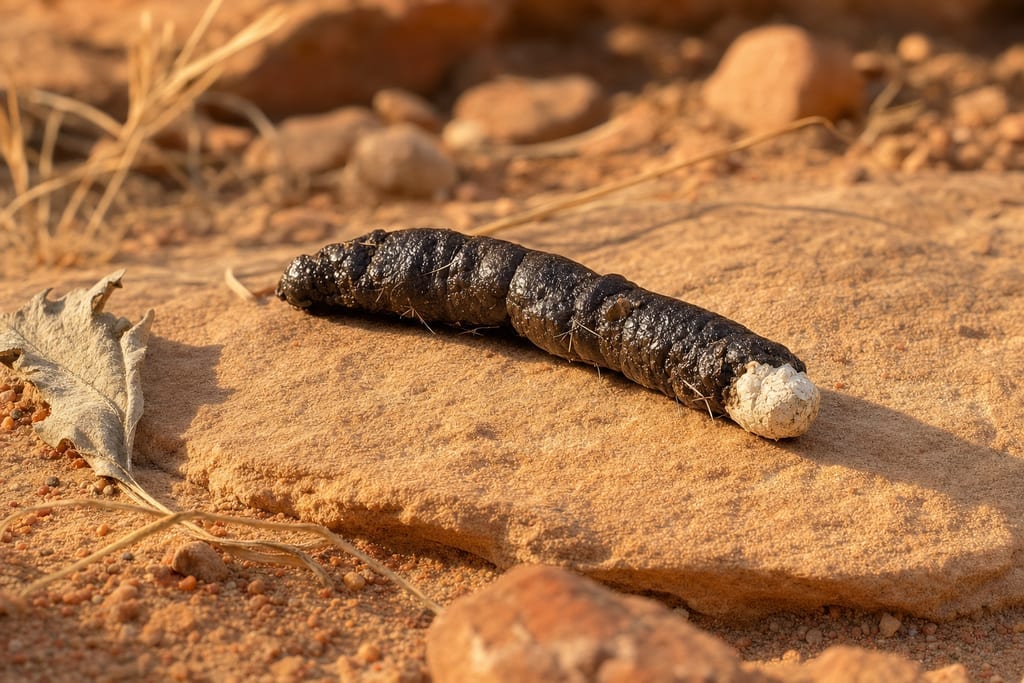
A snake poop pic will show a tubular, log-shaped dropping with a chalky white cap on one end, and that white tip is the clearest sign you are looking at a snake. The white part is urate, basically snake urine that comes out solid alongside the waste, and most other yard critters do not leave that. People mix these droppings up with bird mess or lizard droppings all the time, since both can carry a white smear too. The difference is shape and size: snake droppings hold a firm, cylindrical form, while bird droppings are runnier and lizard droppings are tiny and crumbly.
Smell is another clue, and it is not a pleasant one. Fresh snake droppings carry a sharp, musky odor that gets stronger if a snake has been denning in the same spot for a while, which often means an attic, crawl space, or garage corner. Lining up a few photos side by side against bird, lizard, and rodent droppings makes the call a lot faster than trying to describe it from memory.
Table of Contents
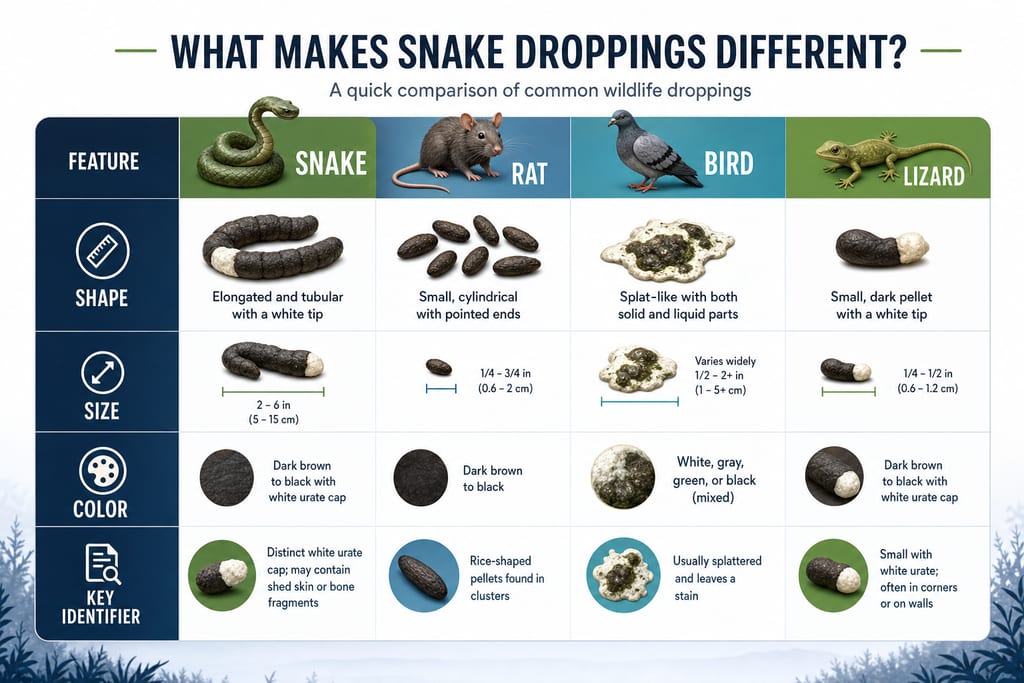
What Makes Snake Droppings Different
Snakes only have one exit, called the vent, so feces and uric acid leave the body together. That shared exit is why the dropping comes out as a single unit with a solid waste section and a chalky urate cap fused onto it, instead of two separate messes.
Diet drives everything else about how the dropping looks. A snake that eats whole rodents leaves a dropping packed with fur and small bone fragments, often dark brown to black, while a snake eating mostly birds or eggs leaves a smoother, paler dropping with less visible texture.
Size scales with the snake, so a garter snake leaves something closer to half an inch long, while a larger rat snake or bull snake can leave droppings two to three inches long. A quick way to sort out what you are looking at:
- Rat droppings: small dark pellets, pointed ends, no white cap
- Bird droppings: runny white and dark splatter, no firm shape
- Lizard droppings: tiny crumbly pellets with a small white tip
- Snake droppings: firm log shape, fur or bone bits inside, solid white cap
Snake Droppings Photo Examples to Compare
A labeled snake poop pic next to a ruler tells you more in five seconds than a paragraph of description. Side-by-side shots of rat snake, copperhead, and bull snake droppings usually show the same basic shape but very different sizes and fill, which is the fastest way to narrow down what left the mess in your garage or attic.
Garter and other small garden snakes leave droppings under an inch long, while a mature rat snake can leave something closer to three inches, packed with fur. Fresh droppings look glossy and slightly sticky, while anything older than a day or two dries out, cracks, and turns a dull gray-brown. Compare a few things before you decide:
- Overall length against a coin or a ruler in the photo
- How dark or pale the solid section looks, which tracks with diet
- Whether the surface looks wet and fresh or flaky and dried
- Any shed skin lying nearby, which confirms a snake over any other animal
That last point matters more than people expect. A dropping on its own is a strong clue, but a dropping sitting next to a papery, translucent shed skin removes any doubt.
Where You'll Usually Spot These Droppings
Snakes leave droppings wherever they spend the day resting, not wherever they travel. Garages, basements, and attics are common spots because they stay dark, cool, and undisturbed for long stretches, which is exactly what a snake looks for between meals.
Outdoors, check woodpiles, mulch beds, and gaps along the foundation, since these spots give cover and hold heat. Fence lines and tall grass are travel routes, so droppings there tend to be scattered rather than clustered. Crawl spaces deserve extra attention because rodents nest there too, and a snake will often follow a rodent problem straight into your house. A few spots worth a flashlight check:
- Behind stored boxes or firewood in the garage
- Along the base of exterior walls and foundation cracks
- Under mulch beds or landscape timbers
- Inside crawl space insulation, especially near rodent burrows
If droppings keep showing up in one of these places, that spot is probably where the snake is denning, not just passing through.
Signs That Confirm a Snake Was There
Droppings alone are a good clue, but a few other signs remove any guesswork. Shed skin is the strongest confirmation, since nothing else leaves a full, papery outline of itself behind.
Slither trails in dust, loose mulch, or sand show up as a single winding line, different from the four-footed tracks a rodent or possum leaves. A strong musky smell in an enclosed space, especially one that gets worse over a few days, usually means a snake has been denning there rather than just passing through. Watch for these together:
- Shed skin near the dropping, even a small torn piece
- A single winding trail instead of footprints
- A musky odor that builds in a closed space
- Rodent activity that suddenly drops off in that same area
That last sign is easy to miss, but a sudden drop in rodent sign is often the first clue that a snake moved in and started feeding.
What To Do After Finding Droppings
Do not touch snake droppings bare-handed. They can carry salmonella and other bacteria, the same risk you would treat seriously with rodent droppings.
For a single dropping out in the open, gloves and a disinfectant spray handle cleanup fine. If droppings are clustered near a woodpile, wall gap, or crawl space corner, that location may be an active den, and removal attempts there can provoke a defensive snake instead of clearing it out. Here's how to decide your next move:
- One dropping in an open area: clean it yourself with gloves and disinfectant
- Several droppings in one spot: treat it as a possible den, not a one-time visit
- Droppings near a known rodent problem: expect the snake to return until the rodents are gone
- Droppings that keep reappearing in the same spot: call for an inspection rather than repeat cleanup
Wildlife X Team can inspect the property, confirm what's living in the space, and seal the entry points so the problem does not keep coming back.
One Dropping or a Pattern
A single dropping on the garage floor usually means a snake passed through once and kept moving. It is worth noting, not worth panicking over. Treat it like a stray clue rather than proof of a problem living on your property.
Finding droppings in the same spot more than once is a different situation. That repetition usually points to a den or a regular hunting path, since snakes tend to rest and feed in the same sheltered corner once they find one that works. A crawl space, woodpile, or wall gap with droppings on two separate visits is telling you where the snake actually lives, not just where it stopped.
Size and frequency together hint at what you are dealing with. A handful of small, half-inch droppings suggests a garter snake passing through a few times, while larger droppings showing up again and again point toward a bigger species like a rat snake settling in. The decision that matters here is whether to keep monitoring or to get the property checked, and a Wildlife Inspection Report can trace the exact entry points a snake and the rodents it is feeding on are using to get inside.
When It's Time to Stop Checking Photos and Call Someone
If what you found matches the shape, cap, and smell described above, and it keeps turning up in the same corner of the garage, crawl space, or attic, that pattern is your answer. A den does not clear itself out because the rodents it fed on are still nearby. Wildlife X Team serves Fort Worth, Denton, Granbury, and the surrounding area, and an inspection can confirm what species you are dealing with and where it is getting in before it settles in for good. Call (817) 799-8686 and get the spot checked while it is still a dropping on the floor, not a snake behind the wall.
Common Questions About Snake Droppings
Can snake droppings make my dog or cat sick if they sniff or step in them?
Yes. Salmonella and other bacteria in the droppings can transfer to a pet's mouth or paws, especially if they lick the area or themselves after contact. Wash paws with soap and water if your pet gets close to a dropping, and keep an eye out for vomiting or diarrhea over the next day or two. Call your vet if symptoms show up.
Why do I only find one dropping even though I suspect a snake is living nearby?
Snakes do not eat often. A rat snake or bull snake might only need one meal every week or two, so droppings show up far less often than you would expect from a den. One dropping does not rule out a snake living close by, it just means you have not caught the pattern yet. Keep checking the same spot over the next couple of weeks before deciding it was a one-time visit.
Is it possible to tell a venomous snake from a non-venomous one just by its droppings?
No. Dropping shape, size, and the white urate cap look the same whether the snake is venomous or not, since diet and body size drive those traits, not venom. The only reliable way to know what species is on your property is to see the snake itself or have someone experienced identify it. Treat any den you find with caution until it is confirmed.
What should I do if I find droppings inside my house instead of the yard?
Droppings inside the house mean a snake found a way in, not just a spot to pass through outside. Clean the dropping with gloves and disinfectant, then check baseboards, vents, and gaps around pipes for the entry point. Wildlife X Team can run a full inspection to find how it got in and seal those gaps so it does not happen again.