
Skunk Removal in Fort Worth for Yards, Crawl Spaces, and Decks

A skunk living under your deck or in your crawl space can turn your Fort Worth property into a no-go zone within seconds of feeling threatened. These black-and-white visitors often move into suburban yards during breeding season, attracted by the shelter and easy food sources that neighborhoods around Keller, Southlake, and Grapevine provide. Understanding why skunks choose your property and how to remove them safely makes the difference between a quick resolution and weeks of dealing with that unmistakable smell.
Table of Contents
Why Skunks Choose Fort Worth Properties
Skunks in Fort Worth aren't just passing through your neighborhood by accident. These black and white critters actively seek out residential areas because they offer everything a skunk needs to survive and raise a family. The combination of Fort Worth's mild winters, sprawling suburban development, and abundance of food sources makes local properties incredibly attractive to these animals. Understanding why skunks pick certain yards and crawl spaces helps homeowners protect their property before problems start.
What Brings Skunks to Your Property
Skunks don't need much to feel at home on your property. A few common items around most Fort Worth homes act like welcome signs for these animals.
Food sources top the list of skunk attractants:
- Pet food left outside overnight becomes an easy meal
- Grubs and insects living in your lawn provide natural food
- Accessible garbage cans offer a buffet of options
- Fallen fruit from trees attracts skunks during certain seasons
- Bird seed scattered under feeders draws them in regularly
Beyond food, skunks need shelter. They look for quiet, dark spaces where they won't be disturbed. Crawl spaces under homes, gaps beneath porches, and openings under sheds check all their boxes. Female skunks especially seek these protected areas during breeding season when they need safe places to raise their young.
Skunk Breeding and Seasonal Patterns
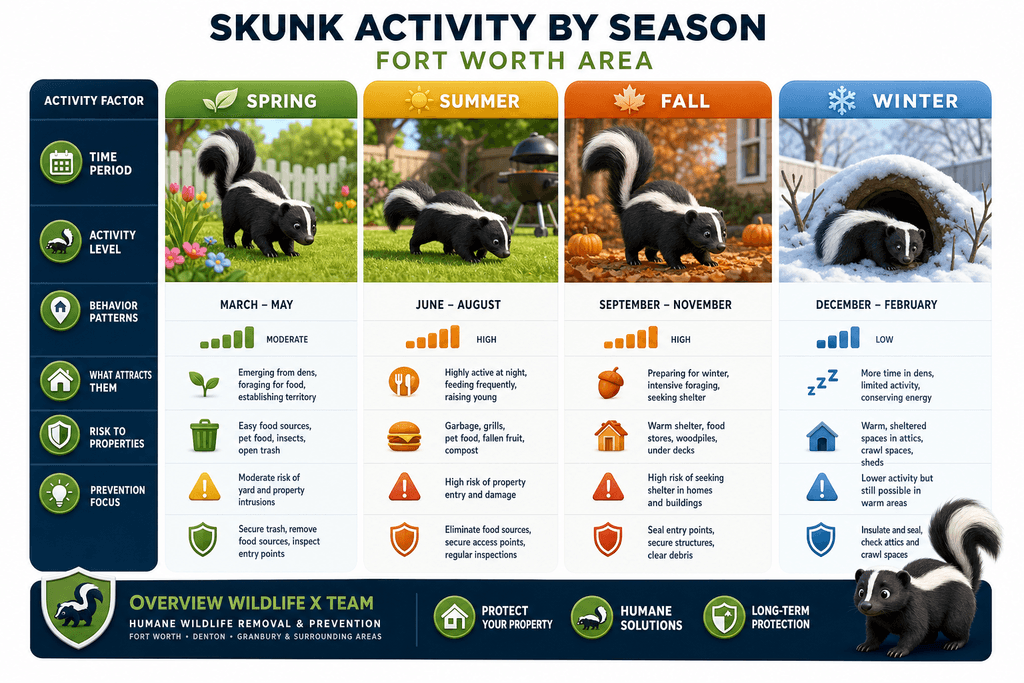
Timing matters when it comes to skunk activity in North Texas. February through March marks breeding season, which means skunks become more active and aggressive during these months. Females search for den sites to give birth, often choosing spots under homes or in crawl spaces. By April and May, baby skunks arrive, and mother skunks defend their dens fiercely.
Different seasons bring different skunk behaviors in Fort Worth:
| Season | Activity Level | Primary Behavior | Risk to Property |
|---|---|---|---|
| Winter (Dec-Jan) | Low to Moderate | Seeking warm shelter, less active | Moderate - Den establishment |
| Spring (Feb-May) | Very High | Breeding and raising young | High - Aggressive defense of dens |
| Summer (Jun-Aug) | High | Foraging, teaching young to hunt | High - Multiple skunks active |
| Fall (Sep-Nov) | Moderate to High | Building fat reserves, finding winter dens | Moderate - Increased foraging |
Fort Worth Climate Creates Perfect Skunk Habitat
Fort Worth's weather patterns work in skunks' favor year-round. Mild winters mean skunks stay active longer than they would in colder climates. They don't truly hibernate, so even January nights might bring skunk visitors to your yard. The area's clay soil and limestone foundations create natural gaps and openings that skunks exploit to access crawl spaces.
Suburban sprawl has actually increased skunk populations in residential areas. As natural habitats shrink, skunks adapt by moving into neighborhoods where resources are plentiful and predators are scarce. The typical Fort Worth property offers more consistent food and shelter than wild areas, making it the logical choice for skunks looking to settle down.
Professional skunk removal Fort Worth services like Wildlife X Team understand these patterns. We know where skunks hide, when they're most active, and what draws them to specific properties. This knowledge helps us remove current skunk problems and prevent future invasions through targeted exclusion work.
Signs You Have Skunks on Your Property
Skunks can live under your deck or in your crawl space for weeks before you even know they're there. Most people think the first sign of a skunk is that unmistakable spray smell, but these animals leave plenty of clues before things get that bad. Knowing what to look for can save you from a much bigger problem down the road. The earlier you catch a skunk issue, the easier it is to handle without dealing with that defensive spray everyone dreads.
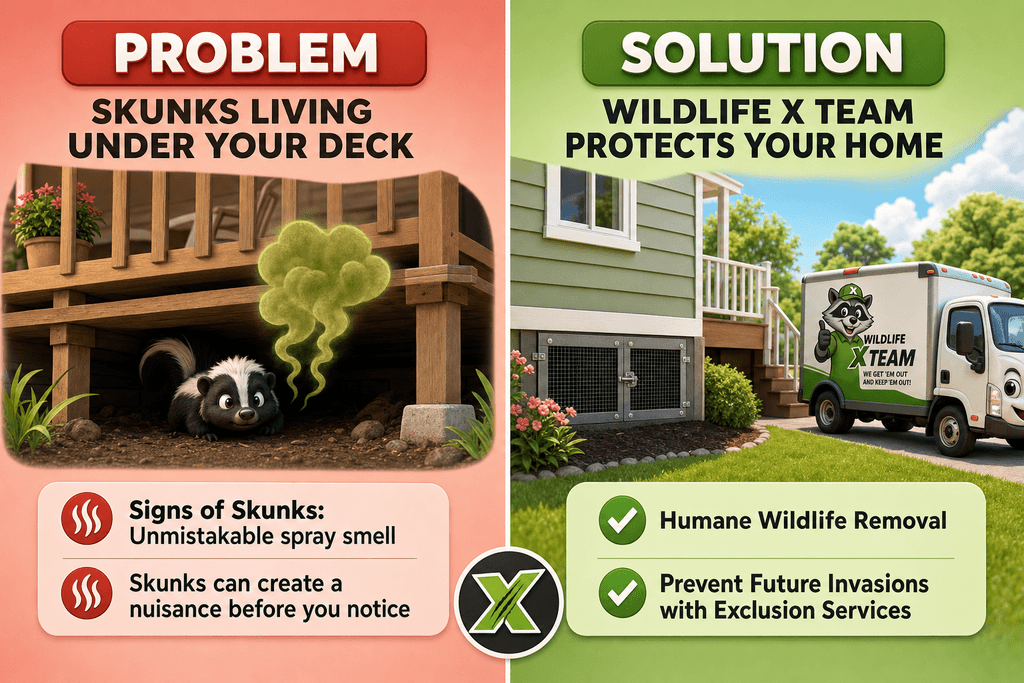
One of the first things you might notice is a faint musky odor around your property, especially near your foundation or deck. This smell is different from the full spray and comes from the skunk's scent glands naturally marking their territory. You might also spot cone-shaped holes in your lawn where skunks have been digging for grubs and insects, which make up a big part of their diet.
- Distinctive musky odor lingering near structures, even without a spray incident
- Cone-shaped holes scattered across your lawn from nighttime foraging
- Tracks and droppings near your foundation, under decks, or around crawl space vents
- Scratching or rustling sounds coming from under your deck or in crawl spaces during dawn and dusk
- Visual sightings during early morning or evening hours when skunks are most active
The tracks are pretty easy to identify once you know what to look for. Skunk prints show five toes with visible claw marks, and they often walk in a distinctive pattern. Their droppings are usually about half an inch in diameter and may contain insect parts or seeds.
Quick Inspection Checklist:
- Walk your property perimeter at dusk when skunks become active
- Check under decks, porches, and sheds for entry holes
- Look for fresh digging in your lawn or garden beds
- Inspect crawl space vents for damage or gaps
- Note any persistent odors near ground-level structures
If you're hearing noises under your deck or in your crawl space right around sunrise or sunset, that's a pretty clear sign. Skunks are most active during these twilight hours, and they're not particularly quiet when they're settling in for the day or heading out to forage.
Professional Skunk Removal Process
Getting rid of skunks isn't something most people want to tackle on their own, and for good reason. One wrong move and you're dealing with a smell that can linger for weeks. Professional removal takes the guesswork out of the equation and handles the problem without putting you or your family at risk. The process starts with understanding exactly what you're dealing with and where the skunks are getting in.

The Wildlife Inspection Report® is where everything begins. This detailed inspection identifies all the entry points skunks are using and maps out their activity areas around your property. It's not just about finding where they are now, but understanding how they got there in the first place.
This video shows exactly how professionals approach skunk removal from common hiding spots like decks and porches. The techniques used make all the difference in avoiding a spray incident.
Once the inspection is complete, humane live trapping begins using proper bait placement and trap positioning. The key is using the right bait and placing traps where skunks naturally travel. Professional trappers know how to handle the traps in a way that keeps the skunk calm and prevents that defensive spray response.
After the skunks are safely removed, the real work begins. Exclusion work seals all entry points to make sure new skunks don't just move in where the old ones left. This includes repairing damaged vents, screening foundation openings, and securing gaps under decks and porches. Wildlife X Team at 11833 Katy Rd in Keller serves Fort Worth and surrounding areas with same-day response for urgent situations.
The whole process typically takes a few days to a week, depending on how many skunks are present and how many entry points need sealing. Most companies will do follow-up checks to confirm all animals are gone before completing the exclusion work.
Skunk-Proofing Your Yard, Deck, and Crawl Space
Removing skunks is only half the battle. Without proper exclusion work, you're just creating a vacancy that another skunk will fill in a few weeks or months. The three main problem areas where skunks set up shop are under decks, in crawl spaces, and in overgrown yards that provide cover and food. Each area needs its own approach to keep skunks out for good.
Foundation screening and barrier installation around decks and porches creates a physical barrier that skunks can't dig under or squeeze through. The screening needs to extend at least 12 inches below ground level because skunks are decent diggers. Above ground, it should reach the bottom of the deck structure with no gaps.
- Heavy-gauge wire mesh installed around deck perimeters
- Barriers buried 12-18 inches deep to prevent digging
- L-shaped footer design that extends outward underground
- Secure attachment to existing structures with no gaps
Crawl space protection focuses on vent guards and access point sealing. Standard crawl space vents are basically open invitations for skunks and other wildlife. Proper guards allow airflow while blocking animal entry. Any existing damage to foundation vents or access doors needs repair before guards go up.
Your yard itself plays a bigger role than most people realize. Proper grading and drainage eliminates the damp, sheltered spots where skunks like to den. Standing water and poor drainage create perfect conditions for the grubs and insects skunks eat. Fix the drainage issues and you remove a major food source.
Property Protection Checklist:
- Install foundation screening around all decks and porches
- Add heavy-duty guards to all crawl space vents
- Repair any foundation cracks or gaps larger than 3 inches
- Improve yard drainage to eliminate standing water
- Keep grass cut short and remove brush piles
- Store garbage in sealed containers away from structures
Regular yard maintenance makes a huge difference. Keeping your lawn treated for grubs removes the main food source that attracts skunks in the first place. Trimming back overgrown vegetation eliminates the cover skunks need to feel safe denning on your property.
Wildlife X Team backs their exclusion work with a Renewable Lifetime Warranty that protects against re-entry. This kind of guarantee only works when the exclusion is done right the first time. The upfront cost of professional skunk-proofing is way less than dealing with repeated removal calls every few months, not to mention the potential damage and health risks from ongoing infestations.
DIY vs Professional Skunk Removal in Fort Worth
A single skunk spray incident inside your home can cost between $2,000 and $10,000 to properly remediate, which is why the decision between DIY and professional skunk removal fort worth services matters more than most homeowners realize. When you're dealing with skunks in your yard or crawl space, the temptation to save money by handling it yourself seems reasonable at first. But the reality of skunk removal involves risks and complexities that aren't obvious until you're already in trouble. The difference between a successful removal and a disaster often comes down to experience and proper equipment.
The Hidden Costs of DIY Attempts
Most Fort Worth homeowners who try DIY skunk removal focus on the visible problem without understanding what's happening beneath the surface. You might catch one skunk, but if you haven't identified all the entry points, you're just creating a vacancy for the next one to move in.
- Store-bought traps often trigger defensive spraying when skunks feel cornered
- Amateur exclusion work typically misses secondary entry points under decks and foundations
- Cleanup costs for skunk spray can exceed the price of professional removal by thousands
- Improper handling can result in bites, requiring expensive rabies treatment protocols
The time investment alone makes DIY approaches questionable. Most homeowners spend 2-3 weeks trying different methods before calling professionals anyway, during which time the skunk damage continues to accumulate.
What Professional Services Actually Provide
Companies like Wildlife X Team bring more than just traps to your property. Their Wildlife Inspection Report® identifies vulnerabilities you'd never spot on your own, from foundation gaps to compromised vent screens that skunks exploit.
- Licensed technicians know how to handle skunks without triggering spray responses
- Comprehensive property inspections reveal all current and potential entry points
- Professional-grade exclusion materials last years longer than hardware store alternatives
- Liability insurance protects you if something goes wrong during removal
- Renewable warranties ensure long-term protection instead of temporary fixes
The cost comparison shifts dramatically when you factor in permanent solutions. A professional skunk removal fort worth service might seem more expensive upfront, but recurring DIY attempts add up quickly. Plus, professionals complete the job in days rather than weeks, minimizing property damage and health risks to your family.
Making the Right Choice for Your Situation
The decision ultimately depends on whether you want a quick fix or a lasting solution. Professional services eliminate the guesswork and risk that make DIY skunk removal such a gamble for Fort Worth property owners.
Getting Skunks Out and Keeping Them Out
Dealing with skunks in your Fort Worth yard or crawl space isn't something you want to handle on your own. The risk of getting sprayed is real, and once that smell sets in, it can take weeks to fully disappear from your property. Professional skunk removal in Fort Worth means getting someone who knows how to handle these animals safely and can actually fix the problem for good, not just chase them away for a few days.
The key to permanent results is combining humane removal with proper exclusion work. You can trap and relocate skunks all day long, but if you don't seal up the entry points under your deck or foundation, new skunks will just move in. That's where most homeowners get stuck in a cycle of dealing with the same problem over and over.
Wildlife X Team handles both parts of the process at our location at 11833 Katy Rd in Keller, TX. Our technicians inspect your property to find every possible entry point, remove any skunks already living there, and then seal everything up so it doesn't happen again. We serve the entire Fort Worth area, including Denton, Granbury, Southlake, and surrounding communities.
If you're smelling skunk spray around your house or seeing signs of digging under your porch, waiting usually makes things worse. Call (817) 799-8686 for a same-day inspection and we'll get someone out to assess the situation. The faster you address it, the less damage you'll deal with and the lower your chances of a spray incident near your home.
Common Questions About Skunk Removal
Dealing with skunks in your Fort Worth yard or crawl space brings up a lot of questions. Most homeowners want to know what to expect before they call for help, and that makes sense when you're dealing with an animal that can spray. Here are the answers to the most common questions we hear about skunk removal in Fort Worth, so you know exactly what you're getting into before you pick up the phone.
How much does skunk removal cost in Fort Worth?
The cost varies based on how many skunks you have and where they're living on your property. Most Fort Worth companies charge between $300 and $600 for basic removal, but prices can go higher if skunks have made a den under your foundation or in hard-to-reach crawl spaces. Wildlife X Team provides free inspections to give you an accurate quote before any work starts, so you won't get surprised by hidden fees later.
How long does the removal process take?
Most skunk removal Fort Worth jobs take between 3 to 7 days from start to finish. The timeline depends on whether we're trapping one skunk or dealing with a family, and whether babies are involved. We set humane traps and check them daily until all skunks are removed, then we seal up entry points so new ones can't move in.
Will the skunk spray during removal?
Skunks rarely spray when they're caught in properly designed traps because they don't feel cornered or threatened. Our team uses specialized equipment and techniques that keep stress levels low for the animal, which means the chances of spraying are minimal. That said, if a skunk has already sprayed in your crawl space before we arrive, we offer cleanup and odor removal services to handle that problem too.
What happens to the skunk after removal?
We relocate skunks to approved areas outside city limits where they can live without causing problems for people. Texas wildlife regulations require humane handling and proper relocation, and we follow all state guidelines. The skunks get a second chance in a better habitat, and you get your property back.
How do you prevent skunks from coming back?
Prevention is just as important as removal when it comes to skunk removal Fort Worth services. After we remove the skunks, we seal all entry points with durable materials that animals can't tear through or dig under. We also identify what attracted the skunks in the first place, whether that's accessible garbage, pet food left outside, or grubs in your lawn. Our Wildlife Inspection Report shows you exactly what needs to be fixed, and our exclusion work comes with a renewable lifetime warranty.
Does homeowners insurance cover skunk damage?
Most standard homeowners insurance policies don't cover wildlife damage or removal costs because it's considered a maintenance issue rather than a sudden accident. Some policies might cover damage if a skunk caused a specific incident like chewing through electrical wiring that started a fire, but you'll need to check your specific policy. The good news is that investing in professional removal and prevention now costs less than dealing with repeated skunk problems or the structural damage they cause over time.