
Skunk Poop Identification and What It Means on Your Property

A skunk can leave droppings in the same spot for weeks, which means that little pile by your deck might be a sign you've got a roommate you didn't invite. Skunk poop has a few tell-tale traits, like its tube shape and the leftover seeds or bug parts inside, that make it easier to spot than you'd think once you know what to look for. This guide breaks down exactly what skunk poop looks like, how it differs from other critter droppings, and what finding it near your home usually means. And if you'd rather have someone confirm it for you and handle what comes next, Wildlife X Team knows this stuff inside and out.
Table of Contents
Key Traits That Identify Skunk Droppings
Skunk poop has a pretty distinct look once you know what to check for. It's usually cylindrical with blunt, rounded ends, kind of like a small cigar that got left out in the yard. Fresh droppings tend to be dark brown to black and sometimes shiny, though they dull out fast once they sit in the sun.
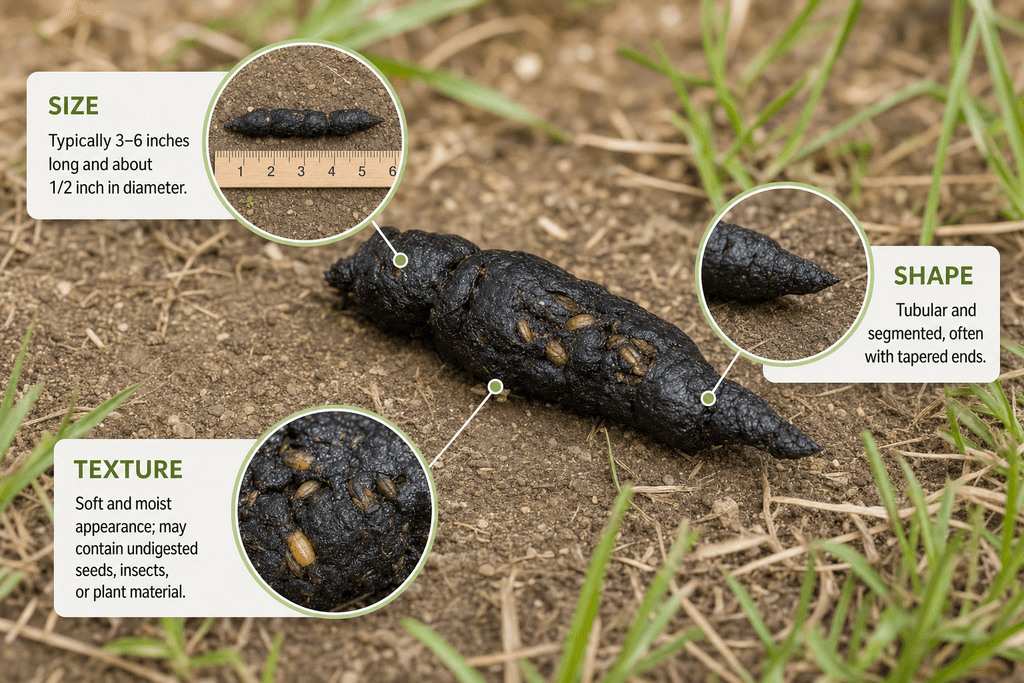
What's inside the scat can tell you a lot too, and it actually changes with the seasons. Here's what to look for depending on the time of year:
- Summer: full of bits of insects and grubs, sometimes with a crunchy texture from exoskeletons
- Fall: more seeds and berries mixed in as skunks switch up their diet before winter
- Year-round: size stays fairly consistent, usually about half an inch thick and a couple inches long
If you're searching for a skunk poop pic online to compare, look for these color and shape details before assuming it's something else digging around your yard.
Skunk Poop vs Other Animal Droppings
It's easy to mix up skunk poop with droppings from raccoons, pets, or rodents if you're just glancing at it. But there are a few clear differences that separate them once you look closer.
- Raccoon scat is noticeably larger and tubular, and it's usually found in shared piles called latrines rather than scattered around
- Cat and dog waste tends to be softer, more segmented, and honestly just smells stronger
- Rodent droppings are tiny, pellet-shaped, and show up in clusters near food sources like pantries or garages
Skunks poop in smaller, more scattered amounts compared to raccoons, and they don't usually pile it up in one obvious spot. That scattered pattern alone can rule out a few suspects before you even get close enough to check texture or color.
If you're still not sure after checking size and shape, that's usually the point where guessing gets risky. Mistaking skunk activity for something harmless is how yards end up with bigger digging problems later.
Where You Find It Tells the Real Story
Location matters almost as much as the poop itself. Skunks tend to leave droppings in predictable spots around a property, and that pattern can point straight to a bigger issue.
- Near deck or shed foundations, where skunks like to den underneath
- Scattered across the lawn near small, shallow holes
- In garden beds, especially where grubs and worms are active
Finding droppings in the same exact spot over and over usually means a den is close by, not just a skunk passing through. Pair that with digging patterns nearby, and it's a pretty strong sign they're foraging for grubs right in your yard.
Quick checklist before assuming it's a one-time visitor:
- Check under decks, sheds, and porches for entry holes
- Look for repeated scat piles in the same location
- Inspect lawn for small cone-shaped digging spots
- Note any strong odor near foundation vents or crawl spaces
If several of these show up at once, it's worth getting a professional set of eyes on the property. Wildlife X Team offers a detailed Wildlife Inspection Report® that checks for exactly these kinds of entry points and den signs, so you're not left guessing whether it's a passing skunk or a permanent houseguest.
Wrap-Up
Figuring out skunk poop isn't too hard once you know what to look for. Check the size, shape, and what's inside it first, then look at where you found it, since skunk droppings near a foundation usually mean there's a den close by.
If you're still not sure, or you found a pile and just want someone to confirm it before things get worse, that's where we come in. Wildlife X Team offers a Wildlife Inspection Report that confirms exactly what animal you're dealing with and finds every entry point around your home, not just the obvious one.
Because once you know it's skunks for sure, the next question is how they're getting in, and that part's usually trickier than the poop identification itself.
Skunk Poop FAQs
Is skunk poop dangerous to touch or breathe in near
Yes, skunk droppings can carry parasites like roundworms and bacteria that make people sick. Never touch it with bare hands, and try not to breathe in dust from dried scat while cleaning. Wear gloves and a mask if you have to get near it, or better yet, let a pro handle the cleanup.
How can you tell fresh skunk scat from old droppings
Fresh skunk poop looks dark, moist, and has a strong smell. Older droppings dry out, turn lighter in color, and crumble easily when poked with a stick. If you're finding fresh piles often, that means skunks are still pooping and living nearby, not just passing through once.
What should you do after confirming skunk droppings on your property
Stop cleaning right away and figure out where the skunk is denning first, since disturbing an active den can lead to spraying or bites. Wildlife X Team handles the removal and cleanup safely, then seals up entry points so skunks don't come back and poop in the same spot again.