
Safely Remove a Mouse Nest and Keep Mice From Coming Back
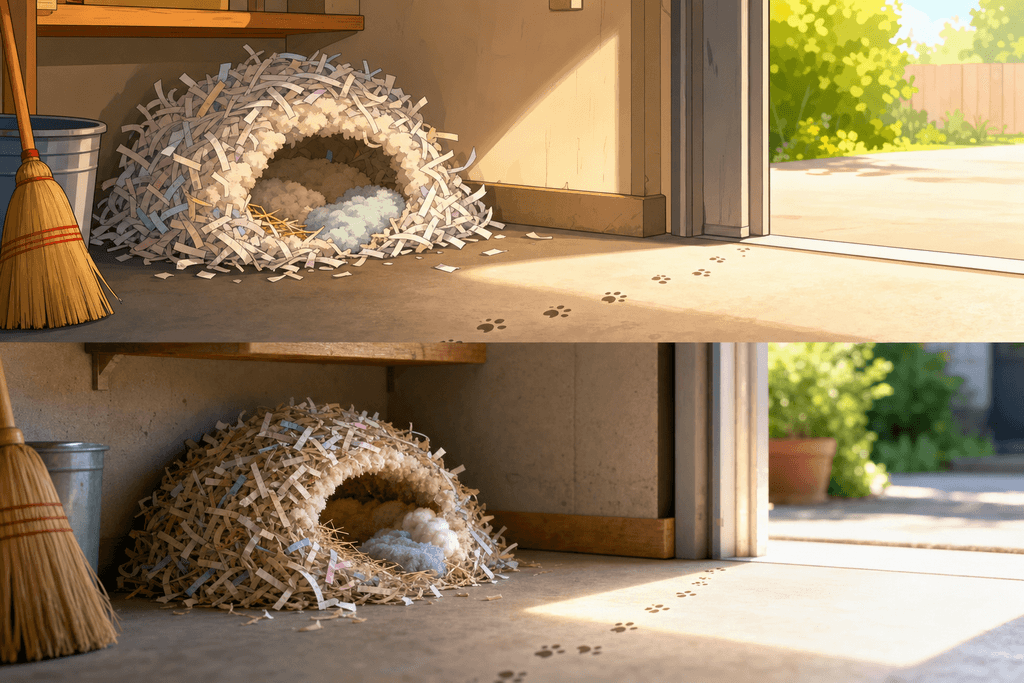
Pull the nest out with gloves on, bag it, disinfect the spot, then find and seal the hole the mouse used to get in, because mouse nest removal that skips the sealing step just leaves a clean room for the next mouse. If you found one nest, do not assume you found the only mice. A single nest often sits close to a litter of five or six babies, and mother mice keep having more every few weeks as long as the spot stays warm and quiet. Look for the nest itself in shredded paper, chewed insulation, or bits of fabric balled up in a corner of the attic, behind a box, or inside a wall void, usually somewhere dark and out of the way.
Cleaning up the mess feels like the finish line, but it is only half the job. Mice leave urine and droppings behind that need to be cleaned up properly, and they will keep coming back through the same gaps unless those gaps get closed. Prevention means checking the foundation, vents, and any small opening around pipes or wires, since a mouse can squeeze through a gap the size of a dime. Handle both steps together and you stop the cycle instead of just resetting it.
Table of Contents
How Mice Build Nests Inside Your Walls
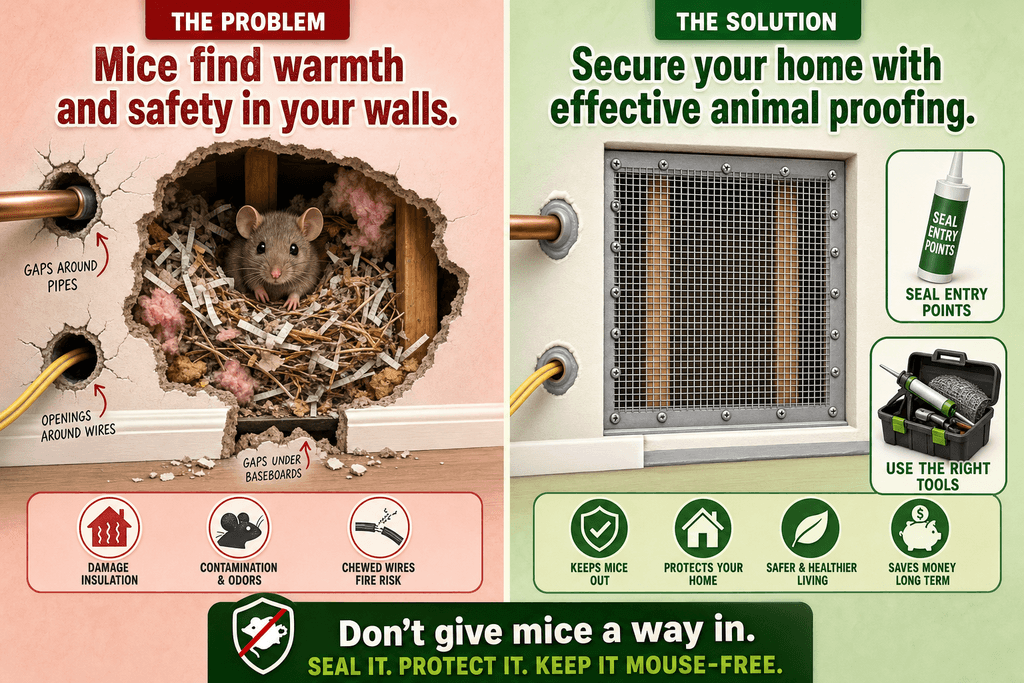
Mice pick spots that stay warm, dark, and quiet, which is why attics, wall voids, spaces behind refrigerators and washing machines, and gaps under attic insulation are their top choices. North Texas homes give them extra reasons to stay: mild winters mean mice never truly go dormant, and older homes around Fort Worth, Denton, and Granbury often have gaps around plumbing and wiring that never got sealed properly.
Once a mouse finds a safe spot, it shreds soft material to build the nest itself. Common nest material includes paper, cardboard, fabric scraps, and insulation fibers, all pulled apart and packed into a tight ball about the size of a fist.
A short list of what mice usually grab for nesting material helps show why almost every house has something on hand:
- Newspaper or cardboard boxes stored in the attic
- Fiberglass or cellulose insulation
- Clothing, blankets, or fabric scraps in storage bins
- Dryer lint or shredded paper towels near appliances
Nests grow fast because mice breed fast. This video walks through the basic steps for dealing with a house mouse problem before it spreads.
Spotting a Mouse Nest Before It Spreads
An active nest looks like a tight ball of shredded material, not scattered debris. Mice pull apart whatever soft material is nearby and pack it into a shape about the size of a fist, usually tucked somewhere dark and out of foot traffic.
Droppings near the nest, a sharp urine smell, and gnaw marks on nearby wood or wiring all point to current activity, not an old abandoned spot. Check attics, garages, the space behind stored boxes, and under sinks first, since those spots stay quiet and undisturbed for weeks at a time.
A few checks tell you if the nest is still in use:
- Fresh, moist droppings mean mice were there in the last day or two
- Dry, crumbly droppings suggest the nest may be abandoned
- Unshredded edges on the nest material mean building is still in progress
- A strong ammonia smell points to heavy, recent use
Never touch a nest with bare hands, even one that looks old. Droppings can carry hantavirus long after the mice are gone, so treat every nest as active until you have gloves and a mask on.
Removing the Nest Without Getting Sick
Suit up before you touch anything. Rubber gloves and an N95 mask are the minimum, since dried droppings can release airborne particles the moment they get disturbed.
Spray the nest and the area around it with a disinfectant and let it sit for several minutes before moving anything. This soaks the material and keeps dust from becoming airborne when you pick it up.
Follow these steps in order once the area is wet down:
- Bag the nest material directly, do not shake it out first
- Seal the bag tightly before carrying it through the house
- Toss the sealed bag in an outdoor trash bin, not an indoor can
- Wipe down gloves with disinfectant before removing them
Never vacuum or sweep dry droppings. Both actions kick dust into the air where you can breathe it in, which is the main way hantavirus spreads to people.
Cleaning and Disinfecting the Nest Area
Once the nest is out, the surface underneath still needs work. A bleach solution or an EPA-approved disinfectant kills what droppings and urine leave behind, and it needs a few minutes of contact time to actually work rather than a quick wipe.
Insulation that mice nested in or soiled should come out, since it holds odor and waste that plain cleaning will not remove. Any fabric, boxes, or stored items near the nest site need a wash or a wipe down too, since mice track waste onto anything they brush against.
Work through the area in this order:
- Spray and let the disinfectant sit before wiping
- Pull and bag any soiled insulation
- Wash fabric items in hot water
- Wipe down boxes and hard-sided containers
Skipping the insulation swap is the most common mistake people make, since the smell and residue left behind can draw the next mouse right back to the same spot. For bigger jobs, Wildlife X Team's Attic Cleanup & Restoration service handles the insulation swap and full disinfecting in one visit.
Blocking Mice From Building Another Nest
Sealing the house is what actually stops the cycle. A mouse can squeeze through a gap the width of a dime, so steel wool packed into cracks and caulk around pipes and wires closes off the entry points that matter most.
Food access matters just as much as entry points. Mice will not stick around a spot with nothing to eat, so storing food and pet food in sealed containers takes away the reason to stay.
A few habits keep the house from looking like a good nesting spot again:
- Clear paper piles and cardboard boxes out of attics and storage rooms
- Store bagged food in hard plastic or metal containers
- Check weep holes, vents, and gaps around utility lines twice a year
- Move firewood and yard debris away from the foundation
Most homeowners miss at least one entry point on their own walk-through, which is where a Wildlife Inspection Report from Wildlife X Team comes in, since it checks the foundation, vents, and roofline for the gaps that get overlooked from ground level.
Doing It Yourself or Calling in a Pro
Most homeowners can pull a nest, bag it, and wipe down the spot without any help. Where DIY runs into trouble is the sealing step, since a mouse only needs a gap the width of a pencil to get back in, and that gap is often somewhere you never think to check, like a weep hole hidden behind a downspout or a gap where a pipe enters the foundation.
A homeowner working alone usually finds the obvious hole and stops there, leaving one or two smaller openings open for the next mouse. Professional exclusion work checks the whole building envelope at once, sealing foundations, vents, and chimneys in the same visit instead of one gap at a time.
That full seal costs more upfront than a tube of caulk and a Saturday afternoon, but it comes backed by a renewable lifetime warranty on the sealing work, so a new gap that opens up later gets closed at no extra charge. If your house has had repeat nests in the same spot, that's the real sign to stop patching and get the whole exterior checked.
Choosing Between Patching a Hole and Sealing the Whole House
One nest gone doesn't mean the problem is gone. If you patched the one gap you found and called it done, check back in a few weeks, because the openings you missed are still open. The decision in front of you is simple: keep patching gaps as you find them, or get the whole exterior checked once. Wildlife X Team handles the inspection, removal, cleanup, and sealing in a single visit, which covers foundations, vents, and chimneys instead of just the hole you happened to spot. That's the version that actually holds up. Homeowners in Fort Worth, Denton, Granbury, and the surrounding areas dealing with repeat nests are better off booking that full check now instead of finding another nest in the same spot next month.
Mouse Nest Worries After Cleanup
Can I get sick just from being near a mouse nest without touching it?
Yes, standing near a disturbed nest can be enough, since hantavirus spreads through dust from dried droppings and urine floating in the air, not just direct contact. The risk goes up in small, closed spaces like attics or crawl spaces with poor airflow. Open a window or run a fan for a few minutes before you get close, and keep the mask on until the area is disinfected.
What if I find a nest with baby mice still inside?
Bag and remove the whole nest with the babies inside, since they cannot survive apart from their mother and leaving them will only draw her back to the same spot. Wear gloves the same way you would for an adult nest, because young mice can still carry the same bacteria in their fur and droppings. Seal the entry point right after, or she will just rebuild nearby.
Will bleach alone kill the smell mice leave behind?
Bleach kills germs on the surface, but it will not pull odor out of insulation, wood, or drywall that soaked up urine over time. The smell sits in the material itself, not just on top of it, so soaked insulation needs to come out rather than get sprayed and left. Wildlife X Team's attic cleanup service replaces that insulation and treats the framing underneath in the same visit.
How do I know if mice moved out or are still coming back?
Check for fresh droppings and a strong ammonia smell over several days after cleanup, since dry, old droppings with no new activity mean the mice are gone for now. Dust a thin layer of flour or baby powder near the sealed entry point and check for fresh tracks after a night or two. Tracks showing up again means a gap got missed and needs a second look.