
Safe Snake Removal Steps for Homes and Yards

You step into your garage to grab a rake and freeze when you spot a coiled shape in the corner, or you're watering the garden and nearly step on something slithering through the grass. Snake encounters in North Texas suburbs have become increasingly common as development pushes into natural habitats, and knowing the right snake removals steps before panic takes over can mean the difference between a safe resolution and a dangerous mistake.
Table of Contents
Understanding Snake Behavior in North Texas
North Texas is home to over 40 different snake species, and most of them are completely harmless to people and pets. The Fort Worth, Denton, and Granbury areas see regular snake activity, especially during warmer months when these cold-blooded creatures come out to hunt and find shelter. Understanding which snakes live in your area and what brings them to your property is the first step in dealing with any snake problem safely. While many homeowners panic at the sight of any snake, knowing the difference between a harmless garden snake and a venomous copperhead can help you respond appropriately and avoid unnecessary fear.
Common Snake Species in the Region
The Dallas-Fort Worth area has a mix of harmless and venomous snakes that homeowners might encounter. Rat snakes and garter snakes are the most common non-venomous species you'll find around homes and yards. These helpful snakes actually eat rodents and other pests, making them beneficial to have around in small numbers.
When it comes to venomous species, North Texas has four main types to watch for:
- Copperheads, which are the most common venomous snake in the region and often hide in leaf piles and woodpiles
- Cottonmouths (water moccasins), typically found near water sources like ponds and creeks
- Western diamondback rattlesnakes, which prefer rocky areas and open grasslands
- Texas coral snakes, which are rare but highly venomous with distinctive red, yellow, and black bands
Most snake removals in the Fort Worth area involve non-venomous species that simply wandered into the wrong place. Wildlife X Team handles both types safely, but knowing what you're dealing with helps determine how urgent the situation really is.
When Snakes Are Most Active
Snake activity in North Texas follows a pretty predictable pattern based on temperature and season. You'll see the most snakes between April and October when temperatures stay consistently warm. During the hottest summer months of July and August, snakes often become more active at night to avoid the scorching daytime heat.
Spring brings increased snake activity for a specific reason. Snakes emerge from winter hibernation hungry and ready to mate, which means they're moving around more than usual and exploring new territories. This is when homeowners in Denton and Granbury report the most snake sightings near their homes.
Fall sees another spike in activity as snakes search for warm places to spend the winter. Crawl spaces, attics, and gaps in foundations become attractive spots for snakes looking to hibernate, which is why professional wildlife inspection becomes important before cold weather arrives.
What Brings Snakes to Your Property
Snakes don't randomly show up at your house. They're following food sources, seeking shelter, or looking for water. If you have mice, rats, or other small rodents around your property, you're basically rolling out the welcome mat for snakes.
Here are the main things that attract snakes to residential areas:
- Rodent populations in garages, sheds, or near bird feeders
- Tall grass and overgrown vegetation that provides cover
- Wood piles, rock piles, and debris where snakes can hide and hunt
- Water sources like ponds, birdbaths, or leaky outdoor faucets
- Gaps under doors, cracks in foundations, and unsealed vents that offer entry points
The presence of one snake often indicates a larger issue with your property's ecosystem. Companies like Critter Control and Omega Animal Removal focus mainly on removal, but Wildlife X Team takes a different approach by identifying what attracted the snake in the first place and fixing those underlying problems.
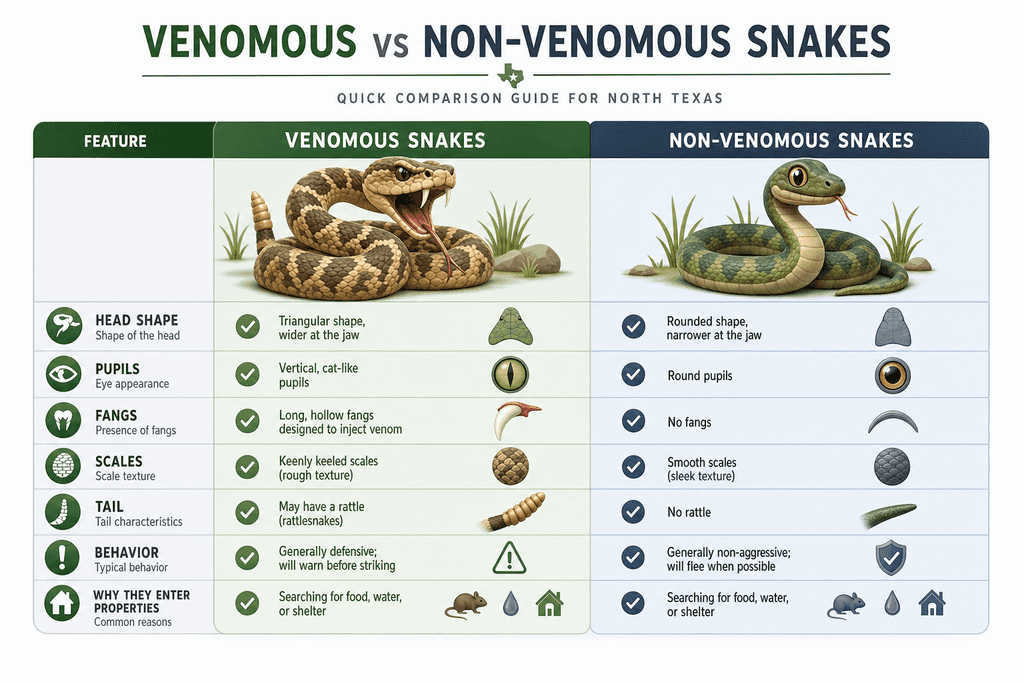
Identifying Venomous vs Non-Venomous Snakes
Knowing whether a snake is dangerous can help you decide how to respond. While you should never try to handle any snake yourself, understanding basic identification can help you communicate clearly with wildlife removal professionals and assess the urgency of the situation.
Here's a quick comparison of key features to look for:
Venomous Snake Characteristics:
- Triangular or arrow-shaped head that's wider than the neck
- Vertical, cat-like eye pupils (except coral snakes, which have round pupils)
- Heat-sensing pits between the eyes and nostrils
- Thick, heavy body relative to length
- Single row of scales on the underside of the tail
Non-Venomous Snake Characteristics:
- Narrow head that's similar in width to the neck
- Round pupils like most animals
- No heat-sensing pits on the face
- Slender body that tapers gradually
- Double row of scales on the underside of the tail
The problem is that these identification tips require getting close enough to see details, which isn't safe or practical. Some non-venomous snakes like hognose snakes will flatten their heads and hiss to mimic venomous species when threatened. That's why professional snake removals are always the safer choice, especially if you're not 100% certain what you're dealing with.
Wildlife X Team's specialists are trained to identify all North Texas snake species quickly and handle them using humane methods that keep both the snake and your family safe. Unlike some competitors who may use harmful chemicals or traps, our approach focuses on safe removal and prevention strategies that address why the snake showed up in the first place.
Immediate Safety Steps When You Spot a Snake
Most snake bites happen when people try to handle or kill snakes they find near their homes. The moment you spot a snake in your yard or house, your first instinct might be to grab a shovel or get closer for a better look. That's exactly what you shouldn't do. The single most important thing is to stop moving and keep at least six feet away from the snake. Snakes typically want nothing to do with humans and will leave on their own if given space and time. Your immediate reaction in the first few seconds can make the difference between a safe outcome and a dangerous situation.
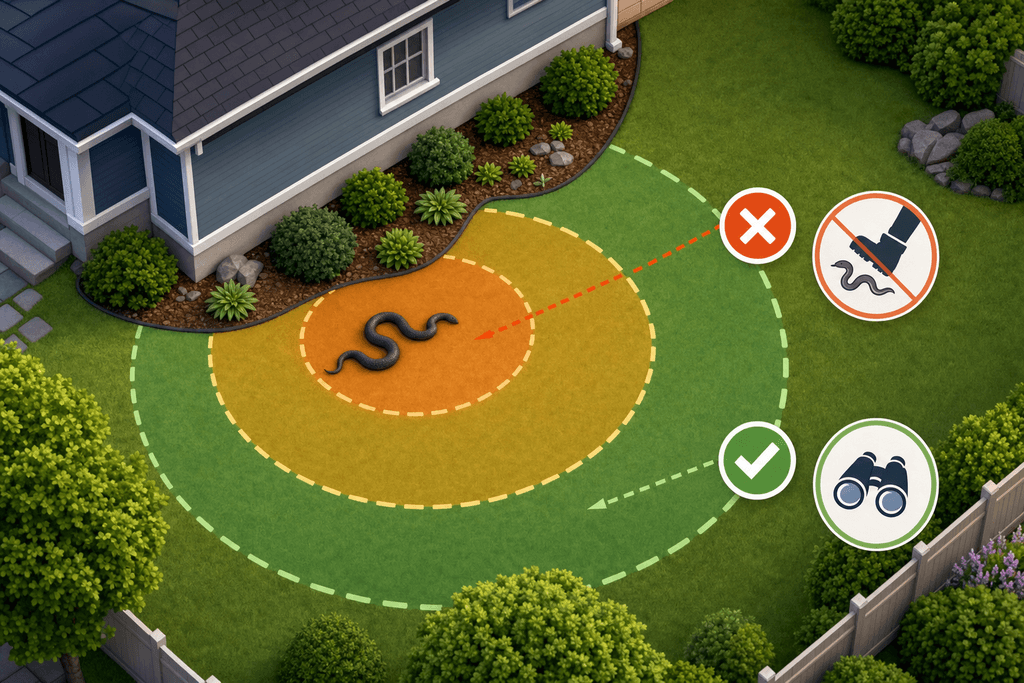
Once you've stopped and created distance, your next priority is securing the area. Get all pets and children inside immediately and close any doors or windows near where you saw the snake. Dogs especially tend to investigate snakes out of curiosity, which often ends badly.
What to Do Right Away
- Keep your distance and never attempt to touch, corner, or trap the snake
- Remove pets and children from the area and keep them indoors
- Watch from a safe spot to see where the snake goes without getting closer
- Take a photo from far away if you can do so safely for identification purposes
- Call professionals immediately if you're unsure what type of snake it is
Here's what makes snake encounters more dangerous than they need to be. People often try to kill the snake with garden tools, which requires getting close enough for the snake to strike. Others attempt to catch it in a bucket or box without proper equipment. Both approaches put you at serious risk, especially since you probably can't tell if the snake is venomous just by looking at it.
When You Need Professional Help
If the snake is inside your home, near your foundation, or you can't identify whether it's venomous, that's when you call for snake removals right away. Wildlife X Team handles these situations daily across Fort Worth, Denton, and surrounding areas. We've seen too many close calls from homeowners who waited or tried handling it themselves.
DIY Snake Removal for Non-Venomous Species
Let's be clear about something first. DIY snake removal only makes sense if you're absolutely certain the snake isn't venomous, it's in an accessible outdoor location, and you have the right tools. Even then, many people find that what seemed simple becomes complicated fast. Non-venomous snakes like rat snakes and garter snakes are common in Texas yards, but they still have teeth and will bite if they feel threatened. The question isn't whether you can remove a snake yourself, but whether you should.
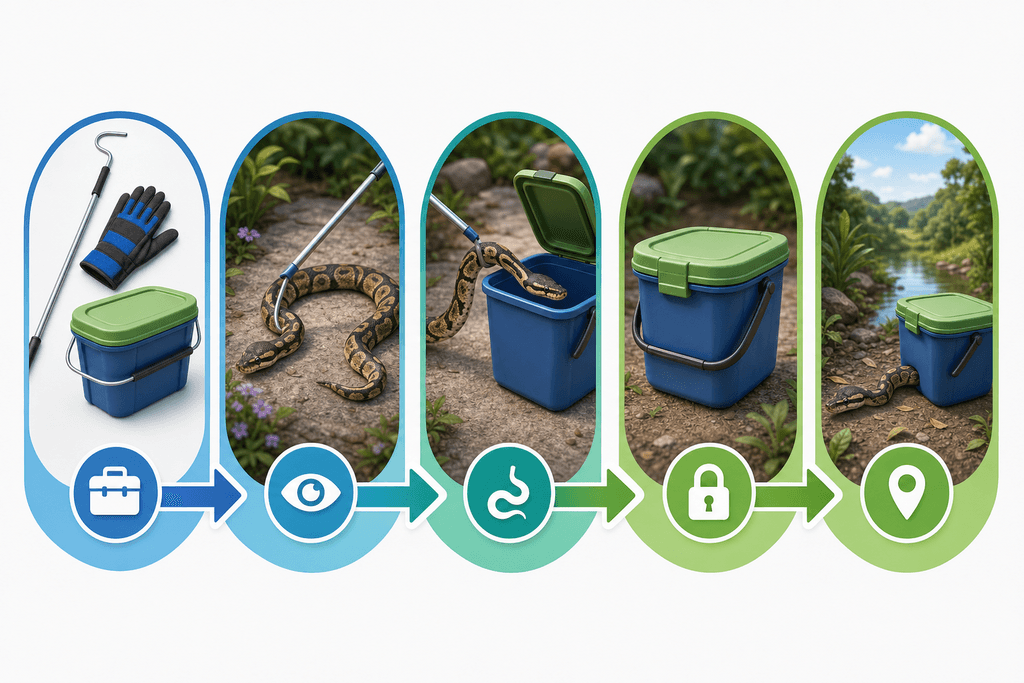
If you decide to proceed with DIY removal, you'll need specific equipment. A snake hook or long-handled grabber tool is essential, along with thick leather gloves, long pants, and closed-toe boots. Never use your bare hands or short tools that require you to get within striking distance.
Safe DIY Removal Steps
- Put on protective gear including thick gloves and boots that cover your ankles
- Approach slowly from behind using a snake hook or long grabber tool
- Gently guide the snake into a large container or toward an exit path
- Transport carefully if relocating, keeping the container secure and ventilated
- Release at least a mile away from residential areas in suitable habitat
This video shows practical techniques for keeping snakes away from your property in the first place. Sometimes prevention beats removal every time.
Stop and Call Professionals If
- The snake shows defensive behavior like coiling or striking
- You're not 100% certain about the species identification
- The snake is in a confined space like a garage or basement
- You feel uncomfortable or uncertain at any point during the process
Most homeowners who start a DIY removal end up calling professionals anyway. There's no shame in that decision, and it's often the smarter choice from the start.
Professional Snake Removal and Prevention
Professional snake removals involve more than just getting the snake out of your yard. When you call Wildlife X Team at (817) 799-8686, we start by identifying the species to determine the safest removal method. Our team includes trained specialists who handle venomous and non-venomous snakes daily, using techniques that protect both you and the animal. We've removed snakes from attics, crawl spaces, garages, and every other spot you can imagine around homes in Keller, Southlake, and throughout the service area. The removal itself is just the beginning of solving your snake problem.
What happens after we remove the snake matters even more. Our Wildlife Inspection Report® identifies exactly how and why snakes are getting onto your property. We check foundations, crawl spaces, gaps around pipes, and other entry points that most homeowners never notice.
Why Professional Service Makes Sense
- Immediate safety without risk to you or your family
- Correct identification of species and potential danger level
- Humane handling that follows proper wildlife management practices
- Complete inspection to find why snakes are attracted to your property
- Prevention planning to stop future snake encounters
The exclusion work we do after removal creates long-term protection. We seal foundation cracks, install vent guards, and address the specific vulnerabilities on your property. This isn't just about one snake, it's about making sure you don't face the same problem next month or next year.
Our animal proofing services include repairs and barriers that physically prevent snakes from entering your home or yard. We've seen what works and what doesn't across hundreds of properties in Fort Worth, Denton, Granbury, and surrounding communities. The renewable lifetime warranty we offer shows how confident we are in these prevention methods.
Making Your Property Less Attractive to Snakes
Snakes don't show up randomly. They come to your property because it offers what they need, which usually means food, shelter, or both. The good news is that you can make your yard much less appealing to snakes with some straightforward changes. Most snake problems start with rodent problems, since mice and rats are primary food sources for many snake species common in Texas. If you've got rodents, you're basically running a snake restaurant without knowing it. Addressing the food source often solves the snake issue naturally.
Your landscaping choices matter more than you might think. Snakes love tall grass, thick ground cover, and piles of leaves or wood because these spots provide cover and keep them cool. Keeping grass cut short and removing debris eliminates hiding spots that make snakes feel safe.
Property Changes That Deter Snakes
- Cut grass regularly and keep it under 3 inches tall
- Remove wood piles, leaf piles, and debris where snakes hide
- Trim bushes and shrubs away from your home's foundation
- Eliminate standing water that attracts rodents and insects
- Store firewood at least 20 feet from your house on raised platforms
- Fill in holes and burrows in your yard that provide shelter
The foundation and exterior of your home need attention too. Snakes can squeeze through surprisingly small gaps. Our exclusion services seal these entry points with materials that last, including foundation repairs, caulking, and specialized barriers. We've worked on properties throughout Weatherford, Azle, and Flower Mound where simple sealing work made all the difference.
Long-Term Prevention Checklist
- Address rodent problems immediately to remove snake food sources
- Seal all gaps larger than a quarter inch around your foundation
- Install door sweeps on exterior doors, especially garage doors
- Cover vents and chimneys with appropriate guards
- Keep bird feeders away from the house since they attract rodents
- Schedule regular inspections to catch new vulnerabilities early
Prevention work takes effort up front but saves you from repeated snake encounters down the road. The combination of property maintenance and professional exclusion services creates a barrier that actually works. Wildlife X Team's approach covers both the immediate removal needs and the long-term prevention that keeps your property protected across all seasons.
Taking Control of Snake Problems
Dealing with snakes around your home doesn't have to be scary if you follow the right steps. The most important things to remember are to keep your distance, never try to handle a snake yourself, and call for help when you spot one you can't identify. Most snake removals go smoothly when people stay calm and let the professionals handle it.
Prevention is really where the magic happens. Once you seal up those entry points and clean up the yard, snakes usually move on to easier hunting grounds. But sometimes the problem is bigger than a weekend DIY project can fix.
That's where Wildlife X Team comes in for folks in Fort Worth, Denton, Granbury, and surrounding areas. We handle snake removals safely and can spot the hidden entry points most people miss. Our team also does the full property inspection to make sure snakes don't come back next season.
The truth is, waiting too long can turn a single snake sighting into a bigger issue. Snakes that find food and shelter on your property tend to stick around, and some species even return to the same spots year after year.
Whether you decide to tackle prevention yourself or bring in help, the key is acting quickly. The sooner you address the problem, the less likely you are to deal with it again. And if you're not sure what kind of snake you're dealing with, that's exactly when you need someone who knows the difference between harmless and dangerous species.
Common Questions About Snake Removal
Finding a snake on your property brings up a lot of questions fast. Most people want to know if they're in danger, what they should do next, and how much it's going to cost to fix the problem. These are the answers homeowners in North Texas ask us most often when dealing with snake removals.
How can I tell if a snake is venomous?
In North Texas, venomous snakes typically have triangular-shaped heads, vertical slit pupils, and heat-sensing pits between their eyes and nostrils. The four venomous species in our area are copperheads, cottonmouths, rattlesnakes, and coral snakes. That said, never get close enough to examine a snake's features because even non-venomous bites can cause infections and require medical attention.
What should I do if someone gets bitten?
Call 911 immediately and get to a hospital as fast as possible. Keep the person calm and still to slow venom spread, remove any jewelry or tight clothing near the bite, and position the bite below heart level if you can. Don't try to catch or kill the snake, don't apply ice or tourniquets, and never attempt to suck out venom like you see in movies.
Will snakes come back after removal?
Snakes don't have a homing instinct like some animals, but they will return to areas that offer food, water, and shelter. If you only remove the snake without addressing what attracted it in the first place, you'll likely see more snakes show up. Wildlife X Team handles both the removal and prevention side, sealing entry points and eliminating the conditions that draw snakes to your property in the first place.
How much does professional snake removal cost?
The cost varies based on the situation, like whether it's a single snake or an ongoing problem, how accessible the snake is, and what prevention work needs to happen afterward. Most companies in the Dallas-Fort Worth area charge differently, and some like Terminix focus more on general pest control rather than specialized wildlife handling. Getting a proper inspection first helps you understand exactly what you're dealing with and what it'll take to solve it long-term.
How quickly can professionals respond?
Most professional wildlife removal services offer same-day or next-day response for snake removals, especially during warmer months when snakes are most active. The speed depends on your location and the company's current schedule, but emergency situations with venomous snakes typically get priority treatment.
Is snake removal humane?
Yes, professional snake removals should always be humane. Trained specialists use proper equipment to safely capture and relocate snakes without harming them. Snakes play an important role in controlling rodent populations, so ethical removal means relocating them to appropriate habitats away from homes rather than killing them unnecessarily.