
Safe Snake Removal Steps for Homes and Yards

Most snake bites in Texas happen when homeowners try to kill or catch snakes themselves, turning a manageable situation into a dangerous one. Whether you spot a snake coiled near your back door or discover one in your garage, knowing the right snakes removal steps keeps everyone safe, including the snake. Wildlife X Team has helped hundreds of Fort Worth area homeowners handle these encounters safely, and the same proven methods can work for you.
Table of Contents
Why Snakes Come to Your Property
Snakes don't just randomly show up in your yard or home. They're actually following a pretty simple plan: find food, water, and a safe place to hide. Understanding what brings these reptiles to your property is the first step in keeping them away. Most homeowners in North Texas deal with snake visits during certain times of year, and it's usually because their yard has become an all-you-can-eat buffet for these cold-blooded visitors. The good news is that once you know what attracts them, you can make your property a lot less appealing.
Food Sources That Bring Snakes Around
Snakes are hunters, and they go where the food is. If your property has a healthy population of rodents, frogs, or insects, you're basically running a snake restaurant. Mice and rats are especially attractive to many snake species common in the Dallas-Fort Worth area.
Here's what typically draws snakes to hunt on your property:
- Rodent populations living in garages, sheds, or near foundations
- Frogs and toads attracted to water features or damp areas
- Insects and grubs in mulch beds and gardens
- Bird eggs and small birds nesting low to the ground
- Fish in outdoor ponds or water gardens
Perfect Hiding Spots Snakes Love
Snakes need places to hide from predators and regulate their body temperature. Your yard might have dozens of spots that look perfect to a passing snake. Woodpiles are like five-star hotels for snakes because they offer shelter, warmth, and often a side of rodents.
Common hiding spots include:
- Stacked firewood or lumber piles
- Tall grass and overgrown vegetation
- Foundation gaps and cracks in concrete
- Rock piles and decorative stone features
- Debris piles and unused equipment
Seasonal Patterns and Snake Activity
Snake activity in Texas follows a pretty predictable pattern. Spring and fall are peak times for snake encounters because these reptiles are most active when temperatures are moderate. During hot summer months, they're still around but tend to move during cooler morning and evening hours.
This helpful video shows practical ways to make your property less attractive to snakes. Wildlife X Team uses similar prevention strategies as part of our comprehensive snake removal services.
When to expect more snake activity:
- Spring (March-May) when snakes emerge from winter dormancy
- Fall (September-November) when they're actively feeding before winter
- After heavy rains when prey animals are more active
- During hot Texas summers when they seek cool, shaded areas
Water and Shelter Needs
Texas summers get brutal, and snakes need water and cool spots just like any other animal. A leaky outdoor faucet or a shaded crawl space can be exactly what a snake is looking for on a 95-degree day. Properties with consistent water sources see more snake activity than drier yards.
What attracts snakes during hot weather:
- Dripping hoses and outdoor faucets
- Pet water bowls left outside
- Air conditioning condensation near foundations
- Cool crawl spaces and basement areas
- Shaded areas under decks and porches
Knowing Your Snake Neighbors
Not all snakes are dangerous, but knowing the difference can help you respond appropriately. North Texas is home to both harmless snakes and venomous species. While companies like Critter Control and Omega Animal Removal offer snake services, understanding basic snake identification helps you know when to call for professional help versus when a snake is just passing through.
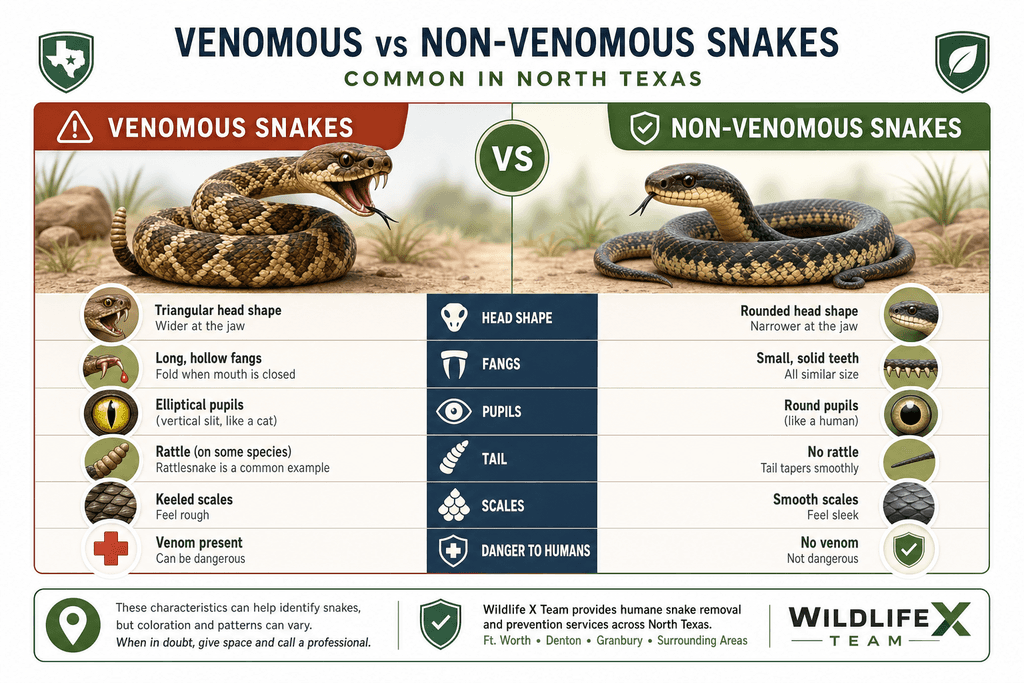
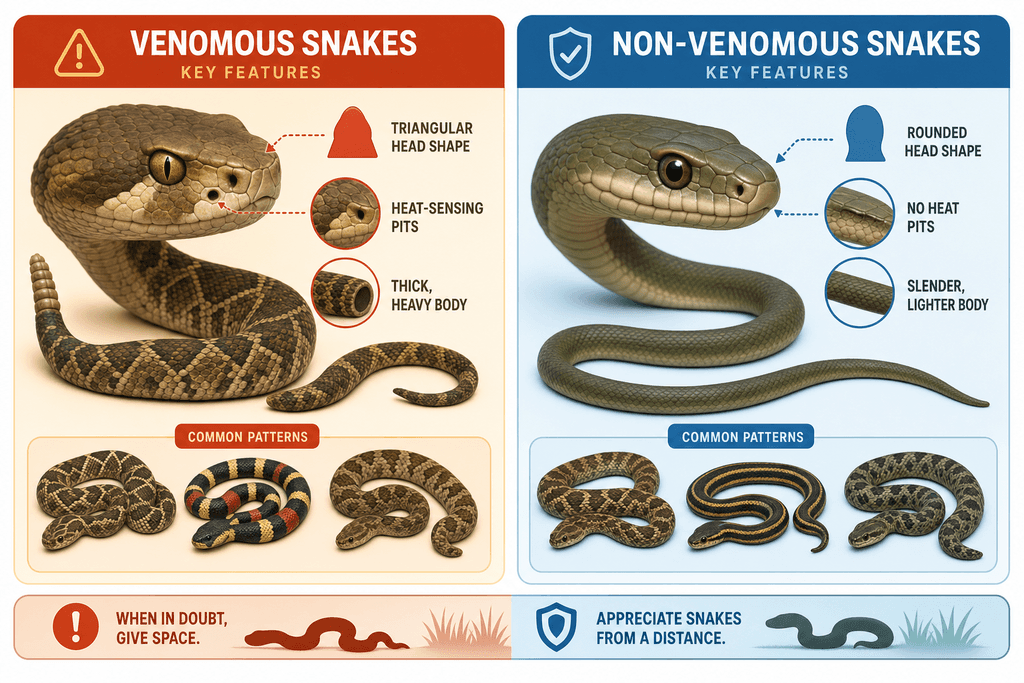
Here are the key differences between venomous and non-venomous snakes common in our area:
| Feature | Venomous Snakes | Non-Venomous Snakes |
|---|---|---|
| Head Shape | Triangular, distinct from neck | Rounded, blends with body |
| Eye Pupils | Vertical slits (like cat eyes) | Round pupils |
| Body Pattern | Bold patterns, often diamond or banded | Varied, often striped or solid |
| Tail | Rattlesnakes have rattles; others taper quickly | Gradually tapers to point |
| Common Species | Copperheads, Cottonmouths, Rattlesnakes | Rat Snakes, Garter Snakes, King Snakes |
When you spot a snake, don't try to get close enough to identify it yourself. Professional snake removal experts can safely identify and remove any snake species. Wildlife X Team provides humane snake removal throughout the Fort Worth and Denton areas, ensuring both your safety and the snake's wellbeing.
Identifying the Snake Before You Act
Most snake bites happen when people try to kill or catch snakes they think are dangerous. The truth is, knowing what you're dealing with from a safe distance can save you from a trip to the emergency room. Texas is home to four venomous snake species: copperheads, cottonmouths, coral snakes, and rattlesnakes. Each one has distinct features you can spot without getting anywhere near striking range.
The shape of a snake's head tells you a lot from several feet away. Venomous snakes in our area typically have triangular or arrow-shaped heads that are wider than their necks. Non-venomous snakes usually have rounded heads that blend smoothly into their bodies. But here's what most people don't realize: some harmless water snakes flatten their heads when threatened, making them look dangerous when they're not.
- Copperheads have hourglass-shaped bands that are wider on the sides
- Cottonmouths are dark with a white mouth lining they show when threatened
- Coral snakes have red, yellow, and black bands (red touches yellow)
- Rattlesnakes have the obvious rattle and diamond or blotched patterns
You'll see advice online about checking pupil shape or counting scale rows, but getting that close defeats the whole purpose of identification. Never approach a snake closer than 6 feet, no matter how confident you feel about what species it is. Even experts keep their distance until they have the right tools ready.
Common mistakes happen all the time in the Fort Worth and Denton areas. Rat snakes get killed because people think they're rattlesnakes. Water snakes get mistaken for cottonmouths almost daily during summer months. If you're not absolutely certain you're looking at a harmless species, the smart move is calling Wildlife X Team at (817) 799-8686 right away.
Safe Removal Steps You Can Take
The first thing you need to do when you spot a snake is create distance between the animal and anyone nearby. Get kids and pets inside immediately, and don't let anyone try to be a hero with a shovel or garden hoe. Most bites happen during attempted removal, not random encounters. Your goal is containment and observation, not confrontation.
For non-venomous snakes that you're completely sure about, you can use a long-handled tool like a rake or broom to gently encourage them toward the edge of your property. Never use your hands, even with harmless species. A scared snake will bite defensively, and while it won't inject venom, those teeth still hurt and can cause infection.
This video shows practical techniques for keeping snakes away from your property in the first place, which is always better than dealing with removal.
What Not to Do
The mistakes people make during snake encounters follow predictable patterns. Never try to pick up a snake, even if it looks dead. Snakes can bite reflexively for up to an hour after death. Don't corner a snake or block its escape route, because a trapped animal is far more likely to strike.
- Keep at least 6 feet of distance at all times
- Clear the area of people and pets first
- If it's venomous, watch from inside and call professionals
- For non-venomous snakes, use long tools to guide them away
- Never attempt to kill, catch, or corner any snake
When you're dealing with a venomous snake or you're just not sure, containment means keeping eyes on it from a safe location while professionals head your way. Close doors to rooms where the snake is located. If it's outside, just maintain visual contact from a window or vehicle. Wildlife X Team serves the entire Fort Worth, Denton, and Granbury areas with same-day response for snake situations because we know these calls can't wait.
Keeping Snakes Away for Good
Snakes don't show up randomly. They're following food sources, looking for shelter, or both. The number one attractant for snakes around homes is rodents, which means your mouse problem might actually be creating a snake problem. Controlling the prey animals removes the main reason snakes visit your property in the first place.
Your yard's layout matters more than you'd think. Snakes love tall grass, wood piles, rock piles, and dense ground cover because these spots offer protection and hunting opportunities. Keeping grass cut short and removing debris piles eliminates most of the hiding spots snakes prefer. Move firewood at least 20 feet from your house and stack it on racks, not directly on the ground.
- Trim bushes and shrubs away from your foundation
- Remove rock piles and construction debris
- Keep grass mowed to 3 inches or shorter
- Store firewood elevated and away from structures
- Eliminate standing water that attracts prey animals
The real problem areas are the ones you can't see without a professional inspection. Snakes can squeeze through gaps as small as a quarter inch, which means foundation cracks, gaps around pipes, and openings under doors all become entry points. Our Wildlife Inspection Report identifies these vulnerabilities that homeowners typically miss during casual walk-arounds.
Professional Exclusion Makes the Difference
Sealing a house against snakes requires different materials and techniques than general pest control. Foundation repairs, vent guards, and proper sealing of crawl space entries all need to meet specific standards or snakes will find their way back in. We've seen plenty of DIY attempts in Southlake and Grapevine that looked good but left gaps snakes could still use.

Long-term protection comes from combining landscape management with professional animal proofing. The exclusion work we do includes installing barriers that last for years, not temporary fixes that fail after one season. That's why Wildlife X Team backs the work with a renewable lifetime warranty, because proper exclusion done right the first time keeps working.
Your Next Steps for a Snake Free Property
Dealing with snakes around your home comes down to three main things: knowing what kind of snake you're dealing with, removing it safely, and making sure it doesn't come back. The identification part helps you figure out if you need to back away and call someone right now or if you can handle it yourself. Safe removal means keeping your distance, using the right tools, and never trying to be a hero with venomous snakes. Prevention is really where the magic happens because once you fix the things that attract snakes in the first place, you won't have to worry about them showing up again.
Your safety should always come first. If you're not sure what kind of snake you're looking at, or if it's in a spot that's hard to reach, that's when professional help makes sense.
Wildlife X Team handles snakes removal throughout Fort Worth, Denton, Granbury, and the surrounding areas with humane methods that actually work. We don't just grab the snake and leave. Our Wildlife Inspection Report finds all the spots where snakes might be getting in, and our exclusion services seal those entry points so you're not dealing with the same problem next month.
The difference between a one-time fix and long-term peace of mind usually comes down to whether someone checked your whole property for vulnerabilities. Most people find one snake and think that's the whole problem, but there's usually more going on underneath.
You've got the knowledge now to make smart choices about snake situations. The questions below cover some of the specific scenarios people run into most often.
Common Questions About Snake Removal
Finding a snake on your property brings up a lot of questions fast. Most homeowners in North Texas aren't sure what steps to take or whether they even need professional help. These answers cover the most common concerns people have when dealing with snakes around their homes and yards.
What should I do if I find a snake in my house?
Stay calm and keep your distance from the snake. Don't try to catch it or kill it yourself, as this is when most snake bites happen. Close the door to contain it in one room if possible, and call a professional wildlife removal service right away. Wildlife X Team can safely remove the snake and check your home for entry points that need sealing.
How much does professional snake removal cost?
The cost varies based on the situation and whether you need just removal or full exclusion services. A simple snake removal typically costs less than dealing with ongoing infestations that require sealing multiple entry points. Getting a Wildlife Inspection Report helps identify all the vulnerabilities in your property so you know exactly what needs fixing. Most companies in the area offer free estimates before starting any work.
Are all snakes in Texas protected by law?
No, but some species are protected under state law. The Texas indigo snake and Louisiana pine snake are protected and cannot be harmed or removed without special permits. Most common yard snakes like rat snakes and garter snakes aren't protected, but humane removal is still the best approach. Professional services know which species require special handling and follow all legal requirements.
How long does snake exclusion work last?
Quality exclusion work should last for years when done correctly. Wildlife X Team offers a Renewable Lifetime Warranty on their exclusion services, which means the barriers and repairs stay effective long-term. The key is using durable materials and sealing every possible entry point, including gaps as small as a quarter inch.
What time of year are snakes most active?
Snakes are most active in North Texas from April through October when temperatures are warmer. You'll see them more often in late spring and early summer when they're hunting for food and looking for mates. They become less active in winter but don't fully hibernate in our climate, so encounters can happen year-round.
Can snakes come back after removal?
Yes, if the conditions that attracted them still exist. Simply removing one snake doesn't solve the problem if your property has food sources, water, and easy entry points. That's why exclusion and prevention matter more than just removal. Sealing entry points, removing debris piles, and addressing rodent problems all help keep snakes from returning to your property.