Safe Animal Relocation Services: Where Do Removed Animals Go?

When a raccoon disappears from your attic after a wildlife removal service, most homeowners assume the story ends there. The truth is, professional wildlife relocation follows strict legal guidelines and careful planning to ensure animals end up in safe, suitable habitats where they can survive. Understanding where removed animals actually go helps you choose ethical services like Wildlife X Team that prioritize both your property protection and animal welfare throughout the entire process.
Table of Contents
- Understanding Wildlife Relocation Laws in Texas
- The Humane Relocation Process Step by Step
- Approved Release Sites and Habitat Requirements
- What Happens to Animals That Cannot Be Relocated
- Why Professional Relocation Matters for Your Property
- Making the Right Choice for Wildlife and Your Home
- Common Questions About Animal Relocation
Understanding Wildlife Relocation Laws in Texas
Most people think wildlife removal companies just catch animals and drop them off in the nearest forest, but Texas law makes it way more complicated than that. The Texas Parks and Wildlife Department has strict rules about where animals can go, how far they need to be moved, and which species can even be relocated at all. Breaking these rules can cost you thousands of dollars in fines, and some violations can even lead to criminal charges. Companies like Wildlife X Team follow these regulations carefully to protect both homeowners and the animals themselves.
Why Texas Has Strict Relocation Rules
Texas didn't create these laws just to make things harder for wildlife removal companies. The rules exist because moving animals around can spread diseases, hurt local ecosystems, and even put the relocated animals in danger. When you move a raccoon from Fort Worth to a random forest, that animal might not survive in its new home.
Here are the main reasons Texas controls wildlife relocation:
- Disease prevention, especially rabies and distemper that spread quickly between animals
- Protection of existing wildlife populations in the release areas
- Prevention of territorial conflicts that can kill relocated animals
- Maintaining balanced ecosystems that could be disrupted by new animals
- Reducing the chance that relocated animals will just find their way back to human homes
Which Animals Can and Cannot Be Relocated
Not all wildlife gets the same treatment under Texas law. Some animals are considered such high disease risks that relocation is completely illegal, no matter what. Other species have specific distance requirements or need special permits before they can be moved.
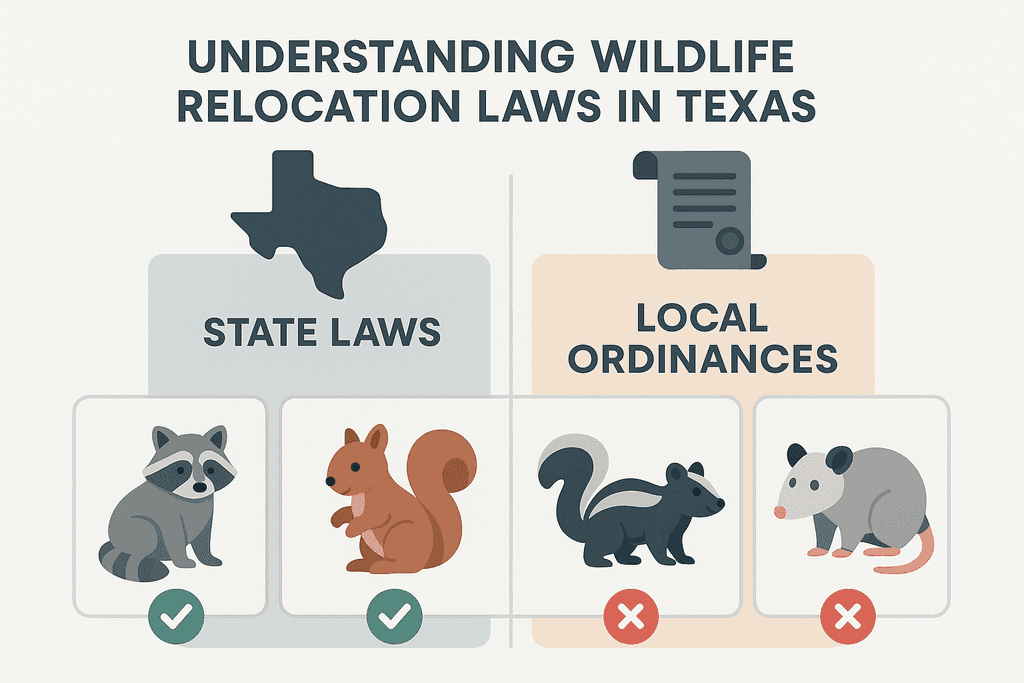
Raccoons are one of the trickiest animals to deal with legally. Because they carry rabies at high rates, many counties ban their relocation entirely. Squirrels have different rules and can usually be moved if done properly. Skunks fall into the no-relocation category in most Texas counties due to rabies concerns.
Understanding these regulations helps explain why professional wildlife removal services exist in the first place. Here's a look at how different animals are treated under Texas law:
Common Texas Wildlife and Their Relocation Rules
The rules change depending on what animal is causing problems in your attic or crawl space. Some species need permits, others need minimum distance requirements, and some cannot be moved at all without euthanasia.
Here's what property owners need to know about common nuisance animals:
- Raccoons often cannot be relocated in urban counties and may require euthanasia
- Squirrels can typically be relocated at least 10 miles from capture site with landowner permission
- Opossums have fewer restrictions but still need proper release locations
- Skunks usually cannot be relocated due to rabies vector status
Permit Requirements and Legal Consequences
Texas requires specific permits for wildlife handling, and these aren't just suggestions. Property owners who try to trap and relocate animals themselves often break laws they didn't even know existed. Professional companies like Wildlife X Team maintain the proper licenses and stay updated on changing regulations across different counties.
The permit system works on multiple levels:
- Trappers need a valid Texas hunting license or trapper's license
- Some species require additional permits from Texas Parks and Wildlife
- Release locations must have written permission from the landowner
- Transport of certain animals requires specific vehicle and cage requirements
Violations aren't taken lightly. Illegally relocating a rabies vector species can result in fines up to $500 per animal. Repeat offenses or cases involving protected species can lead to criminal charges. Some homeowners have faced fines exceeding $2,000 for trying to handle wildlife removal on their own without understanding the legal requirements.
The complexity of these regulations explains why professional wildlife removal services are often the safest and most legal option. Companies operating in the Dallas-Fort Worth area must navigate rules that vary by county and even by city in some cases. What's legal in Denton might be prohibited in Granbury, making local expertise essential for proper wildlife management.
The Humane Relocation Process Step by Step
Most people assume that wildlife removal means animals get dropped off at the nearest park, but the reality is much more complex. When a professional wildlife removal service like Wildlife X Team removes an animal from your property, there's a careful process that happens behind the scenes. The goal isn't just to move the animal somewhere else, it's to give that animal the best chance at survival in a new location. This process starts the moment a technician arrives at your home and continues long after the animal leaves your property.
The Humane Relocation Process Step by Step
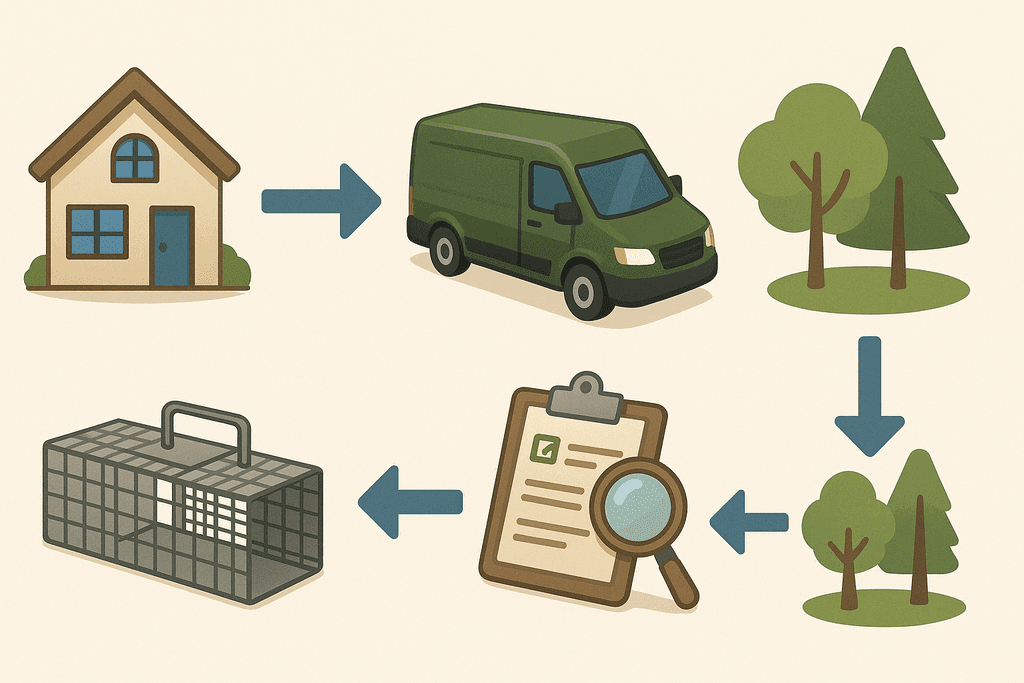
Initial assessment determines the best relocation strategy for each animal based on species, health, and local regulations. Not every raccoon or squirrel gets the same treatment because different animals have different needs.
- Live trapping uses specially designed cages that minimize stress and prevent injury to the animal
- Animals receive health checks before relocation decisions to ensure they're fit for release
- Transportation follows specific protocols to reduce animal anxiety including proper ventilation and temperature control
- Wildlife X Team uses trained zoologists who understand animal behavior to make informed decisions throughout the process
The transportation phase is where many companies cut corners, but it matters more than you'd think. Animals are kept in climate-controlled environments and transported during cooler parts of the day when possible. The cages are covered to reduce visual stress, and the drive to the release site is planned to be as smooth and quick as possible.
Release sites are carefully selected based on habitat requirements that match what the animal needs to survive. A squirrel that lived in your attic still needs trees, food sources, and shelter in its new home. This isn't a random decision.
Approved Release Sites and Habitat Requirements
The question everyone asks is where exactly do these animals end up. The answer depends on several factors, but there are strict guidelines that professional services follow. You can't just drive to any wooded area and let an animal go. There are legal requirements, ethical considerations, and practical concerns that all play a role in choosing the right spot.

Approved Release Sites and Habitat Requirements
Release sites must be at least 10-15 miles from the capture location to prevent animals from finding their way back to your property. Animals have strong homing instincts, and anything closer than that increases the chance they'll return.
- Habitat must match the species' natural requirements for food and shelter
- Private land requires owner permission for animal release
- Public lands have specific regulations about wildlife introduction
- Seasonal considerations affect release timing and location
- Water sources and food availability are critical factors
Professional services like Wildlife X Team maintain relationships with approved release properties throughout the Dallas-Fort Worth area. These aren't just random patches of woods. They're locations that have been vetted for their ability to support different species. Some properties are better for raccoons, others for squirrels, and the decision depends on what's available during that season.
The timing of release matters too. Releasing an animal in winter when food is scarce gives it a much lower chance of survival than releasing it in spring or summer. Professional wildlife removal companies track these factors and plan releases accordingly. Some companies in the area don't follow these guidelines, which is why choosing an experienced service matters.
What Happens to Animals That Cannot Be Relocated
Not every animal that gets removed from a property can be safely relocated to the wild. This is the part of wildlife removal that most companies don't talk about openly, but it's important to understand. There are legitimate reasons why some animals need different solutions, and it's not always a simple catch-and-release situation. State regulations, animal health, and public safety all factor into these decisions.
Injured or sick animals may need veterinary care before release can happen. A raccoon with a broken leg or a squirrel showing signs of illness can't just be dropped off in the woods. These animals need medical attention first.
- Some species carry diseases that prevent relocation by law
- Rabies vector species have special handling requirements that vary by state
- Baby animals separated from mothers require rehabilitation before they can survive on their own
- Licensed wildlife rehabilitators provide temporary care when needed
In Texas, certain animals fall under rabies vector species classifications, which means they have stricter rules about relocation. Professional services work with licensed facilities for special cases where animals need extended care or can't be released. Wildlife X Team coordinates with these facilities to ensure animals get the care they need.
The reality is that euthanasia is a last resort following strict ethical guidelines set by state wildlife agencies. This only happens when an animal poses a serious health risk, is severely injured beyond recovery, or when relocation is prohibited by law. It's never the first option, and reputable companies exhaust all other possibilities first. This is why working with a service that employs trained zoologists makes a difference in how these difficult decisions are made.
Why Professional Relocation Matters for Your Property
Most homeowners who try to relocate wildlife themselves end up facing the same problem within weeks. The animal either finds its way back or another one moves into the now-vacant space. This happens because DIY relocation focuses only on moving the animal without addressing why it chose your property in the first place. Professional wildlife services understand that successful relocation requires both removal and prevention to work together. Without sealing entry points and fixing vulnerabilities, you're just creating a revolving door for wildlife.
The Hidden Costs of Doing It Yourself
Taking the DIY route might seem cheaper at first, but it often leads to bigger expenses down the road. When animals return or new ones arrive, you end up paying for multiple attempts at solving the same problem.
- Animals relocated improperly often return within 24-48 hours using scent trails
- Untrained handlers risk spreading diseases like rabies or leptospirosis to new areas
- Missing secondary entry points means the problem continues even after removal
- Legal violations can result in fines ranging from hundreds to thousands of dollars
- Repeated infestations cause cumulative damage to insulation, wiring, and structures
What Professional Services Actually Include
Companies like Wildlife X Team approach relocation as part of a complete solution rather than a one-time fix. Their Wildlife Inspection Report identifies every potential entry point, not just the obvious ones that homeowners typically notice.
- Comprehensive property assessment to find all current and potential entry points
- Humane removal following state and federal wildlife regulations
- Professional-grade sealing and exclusion work that animals cannot breach
- Attic cleanup and restoration to remove contamination and odors that attract new animals
Protecting Ecosystems and Your Investment
Ethical relocation does more than just move an animal from point A to point B. It considers the health of local ecosystems and ensures relocated animals have a genuine chance at survival. Dropping a raccoon in an unfamiliar territory without adequate resources often leads to its death or forces it to invade another property.
Professional services also provide documentation that protects homeowners from liability. If relocated wildlife causes problems elsewhere or if questions arise about compliance with local ordinances, having proper records matters. The renewable lifetime warranty offered by established companies means you're covered if any issues resurface, something no DIY approach can match.
Making the Right Choice for Wildlife and Your Home
When you hire a professional wildlife removal service, you're not just getting rid of a problem animal. You're making sure that animal ends up somewhere it can actually survive and thrive. Licensed wildlife removal companies work with state regulations to relocate animals to approved habitats where they won't just become someone else's problem or worse, die because they can't find food or shelter. This matters more than most people realize, especially since doing it wrong can land you with serious fines.
The truth is that removal alone never fixes the real issue. If you don't seal up the entry points and address what attracted the animals in the first place, you'll just be dealing with new tenants in a few weeks or months. That's why companies like Wildlife X Team combine removal with prevention services, including animal proofing and attic restoration to make sure your home stays protected long-term.
Professional services also handle all the legal paperwork and permits that come with wildlife relocation. Different animals have different rules, and some species can't be relocated at all without special permits. Getting this wrong can cost you thousands in fines, not to mention the ethical concerns of releasing an animal somewhere it shouldn't be.
The best approach addresses both the immediate wildlife problem and prevents future ones. This means inspection, removal, cleanup, repairs, and exclusion work all working together as one complete solution. You might still have questions about how this process works in specific situations though.
Common Questions About Animal Relocation
Most homeowners have a lot of questions when they discover wildlife in their attic or walls. The biggest concern usually isn't just getting the animals out, but what actually happens to them afterward. Understanding the relocation process helps you make informed decisions about wildlife removal and ensures you're choosing a service that aligns with your values. Here are the most common questions we hear from property owners dealing with unwanted wildlife guests.
How far away are animals relocated from my property?
Most wildlife removal companies relocate animals at least 10 to 15 miles away from your property to prevent them from finding their way back. The exact distance depends on the species and local regulations, but the goal is to move them far enough that they establish a new territory instead of returning. Wildlife X Team follows all state guidelines to ensure animals are relocated to suitable habitats where they can thrive.
Can I relocate wildlife myself legally in Texas?
Texas law actually prohibits homeowners from trapping and relocating most wildlife species without proper permits. Raccoons, squirrels, and many other common nuisance animals require licensed professionals to handle removal and relocation. Attempting DIY relocation can result in fines and often leads to the animal returning or dying due to improper release locations.
What happens if the animal comes back after relocation?
When animals are relocated properly and entry points are sealed correctly, the chances of the same animal returning are extremely low. The bigger risk is actually new animals moving into the space if it isn't properly secured. That's why Wildlife X Team includes exclusion services and offers a Renewable Lifetime Warranty to protect against future invasions from any wildlife.
Are all animals relocated or are some euthanized?
Reputable wildlife removal companies prioritize humane relocation whenever possible. However, animals that are injured, diseased, or pose immediate health risks may need to be handled differently according to state wildlife regulations. Wildlife X Team focuses on humane methods and only follows state-mandated protocols when relocation isn't viable for the animal's welfare or public safety.
How do you ensure animals survive after relocation?
Professional wildlife removal services choose release sites with adequate food sources, water, and shelter that match the animal's natural habitat requirements. Animals are also relocated during appropriate seasons when they have the best chance of survival. Trained technicians assess each situation individually to select locations where the animal can establish a new territory successfully.
What prevents other animals from moving into the space?
Simply removing the current animals doesn't solve the problem if your property still has entry points and attractants. That's why exclusion work is the most important part of wildlife removal. Wildlife X Team seals all entry points, installs barriers, and addresses the conditions that attracted animals in the first place, which is why their approach includes comprehensive animal proofing rather than just removal alone.