
Rodent Removal Solutions for Texas Homes: Rats, Mice, and More

A single mouse can leave behind 50 to 60 droppings every day inside your home, contaminating surfaces and spreading disease while you sleep. Texas homes face constant rodent pressure thanks to our mild winters and sprawling urban development that pushes wildlife into neighborhoods across the Dallas-Fort Worth area. Understanding why rodents target your property and how to stop them is the first step toward protecting your family and home from these persistent invaders.
Why Texas Homes Attract Rodents
Texas creates the perfect storm for rodent problems, combining year-round mild temperatures with rapid urban expansion that destroys natural habitats. Unlike northern states where harsh winters naturally control rodent populations, our climate allows mice and rats to breed continuously throughout the year. The Dallas-Fort Worth metroplex has grown so quickly that rodents have adapted to living alongside humans rather than in the wild, making your attic or crawl space their preferred home.
Property damage from rodents costs American homeowners billions of dollars annually, with chewed electrical wiring causing an estimated 25 percent of house fires with unknown origins. These pests don't just create messes—they gnaw through wood, insulation, pipes, and even concrete to access food and shelter. A family of rats can compromise your home's structural integrity within months, turning a minor nuisance into a major renovation project.
The Fort Worth and Denton areas face particularly high rodent activity due to the mix of older neighborhoods with entry points and new construction that displaces wildlife populations. Rodents need only a gap the size of a quarter to squeeze into your home, and most houses have dozens of potential entry points around foundations, vents, and utility lines. Wildlife X Team's inspection process identifies these vulnerabilities before they become full-blown infestations, protecting your property with humane exclusion methods rather than endless trapping cycles.
Food sources around your property act like a welcome sign for hungry rodents searching for their next meal. Pet food left outside, bird feeders, unsecured garbage cans, and even fruit trees provide consistent nutrition that keeps rodent families thriving near your home. Once they discover reliable food nearby, these intelligent creatures establish nests in your walls or attic where they feel safe from predators and weather.
Table of Contents
Understanding the Rodent Problem in Texas
Texas homes deal with over 2 million rodent intrusion cases every year, making it one of the most affected states in the country. The warm climate and urban sprawl in areas like Fort Worth, Denton, and Granbury create perfect conditions for rats and mice to thrive year-round. These unwelcome guests don't just show up randomly - they're actively looking for food, water, and shelter, especially when temperatures drop or during breeding seasons. Understanding which rodents you're dealing with and why they chose your home is the first step to getting rid of them for good.
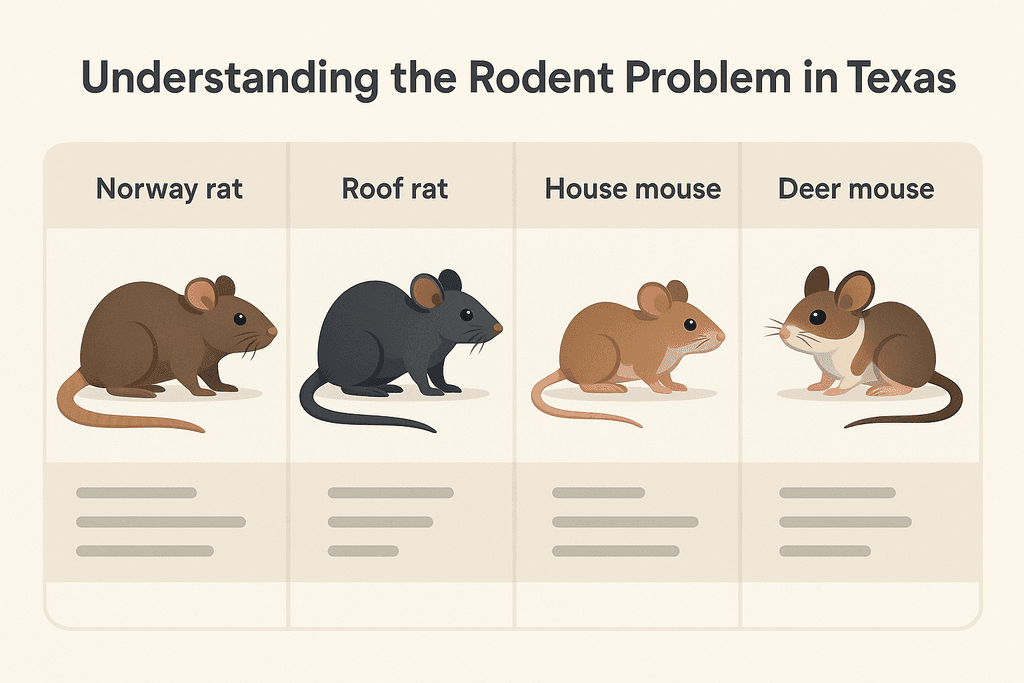
Common Rodent Species in Texas Homes
Three main types of rodents cause problems for Texas homeowners, and each one has different habits and preferences. Norway rats prefer ground-level spaces like basements and crawl spaces, while roof rats live up to their name by invading attics and upper floors. House mice are the smallest but often the most numerous, squeezing through openings as tiny as a dime.
Here's what makes each species different:
- Norway Rats - Heavy-bodied rodents weighing up to one pound with brown or gray fur and small ears
- Roof Rats - Sleek black or dark brown rats with large ears and tails longer than their bodies
- House Mice - Small gray or brown mice weighing less than an ounce with pointed noses and large ears
Wildlife X Team handles all three species using humane removal methods that actually work. The key is identifying which type you have because the removal strategy changes based on their behavior patterns.
This video shows some effective techniques that professionals use when dealing with persistent rodent problems in homes.
Seasonal Activity Patterns in North Texas
Rodent activity in the Dallas-Fort Worth region follows predictable patterns throughout the year. Fall and winter bring the biggest surge in home invasions as temperatures drop and outdoor food sources disappear. Spring sees another spike during breeding season when rodents need safe nesting spots.
Peak rodent activity months include:
- October through December - Seeking warmth and winter shelter
- March through May - Building nests for spring breeding
- July through August - Escaping extreme heat and searching for water
Most homeowners don't realize they have a problem until they hear scratching sounds at night or find droppings in their kitchen. By that point, a small problem has usually become a full-blown infestation.
Health Risks and Property Damage
Rodents carry over 35 diseases that can spread to humans through their droppings, urine, and saliva. Hantavirus, salmonella, and leptospirosis are just a few of the serious health threats these pests bring into your home. The Centers for Disease Control reports that rodent-related illnesses send thousands of Americans to hospitals each year.
The damage goes beyond health concerns:
- Chewed electrical wiring causes an estimated 25% of house fires with unknown origins
- Contaminated insulation requires complete replacement costing $2,000 to $8,000
- Structural damage from gnawing on wood beams and support structures
- Destroyed food supplies and contaminated storage areas
Why Texas Homes Are Vulnerable
Texas construction styles and climate conditions make homes particularly attractive to rodents. Many houses in the Fort Worth area have pier and beam foundations that create easy access points underneath the structure. Older homes often have gaps around utility lines, damaged vent screens, and unsealed crawl spaces that might as well have welcome mats for rats and mice.
Common entry points include:
- Gaps around pipes and utility lines entering the home
- Damaged or missing vent screens on roofs and foundations
- Cracks in foundation walls and gaps under doors
- Unsealed openings where different building materials meet
- Tree branches touching or overhanging the roof
The mild winters mean rodents can breed almost year-round instead of dying off in cold weather like they do up north. A single female mouse can have 5 to 10 litters per year with 5 to 6 babies each time - that's why a small problem becomes a big one so fast.
Signs You Have a Rodent Problem
A single mouse can leave behind up to 75 droppings in just one day, which means if you spot even a few pellets, you're likely dealing with more than one unwelcome guest. Texas homes provide the perfect environment for rodents year-round, with our mild winters and plenty of food sources. Knowing what to look for can help you catch an infestation before it becomes a serious problem. The earlier you spot the signs, the easier it is to address the situation. Most homeowners miss the early warning signals until the problem has already spread throughout their walls and attic spaces.
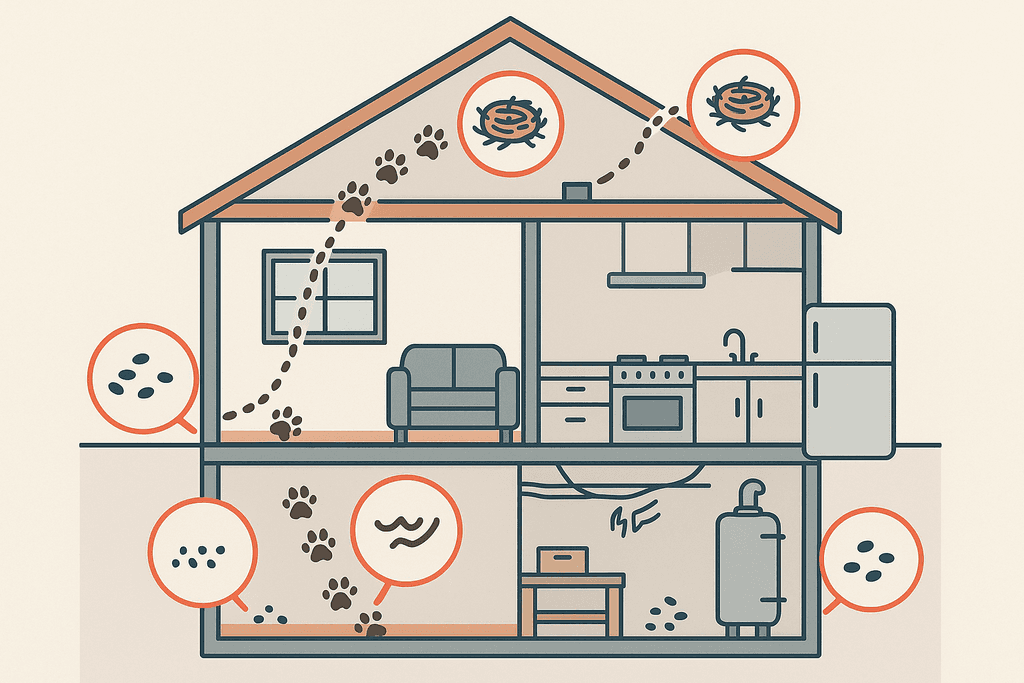
Signs You Have a Rodent Problem
Droppings are usually the first clue that rodents have moved in. You'll find these small, dark pellets along baseboards, in cabinets, and near food storage areas. Urine stains create yellowish marks on surfaces, and you might notice greasy smudge marks along walls where rodents repeatedly travel the same paths.
- Scratching and scurrying sounds in walls, attics, and crawl spaces, especially at night when rodents are most active
- Gnaw marks on wood trim, electrical wires, insulation, and food packaging throughout your home
- Nesting materials like shredded paper, fabric, and insulation tucked away in dark corners
- Strange pet behavior such as pawing at walls or staring intently at specific areas
- Musky odors that get stronger as the infestation grows larger
Your pets often detect rodents before you do. If your dog or cat suddenly becomes obsessed with a particular wall or cabinet, there's probably something living inside. That distinctive musky smell intensifies in enclosed spaces like closets and cabinets where rodents nest and leave waste behind.
Quick Inspection Checklist
- Check behind appliances and under sinks for droppings
- Inspect attic insulation for tunnels and nesting materials
- Look for gnaw marks on baseboards and door frames
- Examine food packages in pantries for holes or tears
- Listen for sounds during quiet evening hours
- Search for entry points around pipes, vents, and foundation cracks
Professional Rodent Removal Process
Most DIY rodent control methods only address part of the problem, which is why infestations keep coming back. A comprehensive approach requires finding every entry point, removing all rodents humanely, and cleaning up the contamination they leave behind. Wildlife X Team's process starts with the Wildlife Inspection Report®, which maps out exactly where rodents are entering and nesting in your home. This detailed inspection reveals problems that most homeowners would never find on their own, like the customer Jesse Bernard mentioned when he discovered multiple entry points he never would have spotted.
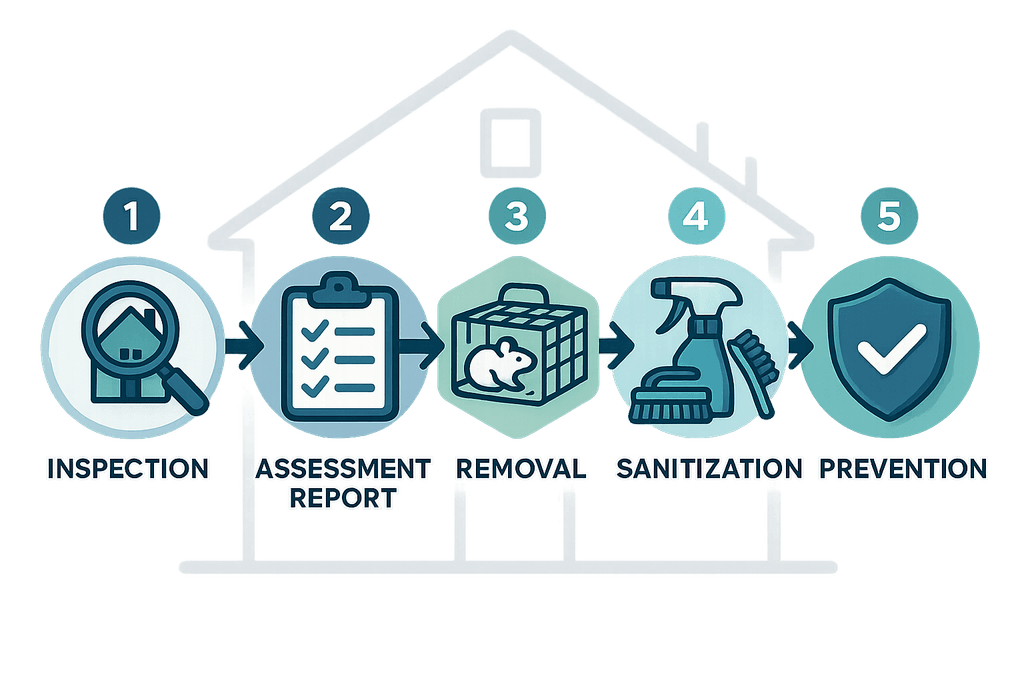
Professional Rodent Removal Process
Humane trapping methods prioritize the welfare of the animals while effectively removing them from your property. Unlike poison or snap traps that create additional problems, professional removal ensures rodents are handled ethically. The inspection process covers every inch of your attic and crawl spaces to locate nests and assess damage to insulation and wiring.
Once all rodents are removed, the real work begins. Contaminated insulation needs to come out because rodent urine and droppings carry diseases that can affect your family's health. Professional disinfection and sanitization eliminates harmful bacteria and viruses that linger long after the rodents are gone.
The difference between professional removal and DIY approaches comes down to completeness. Setting a few traps might catch some mice, but it won't address the entry points, the contamination, or the underlying conditions that attracted rodents in the first place. Companies like Terminix and other pest control services often focus solely on extermination without the comprehensive cleanup and prevention that prevents future problems.
Preventing Future Rodent Invasions
Getting rid of rodents is only half the battle because they'll return unless you seal every possible entry point. Mice can squeeze through openings as small as a dime, and rats need only slightly larger gaps. Animal proofing and exclusion techniques create permanent barriers that keep rodents out for good. This involves more than just stuffing steel wool in a few holes. Professional exclusion means installing foundation repairs, chimney caps, and vent guards that rodents can't chew through or push aside.
The materials matter when it comes to exclusion work. Rodents can gnaw through wood, plastic, and even some metals given enough time. Wildlife X Team uses durable materials and proven installation methods that stand up to determined rodents trying to get back inside.
- Seal all gaps around pipes, wires, and utility lines entering your home
- Install heavy-duty screens on vents and chimney caps
- Repair foundation cracks and gaps in siding
- Store food in airtight containers and clean up spills immediately
- Keep garbage in sealed bins away from your home's exterior
- Trim tree branches that touch or overhang your roof
Landscape modifications reduce the factors that attract rodents to your property in the first place. Overgrown vegetation provides cover for rodents to approach your home undetected. Keeping grass trimmed and removing debris piles eliminates nesting sites in your yard.
Real Results from Texas Homeowners
Franklin's work for customer Sheryl Graham shows how proper exclusion keeps possums and other wildlife out permanently. The repairs addressed not just the immediate problem but also prevented future invasions. This comprehensive approach is what separates professional wildlife management from temporary fixes offered by basic pest control companies.
Regular maintenance schedules help maintain your rodent-free status over time. Weather, settling foundations, and normal wear can create new entry points that need attention. Wildlife X Team's Renewable Lifetime Warranty provides ongoing protection, with periodic inspections to catch potential problems before rodents move back in. This long-term commitment to your home's protection gives you peace of mind that the problem is truly solved, not just temporarily managed.
Why DIY Rodent Control Often Fails
Most Texas homeowners spend around $300 on DIY rodent control attempts before finally calling a professional. The problem isn't that people aren't trying hard enough. It's that rodents are way smarter than the average hardware store trap, and homes have way more entry points than most people realize. When you're dealing with mice that can squeeze through a hole the size of a dime or rats that can chew through wood and plastic, those quick fixes from the store just don't cut it.
The Hidden Entry Point Problem
You might seal up that obvious gap under your garage door and feel pretty good about yourself. But rodents are already coming in through places you'd never think to check. Professional inspectors find an average of 12-15 entry points per home, while homeowners typically only spot 2-3 of the most obvious ones.
- Gaps around utility lines and pipes that run into walls
- Damaged soffit vents hidden under roof overhangs
- Foundation cracks barely visible from ground level
- Worn weatherstripping around basement windows
- Roof-to-wall junctions where materials have separated over time
Store Bought Solutions Create New Problems
Those poison blocks from the big box store seem like an easy answer until a rat dies inside your wall. Now you've got a smell problem that lasts for weeks and potentially attracts other pests. Snap traps work sometimes, but they only catch one rodent at a time while dozens more keep breeding in your attic.
- Poisons cause rodents to die in inaccessible areas creating odor issues
- Glue traps are inhumane and don't address the root cause
- Single-catch traps require constant monitoring and resetting
- Ultrasonic devices have been proven ineffective in multiple studies
Health Risks You Can't See
Cleaning up rodent droppings without proper equipment puts your family at risk for hantavirus and other diseases. Most people don't realize that rodent urine becomes airborne when it dries, meaning you're breathing in contaminated particles while you work. Wildlife X Team's attic cleanup services include proper disinfection and contaminated insulation removal that protects your health.
The Real Cost Breakdown
DIY Approach Limitations
- Initial costs seem lower at $50-150 for traps and supplies
- Requires ongoing time investment checking and resetting traps
- Miss hidden entry points leading to recurring infestations
- No warranty or guarantee if rodents return next month
- Risk of improper handling of contaminated materials
Professional Service Advantages
- Comprehensive inspection identifies all entry points using thermal imaging
- Humane removal methods that comply with Texas wildlife regulations
- Professional-grade exclusion materials that rodents cannot chew through
- Attic restoration and insulation replacement when needed
- Renewable lifetime warranty provides long-term peace of mind
The average homeowner spends 15-20 hours over several months fighting a rodent problem that a professional team can resolve in days. That time adds up when you factor in the stress of hearing scratching sounds every night and worrying about disease transmission to your kids or pets.
Taking Action Against Rodent Problems
Dealing with rodents in your Texas home isn't something you want to put off until tomorrow. The longer mice or rats stick around, the more damage they cause to your insulation, wiring, and stored belongings. Plus, the health risks from droppings and urine only get worse with time. What starts as a few scratching sounds in the walls can turn into a full-blown infestation that costs way more to fix down the road.
Getting professional help makes a real difference compared to trying to handle it yourself. Wildlife X Team serves Fort Worth, Denton, Granbury and the surrounding areas with a complete approach that goes beyond just catching the rodents. The process includes finding every entry point, removing the animals humanely, cleaning up contaminated areas, and making sure they can't get back in.
The best part about working with professionals is knowing the job gets done right the first time. Most homeowners miss hidden entry points that rodents use to sneak back inside. A thorough inspection catches these spots before they become problems again.
Here's what a complete rodent removal solution should include:
- Full property inspection to find all entry points and damage
- Humane removal of all rodents from your home
- Professional cleanup and disinfection of affected areas
- Repairs and exclusion work to prevent future problems
- Long-term protection with warranty coverage
The question isn't really whether you need help with a rodent problem. It's more about how quickly you want to protect your home and family from the damage these pests cause.
Common Questions About Rodent Removal
Dealing with rodents in your Texas home brings up a lot of questions. Most homeowners want to know what to expect before they call for help. Here are the answers to the most common questions we hear about rodent removal, costs, and keeping these pests from coming back.
How quickly can rodents be removed from my home?
Most rodent removal starts the same day or within 24 hours of your call. Wildlife X Team often begins work immediately after the initial inspection, just like they did for Jesse Bernard who had squirrels removed on the spot. The complete removal process typically takes a few days to a week, depending on how many rodents are present and where they're hiding in your home.
Are rodent removal methods safe for pets and children?
Yes, humane removal methods prioritize the safety of everyone in your home, including pets and kids. Wildlife X Team uses exclusion techniques and safe trapping methods that don't involve harmful chemicals or poisons. This approach protects your family while effectively removing the rodents from your property.
What does the Wildlife Inspection Report® include?
The Wildlife Inspection Report® gives you a detailed look at every vulnerability in your home. It identifies all current and potential entry points where rodents might get in, checks for existing damage, and maps out contaminated areas. You'll get a clear picture of what needs to be fixed and why, which helps you understand exactly what you're paying for.
How much does professional rodent removal cost?
Rodent removal costs vary based on the severity of your infestation and the repairs needed. While some companies like Terminix offer standardized pricing, Wildlife X Team provides custom quotes after inspecting your specific situation. Most Texas homeowners find that professional removal costs less than the damage rodents cause if left untreated, especially when you factor in chewed wires, contaminated insulation, and potential health risks.
Will rodents come back after removal?
Not if the job is done right. Simply removing rodents without sealing entry points is like leaving your front door open and wondering why visitors keep showing up. Wildlife X Team includes animal proofing and exclusion services with their removal, plus they offer a Renewable Lifetime Warranty. This means they seal every entry point they find during inspection, so new rodents can't get in where the old ones did.
What areas does Wildlife X Team service?
Wildlife X Team covers the Ft. Worth, Denton, Granbury, and surrounding Dallas-Fort Worth areas. If you're outside these zones, you might need to look at other local options, but for North Texas homeowners, they provide both residential and commercial services throughout the region.