
Rodent Removal in Keller TX for Rats, Mice, and Reentry Proofing
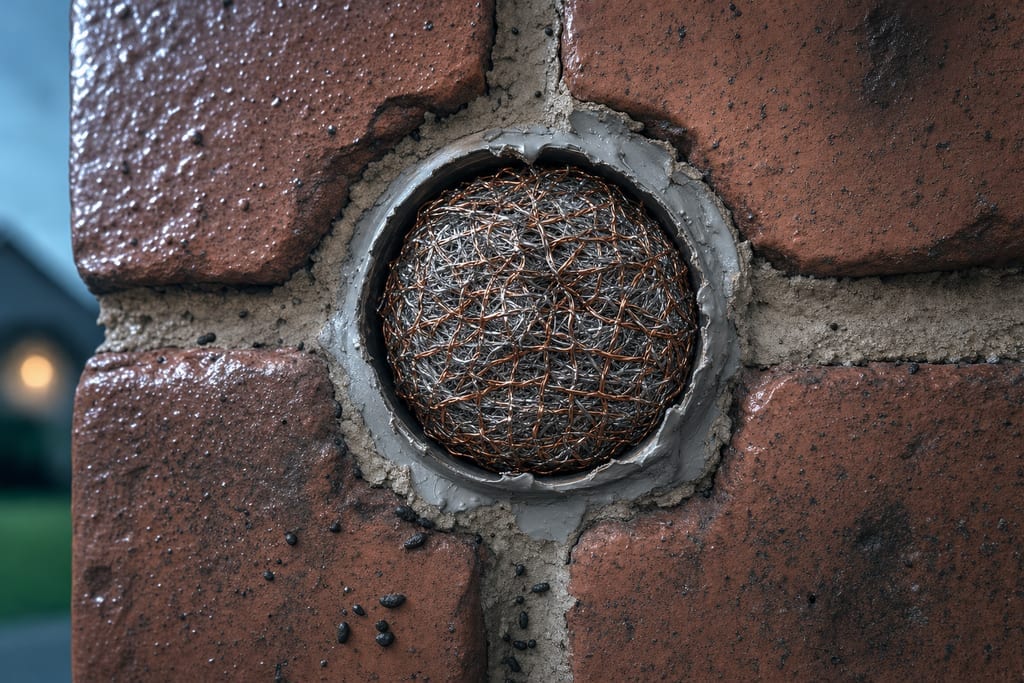
If you want rodent removal in Keller TX that actually sticks, traps alone will not get you there, because the mice getting in today are the grandkids of the ones that got in last spring. A single female mouse can have five or six litters a year, with up to a dozen babies each time, so a handful of mice in your attic in January can turn into dozens by summer. They do not need much of an opening either. A gap the width of a dime, about the size of your pinky fingertip, is wide enough for a mouse to flatten its body and squeeze through.
That is why so many Keller homeowners feel stuck resetting the same traps month after month. Trapping only deals with the mice already inside. If the entry points around your foundation, siding, or roofline stay open, new mice move in as soon as the old ones are gone. Getting ahead of it means finding every gap first, then closing them, not just clearing out whoever happens to be in the walls this week.
Table of Contents
Why Rodents Target Keller Homes and Businesses
Keller winters rarely get cold enough to slow rodents down. Rats and mice stay active year round here, breeding and foraging in every season instead of hunkering down for a few cold months like they would further north.
New subdivisions and decades-old homes both give rodents a way in. Fresh construction settles and leaves small gaps around plumbing lines and siding, while older homes near downtown Keller often have worn weather stripping, aging foundations, and gaps around window units.
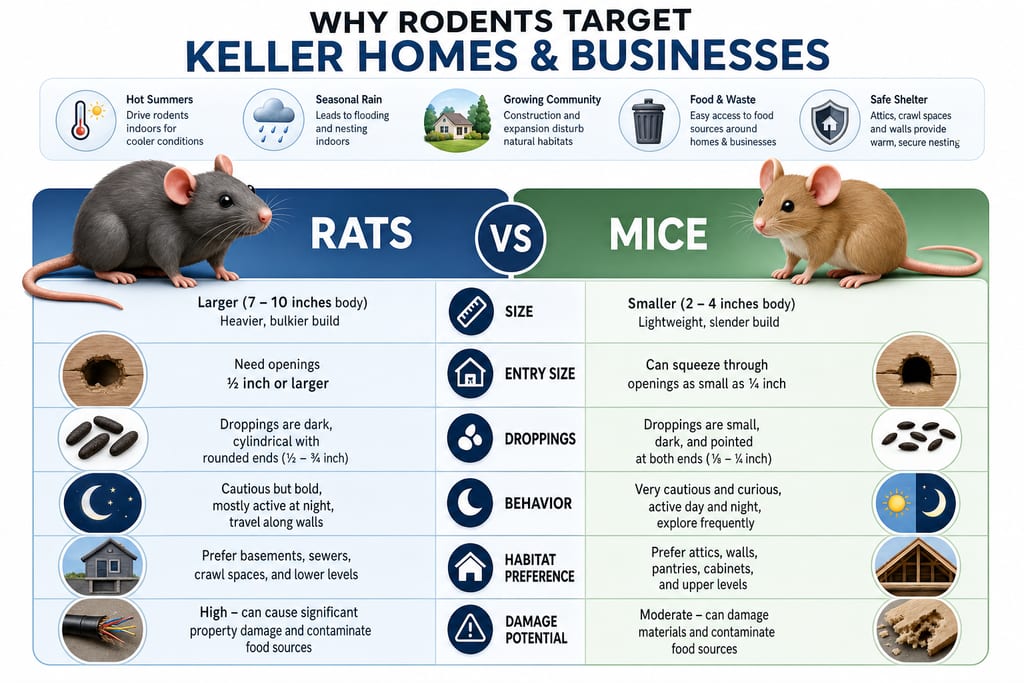
Rats and mice do not act the same way once they get inside, so the fix looks different for each. Mice tend to nest close to food, often in kitchens or near pantries, while rats travel farther and prefer quieter spots like wall voids, garages, and crawl spaces.
- Mice: nest near food sources, breed fast, squeeze through tiny gaps
- Rats: range farther from nests, gnaw through wood and wiring, prefer low, quiet spaces
Watch this for a clear breakdown of what actually works against both.
Signs You Actually Have a Rodent Problem
Scratching in the walls after dark almost always means rats or mice, not squirrels, since squirrels work during the day and go quiet once the sun sets. If you hear movement behind drywall at 11pm or 2am, that timing alone tells you a lot about what you are dealing with.
Droppings are the clearest proof. Fresh ones look dark and moist, while old droppings turn gray and crumble when touched, and finding them near pantries or along baseboards means a nest is active nearby, not just a one-time visitor. Gnaw marks on wires, cardboard boxes, or wood trim point to the same thing, since rodents chew constantly to keep their teeth short.
- Scratching sounds inside walls or ceilings at night
- Dark, moist droppings near food storage or baseboards
- Chewed wires, boxes, or wood edges
- A dog or cat suddenly fixated on one wall or corner
Pets often notice rodents before people do. If your dog starts pawing at a cabinet or your cat stares at the same spot on the wall for weeks, take that as a real signal, not a quirk.
How Wildlife X Team Removes Rats and Mice
The process starts with a Wildlife Inspection Report, a full walk of the property to mark every spot rodents could be getting in, from roofline gaps to foundation cracks. That report is what decides where traps go and what gets sealed later, instead of guessing.
Once entry points are mapped, humane trapping clears out the rodents already living in attics, wall voids, or crawl spaces. After the animals are gone, the crew handles attic cleanup and restoration, pulling out soiled insulation and disinfecting the space so droppings and urine do not sit there attracting the next litter.
- Full inspection to find and log every entry point
- Humane trapping in attics, walls, and crawl spaces
- Removal of contaminated insulation and waste
- Disinfecting the space before it gets sealed up
- Same process adjusted for commercial buildings
Commercial buildings go through the same steps, just scaled to bigger crawl spaces or multiple units, since the entry points matter more than the square footage.
Sealing Every Entry Point for Good
Trapping clears out what is already inside, but exclusion is what keeps new rodents from moving in behind them. Foundation gaps, vent openings, and chimney gaps are the usual culprits around Keller properties, and each one gets closed with caulking, sealing, or a vent guard depending on size and location.
This step matters more than trapping alone, because a sealed-up house stops being a target at all. A property with every gap closed just does not offer rodents anywhere to get in, no matter how many are nesting in the yard next door.
- Foundation cracks and gaps around utility lines
- Vent openings covered with metal guards
- Chimney caps and flashing checked and sealed
- Gaps around siding, windows, and door thresholds
Wildlife X Team backs this exclusion work with a Renewable Lifetime Warranty, so if a new gap opens up down the line, the fix is covered instead of starting the whole process over.
What Keller Customers Say About the Results
Jesse Bernard called in a squirrel problem and ended up with a lesson in how many entry points a house can actually have. The obvious one he'd already noticed, but the crew found a couple more he never would have spotted, and months later his attic is still clear.
Other reviews echo the same pattern: fast response, friendly technicians, and specific praise for repair work. Sheryl Graham mentioned Franklin's repairs keeping possums out, and Mark Thompson pointed to raccoons removed and an attic secured against future problems.
- Jesse Bernard: hidden entry points found beyond the obvious one
- Tim Maletich: fast, friendly, solid work
- Sheryl Graham: repairs that held up against possums
- Mark Thompson: raccoons removed, attic secured afterward
That kind of feedback holds up across the service area, from Fort Worth and Denton down to Southlake, Grapevine, and the smaller towns in between, where the same inspection and sealing process gets used on every property, not just the ones close to Keller.
Traps Alone or Traps Plus Sealing
A trap from the hardware store only answers one question: who is inside right now. It does nothing about the gap in the siding they used to get there, so the next litter finds the same door standing open.
Nests left behind are part of the problem too. Rodents mark their paths with urine and droppings, and that scent trail pulls in new mice even after the original ones are gone, which is why some homes never stop catching a few every month.
Pairing sealing with trapping is what actually breaks that cycle, since one step removes the animals and the other removes the reason more show up. For a homeowner with a single pantry mouse, a trap might be enough. For anyone who has reset traps more than once, sealing is the part that was always missing.
Commercial properties carry more risk if they skip this step. Health inspectors treat leftover droppings as a violation regardless of whether rodents are still active, so a business that only traps and never cleans or seals is gambling with its inspection score, not just its pest count.
Deciding Whether to Call for an Inspection
A mouse problem that feels small in October rarely stays that way, since the same gaps that let one in now will let the next litter in come spring. Waiting for the traps to stop working costs more than booking a walkthrough now, because every month the entry points stay open is another month of new tenants moving in behind the ones you caught. Wildlife X Team covers Keller and the surrounding North Texas towns, from Southlake and Grapevine out to Weatherford and Granbury, with the same inspection and sealing process on every property. Call and get the gaps mapped before the next litter finds them first.
Rat and Mouse Removal Questions
Can mice chew through steel wool or foam sealant used in repairs?
Mice can chew through plain foam sealant, but steel wool stops them because the sharp fibers hurt their teeth and gums. That is why exclusion work pairs steel wool with caulk or a metal guard instead of using foam alone. Wildlife X Team picks the material based on the gap, not a single product for every spot on the house.
How fast can rats rebuild a nest if I only clean the attic myself?
Rats can start a new nest within days if the entry points that let them in stay open. Cleaning out droppings and old nesting material helps, but it does not block the gap they used to get there in the first place. Without sealing, the same spot usually draws in another rat within a week or two.
Will setting poison instead of traps create a smell problem inside my walls?
Yes, poison often leads to a dead rodent decomposing somewhere you cannot reach, like inside a wall void or under insulation. That smell can last one to two weeks and sometimes means cutting into drywall to remove the body. Humane trapping avoids this because the animal is caught and removed alive, not left to die in a hidden spot.
Do I need a separate inspection for my garage or just the attic and crawl space?
No separate inspection is needed, since a full property walkthrough covers the garage along with the attic, crawl space, and foundation. Garages often have their own gaps around door thresholds and utility lines, so leaving them out would miss real entry points. One inspection is built to map the whole structure, not just the spots where noise has already been heard.