
Remove Skunk Smell From Your House With Proven Cleanup Steps
When Skunk Spray Invades Your Home
A skunk spraying near your home can turn into a nightmare that lasts for weeks if you don't act fast. The oily compounds in skunk spray seep into fabrics, carpets, and even your walls within minutes, and the smell actually gets worse over time as it settles deeper into porous surfaces. Standard air fresheners and household cleaners won't touch this odor because skunk spray contains sulfur-based chemicals that require specific neutralizing treatments, which is why Wildlife X Team uses specialized deodorizing methods that target the source rather than just masking the smell.
Table of Contents
- When Skunk Spray Invades Your Home
- Why Skunk Smell Is So Hard to Remove
- Immediate Steps After Skunk Spray Enters Your Home
- First 30 Minutes Action Checklist
- The Most Effective Homemade Solution
- Surface Specific Cleaning Methods
- Washable Fabric Treatment
- Carpet and Upholstery Deep Cleaning
- Wall and Floor Treatment
- HVAC System Contamination
- Getting Your Home Back to Normal
- Common Questions About Skunk Smell Removal
Why Skunk Smell Is So Hard to Remove
A skunk can spray its defensive weapon up to 15 feet away with scary accuracy, and when it hits your house, you're in for a long battle. The smell isn't just bad, it's chemically designed to stick around and make your life miserable. Most people who try to remove skunk smell from their house using regular cleaning products end up frustrated because they don't understand what they're actually fighting against. The spray contains special compounds that work differently than normal odors, which is why your usual air fresheners and cleaners barely make a dent.
The Science Behind the Stink
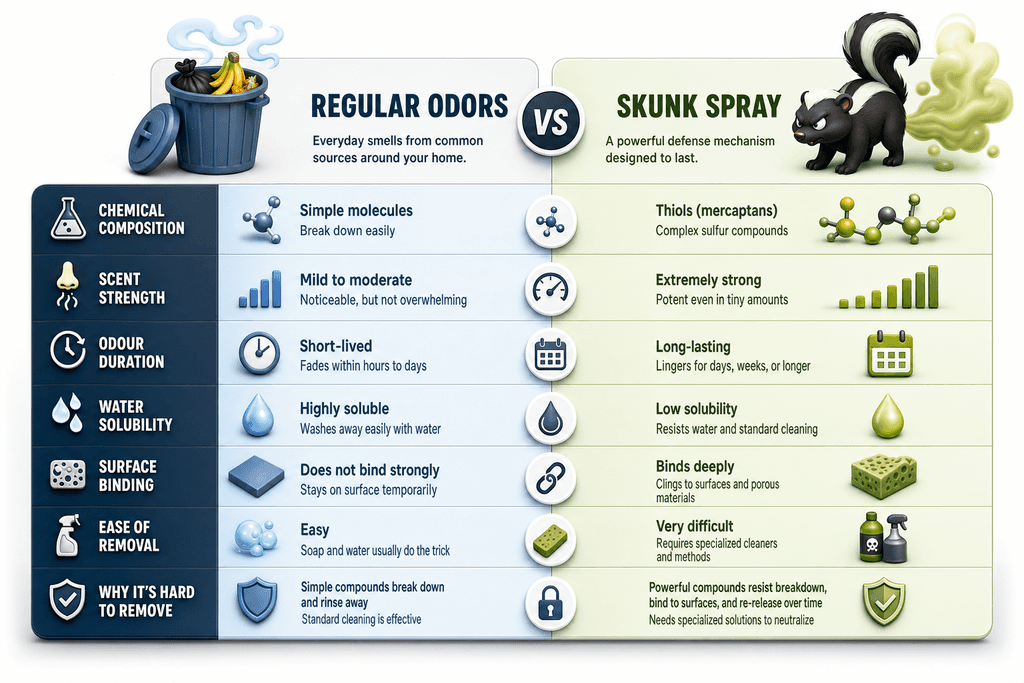
Skunk spray gets its legendary staying power from sulfur-based chemicals called thiols. These aren't your average smell molecules. They bond directly to whatever they touch, whether that's your carpet, your dog, or your favorite couch.
Here's what makes thiols so tough to beat:
- They attach to surfaces at a molecular level, not just sitting on top like regular dirt
- Your nose can detect them at concentrations as low as 10 parts per billion
- They resist breaking down naturally, so time alone won't fix the problem
- Water actually makes them spread instead of washing them away
Why Regular Cleaning Methods Fail
The oily nature of skunk spray creates another layer of difficulty when you're trying to get skunk smell out of your house. Think of it like trying to clean up cooking oil with just water. The spray contains oils that help it stick to fabrics, wood, and other porous materials in your home.
Common mistakes people make include:
- Using water-based cleaners that can't break down the oily compounds
- Covering up the smell with air fresheners instead of neutralizing it
- Not treating hidden areas where the spray may have traveled through vents
The Reactivation Problem
Temperature and humidity changes can bring back skunk odors weeks or even months after you thought the problem was solved. The thiols don't disappear, they just become less noticeable until conditions are right for them to release again. A hot summer day or a humid evening can suddenly make your house smell like it just got sprayed yesterday.
Factors that reactivate dormant skunk smell:
- Increased humidity from rain or seasonal changes
- Heat from sunlight warming up affected surfaces
- Poor ventilation trapping odor molecules inside
- Moisture from cleaning or everyday activities
Understanding these chemical properties explains why you need specialized approaches to remove skunk smell from your house effectively. Wildlife X Team has dealt with countless skunk situations and knows exactly which treatments actually work versus which ones just waste your time and money. The right solution targets the thiols directly instead of just masking them temporarily.
Immediate Steps After Skunk Spray Enters Your Home
Skunk spray contains sulfur-based compounds called thiols that can linger in your house for weeks if you don't act fast. The first hour after skunk odor enters your home is the most important time to prevent the smell from setting into every surface, fabric, and corner of your living space. Most people make the mistake of turning on their air conditioning or heating system right away, which actually spreads the odor through your entire ductwork. The key is to contain the smell before it becomes a much bigger problem that requires professional intervention.
Your immediate response can make the difference between a few days of unpleasant odor and months of lingering smell. Here's what you need to do right now.
First 30 Minutes Action Checklist
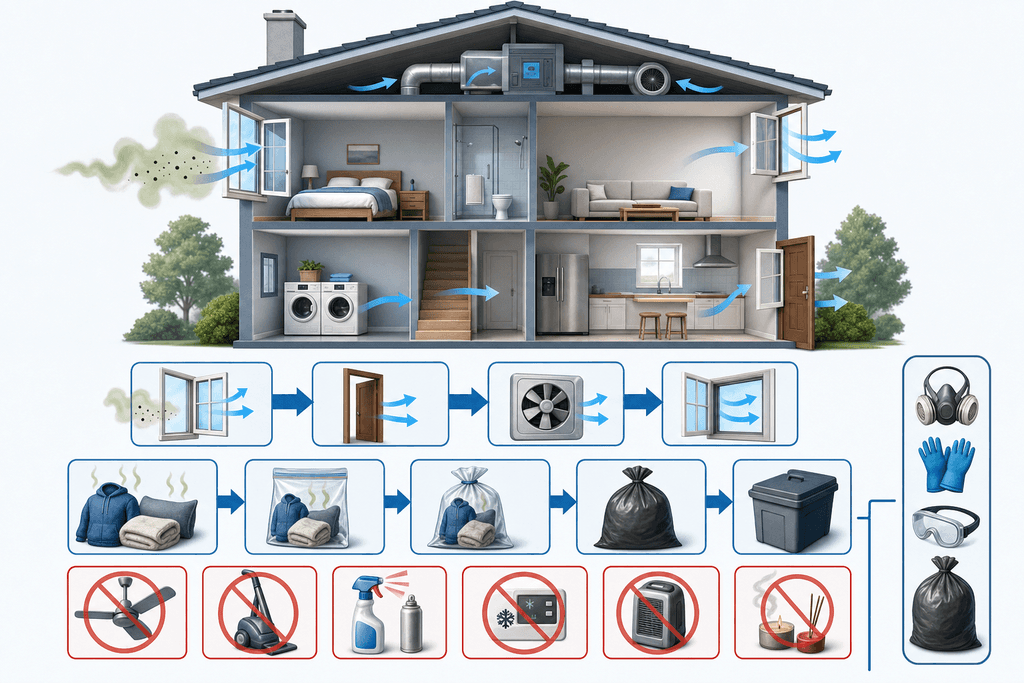
- Open every window and door in your house to create cross-ventilation and push the odor outside
- Turn off your HVAC system immediately to prevent the smell from circulating through your ducts
- Locate the entry point where the skunk spray entered, whether through an open door, window, or pet door
- Put on gloves and protective clothing before touching any contaminated surfaces or items
- Remove any affected fabrics like curtains, throw blankets, or cushion covers and isolate them in sealed plastic bags
- Identify all affected areas by following your nose to find where the smell is strongest
The smell will try to attach itself to everything porous in your home. Fabrics, carpets, and even drywall can absorb skunk odor quickly, which is why speed matters so much in these first critical moments.
Deep Cleaning Solutions That Actually Work
Most store-bought air fresheners and cleaning products just mask skunk smell instead of eliminating it. The thiols in skunk spray need to be chemically broken down, not covered up with perfume. There's a specific homemade solution that works better than almost anything you can buy, and you probably already have the ingredients in your house. The trick is knowing which cleaning method to use on which surface, because what works on tile floors can ruin your couch.
This video shows you exactly how to get a skunk smell out of your house using proven methods that actually neutralize the odor.
The Most Effective Homemade Solution
Mix one quart of 3% hydrogen peroxide with a quarter cup of baking soda and one teaspoon of liquid dish soap. This combination creates a chemical reaction that breaks down the thiol compounds in skunk spray. You need to use this solution immediately after mixing because it loses effectiveness quickly and can build up pressure in a closed container.
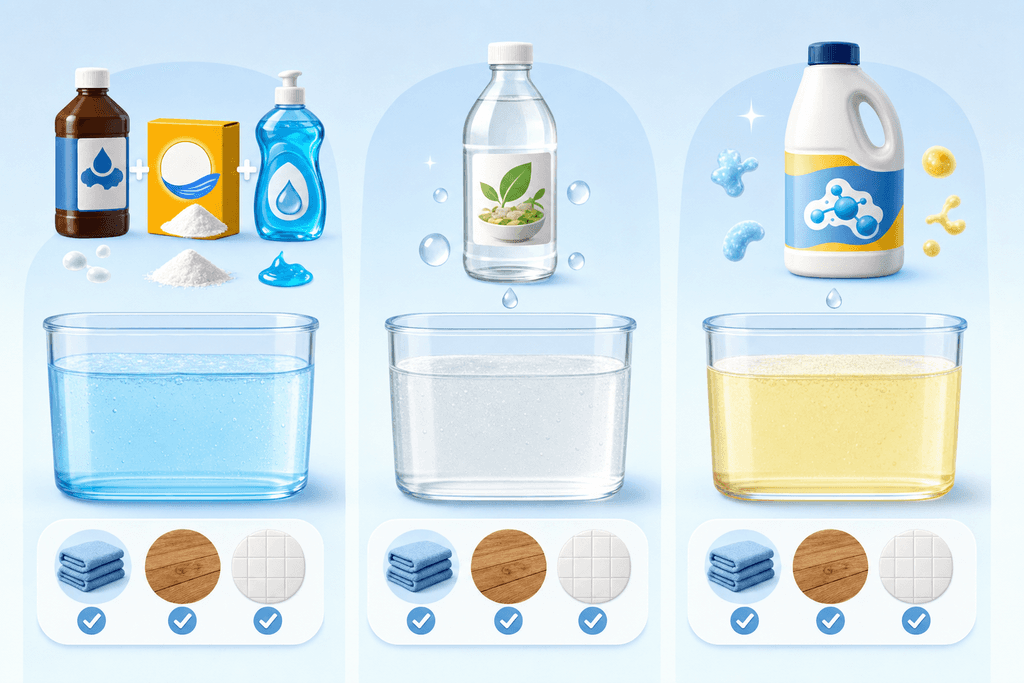
Different surfaces in your home need different approaches. Hard surfaces like tile, linoleum, and sealed wood can handle stronger solutions, while painted walls and delicate fabrics need gentler treatment.
Surface Specific Cleaning Methods
- Hard floors and countertops: Use the hydrogen peroxide solution or straight white vinegar, let it sit for 10 minutes, then wipe clean
- Painted walls: Test the solution on a hidden spot first, then gently wipe with a diluted version to avoid removing paint
- Wood furniture: Use a mild vinegar solution and dry immediately to prevent water damage
- Glass and mirrors: Standard glass cleaner works fine since these surfaces don't absorb odor
- Concrete or unfinished surfaces: Commercial enzymatic cleaners work best because these porous materials trap odor deep inside
You'll probably need to clean affected areas multiple times. The smell might seem gone after the first treatment, but it often comes back as the thiols continue to release from porous materials. Plan on treating surfaces at least two or three times over several days.
Treating Fabrics, Carpets and Upholstery
Soft materials are where skunk smell really digs in and refuses to leave. Fabrics absorb the oily compounds in skunk spray like a sponge, and regular detergent won't touch it. You need enzyme-based cleaners that actually digest the organic compounds causing the smell. Some items might be too far gone to save, especially if they got directly sprayed or sat in contaminated areas for hours before you started cleaning.
Washable Fabric Treatment
Add a cup of white vinegar or enzyme-based laundry additive to your regular detergent and wash on the hottest setting the fabric can handle. Don't put items in the dryer after the first wash because heat can set any remaining odor permanently. Hang them outside in direct sunlight instead, which helps break down the sulfur compounds naturally.
You'll likely need to wash contaminated fabrics three or four times before the smell is completely gone. Check each item by smelling it while it's still damp, because that's when any remaining odor will be most noticeable.
Carpet and Upholstery Deep Cleaning
- Sprinkle baking soda liberally over the affected area and let it sit overnight to absorb surface odors
- Vacuum thoroughly the next morning
- Apply an enzymatic cleaner designed for pet odors, following the product directions exactly
- Use a carpet cleaning machine with hot water extraction if the smell persists
- Allow everything to air dry completely with fans and open windows
Professional steam cleaning might be necessary for upholstered furniture, especially if the skunk smell has penetrated deep into cushions and padding. Some heavily contaminated items like mattresses or thick cushions may need to be replaced if the odor won't come out after multiple treatments.
Eliminating Odors From Walls, Floors and Air Systems
The structural parts of your house can trap skunk smell in ways that aren't obvious at first. Your HVAC system is especially problematic because if it was running when the skunk spray entered your home, the odor has been distributed through every duct and vent. Walls and floors also absorb odors over time, particularly if they're made of porous materials like drywall or unsealed wood. This is where how to remove skunk smell from house gets more complicated than just surface cleaning.
Wall and Floor Treatment
Walls may need washing with TSP (trisodium phosphate) or specialized odor-eliminating cleaners that penetrate porous surfaces. Work from top to bottom in sections, and change your cleaning solution frequently so you're not just spreading the smell around. Wood floors require extra care because too much moisture can damage them, so use a barely damp mop with a mild vinegar solution.
Baseboards and trim often get overlooked but they trap odor just like walls. Pay special attention to corners and crevices where the smell can hide.
HVAC System Contamination
- Replace all air filters immediately if your system was running during the incident
- Wipe down all accessible ductwork near vents with odor-eliminating cleaner
- Consider professional duct cleaning if the smell persists after filter replacement
- Run the system with new filters and windows open to flush out remaining odor particles
Air purifiers with activated carbon filters can help remove airborne odor particles, but they won't solve the problem if the smell is embedded in your ducts or walls. For severe contamination, especially in attics or crawl spaces where skunks may have actually sprayed, Wildlife X Team offers professional attic cleanup and restoration services that go beyond what homeowners can do themselves. Sometimes the source of the smell is a skunk that got into your attic or walls, and that requires both removal and thorough decontamination of the affected areas.
If you're dealing with recurring skunk problems or can't locate where the smell is coming from, there might be an entry point in your home that's allowing wildlife access. Our team at Wildlife X Team in Fort Worth can inspect your property to find and seal these entry points while safely removing any animals that have taken up residence. We've helped countless homeowners in the Denton, Granbury, and surrounding areas deal with wildlife intrusions that lead to these exact odor problems.
Getting Your Home Back to Normal
Dealing with skunk smell in your house isn't fun, but it's definitely something you can handle with the right approach. The key is acting fast and using the proper cleaning solutions instead of just trying to cover up the odor with air fresheners. Most people find that it takes a few days of repeated treatments to completely get rid of the smell, especially if the spray got on fabrics or soaked into porous surfaces. Patience matters here because rushing through the cleanup usually means the smell comes back.
The bigger question is how the skunk got close enough to spray near your house in the first place. Skunks don't just wander around randomly spraying things. They're usually living under your deck, porch, or shed, which means you might have more encounters coming if you don't address the root problem.
Professional wildlife removal does more than just get rid of the current skunk. Wildlife X Team handles the complete process in the Fort Worth area, from removing the animals to sealing up entry points so they can't come back. We also clean and disinfect areas where wildlife has been living, which is important because skunk odor can linger in hidden spaces you might not even know about.
Understanding how to remove skunk smell from house situations is useful, but preventing future incidents saves you from going through this whole process again. The methods we've covered work well for emergency cleanup, but they're not something you want to become an expert at through repeated experience.
Common Questions About Skunk Smell Removal
Dealing with skunk odor raises a lot of questions, especially when you're desperate to breathe fresh air in your own home again. Most homeowners want to know if they can handle the problem themselves or if they need professional help. The answers depend on how severe the smell is and where it's coming from. Here are the most common questions we hear from people trying to get rid of that awful skunk stench.
How long does skunk smell last in a house without treatment?
Skunk smell can linger for weeks or even months if you don't treat it properly. The oily spray contains sulfur compounds that stick to surfaces and get absorbed into fabrics, wood, and drywall. Without intervention, you're basically waiting for the molecules to break down naturally, which takes a very long time.
Can professional cleaners remove skunk smell completely?
Yes, professional wildlife removal services like Wildlife X Team can completely eliminate skunk odor using specialized cleaning products and techniques. We use enzyme-based cleaners that break down the sulfur compounds at a molecular level, rather than just masking the smell. Our attic cleanup and restoration services include thorough decontamination of affected areas, which regular cleaning companies typically can't handle as effectively.
What is the fastest way to remove skunk smell from your house?
The fastest approach combines immediate ventilation with the right cleaning solution. Open all windows and doors to create airflow, then use a mixture of hydrogen peroxide, baking soda, and dish soap on affected surfaces. For severe cases or when the smell has penetrated walls and insulation, professional removal is the quickest path to actually getting rid of the odor instead of just reducing it temporarily.
Will the smell come back after cleaning?
The smell can return if you didn't treat all affected areas or if the skunk is still living under your house or deck. Sometimes the odor seems gone but comes back when humidity rises or temperatures change, which means residual spray is still present in hidden spots. Professional inspection helps identify all contaminated areas so nothing gets missed during cleanup.
How do you prevent skunks from spraying near your home?
Prevention starts with making your property less attractive to skunks in the first place. Remove food sources like pet food, secure garbage cans, and eliminate potential den sites under decks, sheds, and porches. Installing proper exclusion barriers and sealing entry points keeps skunks from taking up residence where they might feel threatened and spray.
When should you call professional wildlife removal services?
Call professionals if the smell is inside your walls or attic, if you've spotted skunks living on your property, or if home remedies haven't worked after a few days. Wildlife X Team provides humane removal and prevention services that address both the immediate odor problem and the underlying wildlife issue. We also offer a renewable lifetime warranty, so you won't have to deal with repeat skunk problems down the road.