
Recognize Squirrel Noises in Attics, Walls, and Yards
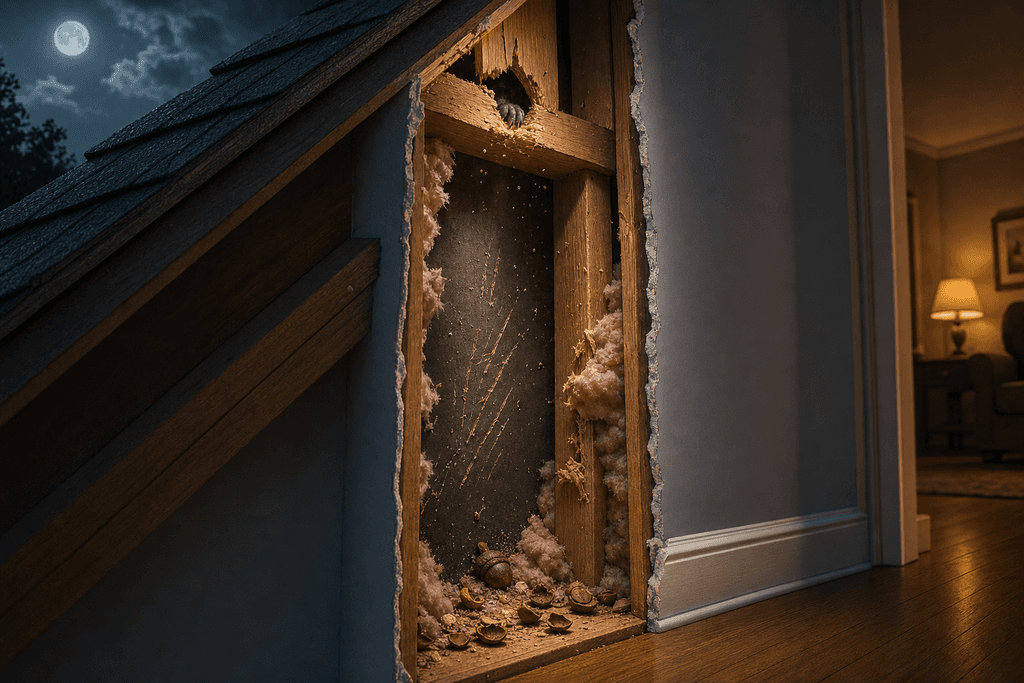
Most squirrel noises are quick scratching and scampering sounds, sometimes a rolling thump, and you will hear them most at dawn and at dusk. That timing is not random. Squirrels are crepuscular, meaning their bodies are wired to be busy right before sunrise and right after sunset, so a scratch at 6 a.m. or 7 p.m. is a stronger clue than one at noon. Rolling sounds usually mean a squirrel is pushing nesting material around, while quick scurrying across a short stretch of ceiling often means it is traveling a path it has already worn in.
Catching that sound early matters more than it seems. A single squirrel in an attic can chew wiring, tear up insulation, and widen its entry hole within days, turning a small fix into a bigger repair bill. The sooner you match the sound to the time of day and the part of the house it's coming from, the easier it is to figure out what is actually up there before it causes real damage.
Table of Contents
Why Squirrels End Up In Your Attic Or Walls
An attic acts like a hollow tree to a squirrel. It is dry, raised off the ground, and holds heat, which makes it a natural spot for building a nest and raising young.
Walls and chimneys get picked for a different reason. These spots offer narrow gaps a squirrel can squeeze through and climb, giving it a hidden path between outside and inside without being seen.
Yard noise usually means something else is going on. Squirrels chase each other over mates or territory, bury acorns and nuts for later, and bark or chatter at other animals getting too close.
Here's a quick way to sort what you're hearing by where it happens and what it likely means:
- Soft rustling near the roofline, often a squirrel entering or leaving through a gap
- Scratching inside a wall cavity, usually one climbing or squeezing through a tight space
- Barking or chattering from a tree or fence line, typically a territory dispute
- Digging sounds in loose soil or mulch, almost always food being buried or dug back up
Scratching And Scampering In The Attic
Light scratching close to the roofline, especially one spot repeated over several days, usually means a squirrel is using that gap as a door. Scampering that shows up right after sunrise or right before sunset points to a squirrel heading out to feed or coming back, which matches their dawn and dusk activity pattern.
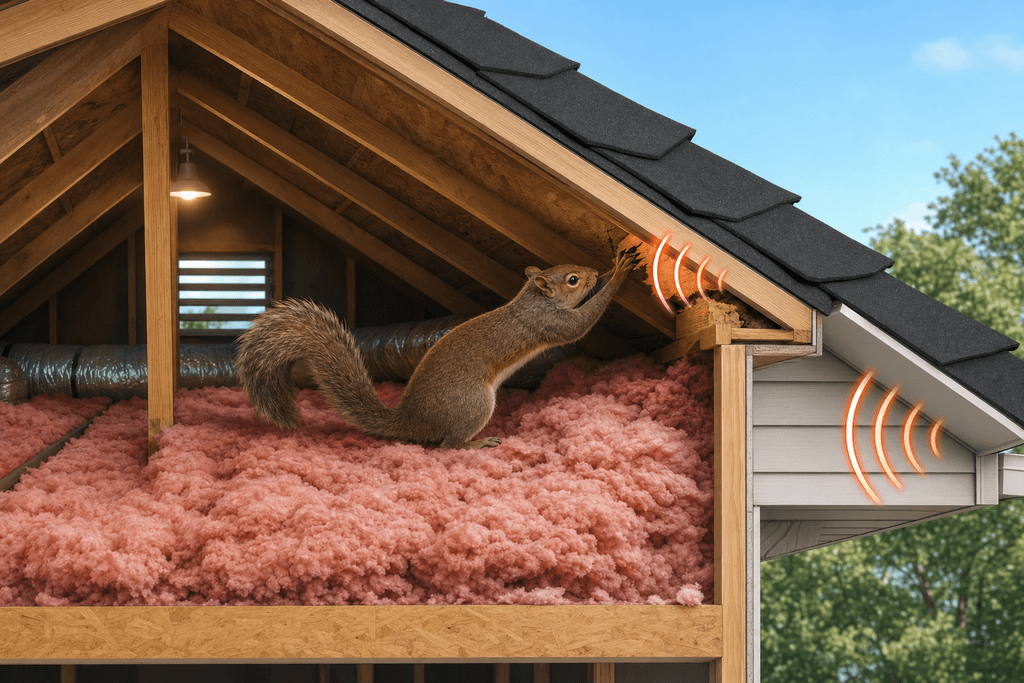
Heavier thumping or a rolling sound is different from footsteps. That's the noise of nesting material, insulation, leaves, or shredded cardboard, being dragged and packed into a corner.
Here's how to sort what you're hearing:
- One faint scratch near the edge of the roof, likely coming or going
- Short bursts of running at dawn or dusk, likely a feeding trip
- A heavier rolling or dragging sound, likely nest building
- The same spot active for more than three or four days straight, likely a nest, not a visitor
A nest changes the job from sealing one hole to removing an animal and her young before any repair work can hold.
Scurrying And Chewing Sounds Inside Walls
Wall sounds feel different from attic sounds because they move. A squirrel inside a wall cavity sounds like quick, light footsteps traveling up or down rather than across a flat ceiling.
Chewing or gnawing noise is the one that needs attention fastest. A squirrel's teeth grow constantly, so it gnaws on wood framing, wiring insulation, or drywall to keep them worn down, and that habit is what turns a nuisance animal into a fire risk or a repair job. Squeaking or chirping between the studs often means a mother has young nearby, which is a sign to leave the wall alone until the animals can be removed properly.
A few clues help narrow down where to look:
- Vertical movement between floors points to a wall cavity, not the attic
- A steady gnawing sound in one location means active chewing, not just travel
- High-pitched squeaking often signals young squirrels still in the nest
- Sound that stops when you bang on the wall usually means the animal is awake and aware of you
Because walls hide the entry point, pinpointing the gap usually takes an inspection rather than guesswork from the sound alone.
Chattering And Barking Sounds In The Yard
Squirrel noise outdoors is communication, not movement, and it sounds nothing like the scratching heard indoors. A fast clicking or chattering call is a warning to other squirrels that a hawk, cat, or person is nearby.
A sharper, single bark usually means two squirrels are arguing over territory or a food cache rather than warning about a predator. Watch the tail along with the sound: quick flicking paired with chatter is a squirrel telling a threat to back off, not a random tic.
A few yard patterns are worth noting:
- Clicking or chattering aimed at the sky or a fence line usually means a predator is close
- A single sharp bark between two squirrels usually means a territory dispute
- Tail-flicking with noise means the squirrel feels cornered or threatened
- Chatter that repeats near the same corner of the roof for several days running often means a nest is already inside, not just nearby
That last pattern is the one worth acting on, since it links outdoor noise directly to an indoor problem.
Telling Squirrels Apart From Other Attic Visitors
Squirrel movement is quick and light, closer to tapping than thudding, which separates it from the heavier, slower steps of a raccoon working across the same joists. Mice make a faster, smaller scratching sound, usually low along baseboards rather than up near the roofline where squirrels travel.
Birds in a vent or chimney produce fluttering and rustling, not the scampering or chewing a squirrel makes. Timing adds another clue: squirrels are active at dawn and dusk, while raccoons are almost always a nighttime sound, often well after midnight.
A short comparison helps when two animals seem possible:
- Light, quick scratching near the roofline at dawn or dusk, likely a squirrel
- Heavier, slower thuds at night, likely a raccoon
- Fast, tiny scratching along baseboards any time of day, likely mice
- Fluttering or rustling without footsteps, likely a bird
Getting the animal right before calling someone out, whether that's a company like Wildlife X Team or another local service, saves a second visit and gets the right traps or exclusion work started the first time.
One Visit Or A Standing Problem
Hearing a scratch once and never again is a different decision than hearing the same sound every day. A single pass through the attic, maybe a squirrel exploring a loose vent or cutting through on its way somewhere else, usually settles on its own once the animal moves on. That's a case where sealing an obvious gap might be all you need.
Noise at the same time every day is a different call. That pattern points to a squirrel treating your attic as home base, and home base for a female squirrel usually means a litter nearby. Spring and late summer are when this shows up loudest, since that's when young squirrels start moving around and testing their legs, adding extra scurrying on top of the adult's usual trips.
Daily, same-time noise is the point where guessing stops being useful. A Wildlife Inspection Report® checks the roofline, vents, and wall gaps directly, so you get the actual entry point instead of a best guess based on where the sound seemed loudest. That report is the difference between patching a hole and patching the right hole.
What To Do Once The Pattern Is Clear
Once you've got a noise happening at the same time, in the same spot, for several days running, stop listening and start calling. That pattern means an animal has settled in, and every extra day it stays is another day of chewed wiring, flattened insulation, or a widened hole. Wildlife X Team handles that kind of inspection and removal across Fort Worth, Denton, Granbury, and the nearby areas, sorting out the actual entry point instead of guessing from sound alone. Getting someone out while the damage is still small keeps the repair small too.
Squirrel Noise Questions People Still Ask
Could the noise I'm hearing actually be a bird or bat instead of a squirrel?
Yes, and it's an easy mix-up if the sound is coming from a chimney or vent. Bats produce a thin scratching mixed with faint squeaking, almost always after dark, while birds make more fluttering than footsteps. Squirrels are the only one of the three moving around heavily at dawn and dusk, so timing is still your best clue if you are not sure.
Will banging on the ceiling or playing loud music scare squirrels away for good?
No, not for good. Banging might startle a squirrel into going quiet for a few minutes, but it comes back once it calms down, especially if there is a nest involved. Noise and vibration don't close the entry point or remove any young that are already inside, so the animal usually just resettles once things quiet down.
Is it normal to hear squirrel noises even after an entry point has been sealed?
It can happen if the squirrel was already inside when the gap got closed, or if there was more than one opening. Sealing a hole from the outside without checking the attic first can trap an animal inside, which makes the noise worse, not better. That's why a full check of the roofline and walls matters more than patching the one hole you can see.
Why do I only hear noises at certain times of day and not others?
Squirrel activity lines up with their body clock, not with how loud a particular hour feels in your house. They rest through most of the day and most of the night, so the quiet gaps are normal and don't mean the animal left. If the sound disappears for several days straight rather than just a few hours, that's a better sign the squirrel has actually moved on.