
Rat's Nest Meaning and What One Looks Like
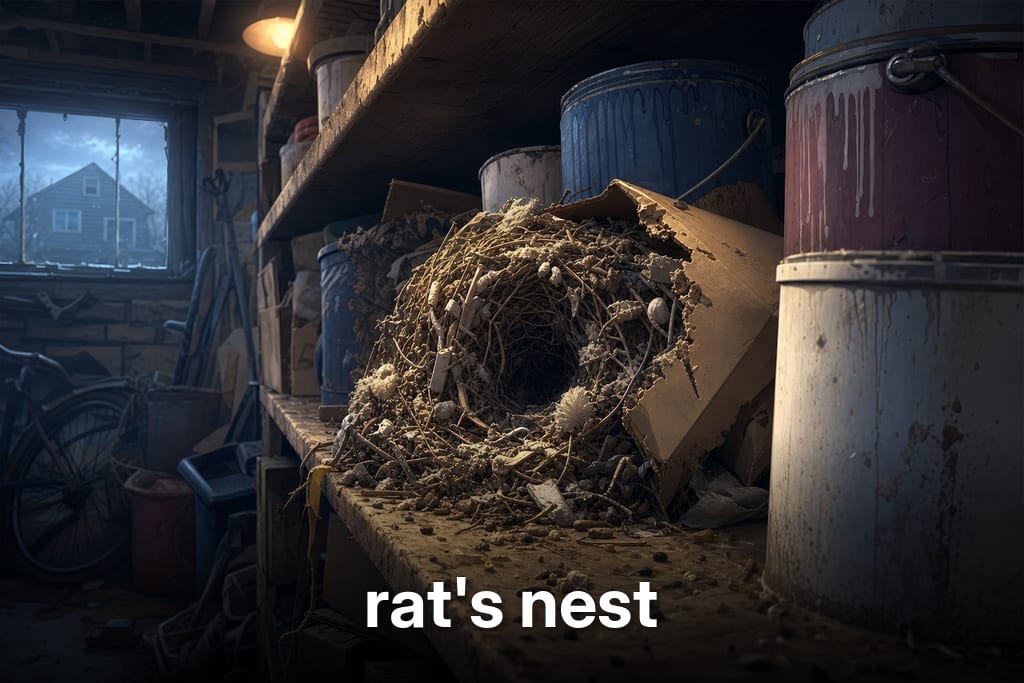
A rat's nest is a torn-up, tangled clump of shredded paper, fabric, insulation, or dry leaves that rats pack into a tight ball for sleeping, hiding, and raising their young. It usually shows up in dark, quiet spots like the back of a closet, behind boxes in the garage, or deep in attic insulation. Rats do not take weeks to build these. A single rat can gather material and shape it into a usable nest in less than a day, using whatever soft stuff is closest, so a clean space can have one within a night or two of the rats moving in.
Finding a nest is not an early warning sign. It means rats already live there, and in most cases more than one. Females build nests to give birth, and a litter can arrive within weeks of the first rat settling in, so one nest can turn into several fast. If you have found one, the rats are not passing through your house, they have set up a home inside it.
Table of Contents
Why Rats Build Nests Where They Do
Rats build nests to stay warm, hide from predators, and raise their young somewhere safe. A nest gives them cover from owls, cats, and anything else that would make a quick meal of a pup, which is why they tuck nests into walls, crawl spaces, and attic corners rather than leaving them out in the open.
A female rat can have up to six litters a year, with several pups in each one. That pace means a single nesting pair can grow into a much bigger problem over just a few months if nothing is done about it.
Rats also build close to food and water, since pups need frequent feeding and adults do not want to travel far from the den to eat. That's why nests tend to turn up near kitchens, pantries, garages with stored food, or any spot with a leaky pipe or standing water nearby.
What A Rat's Nest Looks Like
A rat's nest is round or oval and usually runs 6 to 8 inches wide, about the size of a soccer ball cut in half. It is packed tight rather than fluffy, since rats shred material down small and press it into a dense ball.
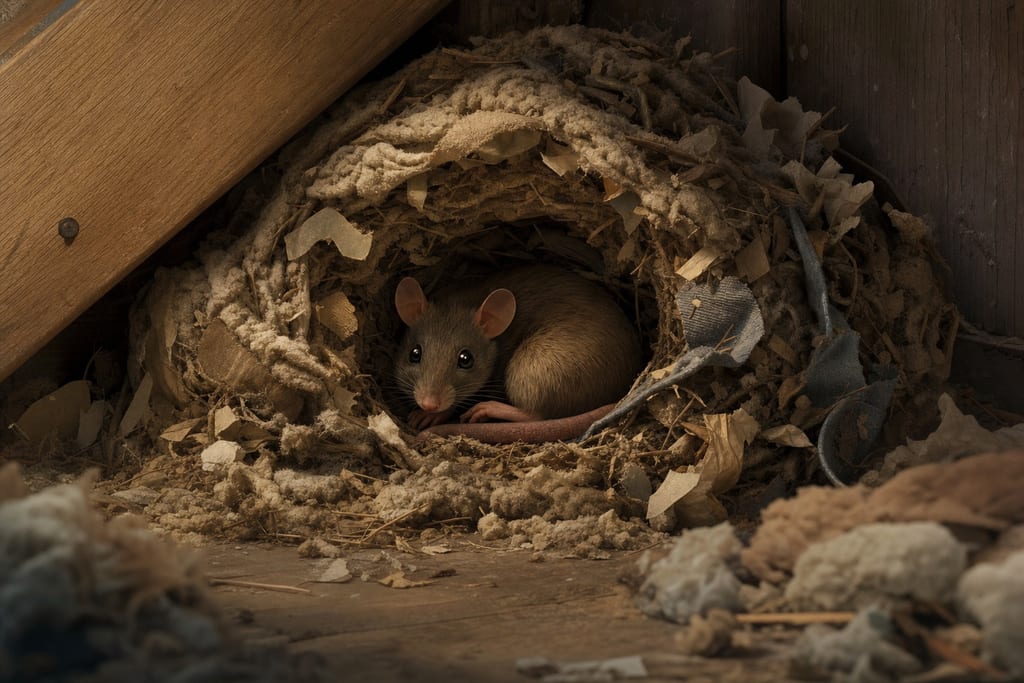
The material tells you what was close by when the rat built it. Common finds include shredded paper, fabric scraps, torn insulation, dried plants, and chewed-up cardboard, often mixed together in the same nest. Most nests have a hollowed-out center where the adult curls up or where a litter of pups gets kept warm.
A few signs confirm you are looking at an active rat nest and not just debris:
- Dark, greasy smudge marks along the edges where rats rub against entry points
- Droppings scattered near or inside the nest, usually dark and about the size of a grain of rice
- Shredded material that looks pulled apart rather than naturally decayed
- A strong, musty odor close to the nest
If you see smudges and droppings together, that combination is a near-certain sign rats are using the space regularly, not just passing through it once.
Where Rats Hide Their Nests Indoors
Rats pick spots that are dark, quiet, and close to food or water. Inside a home or business, that usually means attic insulation, wall voids, or the space behind stored boxes that nobody moves often.
Plumbing areas draw them in too. Under sinks, inside crawl spaces, and near water heaters give rats both shelter and a steady water source, which matters more to them than comfort. Kitchens and commercial break rooms are common targets as well, since rats will nest behind refrigerators, ovens, or dishwashers where the motor heat and food scraps both work in their favor.
Check these spots first if you suspect an indoor nest:
- Behind and under major kitchen appliances
- Attic corners with disturbed or flattened insulation
- Crawl spaces and the area around water heaters
- Storage rooms with boxes that have not been moved in months
Rats avoid high-traffic rooms where people walk through daily. If you find a nest in a quiet, rarely used space, that's a strong sign more nests exist in equally quiet spots nearby, since rats repeat the pattern once they find it works.
Outdoor Nests Versus Indoor Nests
Outdoor rat nests and indoor rat nests look and function differently, and mixing the two up leads people to search the wrong spot. Outdoor nests are usually underground burrows dug near foundations, woodpiles, or dense shrubs, not woven balls of material sitting in the open.
Indoor nests are built entirely from scavenged soft material, since rats inside a structure have no need to dig and instead gather paper, fabric, or insulation. Outdoor burrows show themselves through a visible entry hole, usually 2 to 4 inches wide, often with dirt kicked out around the opening.
A quick way to tell them apart:
- Outdoor burrow: dug into soil, round entry hole, found along foundations or in shrub lines
- Indoor nest: woven from shredded material, hollow center, found in attics, walls, or storage areas
Both point to the same conclusion. Whether it is a hole in the dirt or a ball of shredded paper, finding one means a colony is active, not a single rat passing through.
Signs A Nest Is Active Or Abandoned
You can tell an active nest from an old one by checking a handful of physical clues. Fresh droppings, a strong urine smell, and soft, pliable nesting material all point to rats using the nest right now.
An abandoned nest looks and smells different. The material turns dusty, dry, or crumbling, and the strong odor fades or disappears entirely, since nothing is refreshing it. Gnaw marks on nearby wood, wiring, or baseboards that look light-colored and fresh mean a rat has been chewing recently, which usually lines up with an active nest rather than an old one.
Use these clues together rather than one alone:
- Fresh, dark droppings near the nest
- Soft material that still holds its shape
- A noticeable urine smell in the space
- Light-colored gnaw marks on wood or wiring
If most of these show up at once, treat it as an active nest with more rats likely nesting nearby in the same structure, since one confirmed nest rarely stands alone.
Pull The Nest Or Check The Whole House
Finding one nest leaves you with a real choice, not just a cleanup job. You can pull the nest and move on, or you can treat it as proof that a breeding colony lives in the structure and look for the rest. Pick the first option and you are betting the nest you found is the only one, which is rarely true given how fast rats multiply.
Removing a nest without sealing the gap the rats used to get in costs you time twice. The rats that built it got in somehow, and that same opening lets the next ones in within days, so the job repeats itself. A full property check costs more up front than grabbing the nest and tossing it, but it answers the question that actually matters, which is how they are getting in, not just where they slept.
A Wildlife Inspection Report® is built for that second choice. It maps gaps around foundations, vents, and rooflines that a homeowner walking the yard would miss, since rats only need an opening about the size of a quarter. Skip that step and the nest you clean out today is one of several you have not found yet.
What To Do Once You Have Found A Nest
Finding a nest confirms rats are inside, not how many or where they got in. That answer only comes from checking the attic, walls, and foundation together, since rats rarely stop at one nesting spot once they have found a way in. A professional inspection catches the entry points and the colony size before the damage spreads to insulation, wiring, or stored belongings. Wildlife X Team handles this kind of inspection and sealing work across Fort Worth, Denton, Granbury, and the surrounding towns, pairing humane removal with repairs that close the gap the rats used. That combination is what actually stops the problem instead of just cleaning up after it.
Rat Nest Questions People Still Ask
Is it safe to touch or remove a rat's nest myself?
No, it is not a good idea. Rat droppings and urine can carry hantavirus and other germs that spread through the air when nesting material gets disturbed. Wearing gloves and a mask helps, but the real risk is breathing in dust from dried urine while you pull the nest apart, which is easy to do without noticing.
How many rats usually live in or around one nest?
A single nest often houses one female and her current litter, which can run six to twelve pups. Once those pups mature, they tend to build nests of their own nearby rather than share the original one. That means a property with one confirmed nest frequently has three or four more within the same attic or wall system.
Can a rat's nest cause a fire hazard in my attic?
Yes. Rats chew on electrical wiring to wear down their teeth and to clear material out of their path, and a nest built near wiring puts dry, shredded fuel right next to exposed wire. Stripped insulation on a wire inside an attic full of shredded paper and old attic insulation is a real fire risk, not a minor one.
What should I do with insulation after a nest is found inside it?
Contaminated insulation needs to come out, not just get fluffed back into place. Rat urine and droppings soak into the material and keep smelling long after the nest is gone, and that scent draws new rats back to the same spot. Wildlife X Team handles this kind of insulation removal and replacement as part of their attic cleanup work.