
Rat Poop Pictures and How to Clean Droppings Safely
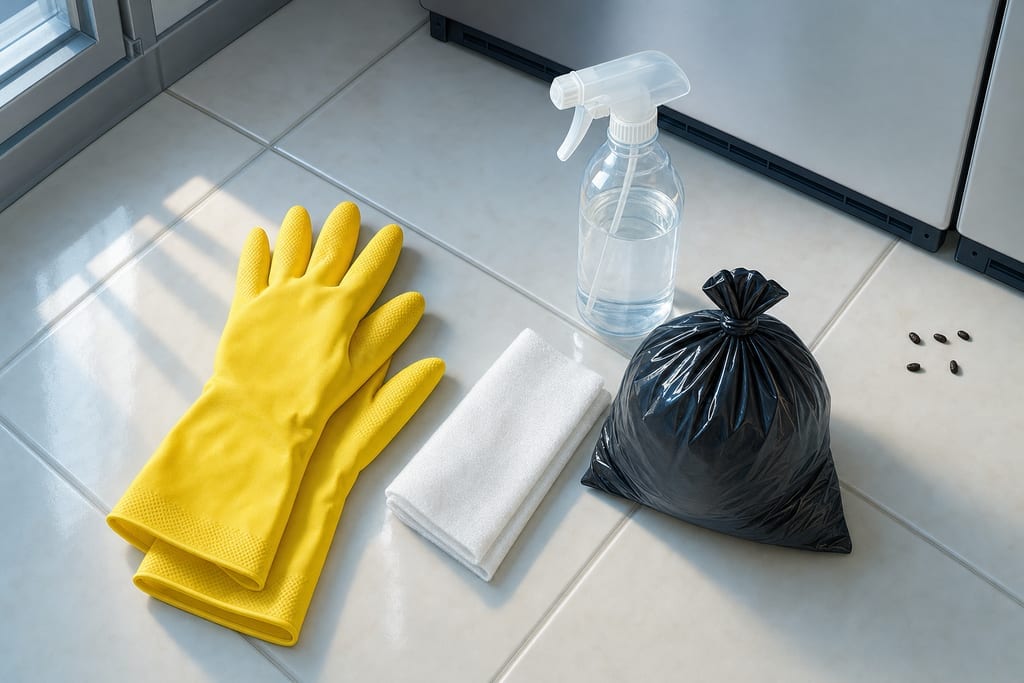
A rat poop pic shows a dark, spindle-shaped pellet with blunt, rounded ends, roughly 1/2 to 3/4 inch long, which is bigger and more tapered than mouse droppings. That size and shape matter because a mix-up can lead you to clean the wrong way, use the wrong gear, or miss a bigger problem hiding in your attic or walls. Rat droppings carry bacteria and viruses that spread through dust when they dry out and get disturbed, so knowing what you're looking at before you grab a broom is worth the extra minute.
Photos side by side make this easier than any written description. Fresh droppings look dark, almost black, and slightly moist or shiny, while old ones turn gray, dry, and crumbly, which tells you how long the rats have been around. Comparing size and color against known reference shots also helps rule out squirrel or other wildlife droppings, since each animal leaves a different calling card and that difference decides how you clean it up safely.
Table of Contents
Why Rat Droppings Carry Real Health Risks
Rat droppings can carry hantavirus, salmonella, and leptospirosis, three illnesses that spread in different ways but all start with the same source. Salmonella spreads through contact with contaminated surfaces or food. Leptospirosis spreads through contact with urine-soaked material, often mixed in with the droppings themselves.
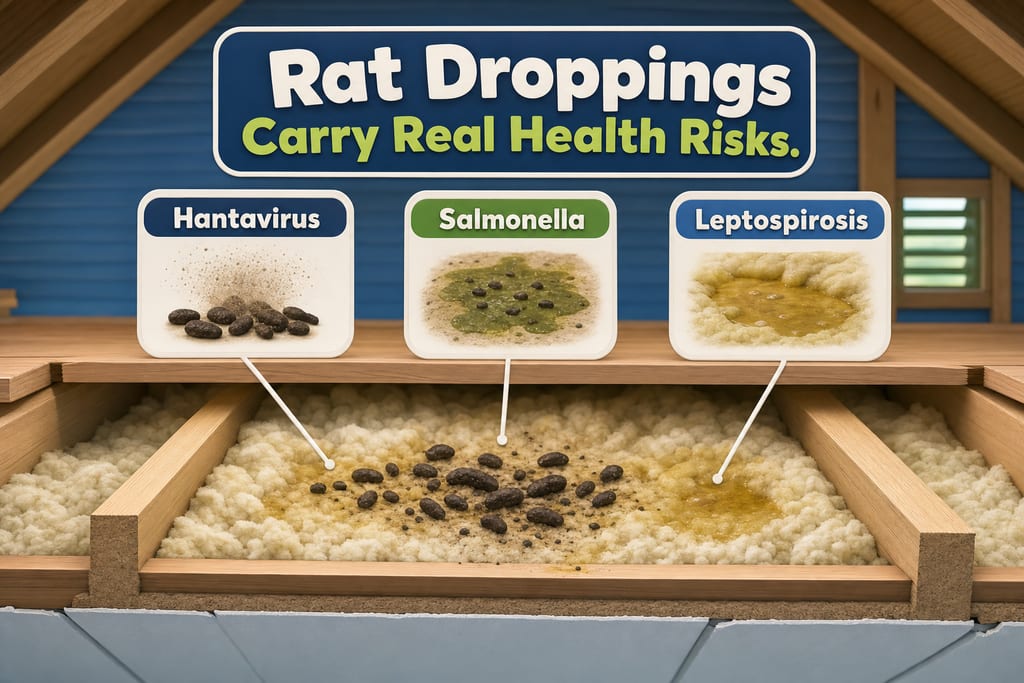
Hantavirus is the one that catches people off guard. Dried droppings crumble into fine dust, and sweeping or vacuuming them stirs that dust into the air where it gets inhaled. This is why dry sweeping or using a shop vac without a sealed filter is one of the most common mistakes people make with rodent cleanup.
The scale of the problem adds up fast. A single rat can leave more than 25,000 droppings in a home over the course of a year, which means even one rat in an attic creates a real contamination job, not just a few spots to wipe down. That number is also why a small infestation left alone for a few months can turn into a cleanup far bigger than the animal problem itself.
What Rat Droppings Actually Look Like
A labeled photo gallery beats any written description for matching what's on your garage floor or attic insulation. Each image should show the pellet next to a ruler or a coin so the size registers, since 1/2 to 3/4 inch is the range that separates rat droppings from smaller rodents.
Lay out your photos this way for a quick comparison:
- Shape: spindle-shaped with tapered or blunt rounded ends, never perfectly round
- Color: dark brown to black when fresh, fading to gray over time
- Texture: shiny and slightly soft when fresh, dry and crumbly when old
- Grouping: fresh droppings often cluster near a nesting spot or feeding path
A caption under each photo should note whether it's fresh or old, since that single detail tells you if rats are still active in the space or if you're looking at leftover evidence. Fresh, shiny droppings mean rats are currently living there, not just visiting in the past.
Spotting Rat Droppings In Your Home
You can usually tell rat droppings apart from other animals by size and texture alone, without needing a lab. Rat droppings run about 3/4 inch with blunt ends, while mouse droppings are closer to 1/4 inch with pointed tips on both sides.
Squirrel droppings look similar in size to rat droppings but tend to have a more uniform, pellet-like shape and show up in attics near entry points rather than along walls. Bat droppings are the easiest to rule out: crush one and it breaks into shiny insect fragments, since bats eat bugs, not food scraps. Use this quick comparison when you're not sure:
- Rat: 1/2 to 3/4 inch, blunt ends, found along walls and behind appliances
- Mouse: about 1/4 inch, pointed ends, found in cabinets and near food storage
- Squirrel: similar size to rat but more rounded, found in attic insulation
- Bat: small and crumbly, breaks into shiny insect bits, found near roof entry points
Check behind appliances and inside cabinets first, since those two spots account for most indoor finds before you ever look in the attic.
Staying Safe Before You Clean Anything Up
Never sweep or vacuum dry droppings. That motion kicks dust into the air where it gets inhaled, which is how the health risks from the last section actually reach a person.
Open windows and let the room air out for at least 30 minutes before you walk back in with cleaning supplies. This one video walks through the same prep steps for mouse droppings, and the process is nearly identical for rats.
Once the air clears, gear up before touching anything:
- Rubber or latex gloves, no bare skin contact
- N95 mask at minimum, a half-face respirator if you have one
- Disinfectant spray or a bleach-water mix ready to go
- Paper towels, not rags you plan to reuse
Spray the droppings and the surrounding area, then let it soak before you wipe anything, since dry wiping just moves the dust around instead of killing it.
The Right Way To Clean Up Rat Droppings
Soak the droppings and the area around them in disinfectant for a minimum of 5 minutes before you wipe. That soak time kills off what's active in the mess instead of just smearing it across the surface.
After wiping, the cleanup isn't done until the waste is sealed and gone. Follow these steps in order:
- Double-bag the waste, used gloves, and paper towels together
- Tie off both bags and put them straight in an outdoor trash can
- Spray your gloves with disinfectant before peeling them off
- Wash your hands thoroughly with soap right after
If the droppings are mixed into attic insulation rather than sitting on a hard surface, a wipe-down won't fix it. Insulation usually has to be pulled out and replaced rather than cleaned, which is a job Wildlife X Team handles as part of their attic cleanup and restoration work when the mess is bigger than a weekend chore.
Cleaning It Yourself Or Calling In Help
Cleaning up what you find today only solves today's mess. If fresh droppings show up again a few days later, that's not leftover evidence, it's proof rats are still getting in and out of the same space.
A hard floor or countertop can be disinfected and wiped clean with no issue. Insulation soaked in droppings and urine is a different problem, since you can't fully disinfect material that's absorbed waste all the way through, it has to come out.
That's the point where a weekend cleanup turns into a bigger job. Wildlife X Team's Attic Cleanup & Restoration service covers disinfecting the space, pulling and replacing ruined insulation, and sealing the gaps rats used to get in, all in one visit instead of three separate fixes.
Before any of that starts, a Wildlife Inspection Report® finds the actual entry points, the ones under the eaves or behind the chimney flashing that don't show up on a casual walk around the house. Skip that step and you can clean every dropping out of the attic and still have new ones back within a week.
One Spot Or Every Room: Which One Are You Looking At
Check how far the mess spreads before you decide what tool to grab. One cluster on a garage floor or a single shelf in a cabinet is a job for gloves, disinfectant, and the steps above, and you can finish it in an afternoon. Droppings packed into attic insulation, tucked along wall voids, or showing up in more than one room point to rats living and moving through the structure, not just passing through once. That spread is the line between a cleaning task and an inspection. Wildlife X Team covers Fort Worth, Denton, Granbury, and the surrounding area for attic cleanup and sealing when the mess has gone past what a paper towel and a spray bottle can handle.
Rat Dropping Questions People Still Ask
Can rat droppings make my pet sick if they sniff or eat them?
Yes. Dogs and cats can pick up salmonella or leptospirosis from sniffing, licking, or eating rat droppings, the same way a person can through contact with contaminated surfaces. Keep pets out of the room until you've cleaned and disinfected it, and call your vet if your pet seems off after getting into a dropping pile.
Why do I still smell a musty odor after I've cleaned up all the droppings I can find?
A lingering smell usually means urine soaked into something you can't fully wipe down, like insulation, drywall, or wood framing. Droppings on a hard surface clean up fast, but urine that's dried into a porous material keeps giving off odor until that material is pulled out and replaced.
Is it true that old dried rat droppings are less dangerous than fresh ones?
No, it's actually the opposite. Fresh droppings are moist and less likely to crumble into dust, while old, dry droppings break apart easily and send contaminated dust into the air the moment they're disturbed. Treat both the same way, with gloves, a mask, and disinfectant before you wipe anything.
What should I do if I find droppings in a box of food I already opened?
Throw the whole box away without eating anything from it, even if the droppings only touched one corner. Rats contaminate more than what they visibly touch, since they walk and sniff across the whole container. Check nearby boxes and bags on the same shelf too, since rats rarely stop at one spot.