
Rat Nest Signs, Common Hiding Spots, and What to Do Next
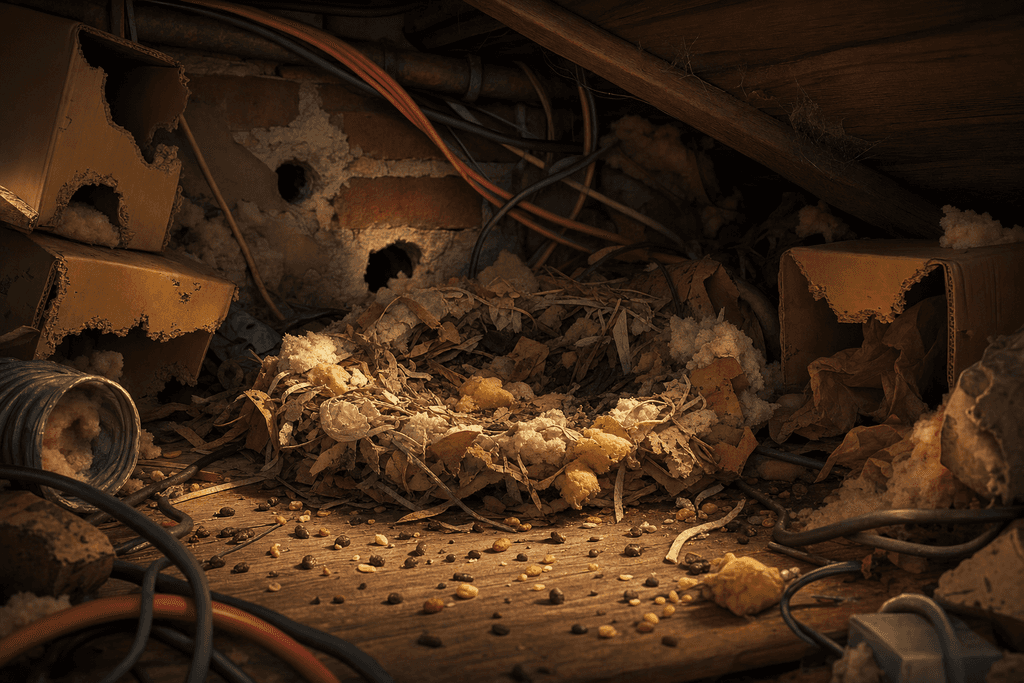
A single rat can shred paper, insulation, and old fabric into a cozy nest in less than 24 hours, often while your family sleeps a few feet away. Most homeowners never actually spot the nest itself, they just notice the scratching, the droppings, or a weird smell and start wondering what's going on. This post breaks down the real signs of a rat nest, the spots rats love to hide a rats nest, and what to do once you find one.
Table of Contents
Why Rats Build Nests Where They Do
A single rat can chew through wood, soft metal, and even wires, which is exactly why your attic or wall space looks like a five-star hotel to them. Rats aren't picky about your home decor, but they are picky about three things: warmth, darkness, and how close they are to food and water. That's it. That's the whole checklist. If your house checks those boxes, you've basically hung out a "vacancy" sign for a rat nest to show up. Once they find a spot that works, they don't just visit, they move in and start a family fast.

Here's the thing people don't always think about: rats build their nests out of whatever junk is lying around. They're not picky decorators. If there's shredded paper, insulation, cardboard, or even fabric scraps nearby, that's what ends up in the rats nest. It's basically a reflection of what's stored in that part of your home.
Some common reasons rats pick certain spots include:
- Close access to a food source like pantries, trash cans, or bird feeders
- Quiet, undisturbed areas like attics, crawl spaces, or behind wall panels
- Warm spots near pipes, water heaters, or insulation
- Easy entry points like gaps around vents, chimneys, or foundation cracks
To help make sense of what you might find, here's a simple breakdown of nest materials compared to where they usually show up:
- Insulation shreds — found in attics and wall cavities
- Shredded paper or cardboard — found in storage boxes, garages, and basements
- Fabric or stuffing scraps — found in closets, under furniture, or in stored clothing
- Dried leaves and twigs — found near vents, chimneys, or crawl spaces close to outdoor entry points
Knowing what rats look for and what they use to build their nests helps you figure out where to check first. It's not about guessing, it's about knowing their habits so you can catch a problem early instead of finding out the hard way months later.
Signs of a Rat Nest in Your Home
A single rat can chew through wood, drywall, and even soft metal without much trouble. Rats have front teeth that never stop growing, so they gnaw constantly just to keep them worn down. That's why one of the first things people notice isn't the rat itself, but the damage it leaves behind. If you've been hearing odd noises or noticing weird smells, there's a good chance you've got more than just one uninvited guest.
Rats are messy builders. They'll use whatever soft material they can find nearby to make their nests comfortable, and this usually leaves a pretty obvious trail if you know what to look for.
- Shredded paper, fabric, or insulation clumped together in hidden corners
- Droppings, grease marks, and gnaw marks along walls or baseboards
- Scratching or scurrying sounds at night, especially in ceilings or walls
- A strong ammonia-like smell in closed-off or rarely used spaces
If you're checking your own place, grab a flashlight and go slow. Rat nests aren't always in plain sight, and the droppings can be easy to miss in dim light.
Common Places Rats Build Nests
Rats like tight, dark, and quiet spots where they won't be bothered. That's why so many nests turn up in places homeowners rarely check, like behind furniture or deep in storage boxes. They're also surprisingly good climbers, so don't assume ground-level rooms are the only ones at risk. Attics, garages, and even the space behind your stove can all become prime real estate for a rat family looking to settle down.
Here's a quick breakdown of where nests tend to show up most, both inside and outside the home:
- Attics and insulation layers
- Wall voids and crawl spaces
- Behind appliances like stoves and water heaters
- Garages, sheds, and storage boxes
- Outdoor woodpiles and dense shrubs near the foundation
Once rats find a spot they like, they don't just visit, they move in and start reproducing fast. A female rat can have up to six litters a year, which means a small problem can turn into a big one before you even realize what's happening.
What to Do When You Find a Rat Nest
Finding a rat nest is unsettling, but what you do next actually matters more than the discovery itself. A lot of homeowners want to grab gloves and clean it up right away, but that's not always the safest move. Rat droppings and nesting material can carry diseases, and disturbing them the wrong way can spread particles into the air. Before you do anything drastic, it helps to know the right order of steps.
Here's a simple checklist to follow once you spot a nest:
- Avoid touching the nest directly, since it can carry disease risks
- Don't seal up entry points yet, rats still inside need a way out or they'll chew new holes
- Take note of where the nest is and how much damage you can see
- Call a licensed wildlife removal service for safe removal and cleanup
This is where a company like Wildlife X Team comes in handy. Their Attic Cleanup & Restoration service is built specifically for situations like this, handling contaminated insulation, sanitizing the area, and sealing up entry points once the rats are fully gone. It's a lot different than trying to Google your way through a DIY cleanup, especially when you're dealing with something that can affect your family's health.
Compared to bigger national names like Terminix or regional options like Critter Control, Wildlife X Team focuses on humane removal paired with long-term prevention, not just a quick fix. If you're in Fort Worth, Denton, Granbury, or nearby areas like Southlake or Flower Mound, that combination of care and follow-through can make a real difference down the road.
Why DIY Rat Removal Often Falls Short
A rat can flatten its body and squeeze through a hole the size of a quarter. That single fact explains why so many homeowners feel like they're stuck in a loop of setting traps, catching a rat or two, and then hearing scratching in the attic again a few weeks later. A rat nest isn't just one animal hiding in your walls, it's often a sign that your home has multiple entry points rats are using to come and go. Traps and poison might knock down the population for a bit, but they don't do anything to stop the next rat from wandering in through that same gap. This is the part DIY methods almost always miss, and it's why the rats nest problem tends to come back even after you think it's handled.
Here's a simple breakdown of how the two approaches stack up.
- DIY traps and poison deal with the rats you can see, but ignore the holes letting new ones in
- Store bought sprays and repellents wear off fast and rarely reach hidden nest sites
- Sealing gaps yourself is tough without knowing every possible entry point on a roof, foundation, or vent
- Professional exclusion maps out the whole property and closes every access point, not just the obvious ones
This is where a proper inspection matters more than people expect. Wildlife X Team's Wildlife Inspection Report® takes a close look at the entire structure, checking spots most homeowners wouldn't think twice about, like gaps behind siding or small chimney openings. It's the kind of legwork that separates a quick fix from an actual solution.
- Foundation cracks and gaps
- Roof and soffit vents
- Chimney openings
- Gaps around utility lines
The other piece worth mentioning is the Renewable Lifetime Warranty. Since rats are persistent and will test the same weak spots over and over, having a long-term guarantee gives homeowners some breathing room instead of wondering if the problem will resurface next winter.
Wrap-up Spotting and Handling a Rat Nest
A rat nest doesn't just show up out of nowhere. There are always clues first, like little droppings tucked in corners, scratching sounds at night, or a smell that just doesn't belong in your house. The tricky part is these signs are easy to brush off until the problem gets a lot bigger than a few rats hiding out.
Most nests turn up in the same handful of spots every time. Think attics, wall voids, and crawl spaces, the quiet, undisturbed areas rats love because nobody bothers them there. If you've checked one of these spots and found something off, chances are good you've got more than one rat calling your place home.
Here's what actually matters once you spot the signs:
- Don't wait around hoping it fixes itself
- Avoid poking around the nest yourself since rats can carry disease
- Get a professional to find every entry point, not just the obvious one
Waiting on a rats nest almost always leads to more damage and bigger bills later. Wires get chewed, insulation gets ruined, and the health risks pile up the longer it sits.
This is where Wildlife X Team comes in. Their Wildlife Inspection Report® tracks down every entry point rats might be using, and their exclusion services seal things up for good so you're not dealing with round two next season.
Now that you know the signs and hiding spots, you're probably wondering about the little stuff, like how fast rats multiply or whether that scratching sound could actually be something else entirely. That's exactly what we'll cover next.
Frequently Asked Questions About Rat Nests
A single rat nest can turn into a full blown infestation faster than most homeowners think. Below are the questions we hear most often from folks who just found a nest, or think they might have one. If you're still unsure after reading these, that's usually a sign it's time to get a second set of eyes on the problem.
What does a rat nest look like
A rat nest usually looks like a messy ball of shredded material such as insulation, cardboard, fabric, or dried leaves. They're often tucked into dark, quiet spots like wall voids, attic corners, or behind stored boxes. If you spot droppings or a greasy smudge trail near it, that's a pretty strong confirmation it's active.
How many rats are usually in one nest
A single nest can hold a mother rat and her litter, which is typically 6 to 12 babies. Since rats breed quickly, one nest found today can mean two or three more nests within a couple months if nothing is done.
Can rats come back after a nest is removed
Yes, and this happens more than people expect. If the entry points aren't sealed up, new rats will find the same easy access and rebuild. This is why exclusion work matters just as much as the removal itself.
Is it safe to remove a rat nest myself
It's not the safest move, honestly. Rat droppings and nesting material can carry diseases like hantavirus, and disturbing a nest without protection can spread contamination through your home. A few things to keep in mind if you're considering it:
- Never touch a nest with bare hands
- Ventilate the area before cleanup
- Don't assume the nest is empty just because it looks quiet
How do I know if it's rats and not mice
Rat droppings are bigger, about the size of a raisin, while mouse droppings look more like small grains of rice. Rats also leave larger gnaw marks and wider grease trails since they're bigger animals overall.
How much does professional rat removal cost
Cost depends on how bad the infestation is, how many entry points need sealing, and whether cleanup or insulation replacement is needed too. Wildlife X Team can walk you through a full inspection so you know exactly what you're dealing with before any work starts, unlike some quick fixes that skip the root cause entirely.