
Raccoon Removal in Keller TX With Humane Exclusion
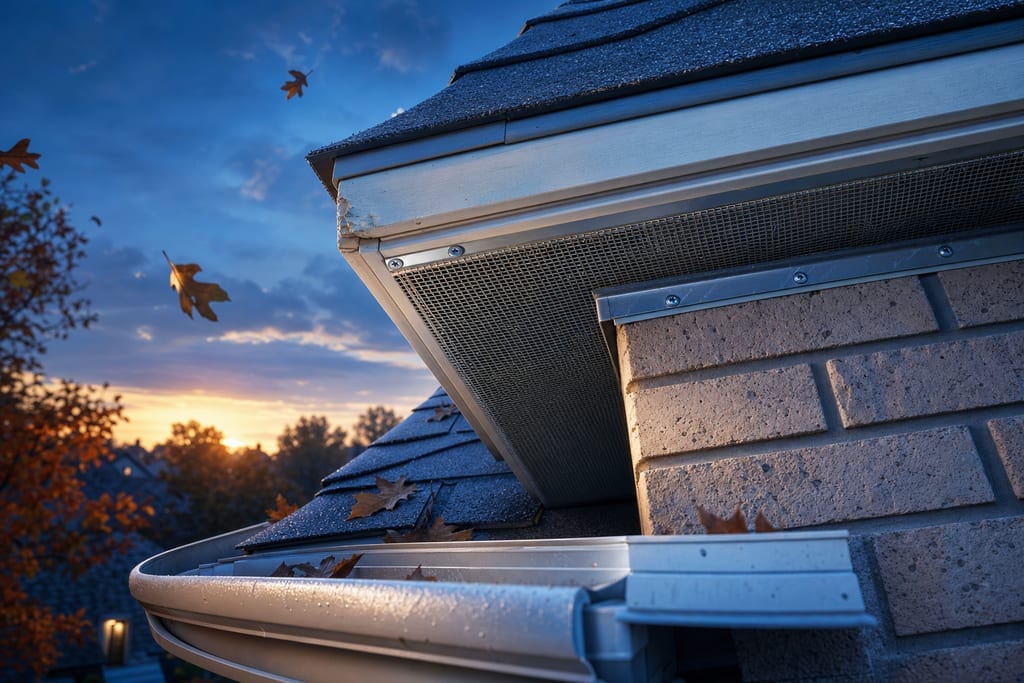
If you want raccoon removal in Keller TX, the short answer is this: get the animal out through humane trapping, then seal every gap it used to get in, because skipping either step just invites the next one. A raccoon can tear open a soffit or rip through a roof vent in a matter of minutes, not hours. Their paws are strong and their claws do real damage to fascia boards, screens, and shingles. Once they find a weak spot, they remember it, and so does every raccoon that comes after them.
Trapping and removing the animal solves today's problem. It does nothing for the hole it left behind, the loose vent cover, or the gap under the eave that let it in the first place. Homes and businesses in Keller, along with Fort Worth, Southlake, Grapevine, Colleyville, North Richland Hills, and the surrounding towns, deal with this same pattern year round. The lasting fix always pairs removal with repair work on the entry points, not one or the other.
Table of Contents
Why Raccoons Keep Showing Up in Keller Attics
Keller sits where creek corridors, wooded lots, and fresh construction all meet. That mix gives raccoons plenty of cover to travel in close and a steady supply of new rooflines they haven't tested yet for weak spots.
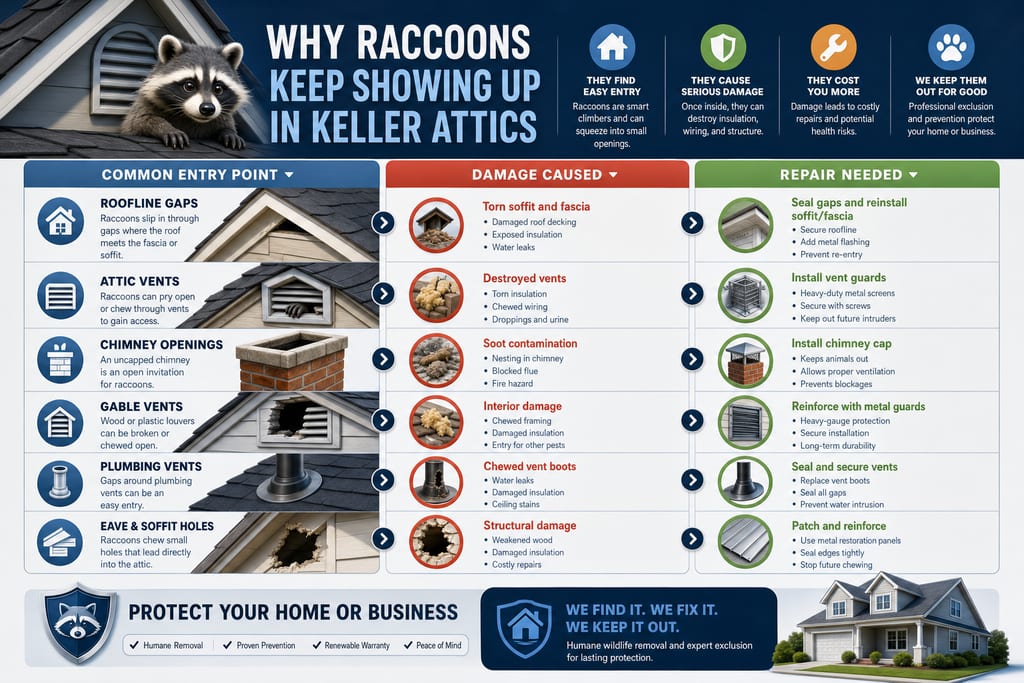
Roof vents are a common way in because the screens behind them are thin and easy to pry loose. Chimneys without a cap work the same way, giving a raccoon a straight drop into the flue or attic space. Gaps at the foundation, especially around crawl space vents or where siding has pulled away, let them in low instead of from the roof.
Each entry point leaves its own kind of damage behind. A torn roof vent usually means bent screen, scattered insulation, and sometimes a water leak once the cover is gone. A raccoon using a chimney often leaves soot tracked through the attic and nesting material packed into the flue. Foundation gaps tend to show up as chewed wiring or insulation pulled down into a crawl space, since that's where a mother raccoon will often den with young.
A quick walk around the outside of a house during daylight can catch some of this before it gets worse.
Fixing any of these spots means more than stuffing in some wire mesh. The vent needs a solid cover rated for animal pressure, the chimney needs a proper cap, and foundation gaps need to be closed with material a raccoon can't pry or chew through.
Spotting a Raccoon Problem Before It Gets Worse
Heavy footsteps at night, torn insulation hanging through a ceiling vent, and a sharp, musky smell are the three signs most homeowners notice first. Raccoons are active after dark, so the sounds usually show up between dusk and early morning, moving from one end of the attic to the other. A female raccoon looking for a den site will often pick an attic in spring to raise her litter, since it's warm, dry, and quiet.
Waiting even a few weeks gives her time to tear more insulation loose and leave droppings in corners that are hard to reach. Droppings left in an attic can carry roundworm, which stays dangerous even after the animal is gone. A short walk through the attic with a flashlight can confirm what's going on before it spreads further.
- Scratching or thumping sounds concentrated in one area at night
- Insulation pulled into a pile or flattened in a nest shape
- A strong, musky odor near a vent or soffit
- Dark, tubular droppings along a beam or in a corner
- Water stains that weren't there a month ago, often from a torn vent
How Humane Removal Actually Works Here
The process starts with a Wildlife Inspection Report, which maps every gap, torn vent, and loose flashing panel a raccoon could be using. Technicians check the whole roofline and foundation, not just the spot where the noise is loudest, since raccoons often use more than one opening. No trap gets set until every access point is accounted for, because sealing one hole while another stays open just moves the problem.
Once the entry points are mapped, removal uses humane, non-lethal methods built around keeping the animal and any young together. Technicians check for babies before closing anything up, since separating a mother from her litter leaves young raccoons trapped and leaves the mother tearing at the house trying to get back in.
- Inspect the attic, roofline, and foundation for every access point
- Document findings in the Wildlife Inspection Report
- Check for a nest or young raccoons before any trapping begins
- Remove the adult and any young using humane methods
- Confirm the attic is clear before sealing work starts
Sealing the Gaps So Raccoons Never Return
Removal only solves half the job, so the next step is closing off the openings for good. Chimney caps stop entry from the flue, vent guards protect the thin screens raccoons pry loose, and foundation repair or caulking closes the gaps low on the house. Each fix uses material a raccoon can't bend, chew, or pull free with its paws.
Attic cleanup follows the sealing work, since contaminated insulation and droppings have to come out before the space is safe again. The area gets disinfected and new insulation goes in where the old material was too damaged to leave. The exclusion work carries a renewable lifetime warranty, so the seal is backed for as long as the homeowner keeps it active.
- Install a chimney cap rated to block animal entry
- Replace or reinforce vent screens with animal-proof guards
- Repair foundation gaps and seal low entry points with caulking
- Remove and replace contaminated attic insulation
- Disinfect the attic space before closing the job out
Why Keller Homeowners Trust This Local Team
Wildlife X Team is based at 11833 Katy Rd in Keller, TX 76244, and works throughout Fort Worth, Denton, Granbury, Southlake, Grapevine, and the surrounding towns. Technicians are licensed and insured, and they've seen how North Texas creek corridors and new construction push raccoons toward the same weak points on different homes. Same-day and emergency response is available when a raccoon is actively in a home right now.
Mark Thompson, a past customer, said the team removed raccoons from his property and secured the attic against future invasions, which is the same two-part approach used on every job. A homeowner deciding between companies can ask a few direct questions to compare service.
- Is the inspection documented in writing before any work starts
- Does the quote include both removal and exclusion repairs
- Is the exclusion work backed by a warranty
- Can the team respond the same day if raccoons are active now
Call (817) 799-8686 to schedule an inspection in Keller or any of the nearby service areas.
Trapping Only or Trapping With Repairs
A homeowner facing a raccoon in the attic has two real paths. Pay for trapping alone and close the job fast, or pay for trapping plus the repair work that keeps the attic sealed. The right choice depends on whether this is a one-time cost or a problem you want solved for good.
Trapping alone is cheaper up front and gets the current animal out within a day or two. The catch is the hole stays open, and a vacant den site rarely stays vacant long in Keller. Another raccoon, or the same one, often finds that same gap within weeks, which means a second service call and a second bill.
Trapping with exclusion costs more at the start because it includes materials like chimney caps, vent guards, and foundation sealing. That upfront cost buys protection against repeat attic damage, torn insulation, and the vet bills that come if a pet gets into a raccoon's territory or picks up roundworm from droppings left behind. It's also the only version of the job where a lifetime warranty means anything, since a warranty on an open entry point isn't protecting anything at all.
A renter or a homeowner planning to sell within the year might reasonably choose trapping alone. Anyone planning to stay in the house, or running a business that can't afford a repeat intrusion, is better served paying for the full repair up front.
Deciding When to Make the Call
A raccoon in the attic doesn't wait for a convenient week, and neither should the fix. Call (817) 799-8686 to schedule a Wildlife Inspection Report and get a technician looking at the roofline, chimney, and foundation before the damage spreads further. Wildlife X Team backs the exclusion work with a renewable lifetime warranty, so the seal on your home stays protected as long as you keep it active, with fast response and humane removal from the first visit. Keller, Fort Worth, Denton, Granbury, Southlake, and the surrounding towns all fall within the service area, so the same team handling the inspection can also do the repair work the same week.
Raccoon Removal Questions in Keller
How fast can someone get to my house if a raccoon is in my attic tonight?
Call (817) 799-8686 and ask about same-day or emergency response, which is available when a raccoon is actively inside a home. Response time depends on how many jobs are already scheduled that day, but an active raccoon case gets priority over a routine inspection booking.
What happens to baby raccoons if the mother is removed first?
They get stuck in the attic, and the mother will claw at vents, soffits, and roof edges trying to get back to them, causing more damage than the original entry. That's why technicians check for a nest and young before any trapping starts, and remove the whole family together instead of taking the adult alone.
Can a raccoon chew through a freshly sealed vent guard or repair?
A properly installed vent guard is built from material rated to resist a raccoon's claws and teeth, so it holds up under the kind of pressure that tears through thin factory screens. If a seal ever does fail, the renewable lifetime warranty covers fixing it again as long as it's kept active.
Will the removal process damage my roof or siding further?
No, the goal is the opposite. Technicians work around the existing damage rather than adding to it, and any repair work on vents, chimneys, or foundation gaps is meant to leave the structure stronger than it was before the raccoon got in.