
Raccoon Removal Costs Near You in Fort Worth and Nearby Areas

A single raccoon family living in your attic can cause over $3,000 in damage before you even notice the problem. Understanding raccoon removal cost near me isn't just about budgeting for a service call—it's about protecting your Fort Worth area home from expensive structural repairs, contaminated insulation, and ongoing wildlife issues. Whether you're in Keller, Southlake, or Grapevine, knowing what professional removal should cost helps you make smart decisions when those masked bandits move in uninvited.
Table of Contents
- Understanding Raccoon Problems in the Fort Worth Area
- What Affects Raccoon Removal Costs
- Typical Raccoon Removal Service Pricing Ranges
- Additional Costs Beyond Basic Removal
- How to Get the Best Value for Raccoon Removal
- Why Professional Removal Costs Less Than DIY in the Long Run
- Making Smart Decisions About Raccoon Removal Costs
- Common Questions About Raccoon Removal Costs
Understanding Raccoon Problems in the Fort Worth Area
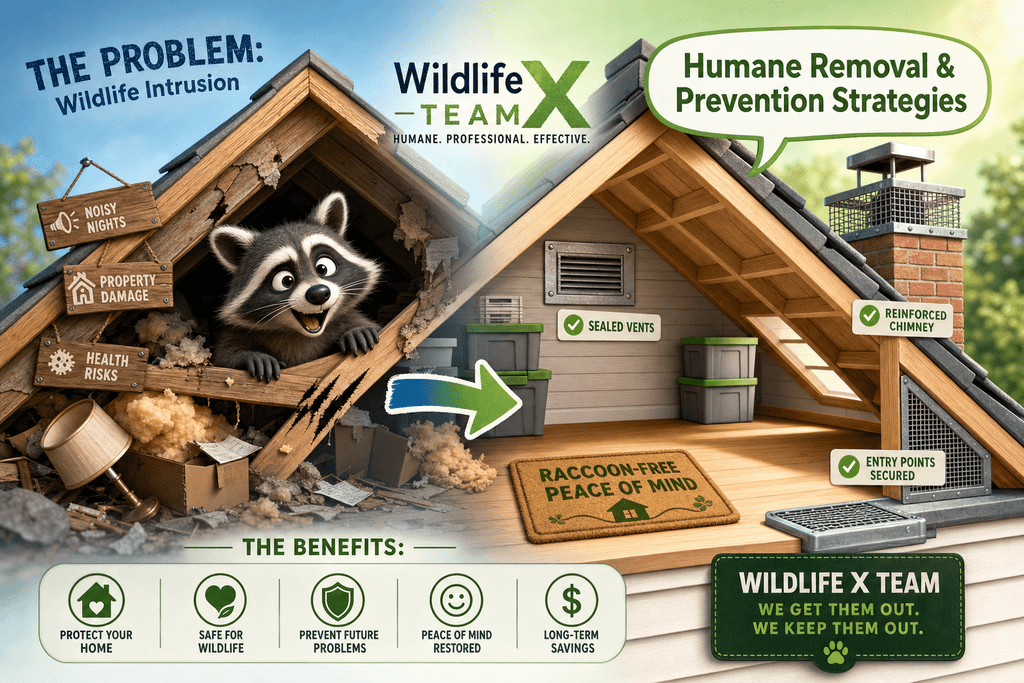
Fort Worth sits right in the sweet spot where city meets countryside, and raccoons absolutely love it here. The mix of wooded areas, creeks, and neighborhoods with plenty of food sources makes North Texas one of the best places for raccoons to thrive. These masked bandits have adapted so well to urban life that they're now more common in cities than in the wild. When you're searching for "raccoon removal cost near me," you're joining thousands of other Fort Worth homeowners dealing with the same problem.
Why Raccoons Choose North Texas Homes
The Dallas-Fort Worth area gives raccoons everything they need to survive and multiply. Our mild winters mean they stay active year-round, unlike raccoons up north that hibernate. They're smart enough to know that your attic is warmer than a tree hollow and your trash can has better food than anything they'd find in the woods.
Here's what makes your home attractive to raccoons:
- Attics that stay warm in winter and cool in summer
- Chimneys without proper caps or screens
- Roof vents with damaged or missing covers
- Trees with branches hanging over your roof
- Unsecured garbage cans and pet food left outside
Seasonal Patterns You Need to Know
Raccoon activity in Fort Worth follows a pretty predictable schedule. Spring brings the biggest problems because mother raccoons are looking for safe places to have their babies, usually between March and May. Your attic looks like a perfect nursery to them.
Fall is the second busy season. Raccoons are fattening up for winter and searching for warm spots to ride out the cold months. Even though our winters are mild, they still prefer your insulation to sleeping outside.
- March through May sees the most attic invasions from pregnant females
- September through November brings increased activity as raccoons prepare for winter
- Summer months show more outdoor activity around trash cans and gardens
- Winter activity stays high in Fort Worth since raccoons don't truly hibernate here
Common Entry Points in Local Homes
North Texas homes have specific weak spots that raccoons exploit. The construction styles popular in our area, from ranch homes in Keller to two-story houses in Denton, all share similar vulnerabilities. Wildlife X Team's inspection reports consistently find the same entry points across the region.
Roof intersections where two sections meet are prime targets. Raccoons can pry up shingles with their surprisingly strong paws. Soffit vents, especially older ones made of thin aluminum, might as well have a welcome mat for these critters.
- Roof-to-wall junctions where different sections connect
- Damaged or poorly installed soffit and fascia boards
- Uncapped chimneys and damaged chimney flashing
- Attic vents without proper screening
- Gaps around utility lines entering the home
Health Risks That Come With Raccoons
Raccoons carry diseases that can seriously harm your family and pets. Their droppings contain parasites and bacteria that become airborne when disturbed. This is why professional removal matters more than just getting rid of the animal.
Raccoon roundworm is particularly dangerous. The eggs can survive in your attic for years and cause severe illness if accidentally inhaled or ingested. Rabies is another real concern in the Fort Worth area, with several cases reported in Tarrant County each year.
- Raccoon roundworm can cause serious neurological damage in humans
- Rabies exposure requires immediate medical treatment
- Leptospirosis spreads through raccoon urine in contaminated areas
- Histoplasmosis grows in areas with accumulated droppings
The damage goes beyond health risks too. Raccoons tear up insulation, chew through electrical wiring, and leave behind contamination that requires professional cleanup. What starts as scratching noises in your ceiling can turn into thousands of dollars in repairs if not handled quickly.
What Affects Raccoon Removal Costs
A single raccoon in your attic can cost anywhere from a few hundred to several thousand dollars to remove, depending on what's actually going on up there. The price you'll pay isn't just about catching the animal and driving it somewhere else. There's a lot more to it, and understanding these factors helps you know what you're actually paying for when you call a wildlife removal company.

The first thing any reputable company will do is send someone out for an initial inspection and assessment. This usually runs between $100 and $200 in the Fort Worth area, though some companies include it free with service. During this visit, a technician figures out how many raccoons you're dealing with, where they're getting in, and what damage they've already done.
- Single raccoon vs. family makes a huge difference in cost
- Location matters because raccoons in walls are harder to reach than those in attics
- Damage extent can range from minor droppings to destroyed insulation and chewed wiring
- Prevention work often costs more than the actual removal
- Emergency calls during nights or weekends typically add 50-100% to the base price
Here's something most homeowners don't realize until they're in the middle of it. If you've got a mother raccoon with babies, the removal process gets more complicated. You can't just trap the mother and leave the babies, because they'll die in your walls and create a whole different nightmare. The severity of the infestation directly impacts both the time required and the methods used.
The location where raccoons have set up shop changes everything about the job. Attics are the most common spot and usually the easiest to work with. Crawlspaces mean someone's got to squeeze into tight, uncomfortable spaces. Raccoons in walls require cutting access points that then need professional repair.
Typical Raccoon Removal Service Pricing Ranges
Most homeowners in Fort Worth, Keller, and surrounding areas can expect to pay between $300 and $600 for basic raccoon removal when it's just one animal and minimal damage. That's the starting point, though. A complete job that includes removal, exclusion, and cleanup typically runs between $800 and $2,500 for residential properties. Commercial properties or severe infestations can push costs higher, sometimes reaching $5,000 or more when extensive repairs are needed.
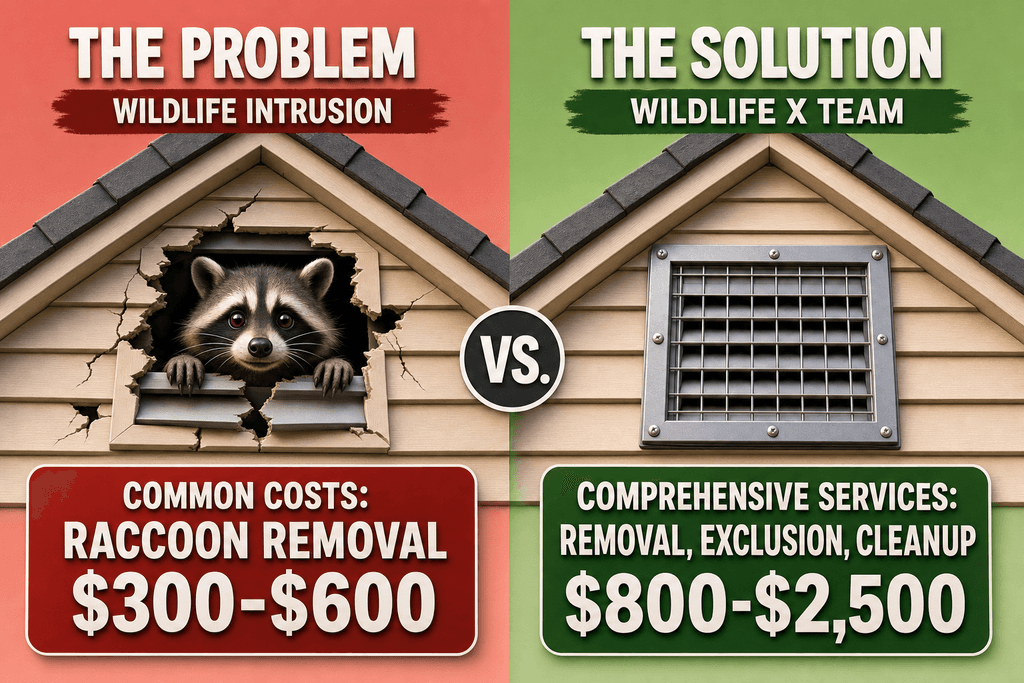
Basic inspection and single raccoon removal usually falls in the $300-$600 range. This covers the inspection, setting humane traps, checking them daily, and removing the animal once caught. It doesn't include fixing whatever damage was done or sealing up entry points.
When you're dealing with a family of raccoons, especially during baby season from March through June, costs jump significantly. Family removal with babies requires more time, specialized techniques, and often multiple visits. Expect to pay $600-$1,200 just for the removal portion when babies are involved.
- Basic single raccoon removal: $300-$600
- Family removal with babies: $600-$1,200
- Attic cleanup and restoration: $500-$2,000
- Exclusion and prevention work: $400-$1,500
- Complete service package: $1,500-$4,000
Wildlife X Team structures their services to address the whole problem, not just the immediate raccoon issue. Their approach includes the removal, but also focuses heavily on prevention and exclusion work to make sure you're not dealing with this again next year. The renewable lifetime warranty they offer means you're paying for long-term protection, not just a temporary fix.
Additional Costs Beyond Basic Removal
The raccoon removal itself is often the smallest part of your total bill. What really adds up is fixing everything the raccoons destroyed and making sure new ones can't get in. Raccoons are incredibly destructive animals that can tear through roof vents, rip up insulation, and leave behind contaminated waste that poses serious health risks. These repairs aren't optional if you want your home back to normal.
Insulation replacement is one of the biggest additional expenses most people face. Raccoons flatten, tear, and soil insulation, making it useless. In the Fort Worth area, attic insulation replacement runs about $1.50 to $3.50 per square foot. For an average attic, that's easily $1,000 to $2,500.
- Structural repairs to entry points like damaged soffits, fascia, or roof edges
- Sanitization services to remove contaminated materials and disinfect affected areas
- Chimney caps installation ranging from $150 to $500 depending on chimney size
- Vent guards for roof vents, typically $50-$150 per vent
- Foundation repairs if raccoons dug underneath to access crawlspaces
Sanitization and decontamination aren't just about smell. Raccoon feces can carry roundworm parasites that are dangerous to humans. Professional decontamination services cost between $500 and $1,500 depending on the contamination level. This includes removing all waste, treating the area with antimicrobial solutions, and sometimes replacing materials that can't be properly cleaned.
Follow-up inspections matter more than most people think. A good company will come back to check their work and make sure no new animals have found a way in. Some companies charge $75-$150 per follow-up visit, while others include several visits in their initial service package.
How to Get the Best Value for Raccoon Removal
Getting quotes from multiple companies makes sense, but the lowest price rarely means the best value when it comes to raccoon removal. You want to ask specific questions during your initial consultation to understand exactly what you're getting. Some companies quote low prices for basic removal but then hit you with surprise charges for everything else. Others provide comprehensive service that costs more upfront but saves money in the long run.
Here are the questions you should ask every company you're considering. What exactly does your quoted price include? How many follow-up visits are part of the service? What warranty or guarantee do you offer? Are you licensed and insured? Can you provide references from recent jobs in my area?
- Quotes that seem too good to be true usually are
- Companies that won't provide written estimates often add hidden fees
- Lack of proper licensing and insurance puts you at risk
- Pressure to sign immediately is a major red flag
- Vague answers about their process suggest inexperience
The value of comprehensive service versus basic removal becomes clear when you consider what happens if raccoons come back. A cheap removal that doesn't include exclusion work often means you're paying again in six months. Wildlife X Team's approach addresses the root cause by identifying and sealing all potential entry points, which is why their renewable lifetime warranty actually means something.
Preventive measures save you money over time. Installing chimney caps, vent guards, and proper screening before you have a raccoon problem costs less than dealing with an infestation. Even after removal, investing in quality exclusion work prevents future issues. The companies serving Fort Worth that focus only on trapping and removal without prevention are basically setting you up to be a repeat customer.
DIY raccoon removal might seem like a money-saver, but it rarely works out that way. Traps cost $50-$150, and you still need to know where to place them, how to bait them, and what to do with the raccoon once caught. More importantly, you're likely to miss entry points that professionals would spot, meaning more raccoons will move in. The health risks from handling raccoons and their waste without proper equipment aren't worth the savings.
Why Professional Removal Costs Less Than DIY in the Long Run
Most Fort Worth homeowners searching for "raccoon removal cost near me" assume doing it themselves will save money. The reality is quite different when you add up everything that goes wrong. A typical DIY attempt starts with buying traps, protective gear, and cleaning supplies, which can easily run $200-$300 before you even catch anything. Then comes the part where you realize raccoons are smarter than most people think, and that trap sits empty for weeks while the damage in your attic gets worse.
The Hidden Price Tag of Going Solo
The equipment costs are just the beginning of what DIY raccoon removal actually involves. Most people don't factor in the real expenses until they're already committed to the process.
- Traps, bait, protective equipment, and cleaning supplies add up fast
- Failed attempts mean buying more supplies and wasting more time
- Structural repairs from entry points you missed can cost thousands
- Contaminated insulation replacement runs $1,500-$3,000 in most Fort Worth homes
- Medical bills from bites or disease exposure can reach five figures
What Texas Law Says About Handling Wildlife
Texas Parks and Wildlife has specific regulations about trapping and relocating raccoons. Breaking these rules can result in fines up to $500 per violation, and most homeowners don't even know these laws exist until it's too late.
Real Costs From Fort Worth Homeowners
Jesse Bernard tried sealing what looked like an obvious entry point in his attic before calling Wildlife X Team. The squirrels just found two other holes he didn't know existed. When professionals finally came out, they found and sealed all entry points in one visit, saving him from months of repeated attempts and additional damage.
Another local homeowner spent three weekends trying to trap a raccoon family, missing work and family time. The opportunity cost alone exceeded what professional removal would have cost, not counting the $800 in damaged ductwork the raccoons caused during those extra weeks.
- Professional services include warranties that cover future intrusions
- Experts identify all entry points in one inspection, not just the obvious ones
- Time saved means you can focus on work and family instead of failed trapping attempts
- Health risks disappear when trained professionals handle contaminated materials
The Wildlife X Team approach includes their Wildlife Inspection Report® that finds vulnerabilities most homeowners miss completely. This prevents the cycle of temporary fixes that end up costing more than doing it right the first time.
Making Smart Decisions About Raccoon Removal Costs
Dealing with raccoons in your Fort Worth area home isn't just about getting rid of the animals today. The real cost comes from what happens if you wait too long or choose the cheapest option without thinking about the bigger picture. Damage to insulation, contaminated attic spaces, and new entry points can turn a simple removal job into a major restoration project that costs thousands more.
When you're looking up raccoon removal cost near me, remember that the lowest price doesn't always save you money. A company that just traps the raccoon but doesn't seal entry points or clean up the mess is basically guaranteeing you'll have the same problem again in a few months.
The main things that affect your final bill include how many raccoons you have, where they're living in your home, how much damage they've caused, and what needs to be done to keep them from coming back. Most homeowners in Keller and surrounding areas spend between a few hundred to several thousand dollars depending on these factors.
Wildlife X Team handles everything from the initial inspection to cleanup and prevention, which means you're not calling multiple companies or dealing with repeat invasions. Our Wildlife Inspection Report identifies every vulnerability in your property, and our Renewable Lifetime Warranty backs up the work.
If you're hearing scratching sounds in your attic or seeing raccoon activity around your property, waiting just makes the problem worse. You can reach the Keller location at (817) 799-8686 to get a proper assessment of what you're dealing with and what it'll actually take to fix it right.
Common Questions About Raccoon Removal Costs
Dealing with raccoons in your attic or crawl space brings up a lot of questions, especially when it comes to what you'll actually pay. Most homeowners in Fort Worth want to know the real costs before they pick up the phone. Here are the answers to the most common questions we hear about raccoon removal pricing and what to expect during the process.
How much does raccoon removal typically cost in Fort Worth?
Raccoon removal cost near me searches usually show prices ranging from $300 to $600 for basic removal, but that's just part of the story. The total cost depends on how many raccoons you have, where they're living, and what damage they've caused. If you need attic cleanup, insulation replacement, or extensive repairs to seal entry points, you're looking at anywhere from $1,500 to $4,000 for a complete job.
Does homeowners insurance cover raccoon removal?
Most standard homeowners insurance policies don't cover wildlife removal or the damage raccoons cause. Insurance companies typically view this as a maintenance issue that property owners should prevent. However, if raccoons caused sudden damage like chewing through electrical wiring that started a fire, some policies might cover that specific damage.
How long does the removal process take?
The actual removal can happen in one day, but the complete process usually takes one to two weeks. This includes setting traps, waiting for all raccoons to be caught, and then sealing entry points. If you have babies in the attic during spring, it might take longer since humane removal means waiting until they're old enough to leave with their mother.
What's included in Wildlife X Team's service?
Wildlife X Team provides a full inspection to find all entry points, humane trapping and removal, repairs to seal your home, and cleanup of contaminated areas. They also offer a renewable lifetime warranty, which means if raccoons find another way back in, they'll come fix it. Their Wildlife Inspection Report shows you exactly where your home is vulnerable.
Are there financing options available?
Many wildlife removal companies in the Fort Worth area offer payment plans or financing options for larger jobs. It's worth asking about this during your initial consultation, especially if you need extensive attic restoration or multiple repairs.
What happens if raccoons come back?
This is where warranties matter. Wildlife X Team's renewable lifetime warranty covers future intrusions, so you're not paying twice for the same problem. Some competitors like Critter Control and Terminix offer shorter warranty periods, which might leave you exposed after a year or two.