
Raccoon Feces Pictures and How to Identify Raccoon Scat

Finding dark, tubular droppings in your attic or on your roof deck means you might have raccoons treating your property like their personal bathroom. Raccoon feces can carry dangerous parasites like roundworm that pose serious health risks to your family and pets, making quick identification critical. Understanding what raccoon scat looks like and where these masked bandits leave their droppings helps you take fast action before a minor nuisance becomes a major health hazard.
Table of Contents
Understanding Raccoon Bathroom Habits
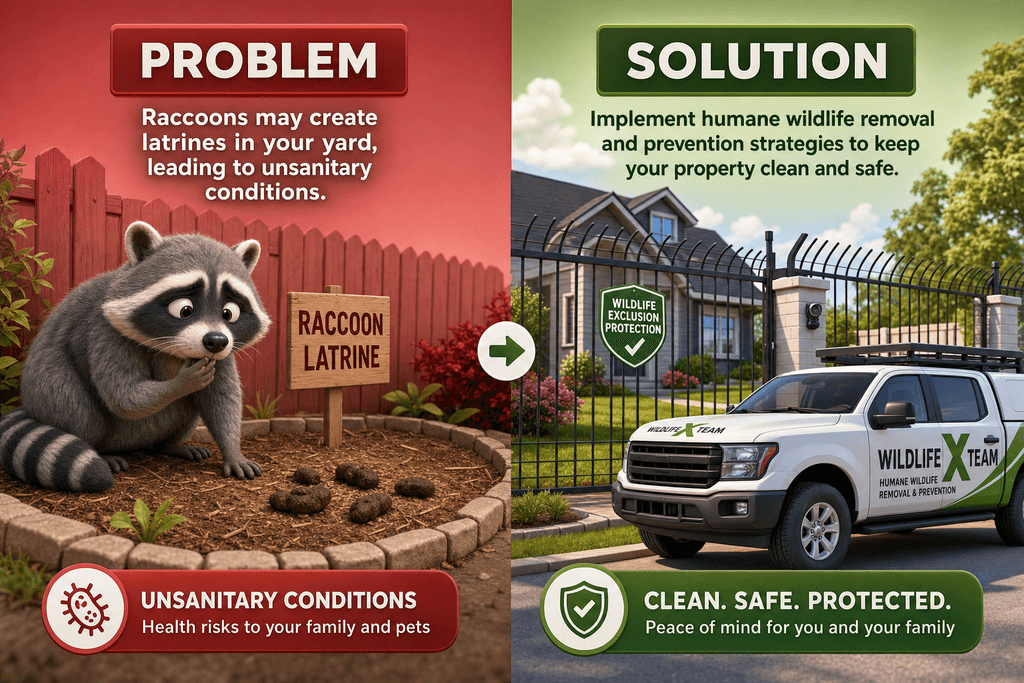
Raccoons are surprisingly clean animals when it comes to their bathroom habits, which might seem odd for creatures that dig through trash cans. Unlike many wild animals that go wherever they happen to be, raccoons actually choose specific spots to do their business. These designated toilet areas are called latrines, and they're one of the main reasons homeowners end up searching for raccoon feces pictures online. Once you understand where and why raccoons create these latrines, you'll have a much easier time finding and dealing with them on your property.
Why Raccoons Create Communal Latrines
Raccoons don't just pick random spots to relieve themselves. They actually share bathroom areas with other raccoons in their territory, kind of like a community restroom. Scientists aren't completely sure why they do this, but it likely helps them communicate with each other and mark their territory.
These latrines serve several purposes for raccoon communities:
- Territory marking to let other raccoons know who lives in the area
- Communication spots where raccoons can leave scent messages
- Safe zones that raccoons return to regularly because they know the area
- Social gathering points where raccoons can detect information about other raccoons
The problem is that raccoons often choose spots on or near human homes for these latrines. When you're looking at raccoon poop pictures online, you're usually seeing photos taken from someone's roof, deck, or worse, their attic.
Where Raccoons Prefer to Set Up Latrines
Raccoons are picky about their bathroom locations. They look for spots that feel safe and are close to where they sleep or travel regularly. Elevated and flat surfaces are their top choice because these areas give them a good view of potential threats while they're vulnerable.
Common latrine locations around homes include:
- Flat sections of roofs, especially near chimneys or vents
- Wooden decks and patios in backyard areas
- Large tree branches that overhang the house
- Attic spaces where raccoons have made dens
- The base of trees in the yard
If you've got raccoons living in your attic, there's almost certainly a latrine up there too. The team at Wildlife X Team sees this all the time during inspections, and it's one of the reasons attic cleanup and restoration services are so important after a raccoon problem.
How Bathroom Habits Help You Find Problems
Understanding raccoon bathroom behavior actually helps you protect your home. Once you know they prefer elevated flat spots near their dens, you can check these areas regularly for signs of activity. Finding raccoon scat early means you can address the problem before it gets worse.
Key areas to inspect on your property:
- Walk around your roof line and look for dark piles on flat sections
- Check your deck railings and flat surfaces every few weeks
- Look at the base of large trees, especially ones near your house
- Listen for sounds in your attic and inspect if you hear movement
Most homeowners don't realize they have a raccoon problem until they spot the latrine. By then, the raccoons have usually been there for a while. That's why comparing what you find to raccoon poop images can help you identify the issue quickly and take action.
What Raccoon Poop Looks Like
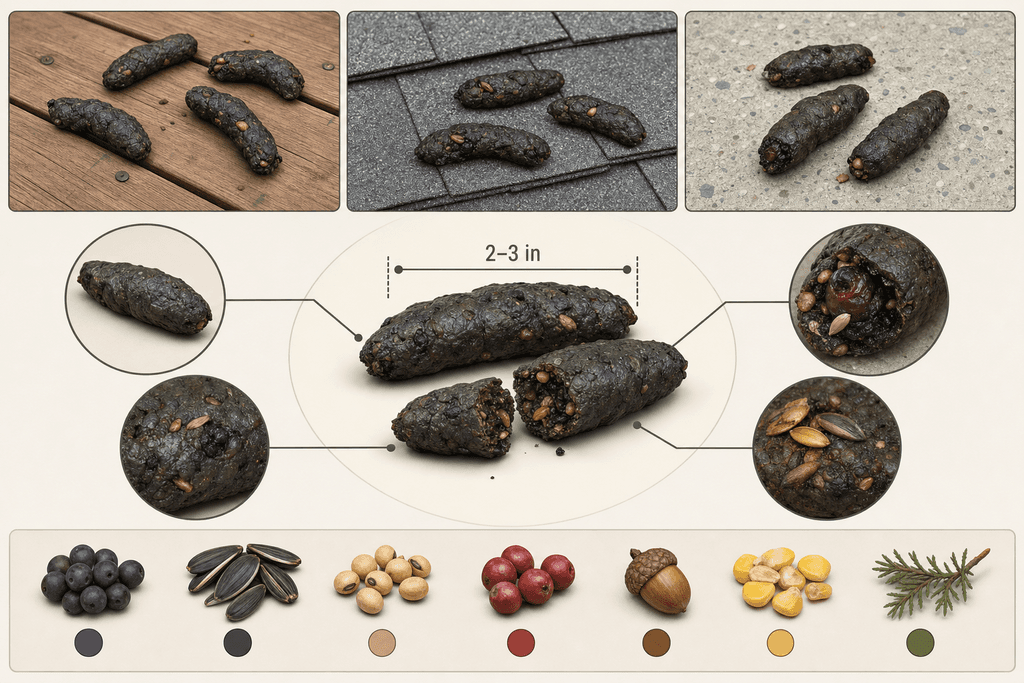
Raccoon droppings have a pretty distinctive appearance once you know what to look for. The scat is typically 2 to 3 inches long and tubular in shape, kind of like a small dog's droppings but with some key differences. The color ranges from dark brown to black, depending on what the raccoon has been eating recently. Fresh droppings tend to be darker and shinier, while older ones fade to a lighter brown or gray color over time.
The texture is another giveaway. Raccoon feces often has a blunt or broken appearance at the ends rather than tapered points. What really sets it apart though is what you can see inside the droppings.
- Undigested food particles are commonly visible throughout the scat
- Seeds and berry remnants show up frequently, especially in summer and fall
- Small bits of insects, crayfish shells, or other food sources may be present
- The droppings often have a rough, granular texture due to these undigested materials
While raccoon poop might look similar to dog feces at first glance, there are clear differences. Dog droppings are usually more uniform in texture and rarely contain visible seeds or berries. Raccoon scat also tends to be found in specific locations called latrines, where multiple droppings pile up over time.
This video shows exactly what to look for when identifying raccoon droppings around your property.
Where You'll Find Raccoon Droppings
Raccoons are creatures of habit when it comes to their bathroom behavior. They create communal toilet areas called latrines, and they return to these same spots repeatedly. This means you'll often find large accumulations of droppings in specific locations rather than scattered randomly around your property. Understanding where raccoons prefer to leave their waste can help you spot an infestation early, before it becomes a bigger problem.
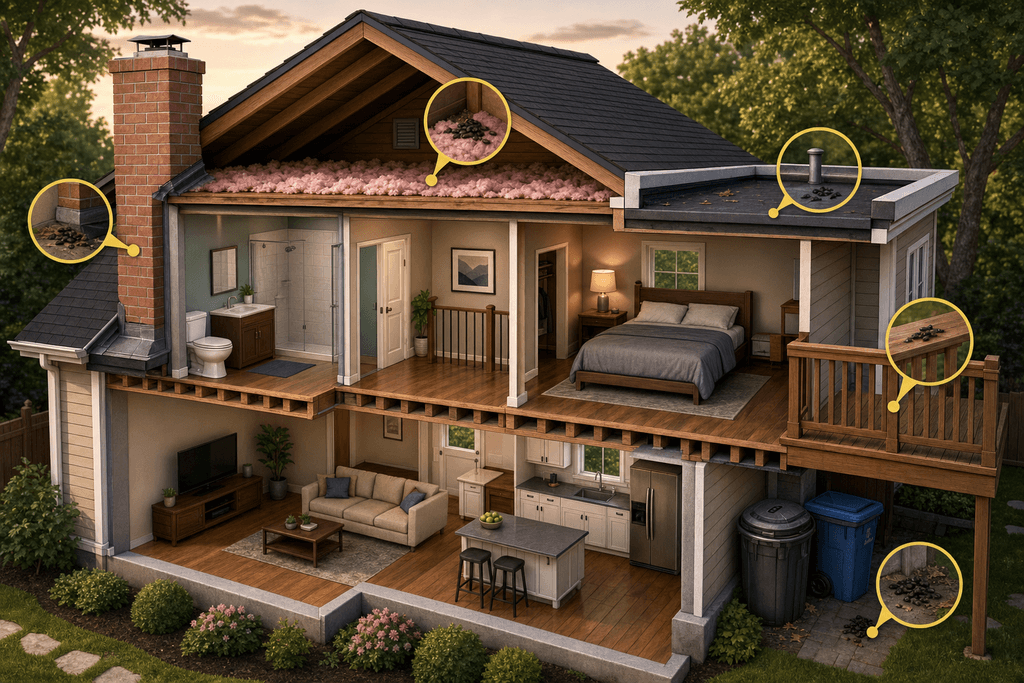
Attic spaces are one of the most common locations for raccoon latrines in residential properties. The animals feel safe and protected up there, and they'll often designate a corner or area near their nesting site as their bathroom.
Common Outdoor Locations
- Roof edges and flat roofs where raccoons travel regularly
- Around chimneys and roof vents that provide entry points
- On deck railings and wooden fence tops
- At the base of large trees, especially in the crotch where branches meet
- Near woodpiles and stacked lumber
- Around garbage bins and compost areas
Swimming pool areas are surprisingly common latrine sites too. Raccoons are drawn to water sources, and they'll often leave droppings on pool covers, hot tub lids, or the surrounding deck areas. This creates a serious health hazard since the contamination can easily spread into the water.
Indoor Problem Areas
When raccoons get inside structures, they don't change their latrine habits. Insulation in attics often becomes heavily contaminated because it's soft and absorbent. The animals will also use areas near wall voids, in crawl spaces, and around HVAC systems. At Wildlife X Team, we've seen cases where years of accumulated droppings have completely destroyed attic insulation and created dangerous living conditions for the homeowners below.
Health Risks from Raccoon Feces
The dangers lurking in raccoon droppings go way beyond the obvious gross factor. Raccoon feces can carry a parasitic roundworm called Baylisascaris procyonis, and this is where things get serious. These roundworm eggs are incredibly resilient and can remain infectious in the environment for years, even in harsh weather conditions. What makes this particularly dangerous is that the eggs are microscopic and can become airborne when dried droppings are disturbed during cleanup attempts.
When humans accidentally inhale or ingest these roundworm eggs, the larvae can migrate through the body and cause severe neurological damage. Children are especially vulnerable because they're more likely to put contaminated objects in their mouths.
- Baylisascaris roundworm can cause permanent brain and eye damage in humans
- The eggs become airborne easily when dry feces are swept or vacuumed
- Leptospirosis bacteria in raccoon urine can cause kidney and liver failure
- Giardia and other parasites spread through fecal contamination
- Pets can contract diseases by sniffing or stepping in contaminated areas
The risk doesn't go away quickly either. Roundworm eggs can survive in attic insulation and soil for years, continuing to pose a threat long after the raccoons are gone. This is why proper decontamination is so critical, not just removing the visible droppings.
People with weakened immune systems face even greater risks from exposure to raccoon waste. The bacterial and fungal spores that grow in accumulated feces can cause respiratory infections and other serious health problems. This is especially concerning in attic spaces where contaminated dust can filter down into living areas through ceiling fixtures and ventilation systems.
Safe Cleanup and When to Call Professionals
Finding a small amount of raccoon droppings on your deck or patio might seem like something you can handle yourself. And for very minor situations with just a few fresh droppings in an outdoor area, that might be true if you take proper precautions. However, most raccoon feces situations require professional intervention because of the serious health risks involved. The line between a safe DIY job and a dangerous one is pretty clear once you understand what you're dealing with.
Any situation involving attic contamination, large accumulations of droppings, or dried feces should be handled by professionals. The risks are just too high when roundworm eggs can become airborne.
When DIY Might Be Okay
If you find just a few fresh droppings on an outdoor surface like a deck railing, you can clean it up yourself with the right safety equipment. You'll need disposable gloves, an N95 respirator mask, and a spray bottle with a disinfectant solution. Never sweep or vacuum raccoon droppings because this launches the dangerous eggs into the air.
- Spray the droppings thoroughly with disinfectant to prevent dust
- Pick up the waste with paper towels or disposable rags
- Double-bag everything in plastic garbage bags
- Scrub the area with hot soapy water, then disinfect again
- Dispose of all materials and wash your hands thoroughly
Situations That Require Professional Help
Attic cleanup is a completely different story. Large-scale contamination requires specialized equipment and training that most homeowners don't have access to. Wildlife X Team uses professional-grade respirators, protective suits, and commercial disinfectants to safely remove contaminated insulation and sanitize affected areas. We also know how to properly dispose of hazardous waste according to local regulations.
The decontamination process involves more than just removing visible droppings. Contaminated insulation often needs to be completely replaced because the roundworm eggs penetrate deep into the material. All surfaces must be treated with specific disinfectants that can actually kill the resilient roundworm eggs, which regular household cleaners can't do. Our team also seals entry points and installs exclusion barriers to prevent raccoons from returning and creating new latrines in the same locations.
Why Fort Worth Homeowners Face Raccoon Problems
The Dallas-Fort Worth metroplex has seen raccoon populations triple over the past decade, making encounters with raccoon scat and feces increasingly common in residential areas. When you spot raccoon poop pictures online and compare them to what's in your attic or yard, you're joining thousands of North Texas homeowners dealing with the same issue. The region's unique combination of urban sprawl and natural habitat creates perfect conditions for raccoons to thrive, and understanding why helps explain those raccoon feces pictures you've been searching for online.
DFW Raccoon Population Stats: Wildlife biologists estimate over 50,000 raccoons currently live within the Fort Worth city limits alone, with populations growing 15-20% annually in suburban areas like Denton and Granbury.
Urban Food Sources Fuel Population Growth
Raccoons in North Texas don't struggle to find their next meal. Residential neighborhoods offer an all-you-can-eat buffet that keeps these masked bandits coming back for more.
- Unsecured garbage bins and compost piles provide easy access to food waste
- Pet food left outdoors attracts raccoons to porches and garages
- Bird feeders and fallen fruit from trees create natural feeding stations
- Koi ponds and decorative water features offer both food and water sources
The abundance of food means raccoons spend more time in residential areas, which leads to more droppings and contamination. Those raccoon poop images you're seeing online probably look familiar because the animals are eating similar diets across the metroplex.
Climate Conditions Support Year Round Activity
Unlike northern states where raccoons hibernate or reduce activity in winter, North Texas raccoons stay active all twelve months. The mild winters mean they're constantly searching for den sites and leaving behind scat throughout the year.
- Average winter temperatures rarely drop below freezing for extended periods
- Spring and fall provide ideal breeding and denning conditions
- Summer heat drives raccoons to seek cool attic spaces during daytime
- Year-round activity means continuous exposure to raccoon feces and health risks
Home Construction Features Create Easy Entry
Fort Worth area homes were built with features that inadvertently welcome raccoons inside. The typical North Texas house has multiple vulnerabilities that these clever animals exploit.
- Roof vents without proper screening allow direct attic access
- Soffits and fascia boards deteriorate in the Texas heat, creating gaps
- Chimney caps often go missing or become damaged over time
- Foundation vents provide crawl space entry points for denning
Wildlife X Team's inspection process identifies these exact vulnerabilities before they become major problems. When homeowners search for photos of raccoon poop to confirm an infestation, they're usually already dealing with structural damage that needs professional attention.
Seasonal Den-Seeking Patterns: February through May sees a 300% increase in attic intrusions as female raccoons seek safe spaces to raise their young, with a secondary spike in September and October.
Understanding the Local Raccoon Behavior
Raccoons in the Fort Worth and Denton areas have adapted their behavior to urban living in ways that increase property conflicts. They've learned that attics stay cooler than outdoor temperatures in summer and warmer in winter, making them prime real estate for raising babies.
- Urban raccoons are less fearful of humans than their rural counterparts
- They establish latrine sites in specific areas, concentrating health hazards
- Multiple generations often return to the same properties year after year
When you're comparing raccoon scat pictures to determine if you have an infestation, you're likely already past the prevention stage. The key is addressing both the current problem and preventing future intrusions through proper exclusion work.
Wrap-up
Now that you know what to look for in raccoon feces pictures and how to identify raccoon scat, you can spot the warning signs before things get worse. Remember that raccoon poop looks like small dog droppings with tubular shapes, blunt ends, and often contains visible bits of berries or seeds. The dark color and two to three inch length make it pretty easy to identify once you know what you're looking at.
The real problem isn't just finding raccoon poop images that match what's in your yard. It's what comes next. Those droppings mean raccoons are treating your property like their personal bathroom, and that puts your family and pets at risk for serious diseases.
Acting fast matters more than most people think. The longer raccoon scat sits around, the more dangerous it becomes as the parasites and bacteria spread. Plus, if you're seeing photos of raccoon poop that look like what's on your property, there's probably a raccoon living somewhere nearby.
Our team at Wildlife X Team handles the whole problem from start to finish. We safely remove the raccoons, clean up contaminated areas properly, and seal off entry points so they can't come back. We serve the Fort Worth, Denton, and Granbury areas, and you can reach us at (817) 799-8686 if you need help dealing with raccoon droppings on your property.
But you probably have more questions about what to do next, how dangerous this really is, and whether you can handle it yourself. Let's get into those answers.
Common Questions About Raccoon Poop
Finding raccoon droppings on your property raises a lot of questions, especially when it comes to safety and cleanup. Most people want to know if they're dealing with raccoons or another animal, and whether those droppings pose a real health risk. These are the questions we hear most often from homeowners dealing with raccoon scat, and the answers might surprise you.
How can I tell raccoon poop apart from other animal droppings?
Raccoon scat is typically 2-3 inches long and about half an inch in diameter, with a tubular shape and blunt ends. The droppings often contain visible bits of undigested food like berries, seeds, or insect parts, which helps distinguish them from dog poop or other wildlife. Raccoons also tend to create latrines in specific spots like the base of trees, on flat roof areas, or in attics, where you'll find multiple droppings piled together rather than scattered randomly.
Can you get sick from old raccoon droppings?
Yes, old raccoon droppings are actually more dangerous than fresh ones because the roundworm eggs they contain become infectious after 2-4 weeks. When the droppings dry out, they can crumble into dust that becomes airborne, making it easy to breathe in the microscopic eggs without even knowing it. This is why professional cleanup is so important, especially in enclosed spaces like attics where Wildlife X Team often finds large accumulations of contaminated material.
How long do raccoon roundworm eggs survive in the environment?
Raccoon roundworm eggs can remain viable in the environment for years, sometimes up to a decade in the right conditions. They're resistant to most common disinfectants and can survive freezing temperatures and extreme heat. The eggs need specific treatment protocols to be properly neutralized, which is why DIY cleanup attempts often fail to eliminate the actual health risk.
What does fresh raccoon scat look like compared to old droppings?
Fresh raccoon poop is dark, moist, and has a strong odor similar to dog feces. As it ages, the droppings dry out, turn lighter in color (often grayish-white), and become brittle and crumbly. Old raccoon scat in raccoon poop pictures often shows a chalky appearance with visible mold growth, but this aged appearance makes them more hazardous since they can easily break apart and release roundworm eggs into the air.
How much does professional raccoon cleanup cost?
Professional cleanup costs vary based on the size of the affected area and the extent of contamination, but it's typically less expensive than dealing with a roundworm infection or property damage from ongoing raccoon activity. Most companies in the Dallas-Fort Worth area provide free inspections to assess the situation before giving you a quote. The investment covers proper protective equipment, specialized disinfectants, contaminated insulation removal, and sealing entry points to prevent raccoons from returning.
How do I keep raccoons from coming back after cleanup?
Preventing raccoon return requires identifying and sealing all entry points, which most homeowners miss without professional help. Raccoons can squeeze through openings as small as 4 inches and are excellent climbers, so vulnerable areas include roof vents, chimney caps, foundation gaps, and damaged soffits. Wildlife X Team's animal proofing services include installing barriers and making repairs that come with a renewable lifetime warranty, so you don't have to worry about dealing with the same problem twice.