
Raccoon Control Options for Removal and Prevention

A raccoon can rip open a section of roof or tear through insulation in just one night, leaving a mess that takes way longer to fix. Worse, if it's a mama raccoon, she might be settling in to have babies up there, which turns a one-animal problem into a family affair fast. Wildlife X Team sees this all the time, and this article breaks down which raccoon control options actually get the job done versus which ones just waste your time.
Table of Contents
- Why Raccoons Love Your Property (And Why It's a Problem)
- DIY Raccoon Control Methods and Their Limits
- Professional Raccoon Removal Done the Humane Way
- Sealing the Deal Prevention and Exclusion Steps
- Removal and Prevention Options Side by Side
- Why Prevention Beats a One-Time Fix
- Choosing the Right Raccoon Control Path
- Raccoon Control FAQs
Why Raccoons Love Your Property (And Why It's a Problem)
A raccoon can remember how to solve a puzzle for up to three years, which is exactly why they're so good at breaking into your attic over and over again. These critters aren't just wandering around by accident. They're smart, they're determined, and your house looks like a five-star hotel to them. Warm attics, quiet chimneys, and dark crawl spaces feel like the perfect den to a raccoon looking to raise her babies or hide from the cold. Once they find a comfy spot, they tend to stick around, and that's when things start going downhill for homeowners and business owners alike. Understanding why they show up in the first place is the first step toward keeping them out for good.
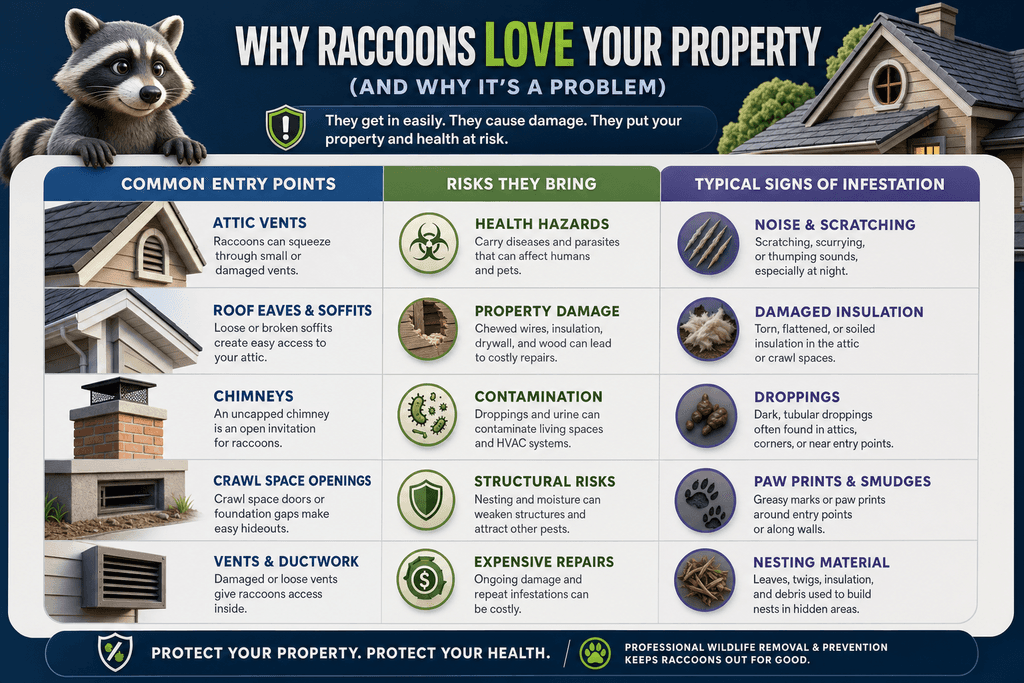
Raccoons aren't picky, but they do have a type. Here's what draws them in:
- Warm, dark spaces like attics, wall voids, and chimneys
- Easy access points such as loose vents, damaged soffits, or gaps near the roofline
- Food sources including trash cans, pet food left outside, and gardens
- Quiet areas with little human activity, especially at night
The problem is, once raccoons move in, they bring more than just noise at 2am. Raccoons can carry diseases like rabies and raccoon roundworm, both of which are serious health risks for people and pets. They also carry fleas, ticks, and other parasites that can spread through your home. On top of the health stuff, they cause real damage. Torn ductwork, soiled insulation, chewed wires, and weakened structures are common after a raccoon has been camping out in your attic for a while.
This quick video breaks down three ways people try to handle raccoon control themselves, and why some methods work better than others.
To make things a little easier to picture, here's a simple breakdown of common entry points, the risks tied to them, and the signs you might already have a raccoon problem:
Entry Point: Roofline gaps or damaged soffits
- Risk: Easy access to attic spaces
- Signs: Scratching sounds at night, torn shingles
Entry Point: Chimneys without caps
- Risk: Raccoons nesting near flues
- Signs: Soot tracks, muffled noises
Entry Point: Foundation vents or crawl space openings
- Risk: Structural damage, parasite exposure
- Signs: Musty smell, droppings near the opening
Raccoon control isn't just about getting one animal out. It's about understanding the bigger picture, which is exactly where the right approach to animal control makes all the difference.
DIY Raccoon Control Methods and Their Limits
A raccoon can rip a hole through roof shingles in one night if it wants inside your attic bad enough. That's why so many folks try the cheap fixes first, like ammonia rags or bottles of fox urine from the hardware store. These tricks can work for a night or two, but raccoons are smart and they figure out pretty quick that nothing is actually going to hurt them. Repellents like ammonia-soaked rags or predator urine offer temporary relief at best, and once the smell fades, the raccoon comes right back to the same spot.
Store-bought traps seem like the next logical step, but they come with their own headaches. Store-bought traps can be dangerous without proper handling and local trapping laws that vary by city and county. Handle one wrong and you could get bit, or worse, catch something you never meant to trap.
- Ammonia rags and predator urine wear off fast, sometimes in a day or two
- Traps require daily checking and knowledge of local relocation laws
- Noise machines and lights only work for a short window before raccoons ignore them
Here's the thing that trips people up the most. DIY methods rarely address entry points, so raccoons or new ones return within weeks, sometimes days. You can spend a whole weekend chasing one raccoon out, only to have its cousin move in through the same gap under your soffit.
This video walks through seven natural deterrents that people often try before calling in help, and it's worth watching if you want to know what you're up against before starting.
Professional Raccoon Removal Done the Humane Way
Raccoons don't just wander into your attic by accident, they find a weak spot and use it on purpose, usually more than once. That's why the first step in any real removal job isn't trapping at all, it's figuring out how the animal got in to begin with. Wildlife X Team's Wildlife Inspection Report® pinpoints exact entry points before removal starts, which saves a lot of guesswork and repeat visits.
Once the entry points are mapped out, technicians go through the property checking every place a raccoon could be hiding.
- Attics get checked for nests, droppings, and damaged insulation
- Wall voids are inspected for scratching sounds or nesting material
- Crawl spaces get a look for tracks and denning signs
Wildlife X Team's technicians assess attics, walls, and crawl spaces for hidden nests because a mother raccoon will hide her babies in the darkest, hardest to reach spot she can find. Missing that nest means the problem isn't actually solved, it just goes quiet for a bit.
The removal itself is done without harming the animal. Humane removal avoids harming raccoons while safely relocating them out of the home, which matters both for the animal and for anyone who doesn't want a stressed, cornered raccoon in their attic.
Jesse Bernard, a customer in the area, ran into a similar situation with squirrels instead of raccoons, but the lesson was the same. He said the crew found entry points he never would have spotted on his own, even though he'd already planned to seal one himself. That's usually how it goes, the obvious hole is rarely the only one.
Sealing the Deal Prevention and Exclusion Steps
Getting a raccoon out of your house is only half the job. If the entry point stays open, you're basically leaving the door unlocked for the next animal looking for a warm, dry place to sleep. That's where exclusion work comes in, and it covers a lot more ground than most homeowners expect. Foundation repair, chimney caps, and vent guards block common raccoon entry spots that raccoons return to again and again once they know they're there.
Small gaps matter more than people think. Caulking and sealing gaps prevents raccoons from squeezing through small openings, and raccoons are surprisingly flexible for their size, so even a gap that looks too small can be an open invitation.
- Inspect the roofline, soffits, and chimney for gaps or damage
- Install chimney caps and vent guards on all exposed openings
- Repair foundation cracks and gaps near utility lines
- Caulk and seal any remaining small openings
- Clean and disinfect attic spaces touched by wildlife
Attic damage is another piece people forget about until they smell it. Attic cleanup and restoration removes contaminated insulation and disinfects the space, which matters because raccoon droppings can carry health risks if left sitting for weeks or months.
Removal and Prevention Options Side by Side
Every raccoon control approach ends the same way on paper, the raccoon leaves. But how long it stays gone depends a lot on which method you picked in the first place. DIY methods, one-time trapping, and full-service removal with prevention each have different outcomes, and it's worth knowing the difference before you decide where to spend your time or money.
- DIY repellents and traps: low cost, short-term results, no entry point work
- One-time trapping service: removes the current animal, doesn't stop the next one
- Full-service removal with exclusion: removes the animal and seals the property against future entry
Some companies, like the pest control chains and local competitors around Fort Worth, focus mainly on trapping and call it done. But long-term protection depends on sealing entry points, not just removing the animal, and that's the part that actually keeps raccoons from becoming a repeat problem every spring when mothers look for denning spots.
Wildlife X Team backs its exclusion work with a Renewable Lifetime Warranty, so if a raccoon or another animal finds a new way in down the road, that's covered too. Renewable Lifetime Warranty offers ongoing peace of mind after exclusion work, which is more than a lot of one-time trapping services can say. If you're dealing with raccoons in Fort Worth, Denton, Granbury, or anywhere nearby, Wildlife X Team can be reached at (817) 799-8686 to talk through what's going on at your property.
Why Prevention Beats a One-Time Fix
Here's something most homeowners don't know: a female raccoon can have up to five babies in one litter, and she'll pick the same cozy attic spot year after year if nothing changes. That's why just trapping and removing raccoons is only half the job. If the hole they used to get in is still there, you're basically leaving the front door open for the next raccoon, squirrel, or possum that wanders by. Raccoon control has to mean more than just getting the current animal out. It means making sure the problem doesn't come right back next month.
This is where a lot of pest companies fall short. Some services focus heavily on the removal part but treat exclusion as an afterthought, or charge extra for it later. A real raccoons animal control plan should treat removal and prevention as one job, not two separate transactions.
Skipping the cleanup step causes its own headaches too. Raccoons leave behind droppings, urine, and torn-up insulation, and that mess doesn't just smell bad, it actually pulls in more critters looking for an easy nest. Attic cleanup isn't just a nice-to-have. It's part of breaking the cycle.
- Leftover waste can spread bacteria and parasites
- Damaged insulation lowers home energy efficiency
- Lingering scent trails attract new wildlife
- Unaddressed damage can worsen over time
Commercial properties carry even more weight here. A raccoon in a restaurant attic or retail storage room isn't just annoying, it's a potential code violation and a customer safety issue.
- Health code violations from contamination
- Liability concerns if customers or staff are exposed
- Reputation damage from visible wildlife problems
- Repeated service calls that eat into operating budgets
This is basically why combining removal, cleanup, and exclusion matters so much more than a quick trap-and-release job. It's the difference between solving the problem once and solving it every few months.
Choosing the Right Raccoon Control Path
A raccoon can rip through a shingle roof in about 20 minutes if it wants inside bad enough. That's the thing about raccoons animal control problems, they don't stop at one attempt. Once a raccoon finds a comfy spot in your attic, it tells its buddies, and pretty soon you've got a whole family moved in rent-free.
Sticky traps, mothballs, bright lights, loud radios, we covered a bunch of DIY tricks earlier. They might annoy a raccoon for a night or two. But raccoons are smart, and they're patient, so most homemade fixes just delay the problem instead of ending it.
Real raccoon control needs two things working together:
- Getting the raccoons out safely and humanely
- Sealing up the ways they got in so they can't come back
Skip either step and you're basically leaving the door open for round two. That's why Wildlife X Team pairs humane removal with a full Wildlife Inspection Report to find every weak spot on your property, not just the obvious one.
We serve Fort Worth, Denton, Granbury, and nearby towns like Weatherford, Southlake, and Flower Mound, backed by a renewable lifetime warranty so the fix actually sticks. Now, about the questions homeowners ask us the most.
Raccoon Control FAQs
Raccoons have been living alongside people in cities and towns for a really long time, and they're smart enough to open latches and jars, so it's no wonder they can outsmart a simple trap or a loose vent cover. If you're dealing with one in your attic right now, you probably have a bunch of questions running through your head. Here are the ones we hear most often from folks in the Fort Worth and Denton area.
How long does raccoon removal take
Most raccoon jobs take anywhere from a few days to about two weeks, depending on if there are babies involved. Mother raccoons won't leave their young behind, so sometimes we have to wait for the babies to get old enough to move on their own before we can safely relocate the whole family.
Is raccoon removal humane
Yes, and it should be the standard, not the exception. Humane removal means no harmful chemicals or traps that hurt the animal, just safe methods that get raccoons out and moving toward a new home outside your walls. This is a core part of what Wildlife X Team does on every single job.
How much does exclusion work cost
It really depends on how many entry points there are and what kind of repairs your home needs. Some houses just need a vent guard or two, while others need chimney caps, foundation repairs, and sealing work. The best way to get a real number is through a Wildlife Inspection Report, which spells out exactly what your property needs before any work starts.
Can raccoons come back after removal
They sure can, especially if the entry points that let them in the first place never got sealed up. This is why removal alone isn't really enough on its own.
- Old entry points get reopened by raccoons or other critters
- Leftover scents can attract new animals
- Weak spots in siding or vents stay weak until repaired
That's why exclusion work matters just as much as the removal itself, and it's backed by a renewable lifetime warranty so you're covered long after the job is done.
Do I need professional raccoon animal control
If you're hearing thumping in the ceiling at night or smell something musty in the attic, it's worth calling in help rather than guessing. Raccoons can carry diseases and parasites, and cornered ones can get aggressive, so professional raccoon control keeps both you and the animal safe.