Professional Wildlife Removal Comparison and Prevention Guide
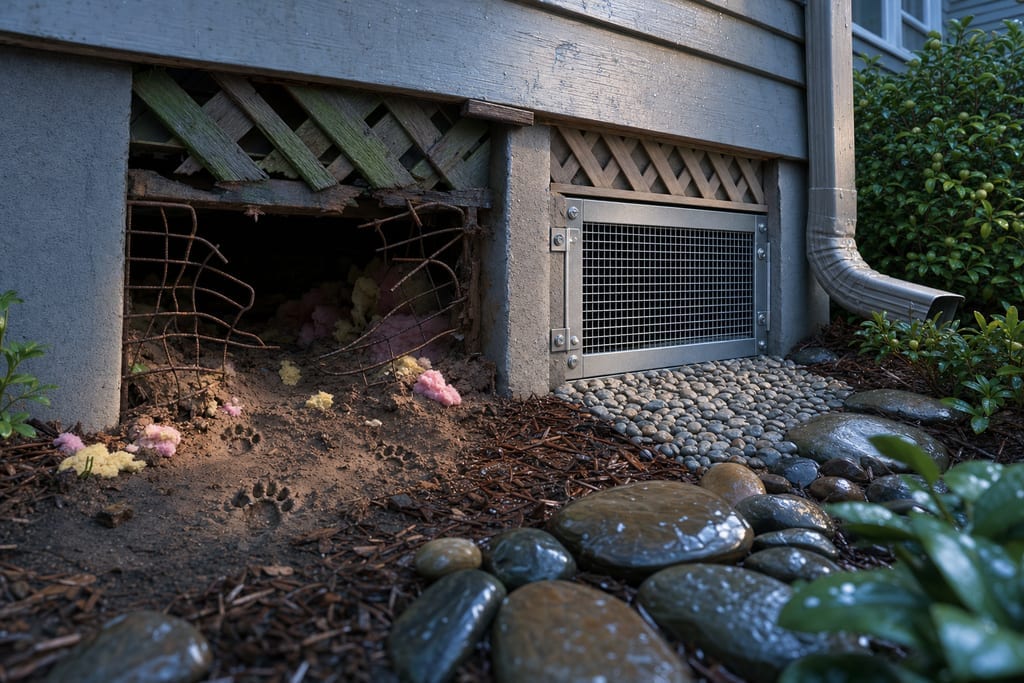
Professional wildlife removal works, but most repeat calls trace back to the same mistake: the first crew found one hole and missed two more. A raccoon or squirrel only needs a gap the size of a baseball to get back into an attic, and if that second or third entry point never gets closed, the animal, or its neighbor, comes right back within weeks. That is why homeowners in Keller, Fort Worth, and towns like Southlake and Grapevine end up calling two or three companies before the problem actually stays solved.
Picking a provider is not just about who answers the phone first. The difference between a quick trap-and-leave job and one that actually seals a home comes down to how the company inspects the property, what they do with damaged insulation or droppings left behind, and whether they stand behind the repair months later. Comparing those details side by side, rather than hiring on price alone, is what keeps wildlife out for good instead of paying for the same service twice.
Table of Contents
Why One Removal Call Rarely Solves the Problem
A trap catches the animal in front of you. It does nothing about the gap behind the soffit, the gnawed vent, or the loose flashing that let it in the first time. Unless someone physically closes that opening, the next raccoon or squirrel walking the fence line finds the same door standing open.
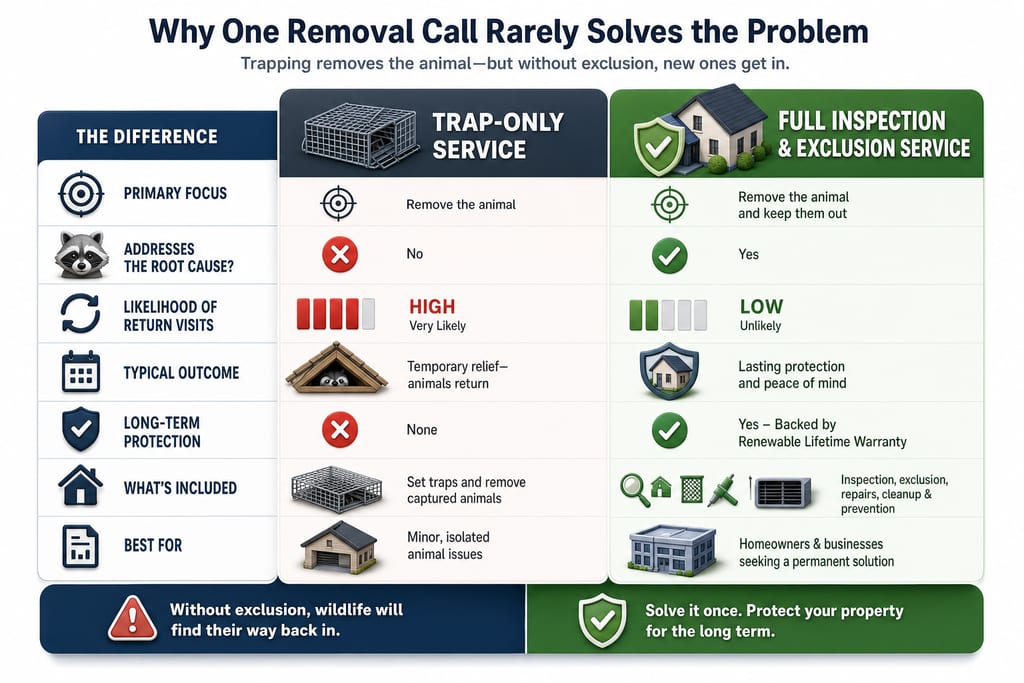
Trap-only service usually means one or two visits, a cage set near the noise, and a bill once the animal is gone. Inspection-plus-exclusion service adds a full walk of the roofline, foundation, and attic vents to map every gap, then seals each one with materials built to outlast chewing and weather.
- Trap-only: targets the animal you heard, skips entry points you did not find
- Inspection-plus-exclusion: maps every gap on the structure, then seals each one
- Trap-only: no repair materials used, no follow-up on the opening itself
- Inspection-plus-exclusion: uses foundation repair, chimney guards, and sealing to close access for good
Older DFW homes with vented crawl spaces and attic soffits give wildlife more weak points than newer slab construction. Keller, Haslet, and Saginaw properties with mature trees near the roofline see this most, since branches give animals a direct path to a second entry point the first crew never checked.
What Separates a Pro From a Basic Trapper
A basic trapper sets a cage and leaves. A professional wildlife removal crew documents what they find, fixes what let the animal in, and checks back later. The gap between those two shows up fast once something goes wrong, like a dead animal in a wall or a second wave of squirrels a month later.
Licensed, insured technicians follow humane handling rules for capture and release, which matters both for the animal and for your liability if someone gets hurt mid-job. Wildlife X Team backs up their work with a Wildlife Inspection Report, a written record of entry points and damage instead of a verbal guess from the truck. That report becomes the plan for repair work, not an afterthought written after the invoice.
- Ask if the technician is licensed and insured, not just experienced
- Ask for a written inspection, not a verbal estimate
- Confirm a follow-up visit is included, not billed as a separate call
- Ask what happens if the animal returns within 30 days
A one-and-done trap drop skips all four of those. Follow-up visits are the clearest sign a company expects their exclusion work to hold up, not just their trap to catch something once.
The Exclusion Work That Actually Keeps Animals Out
Exclusion means physically closing every gap an animal used or could use, not just the one it was caught in. That covers vent guards over attic and foundation vents, chimney caps, foundation repair where settling created gaps, and sealing around pipes and utility lines.
Caulk alone fails on older DFW homes because wood trim shifts with the seasons and raccoons tear through soft sealant in minutes. Lasting exclusion pairs sealant with metal flashing, hardware cloth, or repaired framing underneath it, so there's a structural barrier behind the cosmetic one.
- Vent guards on attic, foundation, and dryer vents
- Chimney caps rated for the animal species common in your area
- Foundation repair where gaps have widened over time
- Attic cleanup with insulation replacement where droppings or urine soaked through
Attic cleanup matters as much as the sealing itself, since contaminated insulation holds odor that draws the next animal back to the same spot. A renewable lifetime warranty on this kind of repair tells you the company expects the seal to hold, and will come back and fix it if it doesn't.
Comparing Costs and What a Quote Should Include
There's no flat statewide price for wildlife removal, since cost depends on the animal, how hard the entry point is to reach, and how much insulation or wood the animal damaged before anyone found it. A squirrel in a soffit costs less to resolve than a raccoon that tore through drywall in a second-story attic.
A quote with no inspection attached, or no written scope of work, is a red flag worth walking away from. That kind of quote is usually a trap-only job dressed up as full service.
- A written inspection with specific entry points listed
- A trapping and removal plan for the species involved
- An exclusion plan naming materials, not just "seal gaps"
- Cleanup and insulation replacement if contamination is present
- Warranty terms in writing, including what triggers a free return visit
Commercial properties usually need a larger-scope quote, since loading docks, drop ceilings, and multiple roof penetrations give wildlife more routes in than a typical house. A restaurant or warehouse quote should reflect that scale rather than a flat residential rate.
Real Results From Homes Near Keller and Fort Worth
Jesse Bernard's attic had what he called a squirrel party, with one obvious entry point he'd considered sealing himself. The crew found two more openings during the inspection, sealed all three, and months later the attic stayed clear, which is the outcome a real inspection is supposed to produce.
Other reviews point to the same pattern across different animals. Mark Thompson had raccoons removed and his attic secured against future entry, Sheryl Graham had repairs done to keep possums out, and David Lee had a fast squirrel response that solved the issue on the first visit.
- Squirrel entry points found beyond the one you can see
- Raccoon removal paired with attic securing, not just trapping
- Possum-specific repairs matched to how they gain entry
- Fast response on active, ongoing squirrel activity
Wildlife X Team works out of Keller and covers Fort Worth, Denton, Granbury, Southlake, Grapevine, Colleyville, and the surrounding towns listed on their service area. The thread running through these reviews isn't speed alone, it's that technicians kept looking after the obvious problem was solved, which is what actually stops the callback.
Weighing What Other Customers Actually Said
With no published pricing, reviews and warranty terms are the two things you can actually compare across companies. A review that says "they removed the raccoon" tells you almost nothing. One that mentions specific repairs, like a chimney cap, a vent guard, or insulation replacement, tells you the crew did the second half of the job.
A renewable lifetime warranty is a useful filter on its own. A company only offers that if it expects the sealing work to hold up for years, since a weak repair would turn the warranty into a cost they'd rather not pay out on.
Vague reviews, or a string of reviews that only mention the trap and never the repair, are worth noticing. It usually means that company stops at removal and treats sealing as optional or extra.
Service area coverage matters too, separate from the quality of the work itself. A company that covers your town directly can get a technician out faster while an animal is still active in the attic, instead of routing the call through a dispatcher covering a wider region.
Picking the Company You Call Once
When you make the call, ask for the written inspection and the exclusion plan before you ask about price. A quote that skips those two is a trap-only job wearing a bigger price tag. For a Keller property, or anything near Fort Worth, Southlake, or Grapevine, a local provider that already works your streets, Wildlife X Team being one, can get a technician to the attic while the animal is still active, instead of waiting on a dispatcher covering half the state. Before anyone sets a trap, get the scope in writing: what gets sealed, what gets replaced, and what triggers a free return if the animal comes back. That one phone question settles more than a week of comparing reviews.
Wildlife Removal Questions Keller Homeowners Ask
Can someone come out the same day if an animal is in my attic right now?
Call the Keller office at (817) 799-8686 and say the animal is active now. An active intrusion gets priority over a routine inspection booking, since an animal moving around inside a wall or attic can cause more damage the longer it stays. Describe the noise and location on the phone so the technician comes prepared for that species.
If I seal one entry point myself, will animals just find another way in?
Yes, if other gaps on the property are still open. A raccoon or squirrel that used to get in one way will test the roofline, foundation vents, and chimney for a new opening once the old one closes. That is why a full inspection of the whole structure matters more than patching the one hole you can see from the ground.
Does a lifetime warranty still cover my house if I replace my roof or siding later?
New roofing or siding work can open fresh gaps around flashing, vents, or trim that the original seal did not cover. Call Wildlife X Team before or after that work so a technician can check the repaired areas and confirm the warranty still applies to them. Changes made to the structure after the original job are the kind of thing worth a quick follow-up visit rather than assuming the old seal still holds.
What happens if the technician finds more damage once the work starts?
The technician should stop and tell you what they found before doing any work beyond the original quote. A legitimate crew treats hidden damage, like rotted framing behind an entry point or insulation soaked further than it looked from the attic hatch, as something to price and approve separately, not something to bill after the fact without asking.