
Professional Snake Removal Service for Yards, Garages, and Homes

A snake coiled in your garage or slithering across your patio isn't just startling—it's a situation that demands careful handling, especially in Texas where venomous species like copperheads and rattlesnakes are common. Most property owners don't know how to tell the difference between harmless and dangerous snakes, which makes DIY removal risky at best. Wildlife X Team's snake removal service handles these encounters safely, removing the snake and identifying what attracted it to your property in the first place.
Table of Contents
Understanding Snake Behavior in North Texas
North Texas is home to over 75 different snake species, and about a dozen of them regularly show up in yards around Fort Worth, Denton, and Granbury. Most snakes you'll find near your home are completely harmless and actually help control rodent populations. But when you spot one slithering across your patio or coiled up in your garage, it's hard to think about the benefits. The real challenge is knowing which snakes pose a danger and why they decided your property was the perfect place to hang out.
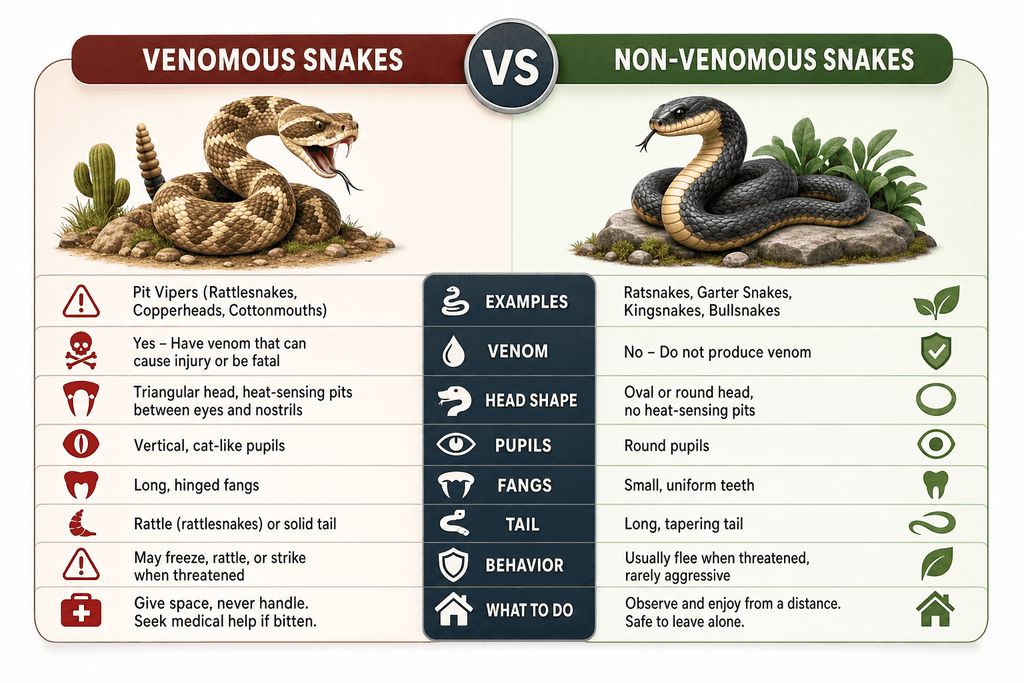
Common Snakes in the Fort Worth Area
The snakes you're most likely to encounter fall into two main groups. Non-venomous species like rat snakes, garter snakes, and rough green snakes make up the majority of sightings. Then there are the venomous ones that require immediate professional attention.
Here's what you need to know about the venomous snakes in our region:
- Copperheads are the most common venomous snake in North Texas and blend in perfectly with leaves and mulch
- Cottonmouths (water moccasins) prefer areas near water sources like ponds and creeks
- Western diamondback rattlesnakes are less common in urban areas but show up in properties near open fields
- Texas coral snakes are rare but have distinctive red, yellow, and black bands
Non-venomous snakes you might see include:
- Rat snakes that climb trees and often end up in attics looking for rodents
- Garter snakes that stick to gardens and areas with lots of ground cover
- Rough green snakes that live in bushes and small trees
- Texas brown snakes that hide under rocks, boards, and debris
When Snakes Are Most Active
Snake activity in Texas follows a pretty predictable pattern throughout the year. Spring and fall are peak times when you'll spot them most often. During these seasons, temperatures are just right for snakes to hunt and move around. Summer brings a different pattern where snakes become more active at night to avoid the scorching daytime heat.
Winter is when most snakes go into a state called brumation, which is similar to hibernation. They find protected spots like rock crevices, abandoned burrows, or even the crawl spaces under homes. This is actually when many homeowners discover they have a snake problem because the animals are looking for warm places to wait out the cold months.
If you find a snake in your garage or another part of your property, this video shows some safe removal techniques. However, professional snake removal service is always the safest option, especially if you can't identify whether the snake is venomous.
What Brings Snakes to Your Property
Snakes don't just randomly show up at your home. They're following food sources, looking for shelter, or searching for water. Understanding what attracts them is the first step in prevention, which is why Wildlife X Team includes detailed property inspections as part of our snake removal service.
The main attractants include:
- Rodent populations in garages, sheds, or near bird feeders
- Piles of wood, rocks, or debris that provide hiding spots
- Overgrown vegetation and unmowed grass
- Water sources like ponds, fountains, or leaky outdoor faucets
- Gaps under doors, cracks in foundations, or open vents
Many homeowners don't realize that controlling the rodent population is one of the best ways to keep snakes away. If mice and rats are living in your walls or attic, snakes will eventually follow them inside. That's why comprehensive wildlife management looks at the whole picture, not just the immediate problem.
Identifying Venomous vs Non-Venomous Snakes
Knowing the difference between dangerous and harmless snakes can be tricky. While some companies like Critter Control and Omega Animal Removal offer basic identification guides, the safest approach is always to assume any snake could be dangerous and call for professional help. That said, there are some general differences worth knowing.
| Feature | Venomous Snakes | Non-Venomous Snakes |
|---|---|---|
| Head Shape | Triangular, distinct from neck | Rounded, blends with body |
| Eye Pupils | Vertical slits (like cat eyes) | Round pupils |
| Body Pattern | Often has bands or diamond patterns | Varies widely, often solid or striped |
| Tail | Blunt or has rattles | Tapers to a point |
| Behavior When Threatened | Coils up, may rattle or strike | Usually tries to escape quickly |
| Heat-Sensing Pits | Present between eye and nostril | Not present |
These identification tips can help, but they require getting close enough to see details, which isn't safe. Professional wildlife removal experts have the training and equipment to identify and safely remove any snake species. Even experienced handlers can make mistakes, which is why services like those offered by Wildlife X Team use proven protocols for every snake encounter.
The reality is that most snake encounters happen suddenly. You're reaching into a storage box in the garage, moving firewood, or walking through tall grass when you spot one. In that moment, identification guides don't help much. What matters is having a plan and knowing who to call for safe, humane removal that also addresses why the snake was there in the first place.
How Professional Snake Removal Works
Texas is home to over 70 species of snakes, and finding one on your property can be unsettling. The difference between a professional snake removal service and trying to handle it yourself often comes down to safety and effectiveness. When you call Wildlife X Team at (817) 799-8686, the process starts with a thorough inspection of your property. Our trained specialists know how to identify different snake species, which is critical because venomous snakes require different handling protocols than non-venomous ones.

The first step involves identifying the snake species and assessing the situation. Not all snakes pose the same level of risk, and knowing what you're dealing with determines the removal approach. Our team examines the area where the snake was spotted, looking for signs of nesting or multiple snakes.
- Complete property inspection to locate all snakes present
- Species identification to determine venomous vs non-venomous
- Assessment of entry points and attractants on the property
- Documentation of findings for the property owner
Once we've identified the snake, safe capture techniques come into play. Professional tools like snake hooks, tongs, and secure containers allow us to remove the animal without causing harm to it or putting anyone at risk. This isn't something you want to attempt with a shovel and a bucket.
After capture, humane relocation follows Texas wildlife regulations. We transport snakes to appropriate habitats away from residential areas where they can thrive without posing a threat to people or pets. For venomous snake situations, we maintain emergency response protocols to handle these cases with extra precaution and speed.
Snake Prevention and Property Protection
Removing a snake solves the immediate problem, but it doesn't address why the snake showed up in the first place. Snakes don't randomly choose properties to visit. They're looking for food, water, shelter, or all three. The key to keeping snakes away long-term involves making your property less appealing to them. Wildlife X Team's Animal Proofing and Exclusion Services focus on creating barriers that snakes simply can't cross.
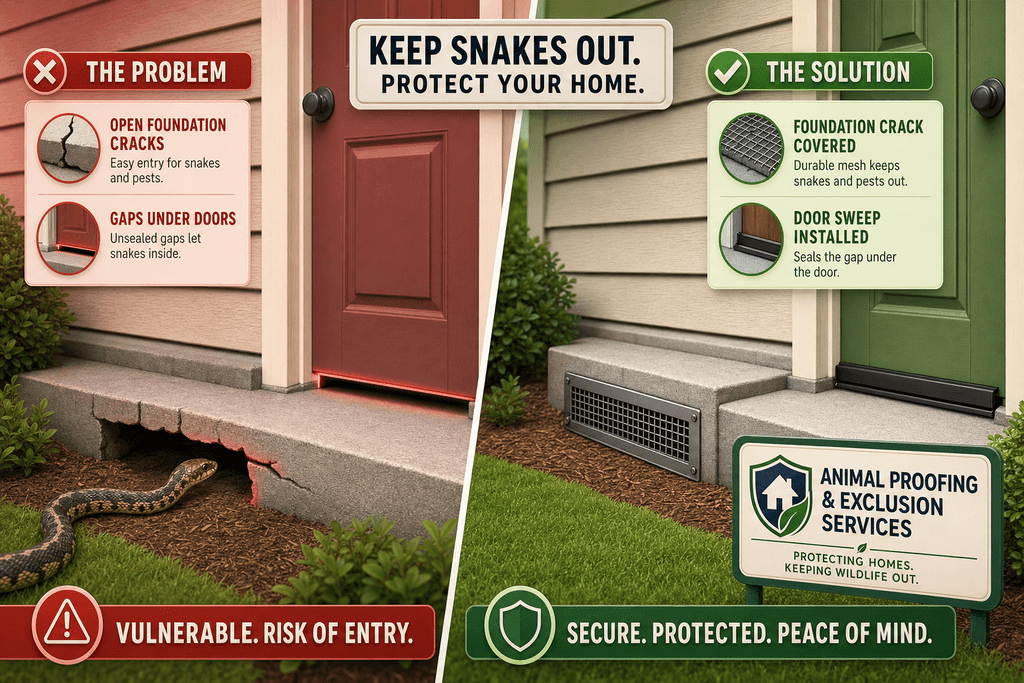
Foundation cracks and gaps under doors are common entry points that need sealing. Snakes can squeeze through surprisingly small openings, sometimes as narrow as a quarter inch. We inspect the entire perimeter of your home or business, identifying every potential access point.
- Seal foundation cracks with appropriate materials
- Install door sweeps and threshold guards
- Repair damaged vent screens and chimney caps
- Fill gaps around utility lines and pipes
- Address structural vulnerabilities in crawl spaces
Habitat modification makes a huge difference in snake activity around your property. Tall grass, wood piles, and debris create perfect hiding spots for snakes and the rodents they hunt. Keeping your lawn trimmed, removing clutter, and storing firewood away from structures reduces the likelihood of snake encounters.
Our exclusion services include installing physical barriers designed specifically for snake prevention. These might include specialized fencing with buried edges that snakes can't burrow under, or mesh barriers around vulnerable areas like garden sheds and pool equipment.
- Remove brush piles and yard debris where snakes hide
- Keep grass cut short, especially near the house
- Store firewood at least 20 feet from buildings
- Eliminate standing water sources that attract prey
- Trim tree branches away from roof lines
The Renewable Lifetime Warranty we offer covers the work we do to keep snakes out. If a snake gets in through an area we've sealed, we come back and fix it at no additional cost. This warranty gives property owners in Fort Worth, Denton, and Granbury peace of mind that the investment in prevention pays off for years to come.
What to Do When You Find a Snake
Panic is the natural first reaction when you spot a snake, but staying calm protects everyone involved. The snake is probably more scared than you are, and most snake bites happen when people try to catch or kill the animal themselves. Your first priority should be creating distance between the snake and any people or pets in the area. Get children and animals inside immediately, and keep everyone away from the snake's location.
Here's what you should never do when you find a snake. Don't try to catch it, even if it looks small or harmless. Don't attempt to kill it with tools or weapons. Don't corner it or block its escape route. These actions increase the risk of a bite exponentially.
- Never attempt to handle or capture the snake yourself
- Don't try to identify it by getting close
- Avoid throwing objects at the snake
- Don't use water hoses to spray it away
- Never assume a snake is dead, even if it appears motionless
Call professional snake removal services immediately if the snake is inside your home, near high-traffic areas, or if you suspect it might be venomous. Wildlife X Team responds quickly to snake calls throughout the Fort Worth area because we know time matters in these situations. You can reach us at (817) 799-8686 any time you need help.
While waiting for help to arrive, monitor the snake's location from a safe distance. If possible, close doors to contain it in one room or area. Take a photo from far away if you can do so safely, as this helps our team prepare the right equipment before arrival. Keep track of where the snake moves, but don't follow it closely or try to herd it anywhere.
- Secure all people and pets in a safe location
- Call Wildlife X Team at (817) 799-8686
- Keep visual contact with the snake from a distance
- Close doors to limit the snake's movement area
- Wait for professional help to arrive
Professional snake removal isn't just about getting rid of the animal you see today. It's about understanding why snakes are attracted to your property and fixing those issues so they don't come back. Whether you're in Southlake, Grapevine, or any of the surrounding communities we serve, having a reliable snake removal service makes all the difference when you need it most.
Why Professional Snake Removal Beats DIY Methods
Every year, thousands of people end up in emergency rooms after attempting to handle snakes on their own. The problem isn't just venomous species either. Even non-venomous snakes can deliver painful bites that lead to infections, and the stress of a close encounter often causes people to fall, trip, or injure themselves in other ways. When you spot a snake in your attic, garage, or crawl space, your first instinct might be to grab a shovel or broom and handle it yourself. That split-second decision could cost you more than you think.
The Hidden Costs of DIY Snake Removal
Most homeowners don't realize that DIY snake removal attempts often end up costing more than calling professionals from the start. You might spend money on traps, repellents, and protective gear that doesn't work. Then there's the time you'll waste researching methods online, many of which are ineffective or dangerous.
- Emergency room visits from snake bites average $3,000 to $5,000 for non-venomous species
- Venomous snake bites can cost upward of $20,000 in medical bills
- Failed DIY attempts mean the snake problem continues, causing more property damage
- Store-bought snake repellents rarely work and cost $30-$100 per application
Wildlife X Team's professional snake removal service addresses the problem correctly the first time. Our trained specialists know how to identify species, understand their behavior, and remove them safely without putting anyone at risk.
What Texas Law Says About Snake Removal
Texas has specific regulations about handling wildlife, and snakes fall under these rules. Killing certain snake species is actually illegal in Texas, even on your own property. The Texas Parks and Wildlife Department protects several snake species, and violating these laws can result in hefty fines.
- Indigo snakes, timber rattlesnakes, and several other species are protected by state law
- Fines for killing protected species can reach $500 or more
- Relocating snakes requires knowledge of proper distance and habitat requirements
- Professional services stay current on all wildlife regulations
Success Rates Tell the Real Story
The difference between professional and DIY snake removal becomes clear when you look at actual results. Professional services like Wildlife X Team don't just remove the snake you see. They find entry points, identify nesting areas, and prevent future problems.
DIY Snake Removal
- Success rate of removing visible snakes: 40-60%
- Chance of snake returning: 70-80%
- Risk of personal injury: High
- Time investment: 5-20 hours of research and attempts
- Long-term prevention: Minimal to none
Professional Snake Removal Service
- Success rate of complete removal: 95-99%
- Chance of snake returning: Less than 5% with exclusion services
- Risk of personal injury: None to homeowner
- Time investment: 1-2 hours for inspection and removal
- Long-term prevention: Comprehensive with warranty protection
Jesse Bernard's experience with Wildlife X Team shows exactly why professional service matters. When he discovered wildlife in his attic, the team found multiple entry points he never would have spotted on his own. Months later, his property remains protected.
Real Results from Fort Worth Area Customers
Customer experiences reveal the true value of professional snake removal service. Mark Thompson dealt with raccoons, but his testimonial highlights what matters most: effective removal and secured property against future invasions. That same approach applies to snake problems.
Quick Response Prevents Bigger Problems
David Lee's situation with squirrels demonstrates how Wildlife X Team's responsive service stops small problems from becoming major headaches. The team handled his attic issue quickly, preventing the kind of damage that happens when wildlife settles in for weeks or months. Snake problems work the same way. The longer you wait, the more likely you'll have eggs, shed skin, and attracted prey animals creating a bigger mess.
Professional Repairs That Last
Sheryl Graham's experience with possum exclusion shows the importance of proper repairs. Franklin's work kept the possums out permanently because professionals understand animal behavior and building construction. When it comes to snakes, this expertise matters even more. Snakes can squeeze through gaps as small as a quarter inch, and only trained eyes spot these entry points.
The pattern across all these testimonials points to one truth. Professional wildlife removal isn't just about catching the animal you see today. It's about understanding why they came, how they got in, and what needs to happen so they never come back.
Getting Snake-Free and Staying That Way
Dealing with snakes on your property isn't something you want to handle alone. Professional snake removal service makes sure the job gets done safely without putting you or the snake at risk. The real trick isn't just getting rid of the snake you see today, but making sure more don't show up tomorrow.
That's where the difference between a quick fix and a real solution shows up. Wildlife X Team handles both the removal and the prevention side of things, which means you're not calling someone back in a few weeks when another snake finds the same entry point. Our team inspects your property to find all the spots where snakes might be getting in, then seals them up properly.
The service covers everything from the initial inspection to cleanup and repairs. If you're in Fort Worth, Denton, Granbury, or the surrounding areas, you can reach Wildlife X Team at (817) 799-8686. They'll come out to your property and figure out exactly what's going on.
Most people don't realize how many entry points their property actually has until someone who knows what to look for takes a close look. That's usually when the real problem becomes clear, and why just chasing snakes around your yard doesn't really solve anything.
Common Questions About Snake Removal
Finding a snake on your property raises a lot of questions, especially if you've never dealt with one before. Most people want to know if they're in danger, how fast help can arrive, and what actually happens during the removal process. Here are the answers to the most common questions we hear from homeowners and business owners dealing with snake problems.
How quickly can professionals respond to snake calls?
Most professional snake removal services, including Wildlife X Team, can respond within a few hours of your call during business hours. Emergency situations involving venomous snakes often get priority response times. The exact timing depends on your location within the service area and the current call volume, but same-day service is typically available for urgent situations.
Are all snakes in Texas dangerous?
No, most snakes in Texas are actually harmless and even beneficial for controlling rodent populations. Out of the dozens of snake species in the state, only a handful are venomous, including rattlesnakes, copperheads, cottonmouths, and coral snakes. The problem is that identifying venomous versus non-venomous snakes requires expertise that most homeowners don't have, which is why calling professionals is always the safer choice.
What happens to snakes after removal?
Professional services use humane removal methods and relocate snakes to appropriate habitats away from residential areas. Wildlife X Team follows ethical practices that ensure the snake's safety while protecting your property. Venomous snakes are handled with special equipment and relocated to areas where they won't pose a threat to people or pets.
How much does professional snake removal cost?
Snake removal costs vary based on the situation, including the snake species, location on your property, and whether exclusion work is needed to prevent future problems. While some companies charge flat rates starting around $150 to $300 for basic removal, comprehensive services that include inspection and prevention measures cost more. Getting a detailed estimate helps you understand exactly what you're paying for.
Can snake removal services guarantee snakes won't return?
Removing one snake doesn't automatically prevent others from entering your property if the conditions that attracted them still exist. That's why comprehensive services include exclusion work to seal entry points and remove attractants like rodent populations. Wildlife X Team offers a Renewable Lifetime Warranty on their exclusion work, which provides long-term protection when you address the root causes.
What areas does Wildlife X Team serve for snake removal?
Wildlife X Team provides snake removal service throughout the Dallas-Fort Worth area, including Ft. Worth, Denton, Granbury, and surrounding communities. Their coverage area extends to both residential and commercial properties across the region, making professional help accessible when you need it most.