
Possum Droppings Photos for Easy Scat Identification
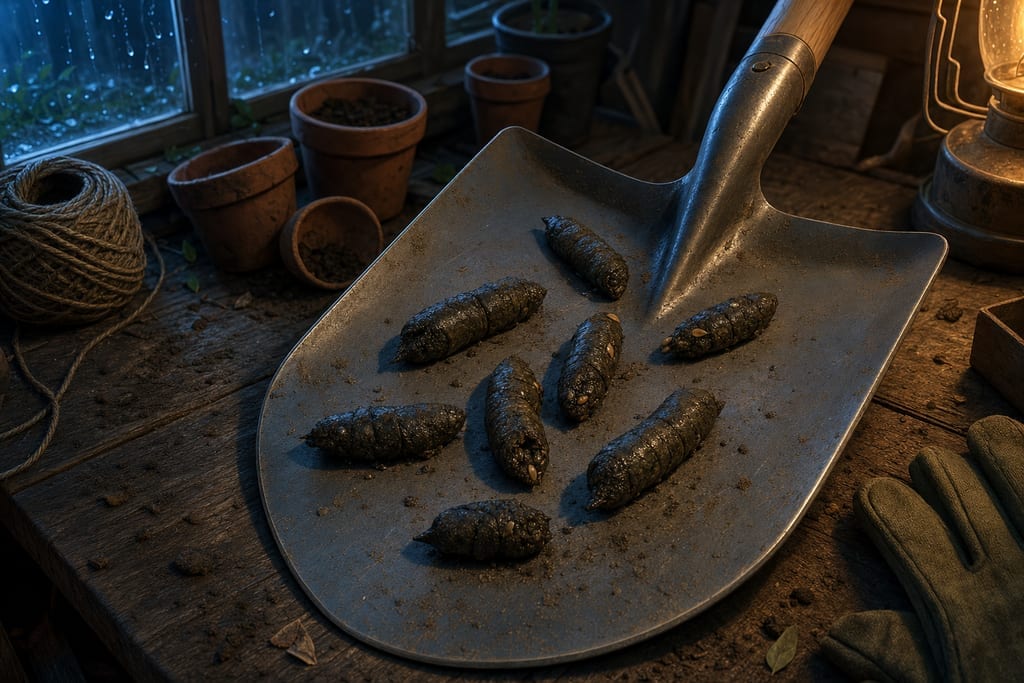
A possum droppings photo shows dark brown pellets about half an inch long, often curved at one end and scattered loosely rather than piled in one spot. That size and shape sits right between raccoon scat, which is thicker and tubular, and rat droppings, which are smaller and more pointed on both ends. Because possum scat shows up in the same dim corners of attics, sheds, and porches where raccoons and rats also leave their mess, homeowners mix them up more often than you'd think. Color alone will not settle it, since all three can look nearly black when fresh and fade to gray with age.
This is set up as a direct side-by-side check, not a general rundown of backyard animals. You look at size first, then shape, then texture, and line those three clues up against what you found before deciding it came from a possum. Fresh droppings are soft and moist, older ones dry out and crumble, and that single change in texture can shift how big or small a pile looks at first glance.
Table of Contents
Why Scat Gets Misidentified So Often
Possums, raccoons, rats, and outdoor cats all travel the same low-traffic edges of a property. Porch corners, attic rafters, and fence lines give them cover and quiet, so droppings from four different animals can turn up in the exact same spot within a week of each other.
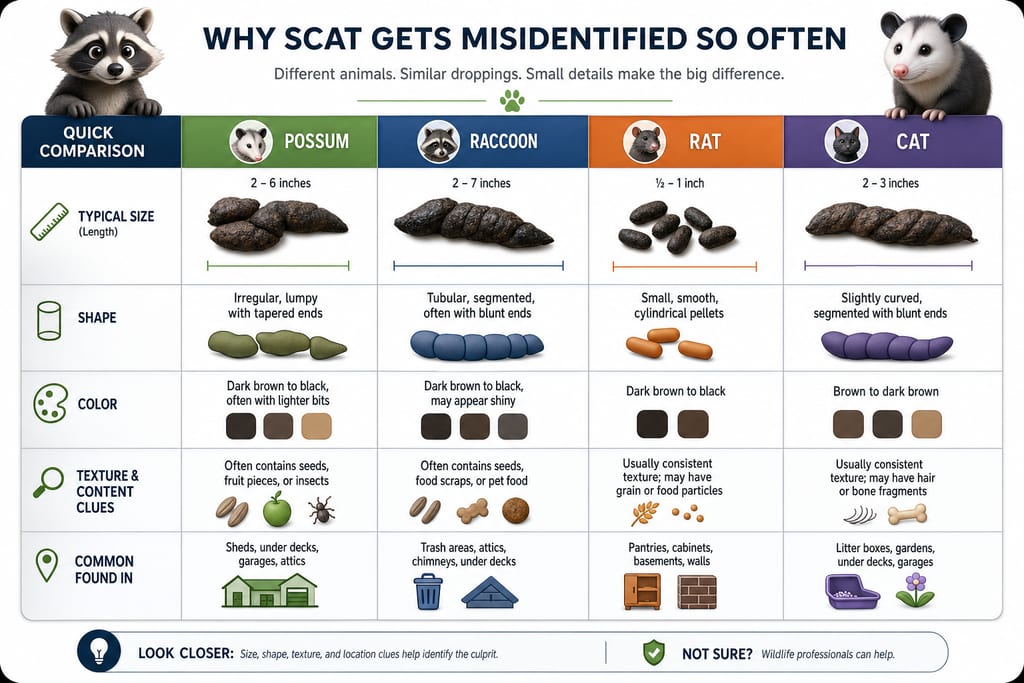
Diet and body size do more to shape a dropping than most people guess. A raccoon that raided a trash can leaves scat packed with seeds and plastic bits, while a possum eating bugs and fruit leaves something smoother and more uniform, even though both animals are roughly cat sized.
A quick comparison helps before you start matching photos to what is in your yard.
- Raccoon: thick, tubular, often segmented, found in piles called latrines
- Rat: small, pointed on both ends, scattered in trails along walls
- Outdoor cat: tapered with a hard point, usually buried in loose soil or mulch
Seeing the shapes side by side makes the differences easier to spot than reading a description alone.
None of these traits lock in a match by themselves. Location, diet clues, and shape only narrow things down enough to compare against clear reference photos, which is the next step.
Possum Droppings Photos and the Traits to Look For
A possum dropping is shaped like a short tube with rounded or blunt ends, usually running 3/4 inch to 2 inches long depending on the animal's size and age. Fresh scat is dark brown to black and often has visible bits mixed in, seeds, insect shells, or small tufts of fur, since possums eat whatever they find.
Give it a few days outside and the color and texture change fast. Older droppings fade to gray and turn dry and crumbly, so a pile that looked solid on Monday can look like loose debris by Friday.
One more habit matters more than color or size: possums don't bury or hide their waste. You'll find it sitting out in the open near trash cans, under a deck, or scattered across attic insulation, with no attempt to cover it up.
- Check the ends: rounded and blunt points to possum, pointed points to rodent
- Check the surface: visible seeds or fur bits mean a fresh possum meal
- Check the texture: crumbly and gray means it's been sitting a while
- Check the placement: exposed and out in the open rules out animals that bury their scat
Seeing real examples side by side makes this easier than reading a description.
Possum Scat vs Raccoon Droppings Side by Side
Raccoon droppings run bigger across the board, often 2 to 3 inches long with a thicker diameter and blunt, broken-looking segments instead of one smooth tube. They pile up repeatedly in the same spot, called a latrine, because raccoons tend to return to one chosen bathroom location near a roofline or deck.
Possum scat doesn't behave that way. It's smaller, scattered across a wider area, and rarely shows up in the same exact pile twice since possums don't claim a fixed spot the way raccoons do.
The health angle matters too. Raccoon droppings can carry roundworm eggs that stay infectious in soil for months, so even though the two can look similar from a distance, handling them calls for more caution than possum scat does.
- Measure length: 2 to 3 inches points to raccoon, under 2 inches points to possum
- Look for repeat piles: a latrine in the same corner is a raccoon sign
- Check segmentation: broken, chunky segments mean raccoon
- Treat any raccoon latrine with gloves and a mask before cleanup
Possum Scat vs Rat and Mouse Droppings
Rat droppings are much smaller than possum scat, around half an inch long with pointed, tapered ends on both sides instead of the blunt rounded ends a possum leaves behind. Mouse droppings are smaller still, about the size of a grain of rice, and they show up in big scattered clusters rather than a handful of individual pieces.
Possum droppings are bigger and far fewer in number. Possums don't nest in colonies, so you won't find the dozens or hundreds of pellets that come with a rodent problem.
Placement gives away the difference fast. If the droppings form a tight, repeated trail along a baseboard or wall, that's a rodent runway, not a possum passing through once or twice.
- Count the pile: dozens of tiny pellets means rodents, a handful of larger ones means possum
- Check the ends: tapered and pointed is rat, rounded and blunt is possum
- Follow the trail: droppings running along a wall edge point to rodents
- Note the size: rice-grain sized is mouse, anything close to an inch or longer is possum
Possum Scat vs Outdoor Cat Droppings
Cat droppings are firmer and more segmented than possum scat, and they carry a stronger, more sour smell that's hard to miss once you're close enough to compare. Possum droppings are softer and more irregular in shape, often with plant matter or insect parts still visible inside.
Burial habits tell you a lot before you even look closely. Cats dig a shallow hole in soft soil or mulch and cover their waste, while possums leave theirs sitting right out on the surface.
Location backs this up. Cat scat tends to turn up in garden beds and loose soil, while possum droppings show up near decks, sheds, and the entry points they use to get into a crawl space or attic, areas our team checks first during an inspection when clearing out an active possum.
- Smell check: a strong sour odor points to cat, a milder smell points to possum
- Dig check: a shallow covered hole means cat, exposed scat means possum
- Location check: garden beds mean cat, deck and shed areas mean possum
- Texture check: firm segments mean cat, soft and loaded with plant bits means possum
When a Photo Isn't Enough on Its Own
A photo on a screen can mislead you in ways the real thing wouldn't. Overhead lighting flattens texture, a flash washes out color, and a dropping that's two days old looks nothing like one from this morning. Diet changes things too, since a possum that's been eating mostly insects leaves scat that looks different from one raiding a compost pile.
If you're set on identifying what you found, don't stop at shape and size. Tracks in dust or mud, scratching or thumping sounds at night, and a gap in the soffit or foundation all add weight to a guess that a photo alone can't carry. A homeowner who's confident based on scat color but hasn't checked for an entry point is only halfway to an answer.
For anyone who wants certainty instead of a best guess, a Wildlife Inspection Report® from Wildlife X Team checks the property directly rather than comparing pictures. That route costs more than a few minutes online, but it settles the question a photo match never fully can, and it tells you where the animal is getting in, not just what it is.
Deciding If It's Time to Call Someone In
If the droppings you found match the possum traits above and keep turning up in the same corner of the attic or deck week after week, that's not a one-time visitor passing through. That's an animal living on the property. A photo match tells you what it is, not how it got in or how long it's been there. Wildlife X Team serves Fort Worth, Denton, Granbury, and the surrounding area with humane removal and attic cleanup, and a call to them can confirm what the pictures suggest before the mess spreads further into insulation or walls. Waiting on a guess costs more than checking does.
Possum Scat Questions People Still Ask
Is this possum poop or rat droppings if I found a pile on my patio overnight?
Check the count and the ends first. A pile of a dozen or more tiny pellets with pointed tips on both sides is rats, while two or three larger pieces with rounded ends sitting alone on the patio points to possum. Rats also leave repeat trails along the same edge of the patio night after night, where a possum pile often won't show up again in that exact spot.
Why do the droppings I found have no visible seeds or fur like the possum photos show?
Diet drives what shows up inside the scat, so a possum eating mostly soft insects or garden scraps can leave smooth droppings with nothing visible mixed in. That doesn't rule out possum, it just means the animal hasn't been raiding trash or eating anything with hard parts lately. Shape, size, and the rounded ends still matter more than whether seeds or fur happen to show.
Can possum droppings make my dog sick if they sniff or eat them in the yard?
It's possible, since possum scat can carry parasites and bacteria like salmonella that affect dogs the same way they would a person. The risk is lower than with raccoon latrines, but it's not zero, especially if your dog eats the droppings rather than just sniffing them. Call your vet if your dog shows vomiting, diarrhea, or low energy after contact with a pile in the yard.
Do fresh possum droppings always smell bad, or can they be odorless?
Fresh possum scat usually has a mild, earthy smell rather than the strong sour odor cat droppings give off, and it can be close to odorless depending on what the animal has been eating. Smell is a weak clue on its own for this reason. Shape, size, and whether the pile sits out in the open still tell you more than odor does.