
Opossum Feces Pictures, Identification, and Health Risks
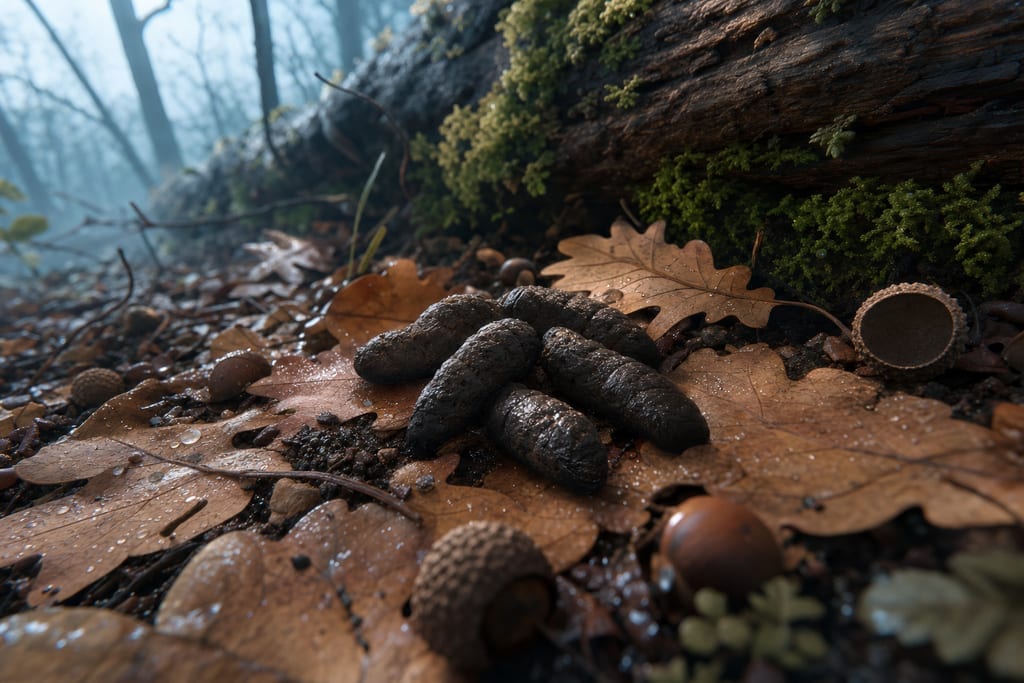
Opossum feces looks like small, tube-shaped pellets with rounded, blunt ends, and the size can jump around a lot even in the same pile. That odd shape is the easiest clue you have, because it is often the only thing that sets it apart from raccoon droppings or a stray cat's mess under the porch. Without a close look, people mix them up all the time, and that matters because each animal carries different risks and calls for a different response.
If you are finding these pellets in your attic, garage, or along the foundation, it usually means an opossum has already worked out a way inside or underneath your home. They do not leave waste far from where they sleep, so a pile near an attic vent or a crawl space gap is a pretty reliable sign of where they are getting in. Knowing what you are looking at before you clean it up is a bigger deal than it sounds, since opossum droppings can carry parasites and bacteria that affect both people and pets.
Table of Contents
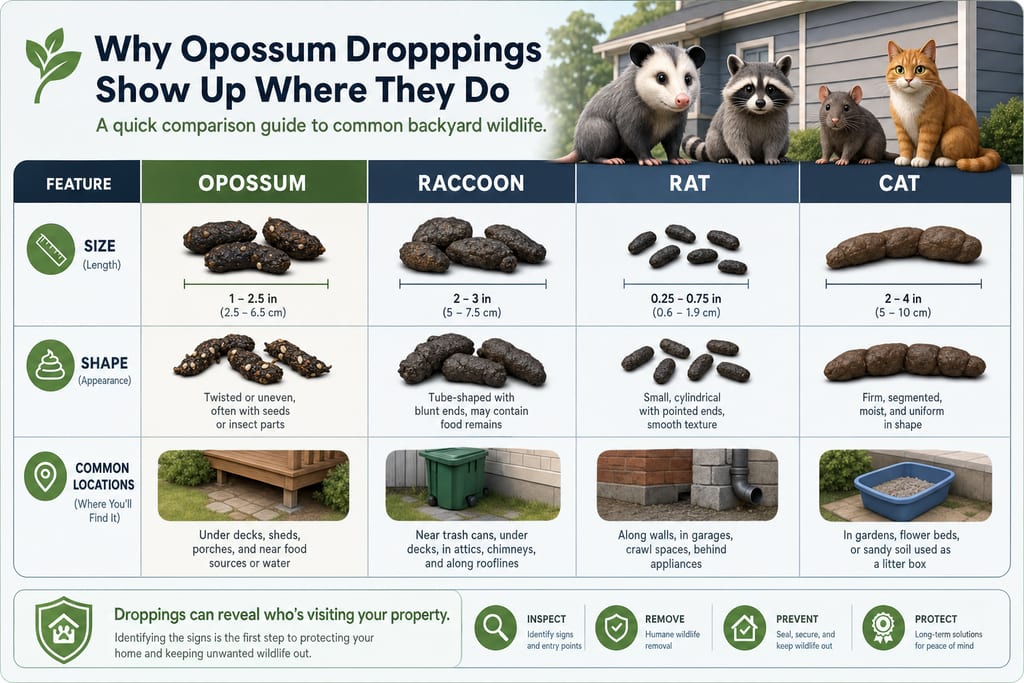
Why Opossum Droppings Show Up Where They Do
Opossums look for tight, dark spots to den during the day, which is why attics, crawl spaces, sheds, and the space under decks are the usual trouble zones. Chimneys without a cap are another favorite, since they offer a quiet, sheltered spot close to the roofline.
Once an opossum settles into a den, it tends to return to the same corner to relieve itself rather than spreading waste around. Over days or weeks that builds into a latrine, a pile that keeps growing in one spot instead of scattered droppings across the attic floor.
Seeing scat on video can help you connect shape to source faster than a written description alone.
A few quick comparisons help rule out the wrong animal. Raccoon droppings are usually larger, darker, and often full of visible seeds or berries. Rat droppings are much smaller, closer to a grain of rice, and show up in scattered clusters rather than one latrine. Cat droppings tend to be firmer, segmented, and often buried or covered with scratched-up dirt or insulation.
What Opossum Poop Actually Looks Like
Opossum droppings run from about half an inch to over two inches long, with the bigger end of that range coming from adults and the smaller pellets from younger animals still in the den. Color changes fast once the scat hits air. Fresh droppings are dark brown or black, and within a day or two they fade to gray and start crumbling apart.
The shape is usually a rounded or slightly twisted tube, not a flat disc or a hard pellet. Because opossums eat almost anything, their droppings often hold visible fur, seed hulls, or bits of insect shell, which is something plant-eating wildlife like rabbits or deer never show in their scat. Comparing opossum feces pictures side by side with raccoon or rodent droppings makes the texture difference obvious fast.
The single biggest tell is the mixed content inside the pellet, since a scavenger's diet leaves scraps that a plant-eater's droppings never contain.
A quick side by side helps:
- Opossum: half inch to two-plus inches, tube shaped, fur or seeds visible
- Raccoon: larger, darker, often packed with berries or seeds
- Rat: rice-grain size, scattered rather than piled
Where You'll Find Droppings Around Your Property
Attics top the list, especially near vents, along rafters, and anywhere insulation has been pushed into a nest shape. Opossums bed down in these quiet, elevated spots and leave droppings close to where they sleep rather than wandering to relieve themselves.
Outside, check fence lines, under porches, and around garbage cans, since these are foraging routes where opossums stop to eat and leave scat behind. Chimneys without caps and crawl spaces under the house offer the same dark, enclosed shelter they look for in an attic, so both deserve a flashlight check.
A pile that keeps growing in one spot, rather than scattered droppings across several areas, usually means an active den, not just an opossum passing through on its nightly rounds.
Spots worth checking first:
- Attic corners near vents or soffits
- Chimney flue and firebox
- Crawl space entry points
- Under decks and porches
- Along fence lines near trash storage
Health Risks Hiding in Opossum Waste
Opossum droppings can carry more than a bad smell. Leptospirosis spreads through contact with the droppings themselves or with water and soil they have touched, and it can make both people and pets sick.
Salmonella bacteria survive in dried feces and can become airborne as dust once the pile is disturbed, which is part of why sweeping up old scat without protection is a bad idea. Fleas, ticks, and roundworm eggs often ride along in or near the droppings too, adding a second layer of risk beyond the bacteria.
The longer droppings sit and dry out, the easier it is for particles to become airborne, so a pile that has been building for weeks poses more risk than one found the same day it was left.
Risks worth knowing before cleanup:
- Leptospirosis from direct contact or contaminated water
- Salmonella from dust kicked up during cleaning
- Fleas and ticks carried in the nesting material
- Roundworm eggs that can linger in soil long after the opossum leaves
Wildlife X Team handles attic cleanup and disinfecting as part of its service, which matters since scrubbing contaminated insulation without the right gear puts a person at the same risk the opossum created.
Fresh Droppings Versus Old Ones
Fresh opossum droppings are dark, slightly moist, and carry a stronger odor than anything that has been sitting for a few days. That moisture and smell fade fast, so catching a fresh pile usually means the opossum was in that spot within the last day or so.
Dried droppings turn gray, crumbly, and noticeably lighter, since most of the moisture content has evaporated. Finding both fresh and dried droppings stacked in the same latrine points to repeat visits over time, not a single animal passing through once.
That distinction matters for deciding what to do next. A latrine with only old, dried scat may mean the opossum already moved on, while fresh droppings next to older ones mean it is still coming back to the same den.
Quick comparisons that help:
- Fresh: dark, moist, strong odor, found within a day or two
- Dried: gray, crumbly, lighter, little to no smell
- Mixed pile: signals an active, repeat-use den site
Clean It Yourself Or Call For An Inspection
One pile near a trash can or along a fence line is usually a visitor, not a resident. An opossum passing through for a night of foraging leaves a small amount of scat and moves on, so a single find outdoors is often fine to clean up on your own with gloves and a disinfectant spray.
Droppings scattered through an attic or crawl space tell a different story. That pattern points to a den, and a den often means young opossums are still inside, which changes the job from a wipe-down to a full removal and exclusion plan.
Timing is the other factor in the decision. A pile found the same week can be handled with basic cleanup, but one that has been sitting for a month has likely already dried into dust that an HVAC system can pull through the rest of the house.
Wildlife X Team's Wildlife Inspection Report checks attic corners, vents, and crawl space gaps for both entry points and den signs before any cleanup starts, which is the step that tells you whether you are dealing with a quick fix or an active den that needs removal first.
What To Do Once You've Found The Pile
Matching the pellets to an opossum only answers half the question. The other half is whether a den is behind it, and that takes someone checking rafters, soffits, and crawl space gaps with the droppings as a starting clue, not the whole answer. If you're anywhere around Fort Worth, Denton, or Granbury and the pile keeps growing instead of staying put, that's the point to stop guessing and get a set of eyes on the entry points themselves. Wildlife X Team covers that ground along with Glen Rose, Weatherford, and the rest of the surrounding area, and a look at the den beats another look at the scat.
Common Opossum Dropping Questions
Can I get sick just from breathing near dried opossum droppings without touching them?
Yes, that risk is real without any direct contact. Dried droppings crumble into dust, and salmonella bacteria can ride on that dust once it gets stirred up by a fan, foot traffic, or an attic vent. A mask alone will not stop every particle, which is why sealed-off areas should stay closed until someone with the right gear handles the cleanup.
Why do I keep finding droppings in the same attic corner after I've swept it clean?
That corner is still part of the den, so sweeping only removes the mess, not the opossum. Opossums are creatures of habit and return to the same latrine spot night after night as long as they still have access to the attic. Until the entry point is found and closed, the pile will keep coming back no matter how often you clean it.
Does bleach alone kill the bacteria in opossum feces or do I need something stronger?
Bleach kills some bacteria but not everything that can hide in opossum waste, like certain parasite eggs and fungal spores. A proper cleanup needs an enzyme-based disinfectant made for animal waste, plus removal of contaminated insulation that bleach cannot reach. Wildlife X Team's attic cleanup service handles both the disinfecting and the insulation replacement in one visit.
Is it normal to find opossum droppings but never actually see the animal itself?
Yes, that is the usual pattern. Opossums are nocturnal and spend daylight hours tucked into the den, so homeowners almost always find the scat first and the animal never at all. Scratching sounds at night or a smell near a vent are often the only other signs you get before an inspection confirms what is actually living there.