
Nearby Snake Control for Yards, Garages, and Home Perimeters

A single snake sighting in your garage or yard can turn your peaceful property into a source of constant worry, especially when you're not sure if more are hiding nearby. North Texas is home to several snake species that actively seek out residential properties for shelter and food, making professional snake control a necessity rather than a luxury. Understanding why snakes choose your property and how to safely remove them is the first step toward reclaiming your outdoor spaces.
Why Snakes Choose Your Property
Snakes don't randomly wander onto your property—they're drawn there by specific conditions that meet their survival needs. The most common attractant is a steady food supply, particularly rodents, insects, and small amphibians that thrive in residential areas. If you've noticed mice in your garage or rats near your foundation, you've essentially set up a buffet that snakes can't resist. Properties with abundant prey become prime real estate for snakes looking to establish hunting grounds close to shelter.
North Texas is home to several snake species that commonly appear in residential areas, including rat snakes, garter snakes, and the venomous copperhead. Rat snakes often hide in attics, wall voids, and storage areas where they hunt rodents, while garter snakes prefer gardens and landscaped areas with moisture. Copperheads, which pose a serious safety risk, typically conceal themselves in woodpiles, rock gardens, and overgrown vegetation where they can ambush prey and stay cool during hot Texas summers.
Many homeowners attempt DIY snake removal using store-bought repellents, traps, or even direct confrontation with tools like shovels or brooms. These methods rarely work and often create dangerous situations, especially when dealing with venomous species that can strike defensively when cornered. Without proper identification skills, you risk mistaking a harmless snake for a dangerous one, or worse, getting bitten while trying to handle the situation yourself. Wildlife X Team uses humane, professional techniques to safely remove snakes and implement prevention strategies that address the root causes of snake activity on your property.
Table of Contents
Snake Activity in the Fort Worth Area
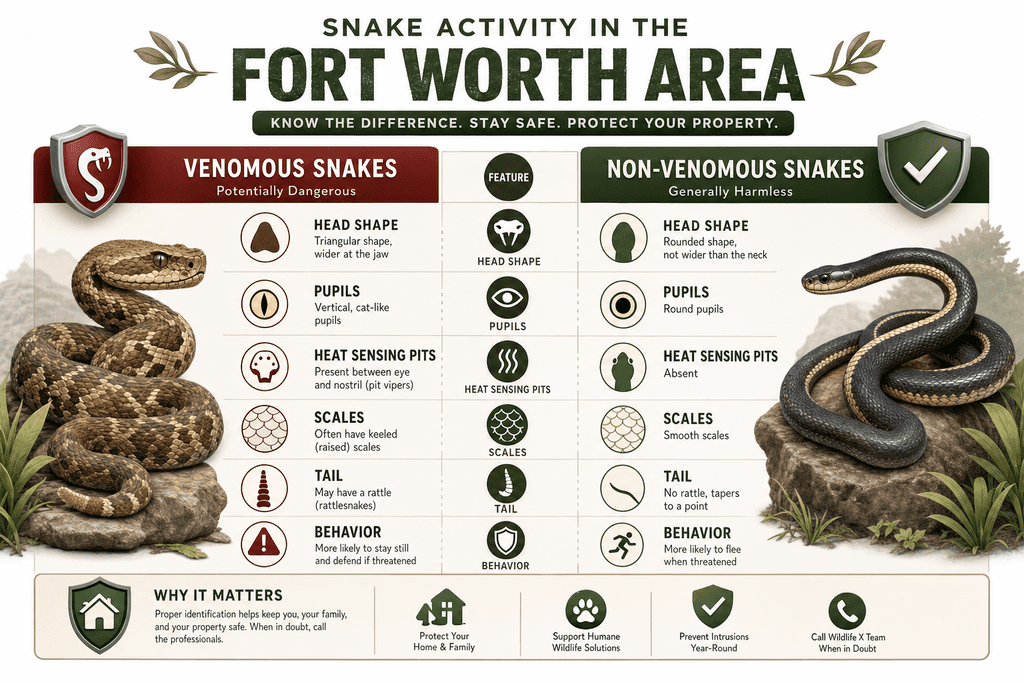
North Texas is home to over 40 different snake species, and about a dozen of them regularly show up in yards around Fort Worth, Denton, and Granbury. Most of these snakes are completely harmless and actually help control rodent populations, but a few venomous species make it important to know what you're dealing with. When you search for "snake control near me," you're probably not thinking about whether the snake is helpful or harmful. You just want it gone, and that's completely understandable.
When Snakes Are Most Active
Snake activity in our area follows a pretty predictable pattern throughout the year. Spring and fall are the busiest times for snake encounters because temperatures are just right for these cold-blooded creatures to move around. During summer, they're still active but tend to come out early morning or evening when it's cooler.
Here's what to expect during different seasons:
- Spring (March-May) brings the highest activity as snakes emerge from winter hiding spots and start looking for food and mates
- Summer (June-August) means snakes are active but mostly during cooler parts of the day, often seeking shade under porches or in garages
- Fall (September-November) sees another spike in movement as snakes search for winter shelter, sometimes ending up in homes
- Winter (December-February) is the quietest time, though snakes can still appear on warm days
Common Species in Residential Areas
The snakes you'll most likely find around your property fall into two main groups. Non-venomous snakes make up about 90% of what homeowners encounter, and they're actually beneficial for keeping mice and rats under control. The venomous ones are less common but require immediate professional attention.
Most common non-venomous snakes include:
- Rat snakes (black or gray, often found in attics and garages)
- Garter snakes (small, striped, usually in gardens)
- Rough green snakes (bright green, live in trees and shrubs)
- Texas brown snakes (tiny, found under rocks and debris)
Venomous species to watch for:
- Copperheads (most common venomous snake in our area)
- Cottonmouths (near water sources)
- Rattlesnakes (less common but present in rural areas)
Identifying Venomous vs Non-Venomous Snakes
Knowing the difference can help you understand the urgency of the situation, though Wildlife X Team recommends professional removal for any snake you're uncomfortable handling. Venomous snakes in Texas have some distinct features that set them apart, but these can be hard to spot from a safe distance.
| Feature | Venomous Snakes | Non-Venomous Snakes |
|---|---|---|
| Head Shape | Triangular, distinct from neck | Rounded, blends with body |
| Pupil Shape | Vertical slits (like cat eyes) | Round pupils |
| Body Pattern | Hourglass or diamond patterns | Stripes or solid colors |
| Tail | Thick, may have rattle | Tapers gradually to point |
| Behavior | Often coils when threatened | Usually tries to escape |
Why Professional Snake Control Matters
About 7,000 people get bitten by venomous snakes in the United States each year, and Texas accounts for a significant portion of those incidents. Most bites happen when people try to catch or kill snakes themselves. Even non-venomous snake bites can cause infections and require medical attention.
Professional removal makes sense for several reasons. Wildlife X Team uses humane methods that safely relocate snakes without putting anyone at risk. We also identify how snakes are getting into your property in the first place, which matters more than just removing the one you saw. Our Wildlife Inspection Report® finds entry points you'd never notice on your own, preventing future snake problems before they start.
Where Snakes Hide Around Your Property
Most snakes found near homes aren't actively seeking out human contact. They're just looking for three basic things: food, shelter, and a safe place to regulate their body temperature. Your yard, garage, and home perimeter might be offering all three without you even realizing it. Understanding where snakes typically hide is the first step in keeping them away from your living spaces. The truth is, many properties in the Fort Worth and Denton areas have multiple snake-friendly spots that homeowners walk past every single day.

Yards provide countless hiding opportunities for snakes, especially in areas with dense vegetation or debris. Woodpiles are basically snake hotels, offering dark crevices and often attracting rodents that snakes feed on. Rock gardens and decorative stone features create similar conditions, with gaps between rocks providing perfect cover.
- Overgrown vegetation and tall grass give snakes concealment while they hunt
- Compost piles and leaf litter retain heat and attract prey animals
- Garden sheds and outdoor storage often have gaps underneath or around doors
- Water features like ponds or birdbaths draw snakes looking for drinking water
- Low-hanging shrubs near foundations create protected pathways to your home
Garages present a different set of challenges. Snakes can slip through surprisingly small gaps under garage doors, sometimes following the scent trail of mice or rats. Once inside, they'll hide behind stored boxes, in corners where tools are piled, or even in the folds of tarps and drop cloths. The temperature-controlled environment makes garages especially attractive during extreme weather.
Foundation gaps and crawl spaces are among the most common entry points professionals find during inspections. A gap as small as a quarter-inch can allow certain snake species to enter. These areas stay cool in summer and relatively warm in winter, making them ideal snake habitat. What makes this worse is that snakes often discover these spots by following rodent burrows and existing animal pathways that lead right to your home's vulnerable points.
Snake behavior changes with the seasons too. During spring and fall, you'll find them basking in sunny spots during the day. Summer heat drives them to seek shade under decks, porches, and air conditioning units. Winter sends them looking for protected areas where they can brumate, which is similar to hibernation.
Homeowner Inspection Checklist
- Walk your property perimeter and note any gaps in the foundation larger than 1/4 inch
- Check under decks, porches, and outdoor structures for snake signs
- Inspect garage door seals and look for gaps when the door is closed
- Examine woodpiles, rock gardens, and debris piles from a safe distance
- Look for shed snake skins near potential hiding spots
- Note areas with heavy rodent activity, as snakes will follow
Professional Snake Removal Methods
There's a big difference between spotting a snake in your yard and actually removing it safely. Most people's first instinct is to grab a shovel or call a neighbor, but that's when accidents happen. Professional snake removal isn't just about getting the animal off your property. It's about doing it in a way that protects everyone involved, including the snake, while making sure the problem doesn't come back next week.
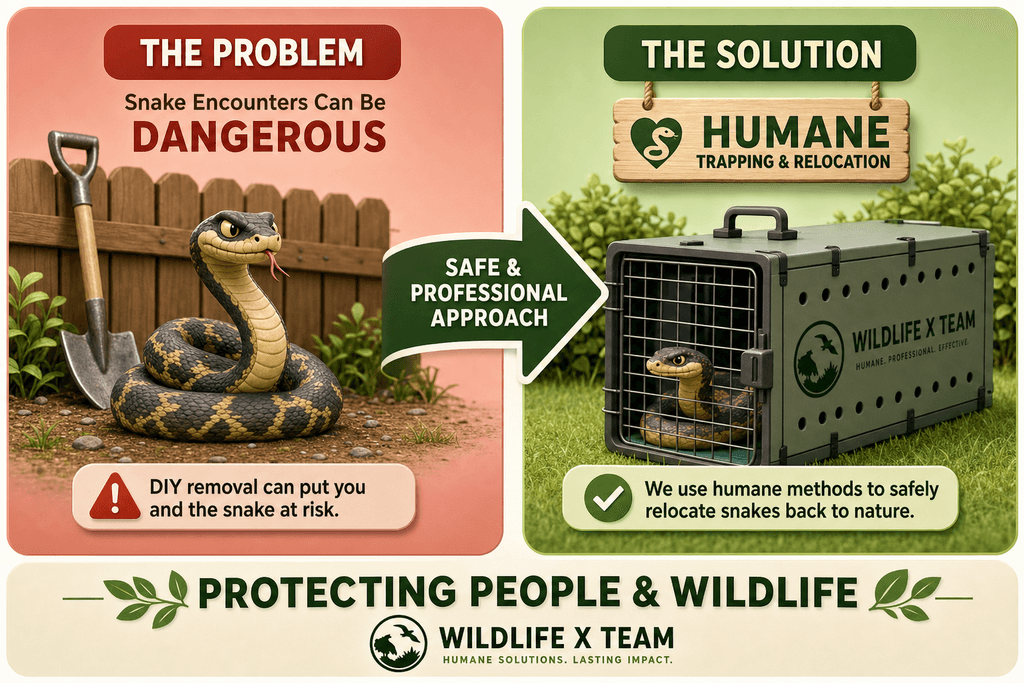
Humane trapping and relocation is the foundation of how Wildlife X Team handles snake situations. The methods vary depending on the species, size, and location of the snake. Some situations call for specialized snake tongs and hooks, while others require carefully placed traps that capture without injury. The goal is always relocation to appropriate habitat far enough away that the snake won't return.
Safety protocols become critical when dealing with venomous species. Texas is home to several venomous snakes including copperheads, cottonmouths, and rattlesnakes. Professional handlers know how to identify species from a safe distance and use appropriate protective equipment. They understand snake behavior patterns that help predict how the animal will react during capture.
- Proper identification prevents unnecessary killing of beneficial non-venomous species
- Specialized equipment keeps handlers at a safe distance during capture
- Knowledge of local regulations ensures legal and ethical handling
- Experience with snake behavior reduces stress on the animal during removal
The Wildlife Inspection Report® process goes beyond just removing the snake you saw. Professionals conduct a thorough property assessment to find evidence of other snakes, locate entry points, and identify what's attracting them in the first place. This might include finding shed skins in crawl spaces, discovering rodent populations that serve as food sources, or spotting gaps in foundations that you'd never notice on your own.
DIY snake removal carries real risks that most homeowners don't consider until it's too late. Misidentifying a venomous snake as harmless can lead to serious medical emergencies. Even non-venomous snakes can deliver painful bites when cornered. There's also the problem of incomplete removal, where you might catch one snake but miss others hiding nearby or fail to address why they came to your property.
Long Term Snake Prevention Strategies
Removing a snake solves today's problem, but prevention solves tomorrow's too. The most effective approach combines physical barriers with habitat modification to make your property fundamentally unappealing to snakes. This isn't about using harsh chemicals or creating an ugly fortress around your home. It's about understanding what snakes need to survive and systematically removing those resources from your property.
Foundation sealing and gap repair creates the first line of defense. Even small cracks in concrete or gaps where utilities enter your home can serve as snake highways. Professional exclusion work involves identifying every potential entry point around your home's perimeter and sealing them with appropriate materials that won't deteriorate over time.
- Seal foundation cracks and gaps larger than 1/4 inch with concrete or foam
- Install door sweeps on all exterior doors including garage doors
- Screen crawl space vents with hardware cloth
- Repair damaged siding and close gaps around pipes and wires
Exclusion fencing works differently than regular fencing. Snake-proof barriers need to be buried several inches underground and angled outward to prevent snakes from burrowing underneath. The material matters too, with smooth surfaces that snakes can't grip being more effective than chain link or wood. Wildlife X Team's Animal Proofing services include installing these specialized barriers around vulnerable areas of your property.
Here's something most people miss: you can't keep snakes away if you're feeding their food source. Rodent control is absolutely essential for long-term snake prevention. Mice and rats attract snakes better than anything else. Eliminating rodent populations removes the primary reason snakes would visit your property in the first place.
Habitat modification means making your yard less snake-friendly through strategic landscaping and maintenance. Keep grass cut short, especially near the house. Move woodpiles at least 20 feet from structures and elevate them off the ground. Remove rock piles and debris where snakes can hide. Trim shrubs and bushes so there's clear space between vegetation and your home's foundation.
Snake Prevention Maintenance Checklist
- Mow lawn regularly and keep grass under 6 inches near the house
- Remove yard debris, leaf piles, and unnecessary items monthly
- Inspect foundation and seal new cracks as they appear
- Maintain rodent control measures year-round
- Trim vegetation away from the house foundation quarterly
- Check door sweeps and weather stripping twice yearly
- Store firewood elevated and away from structures
The reality is that effective snake control near me requires a comprehensive approach. One-time removal without prevention just means you'll be dealing with the same problem again. That's why Wildlife X Team combines immediate removal with long-term exclusion strategies, backed by their Renewable Lifetime Warranty. When you address both the current snake issue and the underlying conditions that attracted them, you create lasting protection for your property in Fort Worth, Denton, Granbury, and surrounding areas.
Why Professional Control Beats DIY Solutions
Most homeowners who search for "snake control near me" have already tried handling the problem themselves and failed. The truth is, DIY snake removal often creates more problems than it solves, and the costs add up faster than people expect. What starts as a simple plan to catch one snake turns into weeks of frustration, wasted money on ineffective products, and sometimes dangerous encounters. Understanding why professional services work better isn't just about convenience, it's about protecting your family and your wallet in the long run.
Common DIY Mistakes That Make Things Worse
People make the same errors over and over when trying to handle snakes on their own. These mistakes don't just fail to solve the problem, they actually make your property more attractive to snakes.
- Using mothballs or home remedies that snakes simply ignore while the smell drives you crazy
- Setting up barriers in obvious spots while missing the actual entry points snakes are using
- Removing one snake without addressing why it came to your property in the first place
- Attempting to catch or kill snakes without knowing which species are protected by law
- Creating new hiding spots accidentally while trying to snake-proof your yard
Safety Risks Nobody Talks About
Handling snakes without training puts you at serious risk, even with non-venomous species. Misidentifying a venomous snake as harmless happens more often than you'd think, and the consequences can be life-threatening. Bites from "harmless" snakes still cause infections and allergic reactions that require medical attention.
- Venomous and non-venomous snakes often look nearly identical to untrained eyes
- Cornered snakes become aggressive and strike faster than most people can react
- Snake bites to hands and arms account for the majority of emergency room visits
- Protective gear from hardware stores doesn't provide adequate protection against fangs
The Real Cost Comparison
Adding up what most people spend on DIY attempts reveals an uncomfortable truth. The average homeowner spends between $200-400 on various products, traps, and repellents before finally calling professionals. That doesn't include the value of your time or the stress of living with snakes for weeks or months.
- Store-bought snake traps cost $30-60 each and rarely catch anything
- Repellent sprays need constant reapplication at $25-40 per bottle
- Hardware store exclusion materials fail because they're not designed for wildlife
- Multiple failed attempts mean buying the same products over and over
Professional services like Wildlife X Team's approach include inspection, removal, and exclusion in one comprehensive solution. The company's Renewable Lifetime Warranty means you're not paying again when snakes return, unlike DIY methods that offer zero guarantees.
Long-Term Effectiveness Makes the Difference
Temporary fixes feel good in the moment but fail within weeks. Professional exclusion work addresses the root causes that attract snakes to your property. Wildlife X Team's Wildlife Inspection Report identifies every vulnerability, not just the obvious ones you can see from your back door.
- DIY barriers leave gaps that snakes find within days of installation
- Professional-grade materials withstand weather and animal pressure for years
- Trained technicians spot secondary entry points that homeowners always miss
- Comprehensive solutions address food sources and habitat that draw snakes in
Getting Started with Snake Control
Dealing with snakes around your property doesn't have to be scary or complicated. The key is understanding that effective snake control near me involves three main steps: safely removing any snakes already on your property, sealing up the spots where they're getting in, and making your yard less attractive to them in the first place. Most people skip that middle step and wonder why snakes keep coming back.
If you've spotted a snake in your garage, yard, or home, the sooner you act the better. Snakes tend to return to places where they've found food or shelter before, which means that one snake you saw last week might bring friends next month.
Wildlife X Team serves the Fort Worth, Denton, Granbury, and surrounding areas with humane snake removal and prevention services. When you call (817) 799-8686, you'll get an initial inspection that looks at your whole property, not just the obvious problem areas. We check foundations, crawl spaces, gaps around doors, and all those little spots most homeowners miss.
The inspection helps identify what's actually bringing snakes to your property in the first place. Sometimes it's rodents living in your walls, sometimes it's gaps in your foundation, and sometimes it's just a really good hiding spot they found under your deck.
You probably have questions about what happens next, how long the process takes, or whether the snakes will come back after treatment. That's completely normal, and the answers depend on your specific situation.
Common Snake Control Questions
Finding a snake in your yard or home brings up a lot of questions fast. Most people want to know what happens next, how long it takes, and whether their family will be safe during the removal process. These are the answers you need when searching for snake control near me.
How quickly can professionals respond to snake sightings?
Most professional wildlife removal companies can respond within 24 hours of your call, and many offer same-day service for urgent situations. Wildlife X Team prioritizes snake calls because we understand the stress and potential danger involved. Response times depend on your location and the time of day you call, but our team serving the Ft. Worth, Denton, and Granbury areas works to get someone to your property as quickly as possible.
Are snake removal services safe for pets and children?
Professional snake removal is designed to be completely safe for everyone in your household, including pets and kids. Technicians use humane capture methods that don't involve harmful chemicals or dangerous traps. You might be asked to keep pets and children inside during the removal process, but this is just a precaution to make the job easier and faster.
What happens to snakes after they are removed?
Captured snakes are relocated to appropriate natural habitats away from residential areas. Humane wildlife removal means the animals are never harmed during the process. Professional services follow local wildlife regulations about where and how snakes can be released. The goal is to solve your problem while respecting the role snakes play in the ecosystem.
How long does snake exclusion work last?
Quality exclusion work can last for years when done correctly. Wildlife X Team offers a Renewable Lifetime Warranty on our exclusion services, which means we stand behind our work long-term. The barriers, sealing, and repairs we install are built to withstand weather and time, keeping snakes out season after season.
Do snake control services work year round?
Snake activity changes with the seasons, but professional services are available whenever you need them. Spring and summer see the most snake activity in Texas, but snakes can appear during warmer winter days too. Prevention work is actually best done in fall and winter before snake season ramps up again.
What areas does Wildlife X Team serve for snake control?
Wildlife X Team provides snake control services throughout the Dallas-Fort Worth area, including Ft. Worth, Denton, Granbury, and surrounding communities. If you're searching for snake control near me in North Texas, our team covers both residential and commercial properties across the region. We handle everything from single snake removals to complete property exclusion for ongoing protection.