
Mouse Nest Identification, Nesting Spots, and Safe Next Steps
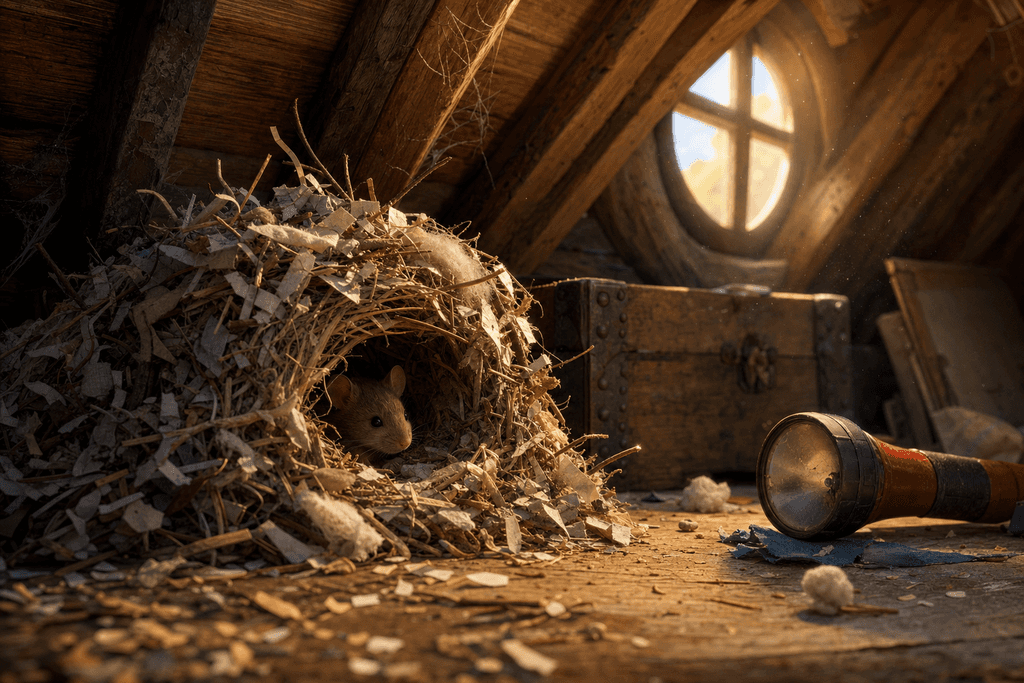
A single mouse can build a nest in less than a day, tucking it into a corner you probably haven't checked in months. If you've spotted shredded paper or fuzzy insulation clumped together in your attic or behind boxes, you're likely looking at exactly that. Knowing what a mouse nest looks like and where to find it is the first step to solving the problem before it turns into a bigger infestation, and that's exactly what this guide will walk you through.
Table of Contents
How to Identify a Mouse Nest
A single mouse can have five to ten babies every three weeks, so finding one nest usually means there's more going on than you think. Mouse nests are small, messy balls usually 4 to 6 inches wide, made from whatever soft stuff the mouse could find nearby.
They're often built from shredded paper, cardboard, insulation, fabric scraps, or dried plant material. If you spot one, look close by for droppings, a sharp urine smell, or small chew marks on wood or wires.
- Mouse nests: small, round, messy, made of soft shredded material
- Rat nests: bigger, bulkier, often near ground level or in burrows
- Squirrel nests: large leaf piles, usually found in trees or attic corners near the roofline
Size and location tell you a lot. A nest tucked into a wall void with tiny droppings scattered around is almost always mice, not something bigger.
Common Mouse Nesting Spots in Your Home
Mice like it quiet, warm, and close to food. That's why attics, wall voids, and loose insulation are some of their favorite indoor spots.

They also don't mind cramped, dark places you rarely check, which is exactly why they're so hard to catch early.
- Behind appliances like the fridge or stove
- Under kitchen or bathroom sinks
- Inside cardboard boxes in storage rooms or garages
- Crawl spaces and gaps near the foundation
- Sheds, garages, and woodpiles outside
Homes in older neighborhoods around Fort Worth and Denton tend to have more of these small gaps, especially near foundations and vents. Once you know where to look, checking these spots every few months only takes a few minutes.
This video walks through where mice like to nest and why those spots are so appealing to them in the first place.
Safe Next Steps After Finding a Mouse Nest
Finding a nest is one thing. Cleaning it up the wrong way is where people get into trouble, since mouse droppings can carry hantavirus, a serious lung disease.
Don't touch the nest with bare hands, and don't vacuum or sweep it up dry. That kicks dust and particles into the air where you can breathe them in.
- Open windows and let the area air out for at least 30 minutes
- Wear gloves and a mask before touching anything nearby
- Spray the nest and surrounding area with disinfectant before cleanup
- Wait until you're sure all the mice are gone before sealing entry points
Sealing gaps too early can trap mice inside your walls, which creates a bigger problem than the one you started with. Our Wildlife Inspection Report checks your whole property for entry points, and our Attic Cleanup and Restoration service handles the disinfecting and repair work so you're not doing it yourself.
Some companies just set a trap and call it done. We look at the full picture, from Fort Worth to Granbury, so mice don't just find a new way back in.
Wrap-up
Mouse nests are small, tucked away, and always close to food or a warm spot to hide from the cold. Once you spot one, cleanup matters just as much as removal since droppings and nesting material can carry health risks if you're not careful. That's why a proper inspection and sealing up entry points makes such a big difference in stopping the cycle before it starts again.
Here's what actually solves the problem long term:
- Finding every entry point, not just the obvious one
- Safe cleanup of nesting material and droppings
- Sealing gaps so mice can't just come back next month
Wildlife X Team handles all of this for homes and businesses across Fort Worth, Denton, Granbury, and nearby towns like Weatherford, Southlake, and Flower Mound. Still got questions about what to look for or what happens next? The next section covers the stuff people ask us most.
Mouse Nest FAQs
How many mice live in one nest
A single nest can hold a mother and her litter, which is usually five to six babies. But mice breed fast, so one nest can turn into dozens of mice in just a few months if nobody deals with it. That's why one nest is never really just one problem.
How to tell if a nest is active
Fresh droppings that look shiny and soft, a musty smell, and shredded material that seems recently moved are all signs of an active mouse nest. Old nests dry out, crumble, and lose their smell. If you keep hearing scratching at night, that's a pretty good clue too.
When to call a professional
If you find more than one nest, hear noises in the walls or attic, or keep catching mice even after cleaning up, it's time to call a professional. At Wildlife X Team, our Wildlife Inspection Report finds every entry point so the mice don't just come back next season.