
Mole Control Services: Getting Rid of Lawn Damage in Fort Worth

A single mole can dig up to 18 feet of new tunnels in just one hour, turning your carefully maintained Fort Worth lawn into a maze of raised ridges and soft spots overnight. The clay-rich soil common throughout the Dallas-Fort Worth area provides perfect conditions for these underground pests to thrive, which is why so many homeowners wake up to find their yards destroyed. While many property owners try DIY traps or home remedies, these methods rarely address the full scope of the problem and can actually encourage moles to expand their tunnel systems even further.
Table of Contents
Why Fort Worth Lawns Attract Moles
Fort Worth sits right in the middle of what mole experts call prime real estate for these underground diggers. The soil here is packed with clay, which holds moisture really well and creates the perfect environment for earthworms and grubs. Those are basically an all-you-can-eat buffet for moles. When you combine our soil type with North Texas weather patterns, you get conditions that make moles feel right at home under your lawn.
Fort Worth Soil Creates Perfect Mole Habitat
The clay-rich soil throughout Fort Worth and the surrounding areas does more than just make gardening tough. It actually creates an underground ecosystem that moles love. Clay soil stays moist longer than sandy soil, especially during our spring and fall seasons. This moisture attracts earthworms, beetle larvae, and other insects that burrow through the ground.
Moles can eat up to 80% of their body weight every single day. They need soil that's easy to tunnel through but firm enough to hold their tunnel shape. Fort Worth's clay soil checks both boxes perfectly.
- Clay soil retains moisture better than other soil types
- Moist soil attracts earthworms and grubs that moles feed on
- The soil composition allows moles to create stable tunnel systems
- Underground insect populations thrive in North Texas clay
Seasonal Mole Activity Patterns
Moles don't hibernate, but their activity definitely changes with the seasons here in North Texas. You'll notice the most damage during spring and fall when the soil has just the right amount of moisture. During hot summer months, moles dig deeper to find moisture and food. In winter, they follow their food sources down below the frost line.
Spring brings the most visible mole damage because the soil is soft and easy to tunnel through. This is when homeowners typically notice those raised ridges crisscrossing their yards. Fall sees a second wave of activity as moles prepare for winter by expanding their tunnel networks and stocking up on food.
- Spring (March-May) shows peak surface tunneling activity
- Summer activity moves deeper underground to follow moisture
- Fall (September-November) brings increased feeding and tunneling
- Winter activity continues but stays below the surface
Lawn Care Practices That Attract Moles
Here's something most Fort Worth homeowners don't realize. The better you take care of your lawn, the more attractive it becomes to moles. Regular watering creates moist soil that draws earthworms to the surface. Fertilizing your lawn feeds the grass, but it also feeds the insects that moles hunt. Even aerating your lawn makes it easier for moles to dig.
Overwatering is probably the biggest mistake people make. When you water too much or too often, you're basically rolling out the welcome mat for moles. The excess moisture brings their food sources closer to the surface, which means more visible tunnel damage across your yard.
- Reduce watering frequency to avoid creating overly moist soil
- Water deeply but less often to encourage deeper root growth
- Avoid overusing fertilizers that boost insect populations
- Consider grub control treatments during peak seasons
Identifying Mole Damage vs Other Pests
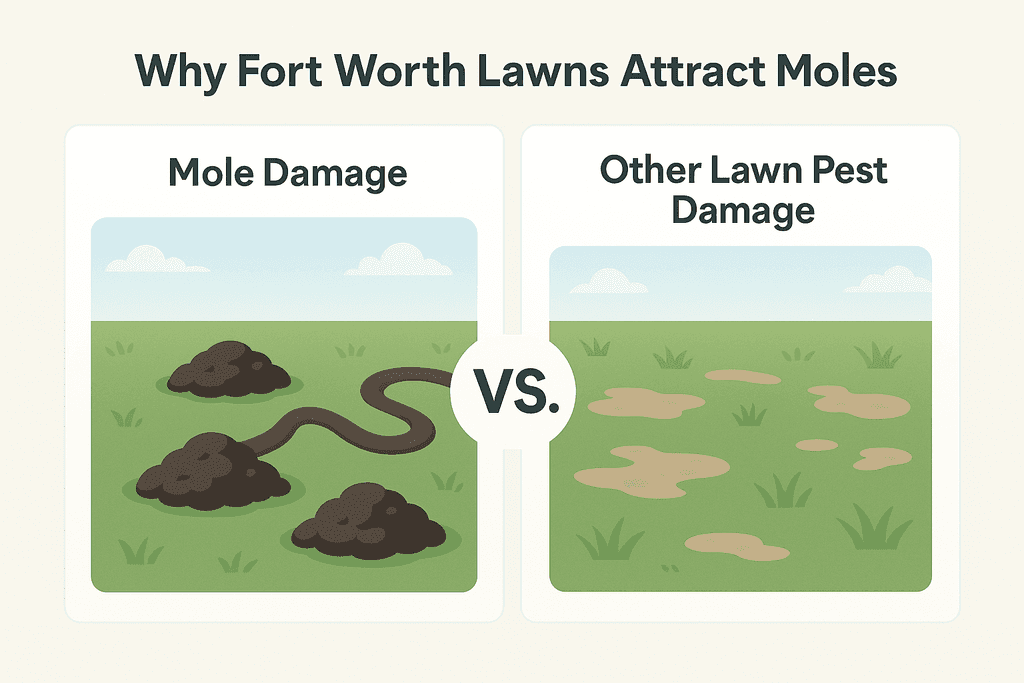
Not every bump in your yard comes from moles. Fort Worth lawns deal with several different pests that can cause similar-looking damage. Knowing the difference helps you figure out what you're actually dealing with. Moles create raised ridges and volcano-shaped mounds, while other pests leave different calling cards.
Gophers make fan-shaped mounds and eat plant roots, which moles don't do. Voles create surface runways through the grass and actually eat the grass itself. Armadillos dig cone-shaped holes when they're hunting for insects. At Wildlife X Team, we see homeowners confuse these pests all the time, which is why our Wildlife Inspection Report® looks at all the evidence before recommending treatment.
Pest Damage Comparison
Mole Damage Signs:
- Raised ridges running across the lawn in irregular patterns
- Volcano-shaped mounds with soil pushed up from below
- Soft spots in the yard where tunnels have collapsed
- No visible holes or entry points on the surface
- Damage appears overnight or very quickly
Gopher Damage Signs:
- Fan-shaped or crescent-shaped dirt mounds
- Visible holes plugged with dirt
- Dead or dying plants from root damage
- Mounds appear in a more linear pattern
- Soil is pushed to one side of the hole
Vole Damage Signs:
- Surface runways through grass about 2 inches wide
- Gnawed bark at the base of trees and shrubs
- Small holes about 1-2 inches in diameter
- Visible paths connecting burrow openings
- Grass clippings and droppings in runways
Armadillo Damage Signs:
- Cone-shaped holes 3-5 inches deep
- Scattered digging across the entire yard
- Damage to flower beds and mulched areas
- Holes appear random rather than in patterns
- Activity mostly happens at night
The timing of damage also tells you a lot. Moles work year-round and you'll see fresh ridges appear almost daily during active periods. Gophers tend to be more active in spring and fall. Voles cause the most damage in winter when other food sources are scarce. Understanding these patterns helps you know when to call in professional help from companies like Wildlife X Team that specialize in humane wildlife removal and prevention.
Recognizing Mole Damage Before It Gets Worse
A single mole can dig up to 18 feet of tunnel in just one hour, which means your lawn can go from perfect to disaster zone faster than you might think. Most homeowners don't realize they have a mole problem until the damage is already visible across their yard. The key to protecting your Fort Worth lawn is catching the signs early, before those underground tunnels turn into a network of destruction. Learning what to look for can save you thousands in lawn repair costs and countless hours of frustration.
The most obvious sign of mole activity is the appearance of raised ridges or tunnels running across your lawn. These surface tunnels look like someone drew lines across your grass with a stick, creating soft, spongy paths that collapse when you step on them. You might also notice volcano-shaped mounds of dirt scattered throughout your yard, which are different from the cone-shaped hills that gophers create.
- Raised tunnel ridges that feel soft underfoot
- Cone or volcano-shaped dirt mounds (molehills)
- Patches of dead or dying grass along tunnel lines
- Uneven or spongy ground that wasn't there before
- Visible damage to plant roots in garden beds
- Increased activity after rain or watering
Understanding the difference between surface tunnels and deep tunnels matters more than most people realize. Surface tunnels are the raised ridges you see on top of your lawn, usually created when moles hunt for insects and grubs just below the grass. Deep tunnels sit 6 to 12 inches underground and serve as the mole's main highway system. The surface damage is what you notice first, but the deep tunnel network is what makes the problem so hard to fix on your own.
The secondary damage from moles often causes more problems than the tunnels themselves. When moles burrow through your lawn, they separate grass roots from the soil, which leads to brown patches that spread quickly in Fort Worth's hot summers. The uneven ground creates tripping hazards and makes mowing a nightmare. Your garden plants might start wilting even though you're watering them, because mole tunnels have damaged their root systems.
Knowing when mole activity indicates a larger infestation can help you decide if it's time to call professionals. If you're seeing new tunnels appearing daily or finding more than three molehills in a week, you're likely dealing with multiple moles or a breeding situation. Mole damage progresses fast because these animals are constantly hunting for food, and a single mole needs to eat about 70% of its body weight every day just to survive.
Professional Mole Removal Methods That Work
Most DIY mole removal methods you'll find online simply don't work, and some can actually make the problem worse by driving moles deeper into your property. Professional mole removal takes a completely different approach that focuses on understanding mole behavior and using that knowledge against them. At Wildlife X Team, we use humane trapping techniques that actually eliminate the problem instead of just moving it around your yard. The difference between professional removal and DIY attempts often comes down to knowing exactly where and when to act.
The first step in professional mole removal is figuring out which tunnels are actually being used. Moles create dozens of tunnels but only use a handful regularly, and setting traps in abandoned tunnels is a waste of time. Our team tests tunnels by gently pressing them down and checking back within 24 hours to see which ones get pushed back up. Active tunnels get repaired by the mole within hours, while inactive ones stay collapsed.
The inspection process goes way beyond just looking at your lawn. We examine your entire property to understand the mole's travel patterns, feeding areas, and entry points from neighboring properties. This detailed approach is part of our Wildlife Inspection Report, which identifies not just where moles are now, but where they're likely to go next. We look at soil moisture levels, grub populations, and landscape features that attract moles to specific areas.
Timing matters more in mole removal than most people realize. Moles are most active during early morning and evening hours, and they're more aggressive about defending their tunnels during breeding season in early spring. Professional removal works faster because we know when to set traps for maximum effectiveness. While some companies might tell you mole removal takes weeks or months, our approach typically shows results within the first few days.
Here's what you can expect during the professional removal process. After the initial inspection, we place humane traps in confirmed active tunnels and check them daily. We monitor the entire property for new activity and adjust our strategy as needed. Most Fort Worth properties see complete mole elimination within one to two weeks, though larger infestations or properties with multiple entry points might take a bit longer.
Preventing Future Mole Invasions
Getting rid of moles is only half the battle, because your lawn will stay attractive to new moles unless you change the conditions that brought them there in the first place. Fort Worth's clay soil and common lawn care practices actually create perfect conditions for mole activity, which is why so many homeowners deal with repeat invasions. The good news is that prevention strategies work really well once you understand what moles are looking for. A combination of soil management, physical barriers, and ongoing monitoring can keep your lawn mole-free for years.
Soil treatment and lawn care practices form the foundation of long-term mole prevention. Moles follow food sources, mainly grubs and earthworms, so managing your lawn's insect population reduces its appeal. Proper drainage also matters because moles prefer moist soil that's easy to dig through. Aerating your lawn and avoiding overwatering can make your property less attractive without harming your grass.
- Reduce grub populations through targeted lawn treatments
- Improve soil drainage to make digging more difficult
- Maintain proper lawn height (not too short)
- Avoid overwatering which creates ideal mole conditions
- Use castor oil-based repellents in problem areas
Physical barriers and exclusion methods provide the most reliable long-term protection against moles. Our Animal Proofing & Exclusion Services include installing underground barriers along property lines and around high-value areas like gardens and flower beds. These barriers extend deep enough to block mole tunnels while remaining completely invisible above ground. We also seal off entry points where moles are crossing from neighboring properties.
Wildlife X Team's prevention services go beyond just barriers and treatments. We create customized plans based on your specific property layout, soil type, and history of mole activity. Our team identifies the factors that made your lawn attractive to moles in the first place and addresses each one systematically. This comprehensive approach is why our customers see such low rates of mole return compared to basic removal services.
Lawn restoration after mole damage requires more than just filling in tunnels and hoping for the best. We help homeowners repair the underground damage, reseed affected areas, and restore proper soil contact with grass roots. The tunnels need to be properly collapsed and compacted, or they'll just create soft spots and drainage problems down the road. Proper restoration prevents future moles from simply reusing the old tunnel systems that previous moles created.
Our Renewable Lifetime Warranty plays a crucial role in mole control because it means we stay invested in keeping your property protected long after the initial removal. If moles return, we come back and handle it at no additional cost. This warranty covers both the removal work and the exclusion barriers we install, giving you true peace of mind. It's the kind of long-term protection that makes sense for Fort Worth homeowners who are tired of dealing with recurring mole problems year after year.
The Real Cost of Ignoring Mole Problems
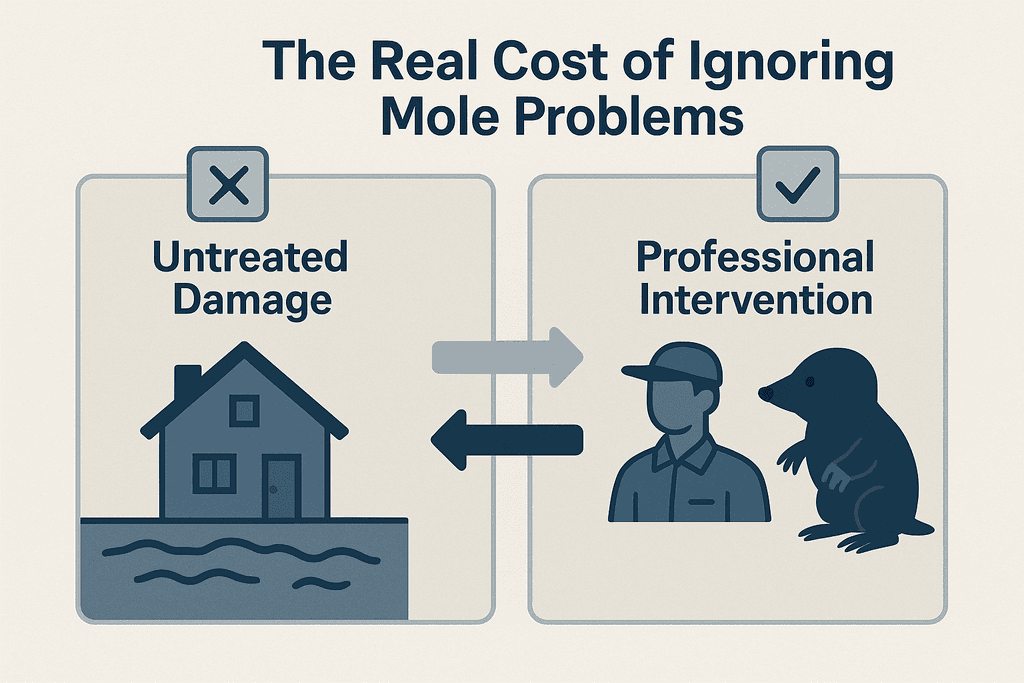
A single mole can dig up to 18 feet of tunnel in just one hour, and most Fort Worth properties dealing with mole damage actually have multiple moles working around the clock. When homeowners see those telltale mounds and surface tunnels crisscrossing their lawn, many assume it's just a cosmetic issue they can handle themselves. The reality is far more expensive. Untreated mole damage creates a domino effect that impacts everything from your property's market value to the structural integrity of your landscape features.
Property Value Takes an Immediate Hit
Real estate professionals in the Dallas-Fort Worth area consistently report that visible lawn damage reduces curb appeal and can knock 5-10% off a home's perceived value during showings. That's potentially $15,000 to $30,000 on a $300,000 property.
- Prospective buyers view mole damage as a sign of poor property maintenance
- Damaged lawns photograph poorly in listing photos, reducing online interest
- Active mole problems must be disclosed in many real estate transactions
- Repair costs often become negotiating points that favor buyers
DIY Methods Cost More Than You Think
Most Fort Worth homeowners spend between $200 and $500 on various DIY mole control products over a single season. Store-bought repellents, traps, and sonic devices rarely work because moles adapt quickly and most products target the wrong species or use ineffective methods.
- Castor oil treatments need monthly reapplication at $30-50 per treatment
- Mole traps require specific placement knowledge most homeowners lack
- Ultrasonic devices show less than 10% effectiveness in field studies
- Time spent researching and applying treatments adds hidden labor costs
Professional services like Wildlife X Team's mole control program typically cost less upfront than six months of failed DIY attempts. More importantly, they come with warranties that protect your investment.
Hidden Damage Beneath the Surface
The tunnels you can see represent only part of the problem. Mole tunnel systems undermine irrigation lines, create air pockets around plant roots, and destabilize hardscape edges. Fort Worth homeowners have reported irrigation repair bills exceeding $1,500 after mole tunnels caused line breaks that went undetected for weeks.
- Sprinkler system damage from collapsed tunnels averages $800-2,000 to repair
- Foundation settling can occur when tunnels compromise soil stability near structures
- Root damage to established trees and shrubs leads to plant loss worth hundreds
- Patio and walkway settling requires expensive releveling or replacement
Long Term Prevention Saves Thousands
The difference between reactive and proactive mole management is substantial. Homeowners who address mole problems early with professional exclusion and removal services spend an average of $400-800 initially. Those who wait until significant damage occurs face combined costs of $2,000-5,000 for lawn restoration, irrigation repairs, and eventual professional removal anyway. Wildlife X Team's renewable lifetime warranty means you pay once for protection that lasts, rather than fighting the same battle every spring and fall when mole activity peaks in North Texas.
Taking Action on Your Mole Problem
Dealing with mole damage on your Fort Worth lawn isn't something you want to put off. The longer these little diggers stay active on your property, the more damage they cause to your grass, garden beds, and even the foundation of walkways. While DIY methods might seem cheaper at first, they often end up costing more time and money when they don't work. Professional mole control gets to the root of the problem instead of just treating the surface.
Wildlife X Team takes a different approach than most companies. We don't just remove the moles and call it a day. Our team identifies what's attracting them to your yard in the first place, removes the current problem, and then sets up prevention measures to keep them from coming back. That's the difference between a quick fix and a real solution.
The key is acting fast when you first notice those telltale mounds and tunnels. Moles can create extensive tunnel systems in just a few weeks, and the damage gets harder to repair the longer you wait. Some homeowners try to handle it themselves for months before calling in professionals, which usually means more lawn restoration work later.
If you're seeing fresh mole activity on your property, the next step is pretty straightforward. Getting a professional inspection helps you understand exactly what you're dealing with and what it'll take to fix it. Most Fort Worth homeowners find that knowing the full scope of the problem makes the decision a lot easier.
Common Questions About Mole Control in Fort Worth
Dealing with moles can feel overwhelming, especially when you're watching your lawn turn into a network of tunnels and dirt mounds. Homeowners in Fort Worth often have similar concerns when it comes to getting rid of these underground pests. Here are the answers to the most common questions we hear about mole control and what you can expect from professional removal services.
How quickly can moles be removed from my property?
Most mole removal projects take between one to three weeks depending on how many moles are active on your property. Wildlife X Team starts with a thorough inspection to identify all active tunnels and burrow systems, then sets up targeted trapping methods. You'll typically see results within the first few days, though complete removal requires monitoring to ensure all moles are gone.
Are mole removal methods safe for pets and children?
Yes, professional mole control methods prioritize the safety of your family and pets. Wildlife X Team uses humane trapping techniques that don't involve toxic chemicals or dangerous poisons that could harm kids or animals. The traps are placed underground in active mole tunnels where pets and children won't encounter them, making the process completely safe for your household.
Will moles come back after removal?
Moles can return if your lawn continues to offer ideal conditions like moist soil and plenty of grubs. That's why prevention is just as important as removal. Wildlife X Team includes exclusion strategies and lawn treatment recommendations to make your property less attractive to future mole invasions, and they back their work with a renewable lifetime warranty for long-term protection.
How much damage can moles really cause?
A single mole can create up to 18 feet of new tunnels every day, which quickly destroys root systems and creates unsightly mounds across your lawn. The damage goes beyond aesthetics though. Mole tunnels can kill grass and plants, create tripping hazards, and attract other pests like voles that use the tunnel systems. Left unchecked, moles can ruin thousands of dollars worth of landscaping in just a few months.
What's included in Wildlife X Team's mole control service?
The service includes a complete property inspection to map out mole activity, strategic trap placement in active tunnels, regular monitoring and trap checks, complete mole removal, and follow-up visits to ensure no new activity. They also provide recommendations for lawn care practices that discourage future mole problems and can help with any necessary lawn restoration after the moles are gone.
Do you offer guarantees on mole removal?
Wildlife X Team stands behind their work with a renewable lifetime warranty on mole control services. This means if moles return to treated areas, they'll come back to address the problem at no additional cost. Unlike some competitors who only offer short-term guarantees, this long-term protection gives you peace of mind that your lawn investment is protected for years to come.