Local Wildlife Rescue Services: Helping Animals and Homeowners in DFW

You hear scratching sounds in your attic at 2 AM, and by morning you discover raccoons have turned your insulation into a nest. Most homeowners in the Dallas-Fort Worth area try to handle these situations themselves, only to find the animals return within days or create even more damage during a panicked escape. Wildlife X Team specializes in humane wildlife rescue that actually solves the problem for good, addressing everything from the initial removal to preventing future intrusions across the DFW metroplex.
Table of Contents
Wildlife Problems in the DFW Metroplex
The Dallas-Fort Worth area has seen a 40% increase in wildlife-related service calls over the past five years. As suburban neighborhoods continue to expand into natural habitats, animals like raccoons, squirrels, and possums are finding new homes in attics, crawl spaces, and chimneys. These aren't just occasional visitors either. Many of these critters set up permanent residence, causing damage that can cost thousands of dollars to repair. What starts as scratching sounds in the walls can quickly turn into contaminated insulation, chewed electrical wiring, and serious health hazards for your family.
Common Wildlife Intruders in North Texas
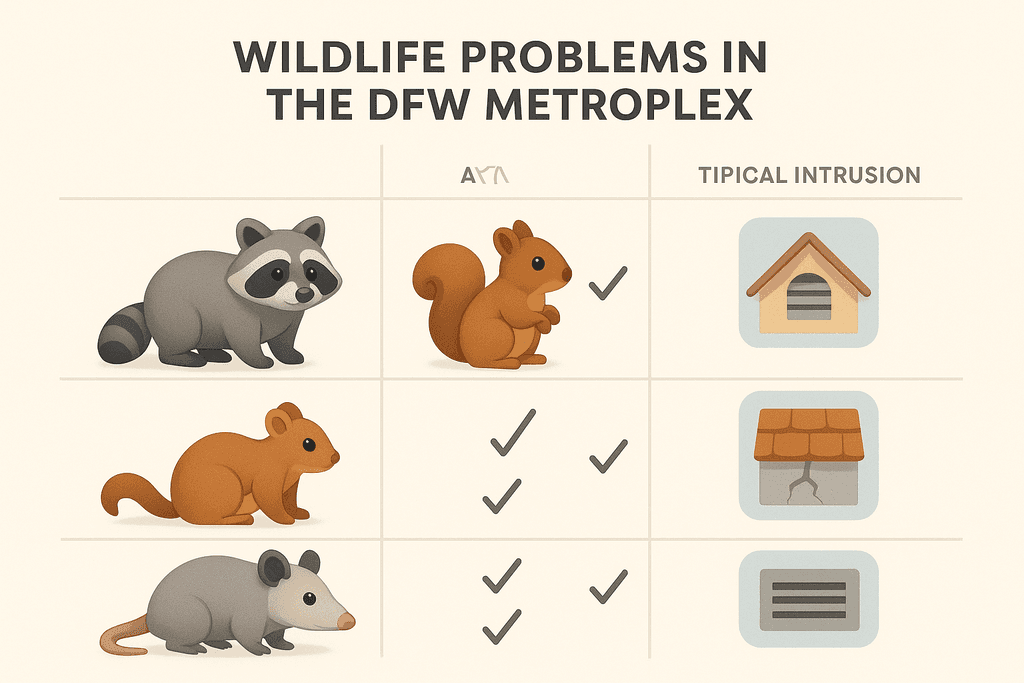
North Texas homes deal with a specific set of wildlife problems that differ from other parts of the country. The warm climate and mix of urban and rural areas create perfect conditions for certain animals to thrive.
- Raccoons are the most destructive intruders, often tearing through roof vents and soffit areas to access attics
- Squirrels cause the most frequent calls, especially during fall and spring nesting seasons
- Possums typically enter through foundation gaps and crawl spaces, often going unnoticed for months
- Rats and mice follow similar patterns but reproduce much faster, creating larger infestations
Each species has different behaviors and entry preferences. Raccoons are strong enough to rip open weak spots in your roof, while squirrels can squeeze through holes as small as a golf ball. Understanding these patterns helps explain why DIY solutions often fail.
Seasonal Wildlife Activity Patterns
Wildlife intrusions in the DFW area follow predictable seasonal patterns. Spring and fall see the highest activity levels as animals search for nesting sites and prepare for temperature changes.
Dallas Animal Services has been overwhelmed with wildlife cases, as shown in this recent news coverage about their shelter capacity issues.
- Spring (March-May) brings pregnant females looking for safe birthing spots in attics and walls
- Summer (June-August) sees increased activity as young animals explore and seek shelter from heat
- Fall (September-November) triggers nesting behavior as animals prepare for winter
- Winter (December-February) drives animals indoors seeking warmth, especially during cold snaps
The mild Texas winters mean wildlife stays active year-round. Unlike northern states where animals hibernate, DFW raccoons and squirrels remain busy all winter long.
Health and Property Risks
Wildlife intrusions create serious health hazards that many homeowners underestimate. Animal droppings carry diseases like histoplasmosis and leptospirosis, while urine-soaked insulation becomes a breeding ground for harmful bacteria. The smell alone can make parts of your home unusable.
- Contaminated insulation loses its effectiveness and spreads airborne pathogens through HVAC systems
- Chewed electrical wiring creates fire hazards that insurance companies take very seriously
- Structural damage from gnawing and nesting can weaken roof supports and wall studs
- Parasites like fleas, ticks, and mites spread from wildlife to pets and humans
- Noise and odor issues affect quality of life and property values
Property damage adds up fast. A single raccoon family can destroy $3,000 worth of insulation in just a few weeks. Squirrels gnaw constantly to keep their teeth from overgrowing, which means they'll chew through wood, plastic, and even soft metals.
Comparing Common DFW Wildlife Species
Different animals prefer different entry points and cause varying levels of damage. Here's what Wildlife X Team sees most often across the metroplex.
Common DFW Wildlife and Their Intrusion Patterns:
Raccoons: Entry points include roof vents, chimney tops, and soffit intersections. They cause severe damage through tearing and ripping. Most active at night during all seasons. Typical signs are large holes in roofing materials and scattered insulation.
Squirrels: Entry points include fascia boards, gable vents, and roof-wall junctions. They cause moderate to severe damage through constant gnawing. Most active during dawn and dusk in spring and fall. Typical signs are small round holes and acorn shells in attic spaces.
Possums: Entry points include foundation gaps, crawl space vents, and deck underside areas. They cause mild to moderate damage, mainly from nesting. Most active at night year-round. Typical signs are disturbed insulation and distinctive droppings.
Rats/Mice: Entry points include pipe penetrations, door gaps, and utility line openings. They cause moderate damage through gnawing and contamination. Active 24/7 in all seasons. Typical signs are droppings along walls and gnaw marks on wood and wires.
Suburban Expansion and Wildlife Populations
The DFW metroplex adds roughly 100,000 new residents each year, and all those new homes push wildlife into smaller areas. Animals adapt quickly though. Raccoons that once lived in hollow trees now see your attic as an upgrade with better protection from predators and weather.
- New construction destroys natural den sites, forcing animals to seek alternatives in existing homes
- Suburban areas provide abundant food sources from garbage, pet food, and gardens
- Lack of natural predators in neighborhoods allows wildlife populations to grow unchecked
Cities like Fort Worth, Denton, and Granbury sit right at the edge of rural areas, creating a perfect storm for wildlife conflicts. Wildlife X Team handles these situations with humane removal methods that protect both the animals and your property. The company's Wildlife Inspection Report identifies every potential entry point, which is something many competitors miss when they focus only on the obvious problem areas.
Professional wildlife management isn't just about removing the current intruders. It's about preventing the next family of raccoons from moving in as soon as the first one leaves. That's where proper exclusion work makes all the difference.
The Complete Wildlife Rescue Process
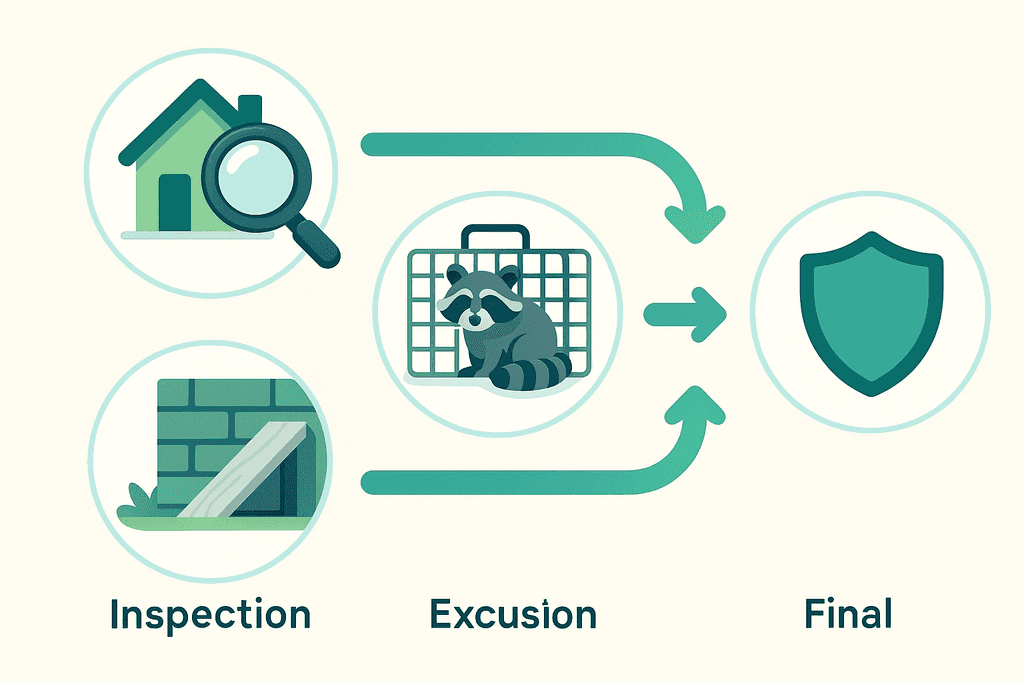
Most homeowners only discover they have wildlife guests after hearing scratching sounds at 2 AM or noticing a strange smell coming from the attic. By that point, animals have often been living there for weeks, creating damage you can't see yet. The good news is that professional wildlife rescue follows a proven process that addresses both the immediate problem and the hidden issues most people miss. Wildlife X Team starts every job with their Wildlife Inspection Report®, which goes way beyond just finding where the animals are right now. This detailed assessment identifies every possible entry point on your property, including the ones you'd never think to check.
The Complete Wildlife Rescue Process
The inspection process reveals vulnerabilities that seem obvious once pointed out but are nearly impossible for homeowners to spot on their own. Professionals know exactly where to look based on animal behavior patterns and building construction.
- Roof line gaps where fascia boards meet the structure
- Foundation cracks that seem too small but aren't
- Vent openings without proper screening
- Chimney access points that animals exploit
- Utility line entry points around pipes and wires
Jesse Bernard's experience shows exactly why professional inspection matters. When squirrels threw a party in his attic, he spotted one obvious entry point and almost sealed it himself. The Wildlife X Team found several additional access points he never would have discovered, which would have meant the squirrels just moved to a different entrance after he patched the first one.
Humane removal techniques prioritize the safety of both the animals and your family. Unlike some companies that use harmful methods, the focus stays on ethical solutions that work with animal behavior rather than against it. This might mean using one-way exclusion doors that let animals leave but not return, or carefully timing removals to avoid separating mothers from babies during nesting season.
The difference between immediate and long-term strategies comes down to whether you want a quick fix or an actual solution. Some situations require emergency removal when animals pose immediate health risks or are causing active damage. Other cases benefit from strategic exclusion methods that take a few days but prevent the animals from ever returning.
Prevention That Actually Lasts
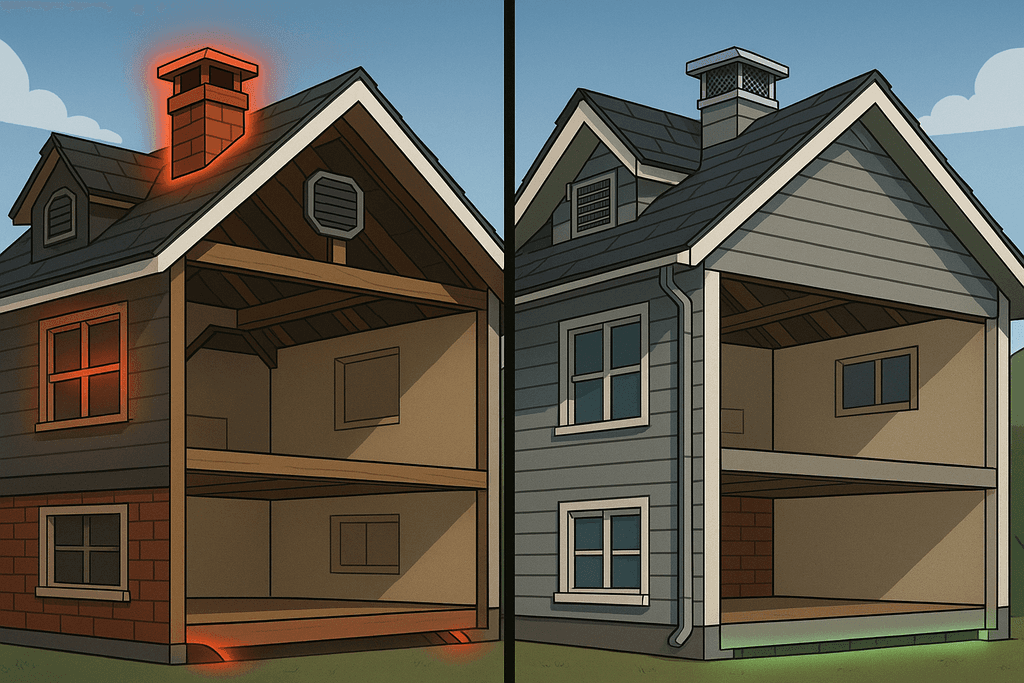
Removing the animals is only half the job, and honestly, it's the easier half. The real challenge is making sure they can't come back next month or next season when they're looking for a new home. Animal proofing and exclusion services address the structural issues that invited wildlife in the first place. This isn't about slapping some chicken wire over a hole and calling it done. Professional exclusion involves understanding how different animals think and move, then creating barriers they simply cannot defeat.
Prevention That Actually Lasts
Foundation repair fixes the cracks and gaps that give ground-dwelling animals like possums and raccoons their first access point. These repairs need to be done right because a determined raccoon can tear through substandard materials in a single night.
Chimney caps and vent guard installations protect the openings that animals see as perfect den sites. A chimney without a cap is basically an invitation for raccoons, squirrels, and birds to move in. Vent guards keep soffit and gable vents secure while still allowing proper airflow for your home.
- Strategic sealing of gaps around utility penetrations
- Professional-grade caulking that animals can't chew through
- Metal flashing installation at vulnerable roof intersections
- Reinforced screening for crawl space access points
The difference between exclusion and simple removal is like the difference between fixing a leaky roof and just mopping up the water. One solves the problem, the other just manages the symptoms. Wildlife X Team's approach focuses on permanent solutions that protect your property value long-term.
The Renewable Lifetime Warranty backs up this commitment to lasting results. This coverage means if wildlife finds a way back in through the areas that were secured, the team returns to fix it at no additional cost. That kind of guarantee only makes sense when you're confident in the quality of the work.
Prevention saves serious money compared to dealing with repeated removals. Every time animals get back in, they cause more damage to insulation, wiring, and structural components. The cost of one comprehensive exclusion job is typically less than paying for multiple removal calls over the years.
Cleanup and Restoration After Wildlife
Even after the animals are gone and all entry points are sealed, your attic or crawl space isn't safe yet. Wildlife leaves behind contamination that poses real health risks to your family. Droppings, urine, nesting materials, and parasites don't just disappear when the animals leave. These contaminants can cause respiratory issues, spread diseases, and attract insects that create their own set of problems. The smell alone can permeate your living spaces and make your home uncomfortable.
Professional disinfection and decontamination goes beyond what any homeowner can do with store-bought cleaners. The process involves specialized equipment and EPA-approved disinfectants that eliminate pathogens without creating additional hazards.
- Complete removal of contaminated insulation
- Treatment of all affected surfaces with professional-grade disinfectants
- Odor neutralization using enzymatic cleaners
- Air quality restoration through proper ventilation
- Installation of fresh, clean insulation
Insulation damage assessment reveals how much of your attic insulation needs replacement. Animals compress insulation when they nest in it, which destroys its ability to regulate temperature. They also contaminate it with waste that can never be fully cleaned. Replacing damaged insulation not only removes health hazards but also restores your home's energy efficiency.
Commercial property restoration requires additional considerations because businesses can't afford extended downtime or health code violations. Restaurants, warehouses, and office buildings need fast, thorough cleanup that meets strict regulatory standards. The approach for commercial clients focuses on minimizing business disruption while ensuring complete remediation.
Why cleanup matters even after animals are gone comes down to protecting your investment and your health. A home with lingering wildlife contamination loses value and becomes harder to sell. More importantly, your family deserves to live in a space that's actually clean and safe, not just animal-free.
Why Humane Methods Win for Everyone
Most homeowners don't realize that trapping and relocating wildlife actually creates more problems than it solves. When animals are forcibly removed without addressing why they chose your property in the first place, new critters move right into the vacant space within weeks. The humane approach that Wildlife X Team uses focuses on understanding animal behavior and creating lasting solutions that keep wildlife out for good. This method combines ethical treatment with practical results, which is why customers report higher satisfaction rates compared to traditional pest control tactics. Texas law also requires specific handling procedures for many wildlife species, making professional humane services not just the right choice but often the legal one.
The Real Cost of Quick Fixes
DIY solutions and harsh removal methods might seem cheaper upfront, but they rarely work long-term. A homeowner who seals one obvious hole without a proper inspection will likely face the same problem next season when animals find another entry point.
- Humane exclusion addresses root causes instead of just symptoms
- Professional inspections identify all vulnerable areas, not just the obvious ones
- Proper cleanup prevents health hazards that DIY methods often miss
- Warranty protection means you're covered if issues return
The difference shows up in customer testimonials. Jesse Bernard mentioned how Wildlife X Team found multiple entry points he never would have discovered on his own, and months later he still has no squirrels.
Comparing Your Options
Professional Humane Services
- Complete property inspection identifies all current and potential entry points
- Animals removed safely without harm or stress
- Exclusion work prevents future intrusions permanently
- Attic restoration eliminates contamination and health risks
- Renewable warranties provide long-term peace of mind
- Complies with Texas wildlife handling regulations
DIY or Traditional Removal
- Often misses hidden entry points and vulnerabilities
- Trapping can be inhumane and stressful for animals
- Relocation creates vacancy that attracts new wildlife
- No professional cleanup leaves health hazards behind
- Repeat problems common within weeks or months
- May violate local wildlife protection laws
The environmental impact matters too. Humane methods maintain the natural balance of local wildlife populations instead of disrupting ecosystems through mass removal or relocation. This approach protects both your property and the broader community environment.
Your Next Steps for Wildlife Free Living
Dealing with wildlife in your home or business doesn't have to be a nightmare. The key is finding someone who knows how to handle the problem the right way, from start to finish. Wildlife X Team covers everything you need, starting with a detailed Wildlife Inspection Report® that finds every possible entry point on your property. Then comes the actual removal, followed by repairs and prevention work to make sure those critters don't come back. The final step is cleaning up any mess they left behind, which matters more than most people realize.
Time matters when you've got animals living in your attic or walls. The longer they stay, the more damage they cause and the bigger the cleanup job becomes. Our services in Fort Worth, Denton, Granbury, and surrounding areas mean help is nearby when you need it.
What sets this approach apart from companies like Critter Control or Terminix is the focus on long-term solutions instead of quick fixes. Anyone can trap an animal and leave, but that doesn't solve why they got in or prevent the next one from doing the same thing.
The Renewable Lifetime Warranty gives you protection that lasts, not just for a few months. That kind of coverage means something when you're investing in keeping your property safe. If you're hearing scratching sounds at night or seeing signs of wildlife activity, getting an inspection is the smart first move.
Common Questions About Wildlife Rescue
When you discover unwanted critters in your home, questions start piling up fast. Most homeowners want to know what happens next, how long it takes, and whether their family will be safe during the process. Wildlife X Team handles these situations daily across the DFW area, so we've put together answers to the questions we hear most often. Understanding what to expect can help you feel more confident about getting your home back to normal.
How quickly can you respond to wildlife emergencies?
Wildlife X Team typically responds to emergency calls within 24 hours, and in many urgent situations, we can arrive the same day. Unlike some companies that make you wait days for an initial inspection, we understand that wildlife problems don't wait for convenient scheduling. Our teams cover the Ft. Worth, Denton, and Granbury areas, which means we're usually close enough to get to you fast when you need help.
Is the removal process safe for my pets and children?
Yes, the removal methods we use are completely safe for your family and pets. We focus on humane trapping and exclusion techniques that don't involve harmful chemicals or dangerous procedures. During the actual removal, we'll let you know if any areas need to be temporarily off-limits, but generally your household can continue normal activities while we work.
What happens to the animals after removal?
All animals are handled according to Texas wildlife regulations and relocated to appropriate habitats away from residential areas. We never harm the animals during removal because we believe in ethical treatment of wildlife. The goal is to solve your problem while giving the animals a chance to thrive somewhere they belong, not in your attic or crawl space.
How long does the complete process take?
Most wildlife removal projects take between 3 to 7 days from start to finish, depending on the severity of the infestation and necessary repairs. The initial removal might happen quickly, but proper exclusion work and cleanup take additional time to do right. Some companies rush through the prevention steps, which is why animals often return, but we make sure every entry point is sealed before we consider the job complete.
What does the lifetime warranty actually cover?
Our Renewable Lifetime Warranty covers any wildlife re-entry through the areas we've sealed and repaired. If an animal gets back in through our exclusion work, we'll come back and fix it at no additional cost. The warranty doesn't cover new damage to different areas of your property, but it does protect the specific work we've completed, giving you long-term peace of mind.
Can wildlife return after professional removal?
Wildlife can attempt to return, which is exactly why the exclusion and animal-proofing steps matter so much. Simply removing the animals without sealing entry points is like leaving your front door open and wondering why visitors keep showing up. Wildlife X Team's approach includes detailed inspections to find every possible entry point, then we install barriers and make repairs to keep animals out permanently.