
Keller Wildlife Removal Guide for Attics, Walls, and Yards

Scratching sounds in your attic at 2 AM usually mean one thing: you've got uninvited wildlife guests making themselves at home. In Keller, TX, the mix of wooded areas and suburban neighborhoods creates the perfect setup for raccoons, squirrels, and other critters to move from trees straight into your home's warmest spaces. Understanding what attracts these animals and how they get inside is the first step to protecting your property from costly damage.
Why Keller Homes Attract Unwanted Wildlife
Keller sits in a unique spot where North Texas suburbs meet natural wildlife habitats, and that geography works against homeowners trying to keep animals out. The tree-lined streets and nearby green spaces that make the area beautiful also provide perfect highways for raccoons, squirrels, opossums, and rodents to travel between wooded areas and residential properties. These animals aren't just passing through—they're actively looking for warm, safe places to nest, and your attic or crawl space checks every box on their wish list. Wildlife removal Keller TX services have seen a steady increase in calls as more homes get built near these natural corridors, creating more opportunities for animal encounters.
The most common culprits causing problems for Keller homeowners are raccoons, squirrels, opossums, rats, and mice. Raccoons are particularly troublesome because they're strong enough to tear through roof vents and fascia boards to access attics. Squirrels can squeeze through openings as small as a golf ball and will chew through wood, plastic, and even some metals to expand entry points.
The financial impact of ignoring wildlife problems adds up fast. A single raccoon family can destroy thousands of dollars worth of insulation in just a few weeks, contaminating it with urine and feces that create serious health hazards. Squirrels chew on electrical wiring, which creates fire risks that most homeowners don't discover until it's too late. Wildlife X Team at 11833 Katy Rd in Keller has seen repair bills ranging from a few hundred dollars for minor exclusion work to over ten thousand for complete attic restoration after long-term infestations.
What makes the situation worse is that wildlife problems rarely stay small. A single pregnant female squirrel can turn into a family of six within weeks, and raccoons will return to the same den site year after year if the entry point isn't properly sealed. The longer you wait to address the issue, the more damage accumulates and the harder it becomes to fully resolve the problem without professional help.
Table of Contents
- Why Keller Homes Attract Unwanted Wildlife
- Understanding Wildlife Behavior in North Texas
- Attic Invasions and the Damage They Cause
- Wall Cavities and Hidden Wildlife Problems
- Yard Protection and Outdoor Wildlife Management
- Taking Action Against Wildlife Intrusions
- Common Questions About Wildlife Removal in Keller
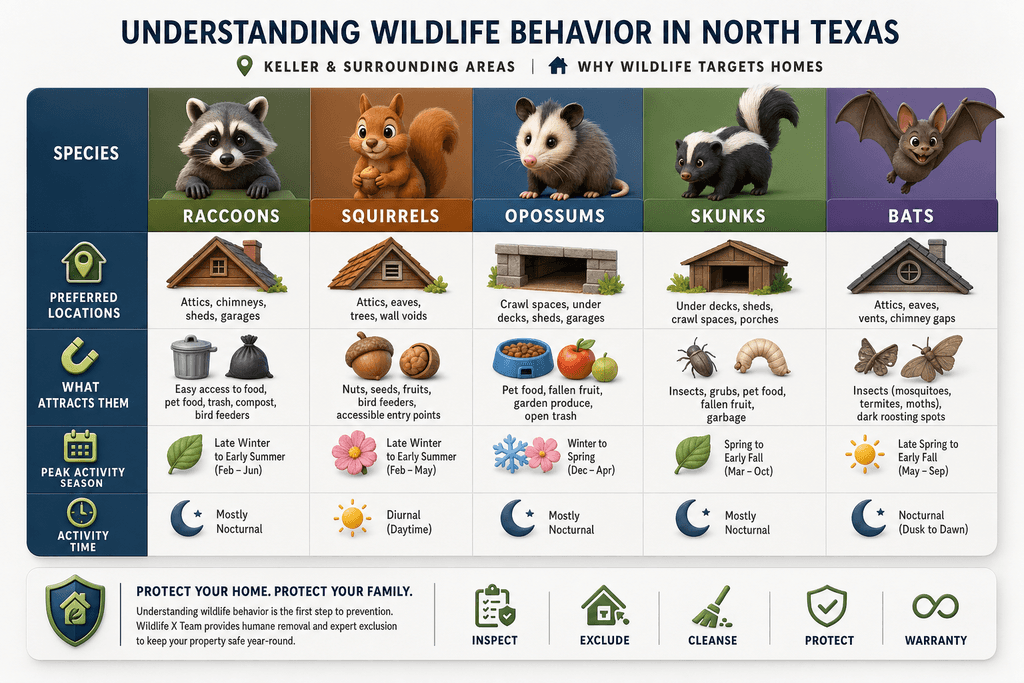
Understanding Wildlife Behavior in North Texas
Keller homeowners deal with more wildlife problems between October and March than any other time of year. Animals like raccoons, squirrels, and opossums start looking for warm places to spend the winter, and your attic checks all their boxes. The temperature stays comfortable, predators can't reach them, and it's the perfect spot to raise babies when spring arrives. Understanding why these critters choose your home helps you spot problems early and take action before damage gets worse.
Why Animals Target Keller Homes
North Texas sits right in the middle of several wildlife migration routes, which means animals pass through our neighborhoods regularly. When temperatures drop or food becomes scarce in wooded areas, wildlife moves closer to human homes. Your property offers everything they need to survive.
Attics make ideal homes for wildlife because they provide shelter from weather and predators. The insulation keeps things warm in winter and cool in summer. Most attics stay dark and quiet during the day, which is exactly what nocturnal animals want. Wildlife X Team's inspection process identifies these attractive features in your home before animals move in.
- Warmth from your home's heating system rises into the attic space
- Insulation materials work perfectly for building nests
- Dark corners and storage boxes create hiding spots
- Minimal human activity means animals feel safe
What Brings Wildlife to Your Yard
Before animals get into your attic, something draws them to your property in the first place. Food sources are the biggest attraction. Bird feeders, pet food left outside, unsecured garbage cans, and fruit trees all send signals that your yard is a good place to find meals.
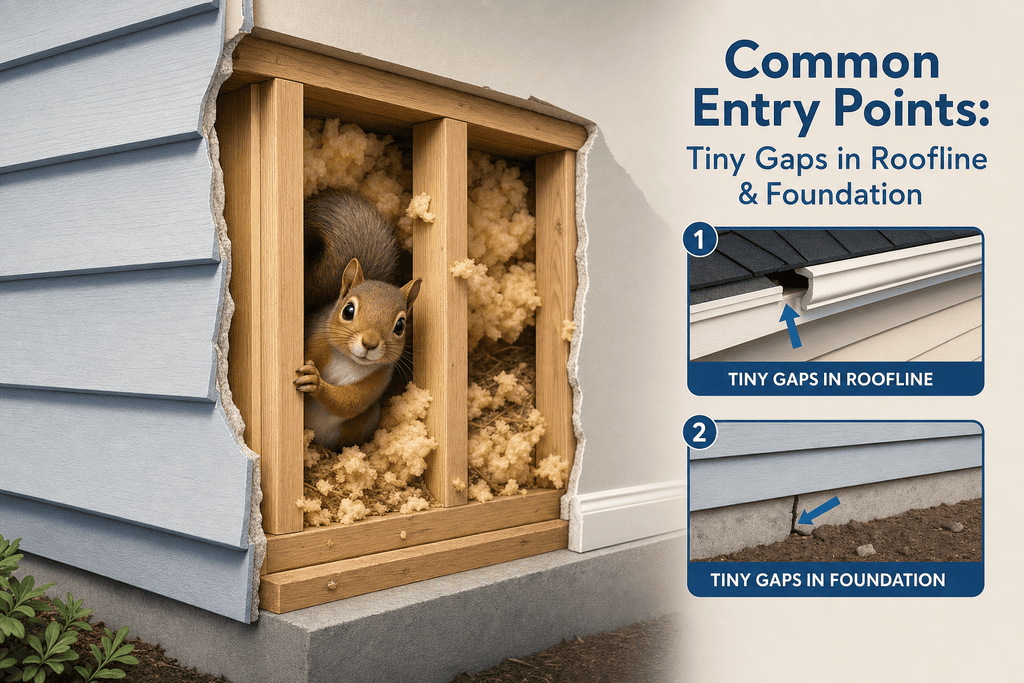
Water sources matter too. Birdbaths, pet water bowls, and even AC condensation can provide the hydration wildlife needs. Once animals find reliable food and water on your property, they start looking for shelter nearby. That's when they notice those small gaps in your roof or foundation.
- Garbage cans without tight lids attract raccoons and opossums
- Bird seed spills bring squirrels and rats
- Compost piles draw various scavengers
- Overgrown vegetation provides cover for approaching your home
Common Keller Wildlife and Their Habits
Different animals prefer different parts of your home and stay active during specific seasons. Raccoons typically cause the most damage because they're strong enough to tear open vents and rip up shingles. Squirrels are active year-round but cause the most problems in fall when they gather food and in spring when they have babies. Opossums usually stick to crawl spaces and under decks, but they'll move into attics if they find an easy way in.
Wildlife Species Comparison in Keller TX
Raccoons: Prefer attics and chimneys | Most active March-June and September-November | Nocturnal, cause heavy structural damage
Squirrels: Target attics and wall voids | Peak activity February-April and August-October | Daytime activity, chew electrical wiring
Opossums: Choose crawl spaces and attics | Active year-round with spring baby season | Nocturnal, leave droppings and odors
Rats: Nest in attics and walls | Breed year-round in Texas | Nocturnal, contaminate insulation
Bats: Roost in attics and eaves | Most active April-October | Nocturnal, create health hazards with guano
How Wildlife Gets Inside
Animals don't need much space to enter your home. A gap the size of a quarter can let mice in, while raccoons only need a four-inch opening. Roof vents often have damaged screens or loose covers that animals push aside. Chimneys without caps are like open doors to your attic. Foundation gaps around pipes and utility lines give ground-dwelling animals access to crawl spaces.
The areas where different building materials meet create natural weak points. Where your roof meets the walls, where the chimney connects to the roof, and where additions attach to the original structure all develop small gaps over time. Weather and age make these openings bigger. For wildlife removal Keller TX homeowners should check these spots regularly, especially before fall when animals start seeking winter shelter.
- Inspect roof vents and replace damaged screens before fall
- Install chimney caps to block entry from above
- Seal foundation gaps with steel wool and caulk
- Trim tree branches that hang within six feet of your roof
- Replace worn weatherstripping around attic access points
Attic Invasions and the Damage They Cause
A single raccoon family can destroy thousands of dollars worth of insulation in just a few weeks. When wildlife moves into your attic, they don't just set up a quiet camp and mind their business. These animals actively tear apart your home's infrastructure to create nests, store food, and raise their young. The damage starts small but compounds quickly, turning what could have been a simple removal into a major restoration project.

Raccoons and squirrels are particularly destructive because they shred insulation to build comfortable nesting areas. They don't carefully remove small pieces either. These animals pull down entire sections, leaving bare spots that compromise your home's energy efficiency.
- Animal waste creates serious health hazards through airborne pathogens and bacteria
- Chewed electrical wiring can spark house fires without warning
- Contaminated insulation loses its R-value and drives up heating and cooling costs
- Foul odors from urine and feces seep into living spaces below
The inspection process at Wildlife X Team identifies every possible entry point, not just the obvious ones. Most homeowners spot one hole and assume that's the only problem. But animals rarely use just one entrance, and sealing a single opening often traps them inside or forces them to create new damage trying to escape.
This video shows exactly how raccoons access attics and the kind of damage they cause once inside. The electrical wiring risk alone makes professional removal worth considering, since a single chewed wire can start a fire while you sleep.
Yard Protection and Outdoor Wildlife Management
Your yard might be inviting wildlife without you realizing it. Overhanging tree branches create highways straight to your roof, while unsecured garbage cans offer free meals that keep animals coming back. The goal isn't to eliminate all wildlife from your property, but to make your home less attractive than natural habitats nearby. Small changes to your outdoor space can dramatically reduce the chances of animals moving from your yard into your house.
Proper fence installation stops burrowing animals like skunks and groundhogs from setting up shop under your deck or shed. The fence needs to extend below ground level, not just sit on top of the soil.
- Secure all garbage cans with tight-fitting lids or store them in garages
- Remove fallen fruit from trees and keep compost bins properly sealed
- Trim tree branches so they're at least 8 feet away from your roofline
- Install exclusion barriers under decks, sheds, and crawl spaces
- Eliminate standing water sources that attract thirsty animals
Garden protection doesn't require harsh methods or chemicals. Simple barriers like chicken wire around vegetable beds or motion-activated sprinklers work well without harming animals. The idea is to make your property less convenient than the woods or fields nearby.
Long-term prevention through habitat modification means thinking like the animals you're trying to deter. If you were a raccoon looking for food and shelter, would your property look appealing? Wildlife X Team's approach focuses on these preventive strategies alongside removal services, which is why their renewable lifetime warranty actually means something. They're not just removing animals and hoping they don't come back.
One customer in Keller had squirrels throwing what he called a "party" in his attic. The team found multiple entry points he never would have spotted on his own, sealed everything properly, and months later the house stayed quiet. That's the difference between a quick fix and actual wildlife removal in Keller TX that lasts.
Taking Action Against Wildlife Intrusions
Dealing with wildlife in your attic or yard isn't something you want to put off. The longer animals stay in your home, the more damage they cause to insulation, wiring, and structural components. What starts as a few scratching sounds can turn into thousands of dollars in repairs if you wait too long. Professional wildlife removal keller tx services handle the problem correctly the first time, which actually saves money compared to trying DIY methods that often fail.
The humane approach matters more than most people realize. Animals are just looking for shelter and food, but that doesn't mean they belong in your house. Wildlife X Team uses methods that protect both your property and the animals, removing them safely and relocating them when appropriate.
Here's what makes professional service worth it:
- Complete exclusion work prevents the same animals from coming back
- Proper cleanup removes health hazards you can't see
- Expert inspections find entry points you'd never notice on your own
- Renewable warranties give you long-term protection
Wildlife X Team serves Keller and the surrounding areas including Fort Worth, Southlake, Grapevine, and Colleyville from their location at 11833 Katy Rd. The team handles everything from initial inspection to final repairs, so you don't have to coordinate multiple contractors or wonder if the job was done right.
If you're hearing noises in your attic or seeing signs of animal activity in your yard, getting an inspection sooner rather than later makes sense. You can reach them at (817) 799-8686 to schedule a Wildlife Inspection Report and find out exactly what you're dealing with. The questions below cover some of the most common concerns homeowners have about wildlife removal.
Common Questions About Wildlife Removal in Keller
Most homeowners in Keller have never dealt with wildlife removal before, so they naturally have questions about the process. Understanding what to expect can help you make better decisions when you discover unwanted guests in your attic or yard. These are the questions we hear most often from property owners dealing with wildlife problems.
How quickly can wildlife be removed from my home?
Most wildlife removal situations can be addressed within 24 to 48 hours of your initial call. Wildlife X Team often starts work the same day for urgent cases, especially when animals pose immediate risks to your property or family. The complete removal process typically takes a few days to a week, depending on the type of animal and the extent of the infestation.
Is wildlife removal safe for pets and children?
Humane removal methods prioritize safety for everyone in your home, including your pets and kids. Wildlife X Team uses exclusion techniques and safe trapping methods that don't involve harmful chemicals or dangerous poisons. You might need to keep pets away from certain areas during the removal process, but the techniques themselves won't put your family at risk.
What areas does Wildlife X Team serve around Keller?
Wildlife X Team covers Keller and the surrounding communities throughout the Fort Worth and Denton areas. This includes nearby cities like Southlake, Colleyville, North Richland Hills, and Roanoke. If you're in the greater Dallas-Fort Worth metroplex and dealing with wildlife problems, they can likely help.
How do you prevent animals from coming back?
Prevention involves sealing every possible entry point that animals could use to get inside. This includes installing vent guards, repairing foundation gaps, protecting chimneys, and reinforcing vulnerable areas around your roofline. Wildlife X Team provides a renewable lifetime warranty on their exclusion work, which means they stand behind their prevention methods long-term. Unlike some competitors who only focus on removal, the comprehensive approach addresses both current problems and future risks.
What should I do if I hear animals in my attic right now?
Don't try to handle it yourself or go into the attic to investigate. Wild animals can be aggressive when cornered, and they may carry diseases. Call a professional wildlife removal service immediately to schedule an inspection. In the meantime, keep pets and children away from the area where you hear the noises.
Does homeowners insurance cover wildlife damage?
Most standard homeowners insurance policies don't cover wildlife damage or removal costs because it's considered a maintenance issue. Some policies might cover sudden damage caused by larger animals, but prevention and removal typically fall on the homeowner. It's worth checking your specific policy, but you should plan to handle wildlife removal keller tx costs out of pocket in most cases.