
Humane Skunk Removal Guide for Yards, Crawl Spaces, and Sheds

A skunk can spray its defensive musk with pinpoint accuracy up to 15 feet away, and that smell can linger on your property for weeks. These black-and-white visitors dig under decks, sheds, and crawl spaces looking for shelter and food, with spring and fall bringing peak activity across Fort Worth and surrounding Texas communities. Understanding why skunks choose your yard and how to remove them safely makes all the difference between a quick solution and a lingering problem that affects your entire neighborhood.
Table of Contents
Why Skunks Choose Your Property
Skunks can spray up to 15 feet with surprising accuracy, but most homeowners never see them coming until it's too late. These black and white critters are masters at staying hidden while they turn your yard into their personal buffet and bedroom. Understanding why skunks pick certain properties helps you figure out if your home is sending them an open invitation. The truth is, your yard might be offering everything a skunk could want without you even realizing it.
What Attracts Skunks to Yards
Skunks are opportunistic eaters who follow their noses to easy meals. Your lawn is basically a restaurant if it has the right menu items. They dig small cone-shaped holes looking for their favorite foods, and once they find a good spot, they keep coming back.
Here's what brings skunks to residential areas:
- Grubs and insects living in your lawn provide protein-rich meals
- Fallen fruit from trees offers sweet snacks
- Pet food left outside becomes an easy dinner
- Garbage cans with loose lids smell like a feast
- Compost piles attract insects that skunks love to eat
Wildlife X Team sees this pattern constantly during skunk removal calls. Homeowners often don't realize their yard maintenance habits are rolling out the welcome mat for these animals.
Perfect Denning Spots
Skunks don't build elaborate homes like some animals do. They look for dark, quiet spaces that already exist and move right in. Your property probably has several spots that look perfect to a skunk searching for shelter.
This video shows the most common places skunks set up their dens and how professionals handle removal from these tight spaces.
Common denning locations include:
- Crawl spaces under homes with gaps in foundation vents
- Spaces beneath sheds, decks, and porches
- Abandoned burrows left by other animals
- Wood piles and brush heaps in yards
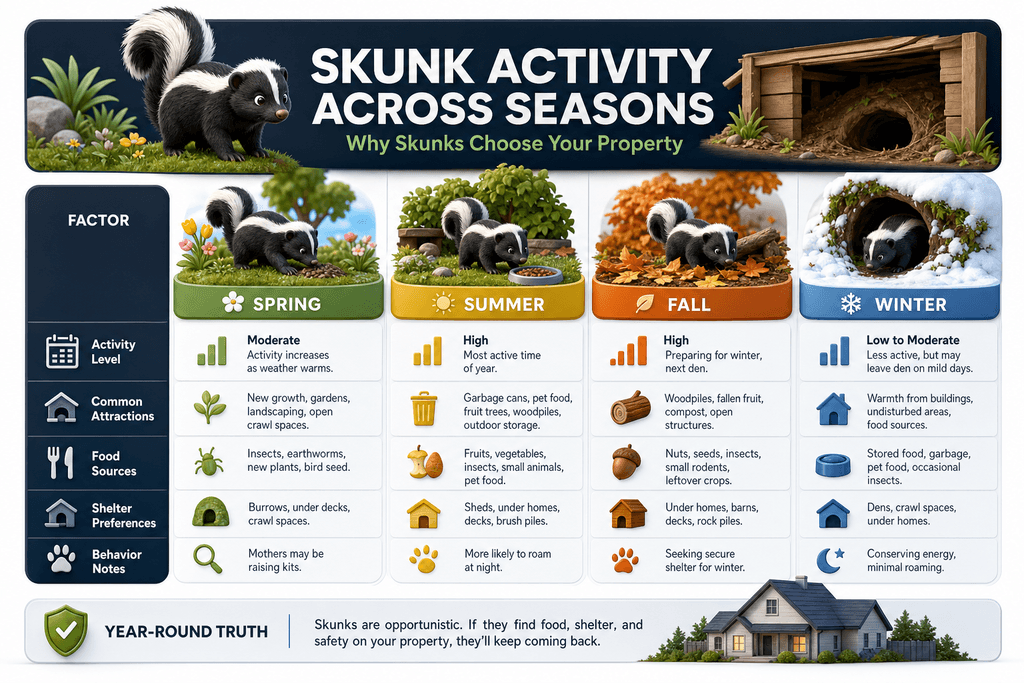
Seasonal Skunk Behavior
Skunks don't act the same way all year long. Their activity changes with the seasons, and knowing these patterns helps you understand when you're most likely to have problems. Female skunks become especially determined in spring when they're looking for safe places to raise their babies.
| Season | Activity Level | Main Behavior |
|---|---|---|
| Spring (March-May) | Very High | Females search for denning sites to raise young |
| Summer (June-August) | High | Mothers raise babies, increased foraging activity |
| Fall (September-November) | Medium | Building fat reserves, seeking winter shelter |
| Winter (December-February) | Low | Less active but not hibernating, stay in dens during cold |
Urban Expansion Pushes Skunks Closer
Cities keep growing outward, and that means skunk habitat keeps shrinking. These animals adapt by moving into neighborhoods where they find everything they need. The Dallas-Fort Worth area has seen major development over the past decade, which explains why more homeowners are dealing with wildlife issues now than ever before.
Skunks actually do pretty well in suburban areas because:
- Landscaping creates ideal foraging conditions with irrigated lawns full of grubs
- Structures provide more shelter options than natural areas
- Fewer natural predators exist in residential zones
When a pregnant female skunk finds your crawl space in March or April, she's not just passing through. She's found what looks like the perfect nursery, and she'll defend it. That's when homeowners usually call for professional help, because skunk removal becomes urgent once babies are involved.
Safe Skunk Removal from Yards and Gardens
Skunks can dig up to 200 holes in a single lawn while searching for grubs and insects. If you've noticed cone-shaped divots across your yard or caught a whiff of that unmistakable smell near your garden, you're dealing with a skunk problem. These nocturnal diggers don't just ruin your landscaping. They can also create serious health risks and turn your outdoor space into a minefield of potential spray zones.
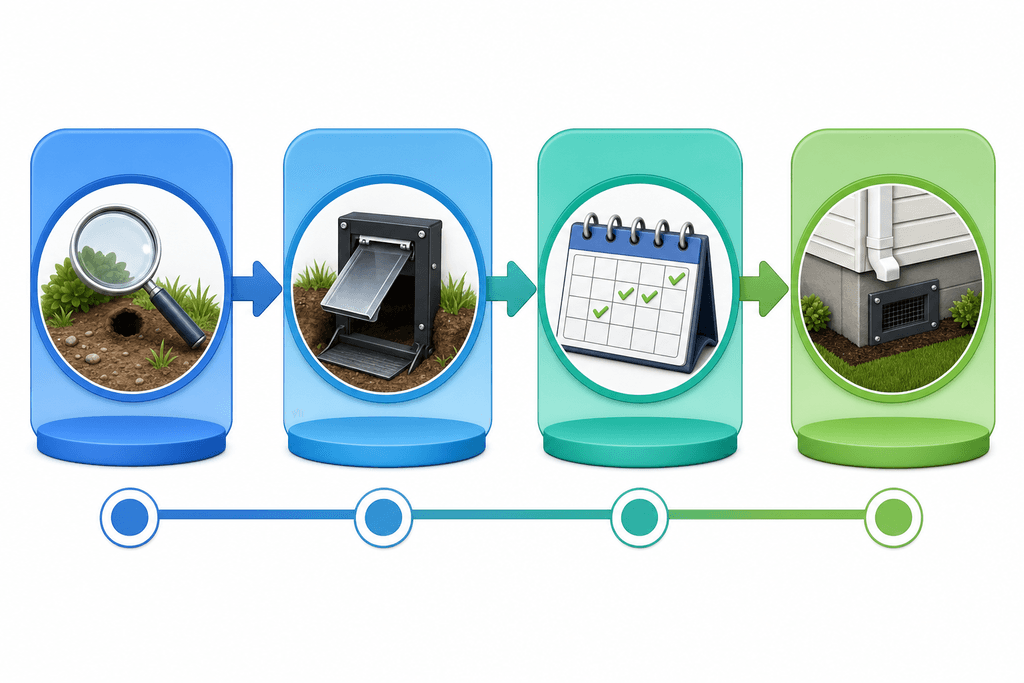
The first step in humane skunk removal is figuring out where they're actually living. Active burrows show fresh dirt, clear entrance holes, and sometimes tracks or droppings nearby. Abandoned burrows look weathered and often have spider webs or debris blocking the entrance. This distinction matters because you don't want to seal up a hole with baby skunks still inside.
- Look for fresh digging around fence lines and under bushes
- Check for multiple entrance holes, as skunks often create backup exits
- Watch for activity at dusk when skunks typically emerge to forage
- Note any strong odors that indicate recent skunk presence
One-way doors are the gold standard for humane skunk removal. These devices let skunks exit their burrows but prevent them from getting back in. The timing here is everything. Install these doors in late summer or early fall when babies are old enough to leave with their mothers. Never attempt this during spring baby season without professional help, or you risk trapping helpless kits inside.
Here's what most people get wrong: they fill in the holes too soon. You need to wait at least three to five days after installing exclusion devices to make sure all skunks have actually left. Proper timing prevents spray incidents and ensures humane treatment of the animals. Wildlife X Team uses monitoring techniques to confirm the burrow is empty before sealing it permanently.
Yard Inspection and Removal Checklist
- Walk your property at dusk to identify active digging sites
- Mark all potential burrow locations with flags or stakes
- Check the calendar to avoid baby season (typically March through May)
- Install one-way exclusion doors at confirmed active burrows
- Monitor for 3-5 days to ensure all skunks have exited
- Fill burrows with soil and pack firmly
- Remove attractants like fallen fruit, pet food, and accessible garbage
Crawl Space Skunk Removal Techniques
Crawl spaces are like five-star hotels for skunks. They're dark, protected from weather, and usually have multiple entry points that homeowners don't even know exist. Crawl spaces provide ideal denning conditions for skunks because they offer consistent temperature, protection from predators, and easy access to your yard for nightly foraging. The problem is that once skunks move in, they're incredibly difficult to remove without the right approach.
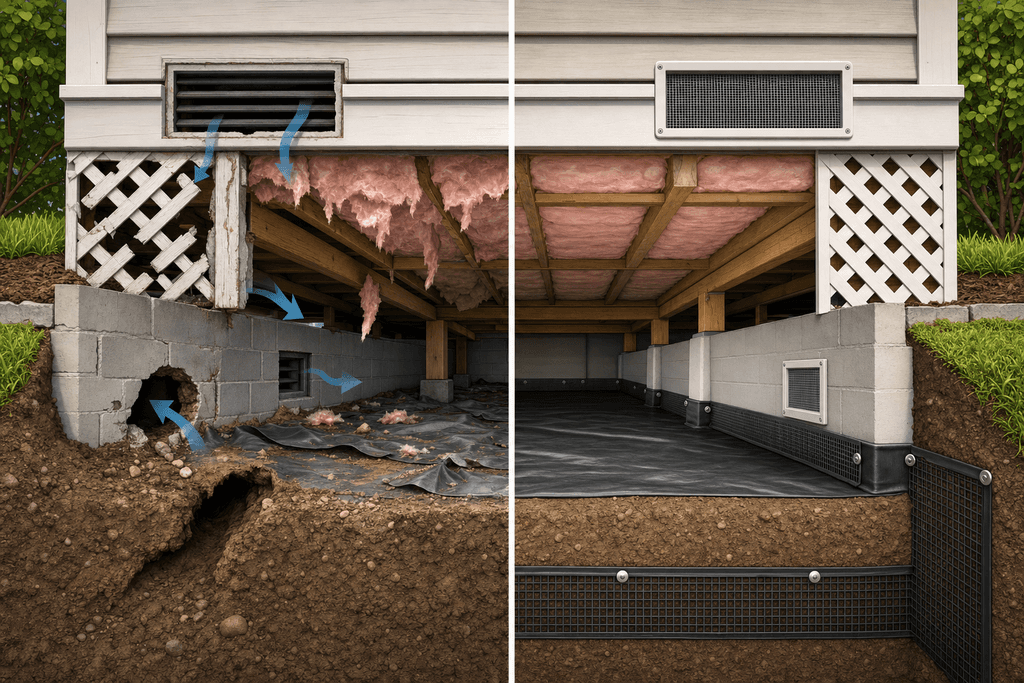
The confined nature of crawl spaces makes DIY skunk removal particularly risky. You can't see what you're dealing with, and cornering a skunk in a tight space is basically asking to get sprayed. Professional inspection identifies all entry points before exclusion work begins, which is critical because skunks can squeeze through openings as small as four inches in diameter.
This video shows exactly why crawl space removal requires specialized knowledge and equipment. Removal must account for limited access and visibility, which means using cameras, proper lighting, and exclusion methods that work in confined areas. At Wildlife X Team, we've handled hundreds of crawl space situations across Fort Worth, Denton, and surrounding areas, and each one requires a customized approach.
But getting the skunk out is only half the battle. Skunks leave behind urine, feces, and oils that attract other animals. Cleanup and decontamination prevent future animal attraction and eliminate health hazards like roundworm and bacterial contamination. The smell alone can permeate your home's living spaces through floor vents and gaps.
- Foundation vents need secure screening that skunks can't tear through
- Vapor barriers should be intact and properly sealed
- Insulation damaged by skunk activity must be replaced
- All organic material and nesting debris requires removal
Proper ventilation and vapor barriers deter re-entry by making the space less appealing and harder to access. This long-term prevention approach is what separates a temporary fix from a permanent solution.
Getting Skunks Out of Sheds and Outbuildings
Your garden shed probably has more entry points than you realize. Skunks enter through surprisingly small gaps in shed foundations, often where the structure meets the ground or where wood has rotted over time. They're also opportunistic about using existing damage from other animals or simple wear and tear. Once inside, they treat your shed like their personal den, and that's when things get complicated.
The clutter factor makes shed removal particularly tricky. Storage areas with clutter provide additional hiding spots that make it nearly impossible to confirm whether skunks have actually left. Boxes, lawn equipment, and stacked materials create a maze where skunks can hide during inspection attempts.
Shed and Outbuilding Skunk-Proofing Checklist
- Inspect the entire foundation perimeter for gaps larger than three inches
- Check door sweeps and replace any that have deteriorated
- Examine corners and joints where materials meet
- Look for rotted wood that creates easy entry points
- Verify that ventilation openings have intact screening
- Remove stored items from floor level when possible
Here's the thing about shed skunk removal: you can't just seal one hole and call it done. Exclusion work must seal all potential entry points simultaneously, or the skunk will just use a different entrance. This is where professional removal really shows its value. We identify every vulnerability during our Wildlife Inspection Report process before starting any exclusion work.
Professional removal prevents spray damage to stored items like lawn mowers, holiday decorations, and tools that can absorb skunk odor and become permanently ruined. The cost of replacing sprayed items often exceeds the cost of proper removal in the first place. Plus, attempting DIY removal in a confined shed space dramatically increases your chances of getting sprayed.
DIY vs Professional Shed Skunk Removal
DIY Approach: Lower upfront cost but higher risk of incomplete removal, spray incidents, and missed entry points. Most homeowners lack the equipment to properly inspect dark shed corners or install professional-grade exclusion materials. Time investment can stretch over weeks.
Professional Removal: Complete inspection identifies all vulnerabilities, humane removal methods protect both you and the animal, and comprehensive sealing prevents future problems. Wildlife X Team's approach includes cleanup and our Renewable Lifetime Warranty for long-term protection.
Long-term prevention includes proper storage practices like keeping items off the floor, maintaining your shed's structural integrity, and removing attractants like pet food or birdseed. These simple changes make your outbuildings far less appealing to skunks and other wildlife looking for shelter.
Why Professional Removal Works Better
Most homeowners who try DIY skunk removal end up making the problem worse, not better. The reality is that skunks are surprisingly clever animals that can squeeze through openings as small as four inches, and they rarely use just one entry point. What looks like a simple fix often turns into a frustrating cycle of temporary solutions that waste time and money. Professional skunk removal services bring specialized knowledge and equipment that most people simply don't have access to, which makes all the difference between a quick fix and a lasting solution.
The Equipment and Training Advantage
Professional wildlife technicians use tools and techniques that aren't available at your local hardware store. They understand skunk behavior patterns and know exactly where to look for hidden entry points that homeowners typically miss.
- Specialized one-way exclusion doors that let skunks exit but prevent re-entry
- Professional-grade sealants and barriers designed specifically for wildlife exclusion
- Protective equipment that keeps technicians safe from spray and potential diseases
- Thermal imaging cameras to detect hidden nests and activity areas
Finding What You Can't See
Wildlife X Team's inspection process uncovers vulnerabilities that most property owners walk past every day. A trained eye can spot the subtle signs of skunk activity that look like normal wear and tear to the untrained observer. One customer, Jesse Bernard, thought he only had one obvious entry point in his attic but discovered the team found several others he never would have noticed on his own.
The Humane Approach Protects Everyone
Professional skunk removal prioritizes safety for both the animals and the people involved. Attempting to trap or relocate skunks yourself can result in painful spray incidents, bites, or legal issues since many areas have strict regulations about wildlife relocation.
- Humane exclusion methods allow skunks to leave naturally without stress or harm
- Proper handling techniques minimize the risk of defensive spraying
- Legal compliance with local wildlife regulations and relocation laws
- Prevention of orphaned baby skunks during breeding season
Comprehensive Solutions Stop Repeat Problems
The biggest difference between professional and DIY skunk removal is what happens after the animal leaves. Simply removing a skunk doesn't solve the underlying problem that attracted it in the first place. Wildlife X Team's approach includes thorough cleanup and restoration services that eliminate the scent markers and food sources that draw new skunks to the same location. Their exclusion work seals every potential entry point, not just the obvious ones, which is why they can offer a renewable lifetime warranty on their work.
Your Next Steps for Skunk Free Property
Dealing with skunks doesn't have to mean choosing between your property and the animals. Humane skunk removal protects both your home and the wildlife that accidentally wandered into your space. The key is acting quickly before a small problem turns into damaged insulation, contaminated crawl spaces, or that unmistakable smell that can linger for weeks.
Professional skunk removal does more than just get rid of the current problem. Wildlife X Team handles the complete process, from safe removal to sealing up every entry point those skunks used to get in. We serve Fort Worth, Denton, Granbury, and surrounding areas with methods that actually work long-term.
The difference between a quick fix and a real solution comes down to prevention. You can chase skunks out of your yard today, but without proper exclusion work, new ones will move right back in tomorrow. That's why our approach includes identifying vulnerabilities, installing barriers, and making sure your property stays protected with our renewable lifetime warranty.
Most property owners wait too long to call for help. They try DIY methods that don't work or hope the skunks will just leave on their own. Meanwhile, the damage keeps adding up and the health risks grow. The sooner you address a skunk problem, the less it costs to fix and the faster you get back to normal.
If you're dealing with skunks in Fort Worth or nearby areas, you probably have questions about what happens next. Let's cover some of the most common concerns people have about skunk removal.
Common Skunk Removal Questions
Dealing with skunks can be stressful, especially when you're worried about getting sprayed or making the problem worse. Most homeowners have similar questions when they discover these black and white visitors on their property. Here are the answers to the most common concerns about skunk removal and what you can expect during the process.
How long does skunk removal take?
Most skunk removal jobs take between 1-3 days depending on how many skunks are present and where they're hiding. Wildlife X Team typically starts with a thorough inspection to locate all entry points and determine the best removal strategy. The actual trapping and removal process is usually quick, but sealing up entry points and making sure no baby skunks are left behind takes additional time.
What time of year are skunks most active?
Skunks are most active during spring and fall, with peak activity happening between February and March during mating season. You'll also notice increased skunk activity in late summer when mothers are teaching their young to forage. They're nocturnal creatures, so most of their movement happens at night when they're searching for food like grubs, insects, and small rodents.
Can I remove a skunk myself safely?
While it's technically possible to remove a skunk yourself, it's not recommended for several reasons. Skunks can carry rabies and other diseases, and they'll spray if they feel threatened during a DIY removal attempt. Professional services like Wildlife X Team use humane trapping methods and know how to handle skunks without getting sprayed or injured. Plus, many homeowners miss hidden entry points that lead to repeat problems.
How do you prevent skunks from coming back?
Prevention involves removing food sources and blocking access to shelter areas. This means securing garbage cans, removing fallen fruit, and eliminating grub populations in your lawn. The most important step is sealing all potential den sites under decks, sheds, and crawl spaces with heavy-duty materials that skunks can't dig through. Wildlife X Team's exclusion services include foundation repairs and vent guards that keep skunks out permanently.
What should I do if a skunk sprays near my home?
If a skunk sprays near your home, ventilate the area immediately by opening windows and using fans. A mixture of hydrogen peroxide, baking soda, and dish soap can neutralize the odor on surfaces, but the smell typically fades on its own within 2-3 weeks. Don't try to approach or remove the skunk yourself after a spray incident, as this means they're already feeling defensive.
Does homeowners insurance cover skunk damage?
Most standard homeowners insurance policies don't cover damage caused by wildlife, including skunks. Some policies might cover damage if it's sudden and accidental, but gradual damage from nesting or contamination is usually excluded. It's worth checking your specific policy, but prevention and quick removal are your best financial protection against costly repairs to insulation, ductwork, and structural components.