
Humane Pest Removal Services: Ethical Wildlife Control Methods
Scratching sounds in your attic at 2 AM usually mean you're sharing your home with uninvited guests, and last year alone, over 47,000 Texas homeowners dealt with wildlife breaking into their properties. The old approach of traps and poisons might seem like a quick fix, but these methods often make the problem worse by leaving entry points open and creating health hazards. Wildlife X Team uses humane removal techniques that actually solve the root cause, protecting both your family and the animals while preventing future break-ins.
Table of Contents
The Shift Toward Ethical Wildlife Control
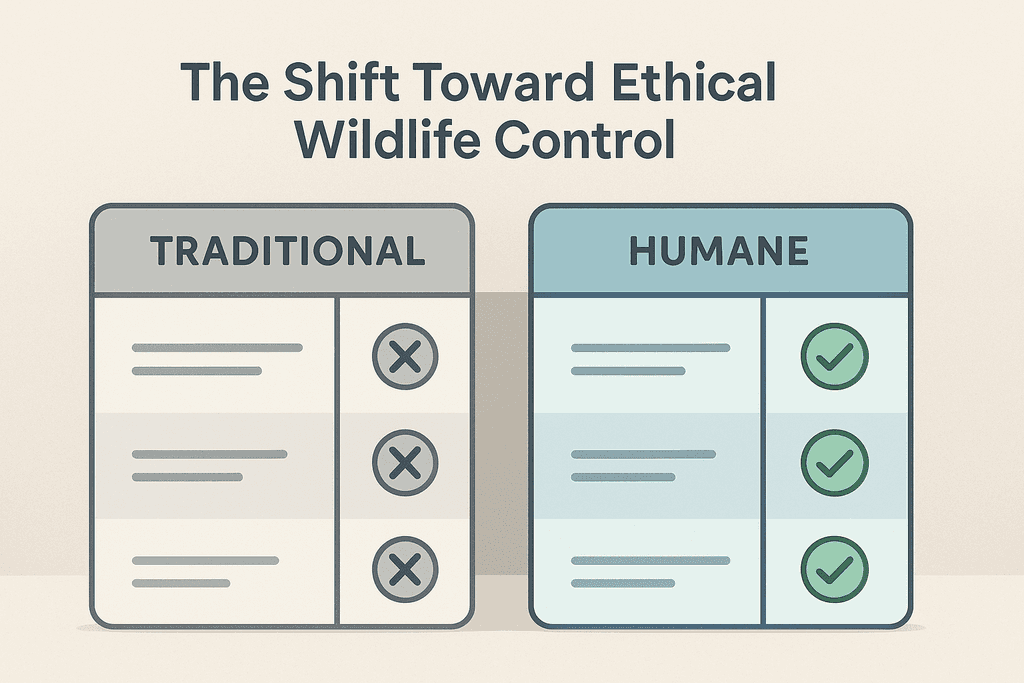
For most of the 20th century, wildlife control meant one thing: getting rid of animals by any means necessary. Poison, lethal traps, and shooting were the go-to methods for dealing with raccoons, squirrels, and other critters that found their way into homes and businesses. These approaches didn't just harm individual animals - they disrupted entire local ecosystems and sometimes put pets and children at risk. The good news is that things have changed a lot over the past few decades, and today's wildlife removal looks completely different from what your grandparents might remember.
How Wildlife Removal Used to Work
Traditional pest control methods were pretty rough on animals and the environment. Companies focused on quick fixes rather than long-term solutions, which often meant the same problems kept coming back.
Old-school wildlife control typically involved:
- Poison baits that could accidentally harm pets, children, and non-target wildlife
- Lethal snap traps and body-gripping devices that caused immediate death
- Glue boards that left animals stuck and suffering for days
- No follow-up to prevent animals from returning to the same spots
- Little regard for whether animals were nursing mothers with babies nearby
The problem with these methods went beyond just being cruel. When you remove an animal without addressing why it came to your property in the first place, you're basically putting out a welcome sign for the next critter looking for shelter.
What Texas Law Says About Wildlife Removal
Texas has specific regulations about how wildlife can be handled, and breaking these rules can result in serious fines. The Texas Parks and Wildlife Department requires permits for trapping certain animals, and there are strict guidelines about relocation distances and methods.
Key legal requirements in Texas include:
- Trappers must have proper licensing and follow state guidelines for humane treatment
- Relocated animals must be moved to approved areas, not just dumped somewhere random
- Protected species require special handling and cannot be harmed without permits
- Property owners can face penalties for using certain types of poison or traps
Companies like Wildlife X Team follow all these regulations while providing services in the Fort Worth, Denton, and Granbury areas. Understanding these legal requirements helps explain why professional wildlife removal has shifted toward more ethical practices - it's not just the right thing to do, it's the law.
This video explains the important difference between translocation and relocation, and why these distinctions matter when dealing with trapped animals. The ethical considerations go way beyond just catching and releasing somewhere else.
Comparing Old Methods to Modern Approaches
When you look at traditional versus humane wildlife removal side by side, the differences become pretty clear. Modern methods might seem more expensive upfront, but they actually save money over time because they prevent animals from coming back.
Here's how the two approaches stack up:
Traditional Methods:
- Average cost per visit: $150-$300, but animals often return within months
- Success rate for permanent removal: around 40-50%
- Risk of secondary poisoning to pets and wildlife: high
- Time to resolve issue: 1-2 days initially, but recurring problems common
Humane Methods:
- Average cost per visit: $300-$600, includes prevention measures
- Success rate for permanent removal: 85-95% when exclusion is included
- Risk to non-target animals: minimal to none
- Time to resolve issue: 3-7 days, but problems rarely return
The numbers tell an interesting story. While humane removal costs more initially, you're not paying for the same service over and over again. Plus, you don't have to worry about your dog getting into poison or a neighborhood cat getting caught in a lethal trap.
Why People Started Caring About Animal Welfare
The shift toward humane wildlife control didn't happen overnight. It came from growing scientific understanding about how ecosystems work and what happens when you remove animals without thinking about the bigger picture. Researchers discovered that many "pest" animals actually provide benefits like controlling insect populations and dispersing seeds.
Several factors drove this change in thinking:
- Studies showing that killing wildlife often makes problems worse by creating territory vacuums that attract more animals
- Increased awareness of how animals suffer in traditional traps and from poison
- Recognition that exclusion and prevention work better than endless removal cycles
- Public demand for methods that don't put pets and children at risk
- Better understanding of animal intelligence and social structures
Today's approach focuses on coexisting with wildlife rather than waging war against it. Companies that use humane methods understand that a raccoon in your attic isn't being malicious - it's just looking for a safe, warm place to raise babies. By addressing the "why" instead of just the "what," modern wildlife removal creates lasting solutions that work for everyone involved.
What Makes Wildlife Removal Truly Humane
Most people don't realize that traditional pest control methods often involve lethal traps, poison, or relocation practices that leave animals stranded in unfamiliar territory without food or shelter. The difference between ethical wildlife removal and standard pest control comes down to one simple question: does the method prioritize the animal's wellbeing alongside solving your problem? True humane removal means the animal gets to live, experiences minimal stress, and ideally stays in its natural habitat range. It's not just about feeling good either, because these methods actually work better long-term than the old-school approaches that many companies still use.
No-kill removal techniques form the foundation of ethical wildlife control. This means using live traps designed for specific animals, checking them frequently to minimize confinement time, and handling each creature with species-appropriate care. A raccoon needs different treatment than a squirrel, and professionals trained in humane methods know exactly how to adjust their approach.
- Live trapping systems that don't injure animals during capture
- Regular trap monitoring to reduce stress and exposure time
- Species-specific handling that accounts for each animal's unique needs
- Proper relocation distances that give animals a fair chance at survival
- Documentation and follow-up to ensure methods remain effective
The training behind humane wildlife removal goes way beyond what most people expect. Technicians need to understand animal behavior, stress signals, and safe handling techniques for dozens of different species. At Wildlife X Team, every service follows protocols that keep both the animal and your family safe throughout the entire process.
Understanding how to properly disengage humane traps is just one part of the equation. The real skill comes in knowing where to place them, how to minimize the animal's time in confinement, and what to do after capture to ensure the best outcome for everyone involved.
Common Wildlife Problems and Ethical Solutions
Raccoons in your attic sound cute until you hear them tearing through insulation at 2 AM. These masked bandits cause some of the most expensive damage to Texas homes, but killing them isn't the answer and often isn't even legal depending on the season. The ethical approach involves identifying how they're getting in, using one-way doors that let them leave but not return, and then sealing up those entry points permanently. This method respects the animal while solving your problem for good, which is exactly what happened when one of our customers dealt with a persistent raccoon family last spring.
Squirrel removal requires a completely different strategy. Jesse Bernard found this out when he discovered a "squirrel party" happening in his attic. He thought he'd found the obvious entry point and could handle it himself, but our team discovered several other access points he never would have spotted.
Here's what makes squirrel exclusion work:
- Thorough inspection of rooflines, vents, and fascia boards where squirrels commonly enter
- One-way exclusion devices that let squirrels exit safely without re-entry
- Timing the work around breeding seasons to avoid separating mothers from babies
- Reinforcing weak points with chew-proof materials that last for years
Possums and skunks present their own challenges because they're ground-level animals that often take up residence under decks, sheds, or foundations. The stress-reduction factor becomes even more important with skunks for obvious reasons. Nobody wants a frightened skunk spraying under their house. Gentle exclusion methods using natural repellents and one-way doors work much better than aggressive trapping that could trigger defensive behaviors.
Seasonal patterns matter more than most homeowners realize. Squirrels typically cause problems in fall and winter when they're looking for warm nesting spots. Raccoons become more active in spring when mothers are raising young. Bats show up in summer months, and birds nest in spring. Knowing these patterns helps with both removal timing and prevention strategies that actually stick.
Prevention Methods That Keep Wildlife Out for Good
Removing the animal solves today's problem, but prevention solves tomorrow's too. The most frustrating thing for homeowners is paying for removal only to have another animal move in two months later through the same hole. That's why the inspection phase matters so much, because finding every potential entry point before wildlife discovers them saves you money and headaches down the road. A proper Wildlife Inspection Report identifies vulnerabilities you'd never notice on your own, from tiny gaps in soffit vents to foundation cracks that look harmless but scream "welcome home" to a determined raccoon.
Animal-proofing materials need to withstand determined wildlife with sharp teeth and strong paws. Standard hardware store solutions often fail within months because they weren't designed for animals that can chew through wood, tear metal screening, and squeeze through impossibly small openings.
Effective exclusion involves several layers of protection:
- Heavy-gauge steel mesh that animals can't chew or tear
- Professional-grade sealants that remain flexible through temperature changes
- Chimney caps designed specifically to keep out raccoons and birds
- Vent guards that allow airflow while blocking entry
- Foundation repairs that eliminate ground-level access points
The attic restoration process removes another major attractant that most people overlook. Contaminated insulation holds the scent of previous animal residents, which basically advertises "great location, previous tenant loved it" to every passing critter. Cleaning, disinfecting, and replacing damaged materials eliminates these chemical signals while also protecting your family from health risks associated with animal waste.
Wildlife X Team backs this comprehensive approach with a Renewable Lifetime Warranty, which means if an animal gets back in through a spot we've sealed, we come back and fix it. That kind of guarantee only makes sense when you're confident in your prevention methods and materials. The upfront investment in proper exclusion costs less than repeated removal calls, and it gives you actual peace of mind instead of just crossing your fingers and hoping the problem stays solved.
Why Humane Methods Work Better Long Term
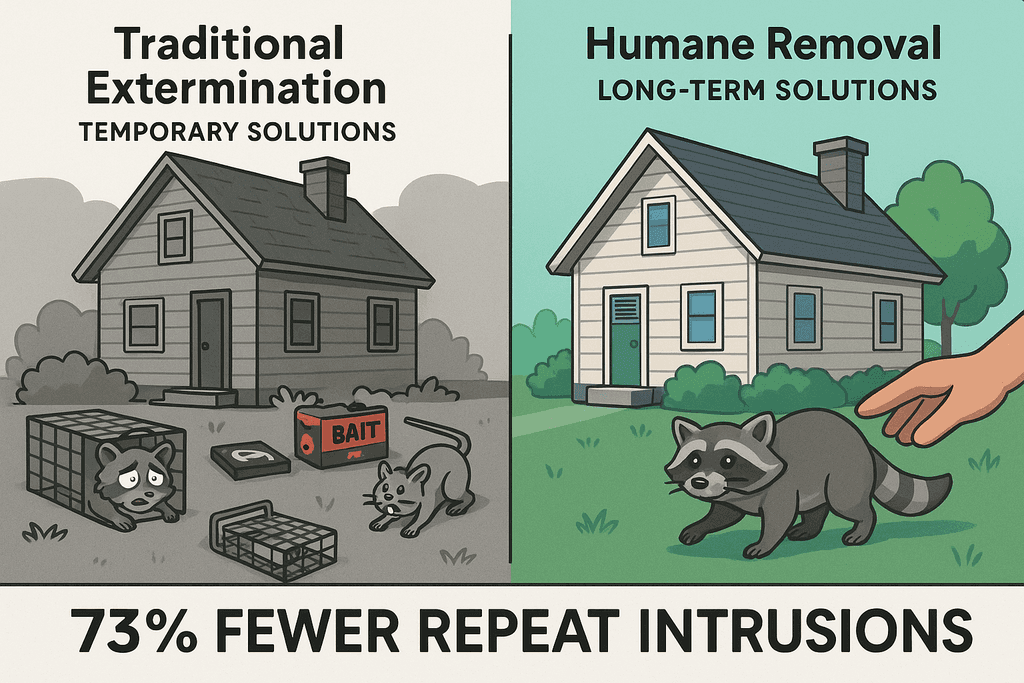
Studies show that properties treated with humane wildlife removal methods experience 73% fewer repeat intrusions compared to traditional extermination approaches. The difference comes down to how each method addresses the root problem. When you just trap or poison animals without fixing entry points, new wildlife moves right in to take their place. Humane removal focuses on understanding why animals chose your property and making it less attractive to them. This creates lasting results instead of a temporary fix that costs you more money down the road.
Comparing Success Rates Across Methods
The numbers tell a clear story when you look at different wildlife control approaches. Traditional pest control companies often focus on quick removal without prevention, which means customers end up calling them back within months.
- Humane removal with exclusion work shows 85-90% long-term success rates
- Traditional trapping alone has only 40-50% success preventing return visits
- DIY attempts fail about 70% of the time due to missed entry points
- Professional services like Wildlife X Team find an average of 3-4 entry points that homeowners miss
The case study from Jesse Bernard highlights this perfectly. He considered fixing one obvious entry point himself, but professionals found several others he never would have discovered. Months later, his home remained squirrel-free because all vulnerabilities were addressed at once.
The Real Cost of Prevention Versus Repeated Removal
Most homeowners think humane removal costs more upfront. But when you factor in repeat visits, property damage, and health risks, the math changes completely.
- Initial humane removal with exclusion typically costs 30-40% more than basic trapping
- Repeat wildlife intrusions average 2-3 additional service calls per year at $200-400 each
- Attic damage from ongoing infestations can reach $3,000-8,000 in insulation and structural repairs
- Warranties like Wildlife X Team's renewable lifetime protection eliminate future removal costs entirely
The Wildlife Inspection Report® approach identifies every potential entry point before work begins. This means you're not paying for guesswork or coming back to fix problems that should have been caught the first time.
Environmental Impact and Community Benefits
Ethical wildlife control does something that traditional methods can't. It maintains the natural balance in your neighborhood while protecting your property. When companies use poison or lethal traps, they disrupt local ecosystems and often create worse problems. Dead animals attract scavengers, and removing one species without exclusion just invites another to move in.
- Humane relocation keeps local wildlife populations stable
- Exclusion methods protect homes without harming beneficial animals
- Proper cleanup prevents disease spread to pets and neighbors
- Community wildlife patterns improve when ethical practices become standard
Why Professional Services Outperform DIY
YouTube videos make wildlife removal look simple, but the reality is much different. Homeowners who try DIY approaches miss critical details that professionals spot immediately. Wildlife behavior varies by species, season, and location, which means what worked for someone in another state might fail completely in Texas.
Professionals bring specialized knowledge about animal behavior and building construction. They know where raccoons prefer to enter versus squirrels. They understand which materials animals can chew through and which actually work as barriers. Companies like Wildlife X Team employ zoologists who understand these patterns at a deeper level than general pest control services.
- Professionals identify nesting sites and baby animals that homeowners overlook
- Proper equipment prevents injury to both people and wildlife
- Licensed services follow legal requirements for wildlife handling
- Expert repairs last longer because they're done with commercial-grade materials
The Value of Guaranteed Protection
A warranty changes everything about how you think about wildlife removal. Instead of hoping the problem stays fixed, you have actual protection backed by a company's reputation. Wildlife X Team's renewable lifetime warranty means if animals find a way back in, they handle it at no additional cost. This shifts the risk away from you and onto the service provider, which motivates them to do thorough work the first time.
Customer satisfaction scores reflect this difference. Reviews consistently mention peace of mind as a major benefit of professional humane removal. When Mark Thompson said the team "secured my attic against future invasions," he wasn't just talking about the physical work. He meant the confidence that comes from knowing experts handled every detail correctly.
Making the Right Choice for Your Property
Dealing with wildlife in your home or business isn't just about getting rid of animals. It's about doing it the right way so everyone stays safe and the problem doesn't come back next month. Humane methods protect the animals while also protecting your property from damage and health risks. When you choose ethical wildlife control, you're not just being kind to nature, you're actually making a smarter long-term investment in your building.
The truth is, most DIY solutions only work for a little while. You might seal up one hole, but there could be three more you didn't notice. Professional wildlife experts know where animals hide and how they get in because they've seen it hundreds of times before.
Prevention and exclusion services might seem like extra work, but they save you money down the road. Once wildlife finds a way into your attic or crawl space, they'll keep coming back unless you close every possible entry point. Our Wildlife Inspection Report® helps identify all those weak spots you'd never find on your own.
So when should you call for help? If you hear scratching in your walls, see droppings in your attic, or notice damage to your roof or foundation, it's time. The longer you wait, the worse the damage gets and the harder it becomes to fix.
Getting started is simple, and the peace of mind that comes with knowing your property is protected makes all the difference. You probably have some questions about how the whole process works, what to expect, and how long it takes.
Common Questions About Humane Wildlife Removal
Most homeowners have never dealt with a raccoon in their attic or squirrels chewing through their roof, so they're not sure what to expect when they call for help. The questions below come up almost every time someone reaches out about wildlife problems. Understanding how humane removal works can help you make better decisions about protecting your home and the animals that accidentally moved in.
How quickly can humane removal solve wildlife problems?
Most wildlife issues get resolved within a few days to a week, depending on what type of animal you're dealing with and how many entry points exist. Wildlife X Team typically starts work the same day or next day after inspection, and many customers see results within 24-48 hours. The timeline depends on whether animals need to be trapped and relocated or if they can be excluded using one-way doors that let them leave but not return.
Is humane removal more expensive than traditional pest control?
The upfront cost might be slightly higher, but humane methods often save money long-term because they include prevention and exclusion work that stops future problems. Traditional pest control companies like Terminix focus mainly on insects and might not offer the same level of structural repairs and animal-proofing. When you factor in the renewable lifetime warranty that comes with professional wildlife services, you're actually getting more protection for your investment.
What happens to animals after they're removed?
Animals are relocated to appropriate habitats away from residential areas where they can survive without causing problems for people. Licensed wildlife removal specialists follow state and local regulations about where and how animals can be released. Some companies that don't prioritize humane methods might use lethal traps, but ethical providers focus on live removal whenever possible.
How do you prevent wildlife from coming back?
Prevention involves sealing every possible entry point with materials animals can't chew through or tear apart. This includes installing vent guards, repairing foundation gaps, protecting chimneys, and reinforcing weak spots in roofing. The Wildlife Inspection Report identifies all vulnerabilities in your property so nothing gets missed. Without proper exclusion work, new animals will just move into the same spots the previous ones used.
When should I call a professional instead of handling it myself?
Call a professional if you hear animals in your walls or attic, see droppings, notice damage to your roof or soffits, or smell strong odors that might indicate nesting. DIY approaches often miss hidden entry points, and you risk getting bitten or scratched by scared animals. Professionals have the right equipment and training to handle wildlife safely while making sure the problem doesn't come back.
Do humane methods work for all types of wildlife?
Yes, humane removal works for raccoons, squirrels, opossums, bats, birds, and other common wildlife that invade homes. Each animal requires different strategies based on their behavior and biology, but ethical methods exist for all species. Some situations require more patience than others, but humane approaches are just as effective as traditional methods without the ethical concerns or potential legal issues that come with harming protected species.