
Humane Bat Removal and Exclusion Near You
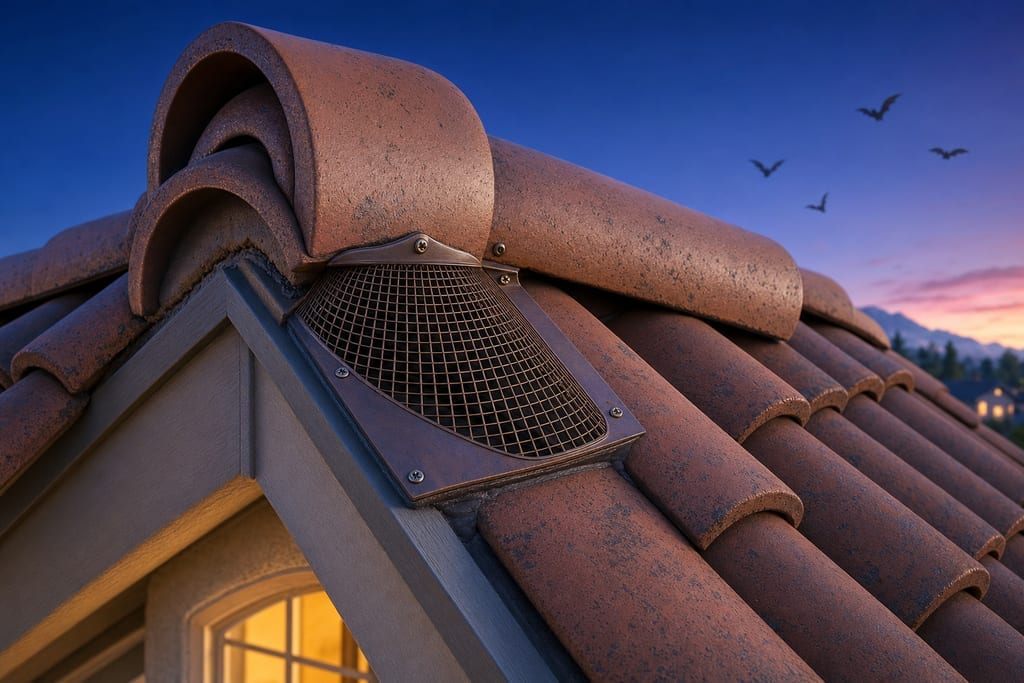
If you are searching for a bat exterminator near me, stop and call a wildlife removal company instead, because killing bats is illegal in most states and extermination is not the legal or safe path. A single bat colony can leave behind pounds of droppings every month, and that guano builds up fast in an attic, holding onto fungus spores that cause real breathing problems for anyone in the house. Bats are protected under state and federal law in Texas and most other places, so trapping or poisoning them can land a homeowner in legal trouble on top of the health risk already sitting over their head.
The fix is humane removal paired with sealing up the ways bats got in to begin with. Wildlife X Team handles that work across Fort Worth, Denton, Granbury, and the surrounding towns, getting bats out safely and closing the gaps so they cannot come back next season.
Table of Contents
Why Bats Pick Your Attic in North Texas
Mexican free-tailed bats are the species most homeowners in this area run into, and they favor attics, soffits, and chimneys over hollow trees or caves. Those spots offer the same dark, enclosed shape bats look for in the wild, just with better insulation.
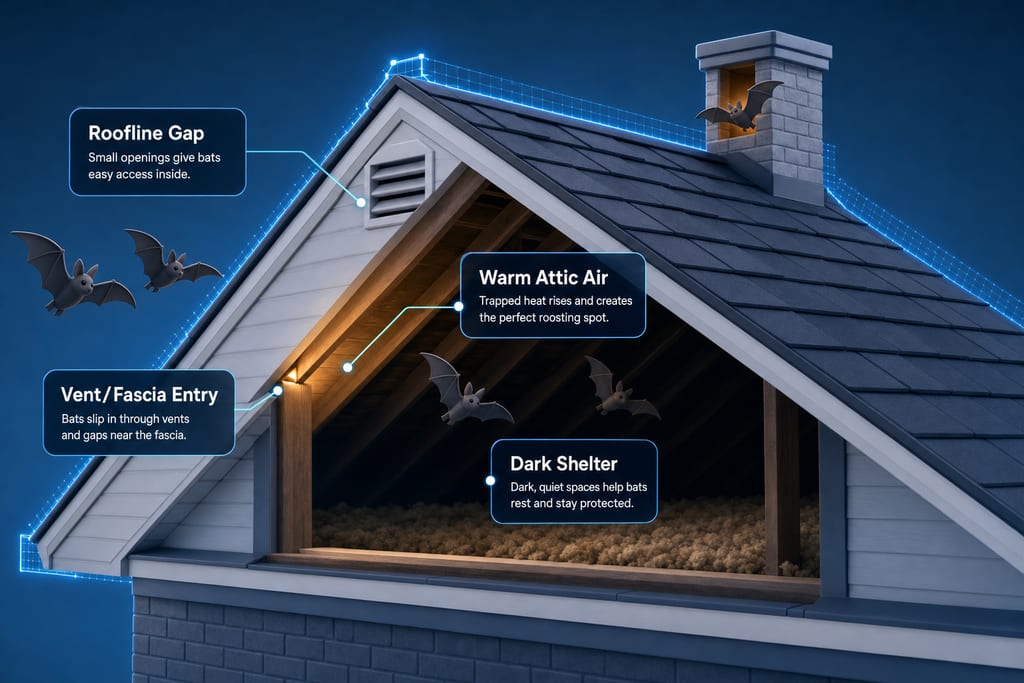
A roofline gap near a vent or fascia board holds heat and stays dark around the clock, which reads as a cave entrance to a bat looking for shelter. A few things make these spots attractive to a colony:
- Warm air trapped near the roof deck, especially in summer
- Narrow gaps that block wind and light, similar to a cave mouth
- Height off the ground, away from ground predators
- Quiet, undisturbed space during daylight hours
This video walks through what humane removal actually looks like once bats are already inside.
Sealing a gap before every bat has left for the night traps the ones still roosting inside. That kills them slowly, which is both illegal under the same protections covering the colony and a problem once they decompose inside a wall or attic.
A Local Team Licensed for Bat Work Near You
Wildlife X Team is based at 11833 Katy Rd, Keller, TX 76244, and sends crews out across Fort Worth, Denton, Granbury, Glen Rose, Weatherford, Southlake, Grapevine, Colleyville, North Richland Hills, Flower Mound, and the smaller towns around them. That spread matters because bat colonies show up differently depending on the building, the roofline, and how close the property sits to a creek or open field where bats feed at night.
Technicians train on humane, legal exclusion methods only. Texas law protects bats, so no poison and no lethal traps are ever part of the job. A local crew also means faster callbacks and a better read on how regional building styles, like older brick homes with chimney flues, tend to let bats in.
A few things separate a licensed bat exterminator service from a general pest sprayer:
- Training specific to bat biology and exclusion timing, not just general pest control
- Equipment built for one-way exits instead of chemical treatments
- Knowledge of which entry points are common in local construction, like fascia gaps and chimney caps
What the Wildlife Inspection Report Finds
The Wildlife Inspection Report is a walk-through of the whole structure, checking rooflines, vents, chimneys, soffits, and any gap wide enough for a bat to squeeze through. A gap as small as half an inch is enough for most bat species in this region to use as an entry point, so the inspection covers spots most homeowners never think to check.
Technicians look for droppings on insulation, staining around entry points from body oils, and the timing of scratching or chittering noises at dusk to get a sense of colony size and where the roost sits inside the structure. That information turns into a plan built for that specific building, not a generic fix.
The report usually covers:
- Roofline and soffit gaps where shingles meet fascia boards
- Chimney caps and flashing seams
- Vent screens and gable vents
- Staining or guano near suspected entry points
- Noise patterns at dawn and dusk to estimate roost size
How One-Way Exclusion Gets Bats Out Safely
One-way exclusion devices are small valves or netting fitted over the entry point that let bats fly out at dusk to feed but block them from flying back in. Once every bat in the colony has left through the device, the crew removes it and seals the gap for good.
Timing decides whether this works safely. Excluding bats during pup season traps flightless young inside, since they cannot yet fly out on their own, so crews check for pups before installing any device and may hold off until the young can fly.
After the colony clears out, the real sealing work starts:
- Caulking smaller gaps around trim and siding
- Steel mesh over larger openings bats could chew or squeeze through
- Chimney caps fitted to block flue access
- Vent guards installed over gable and soffit vents
Cleanup and Long-Term Protection After Bats Leave
Once bats are out and the building is sealed, the attic still needs cleaning. Guano and urine get removed and the area disinfected to cut down odor and reduce the risk of histoplasmosis, a lung infection tied to fungus that grows in bat droppings.
Insulation soaked or soiled during the roost gets pulled and replaced, since cleaning alone will not restore its ability to hold heat. The exclusion work is backed by a renewable lifetime warranty, so if bats try to find a new way in after the original seal, the fix is covered rather than billed as a fresh job.
A full cleanup and restoration job typically includes:
- Removal of guano, urine stains, and nesting debris
- Disinfecting surfaces to cut odor and airborne fungal spores
- Replacing damaged or compacted insulation
- Final check of all sealed entry points before the job closes out
Picking a Time to Call
Fall and winter are the easiest time to get exclusion work done, since pup season restrictions are not a factor and a crew can seal entry points right after the colony clears out. Waiting until spring or summer means the job may have to pause if young bats are found inside, pushing the full fix back weeks. Calling now, before that season starts, skips that delay entirely.
A homeowner noticing droppings, staining, or noise at dusk is better off calling before the colony grows or the guano spreads further into insulation. The longer bats stay, the more cleanup and insulation replacement the job needs later. A quick call settles whether the issue is a small gap or a full roost, and settles it before the damage grows.
Call (817) 799-8686 to set up a free inspection and get a straight answer on what is going on in the attic. Wildlife X Team covers Fort Worth, Denton, Granbury, Southlake, Grapevine, Colleyville, Flower Mound, Weatherford, and the smaller towns around them.
Weighing a DIY Fix Against Calling a Licensed Crew
Grabbing caulk or foam and sealing a gap yourself seems cheap, but if bats are still roosting inside, that seal traps them in the wall or attic, which is illegal under the same protections covering the colony and leaves a dead-animal problem behind the drywall. Store-bought poison is off the table for the same legal reason, and it will not touch any entry points you missed. A licensed crew clears the colony with one-way devices first, seals every gap after, and backs that work with a renewable lifetime warranty, so a new attempt at entry later is covered rather than billed as a new job. Waiting adds guano, insulation damage, and cost. Wildlife X Team can be reached at (817) 799-8686 to look at the attic before the colony grows any larger.
Bat Removal Questions Homeowners Ask
Will I be fined if I try to remove bats myself in Texas?
Possibly, since bats are a protected species and harming or killing one can bring state or federal penalties on top of any damage you cause to your own home. Sealing a gap with bats still inside counts as harm under those same protections, even if you never touch an animal directly. A licensed crew avoids that risk by using legal exclusion methods only.
Can bats get back in through the same spot after exclusion is finished?
They can try, especially if the seal was done with caulk alone and no steel mesh or cap behind it. Bats can chew through soft materials and squeeze into gaps that shift as a house settles. Wildlife X Team backs its exclusion work with a renewable lifetime warranty, so a repeat attempt at that same entry point gets fixed under the original job instead of a new bill.
What if I find a single bat flying inside my living room, not the attic?
Open a window or door near the bat and turn off the lights in that room, since bats usually fly toward open, darker space once given the chance. Do not try to catch it with your hands. If it landed on a curtain or wall and will not leave, call a wildlife removal crew rather than swatting at it or trapping it under a container, since Texas law protects the species even inside your own home.
How much noise or odor should I expect during the exclusion process?
Installing one-way devices and sealing gaps is quiet work, mostly caulking, mesh, and cap fitting done from a ladder or the roofline. Odor is the bigger factor, and it comes from guano already in the attic rather than the exclusion itself, which is why cleanup and disinfecting happen right after the colony clears out, not weeks later.