How to Find Reliable Wildlife Removal Near Me in Fort Worth

Strange scratching sounds in your attic at 2 AM usually mean one thing: you've got uninvited wildlife guests making themselves at home. Fort Worth's rapid growth has pushed raccoons, squirrels, and other critters closer to our neighborhoods, and trying to handle them yourself often backfires in dangerous and expensive ways. Finding a reliable wildlife removal service like Wildlife X Team isn't just about getting rid of animals—it's about protecting your family and preventing these visitors from coming back.
Table of Contents
- Why Fort Worth Homes Attract Wildlife
- What Makes a Wildlife Removal Company Reliable
- Red Flags to Avoid When Searching Online
- The Complete Wildlife Removal Process Explained
- Why Prevention Matters More Than Removal
- Your Next Steps to a Wildlife-Free Home
- Common Questions About Wildlife Removal in Fort Worth
Why Fort Worth Homes Attract Wildlife
Fort Worth sits right in the middle of North Central Texas, where rolling prairies meet urban neighborhoods, creating a perfect storm for wildlife encounters. The city's warm climate, with mild winters and hot summers, means animals stay active year-round instead of hibernating like they do up north. When you add in the Trinity River running through town and all those mature oak trees in older neighborhoods, you've got everything raccoons, squirrels, and opossums need to thrive. The problem gets worse every year as new developments push further into what used to be wild areas, forcing animals to look for new homes.
73% of Fort Worth homeowners report seeing wildlife on their property at least once per month, with attic intrusions increasing by 40% during fall and winter months.
Common Entry Points in Texas Homes
Texas homes have some unique features that make them easy targets for wildlife. Most houses here have attics with vents that aren't properly screened, and those vents are like open doors to a raccoon looking for a warm spot. Foundation issues are super common too because of our clay soil that expands and contracts with the weather.
Here's where animals typically get inside:
- Attic vents and roof returns that lack proper screening or have damaged covers
- Chimney tops without caps, which are basically luxury condos for raccoons and squirrels
- Foundation gaps and cracks caused by soil movement, especially after dry spells followed by heavy rain
- Soffit and fascia boards that have rotted from our intense summer heat and occasional storms
- Dryer vents and exhaust fans with broken or missing covers
Seasonal Patterns and Wildlife Behavior
Wildlife doesn't just randomly decide to move into your attic. There are specific times of year when you're way more likely to hear scratching sounds above your bedroom. Fall and winter bring the biggest surge in wildlife intrusions as animals look for warm places to nest and have babies.
Understanding these patterns helps explain why your neighbor might have had raccoons in March while you're dealing with squirrels in November:
- September through November sees squirrels gathering food and building winter nests in attics
- December through February brings raccoons and opossums seeking warm shelter from cold snaps
- March through May is baby season when mother animals get aggressive protecting their young
- Summer months see less activity, but bats become more noticeable as they hunt insects at dusk
Wildlife removal calls spike by 65% between October and March in the Dallas-Fort Worth area, with raccoons accounting for nearly half of all residential intrusions.
How Growing Neighborhoods Push Wildlife Into Homes
Fort Worth keeps expanding, with new neighborhoods popping up in places that were just empty fields five years ago. When developers clear land for houses and shopping centers, the animals that lived there don't just disappear. They move into the nearest available shelter, which often means your attic or crawl space.
The impact shows up in different ways across the city:
- Older neighborhoods near the Trinity River see more raccoon problems because of nearby water sources
- Areas with mature trees like Arlington Heights and Fairmount deal with constant squirrel activity
- New developments on the city's edges report opossums and skunks more frequently
- Commercial properties near wooded areas face ongoing wildlife pressure as natural habitats shrink
Wildlife X Team handles these situations every day across Fort Worth, Denton, and Granbury. The company's Wildlife Inspection Report helps identify exactly where your property is vulnerable before animals find those spots themselves.
What Makes a Wildlife Removal Company Reliable
About 40% of Fort Worth homeowners will deal with a wildlife intrusion at some point, but not all removal companies handle these situations the same way. The difference between a reliable service and a questionable one can mean the gap between solving your problem permanently or watching raccoons return to your attic next month. When you're searching for wildlife removal near you, knowing what separates the professionals from the rest becomes critical to protecting both your home and your wallet.

What Makes a Wildlife Removal Company Reliable
Humane removal methods should be at the top of your checklist. A reliable company won't use poison or cruel traps that cause unnecessary suffering. Instead, they'll use techniques that safely relocate animals while respecting their welfare. This approach isn't just about being kind to animals, it's also about following Texas wildlife regulations that protect certain species.
- Proper licensing and insurance coverage for wildlife work in Texas
- Experience with local species like raccoons, squirrels, and opossums
- Detailed inspection processes that find every entry point
- Prevention strategies included with removal services
- Clear warranties that protect your investment
- Transparent communication about methods and pricing
The inspection process tells you a lot about a company's reliability. Wildlife X Team, for instance, provides a Wildlife Inspection Report that documents every vulnerability in your property. This isn't just a quick walk-around. A thorough inspection should identify hidden entry points you'd never spot yourself, like the customer Jesse Bernard mentioned when he discovered multiple access points beyond the obvious one he'd considered fixing on his own.
Prevention matters just as much as removal. Some companies will trap the animals and leave, but that's only half the job. The reliable ones seal entry points, install barriers, and make sure those critters can't come back. This comprehensive approach saves you money in the long run because you're not paying for the same service twice.
Red Flags to Avoid When Searching Online
Your search results will show dozens of wildlife removal companies, but some of them could make your situation worse instead of better. Knowing the warning signs helps you avoid wasting time and money on services that won't actually solve your problem. The wrong choice might mean dealing with the same animals again in a few weeks, or worse, structural damage from improper repairs.
Red Flags to Avoid When Searching Online
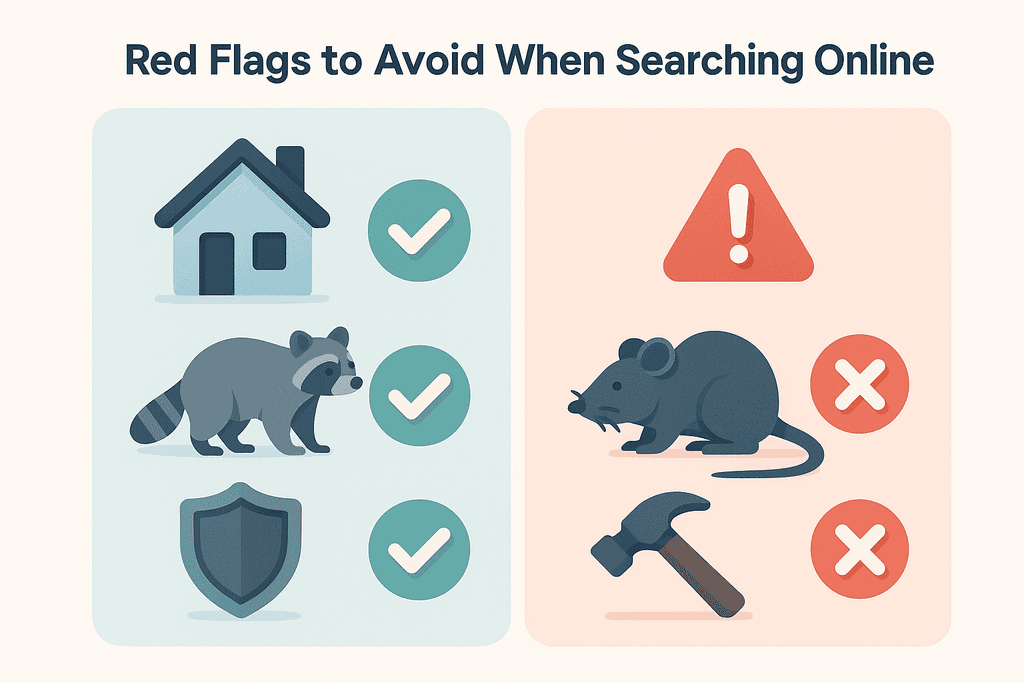
Companies promising instant fixes without inspections should raise immediate concerns. Wildlife removal isn't a one-size-fits-all situation. Each home has different entry points, different species, and different levels of infestation. Any service that quotes you a price without seeing your property is probably cutting corners somewhere.
Watch out for services that only offer removal without any prevention work. This is like bailing water out of a boat without fixing the leak. The animals will just come back through the same holes they used before. A complete service should include exclusion work and repairs to keep wildlife out permanently.
- No proof of licensing or insurance when you ask
- Refusing to explain their removal methods in detail
- Prices significantly lower than other quotes
- No warranty or guarantee backing their work
- Reviews that seem fake or overly generic
- Pressure tactics to sign contracts immediately
The warranty situation deserves special attention. Reliable companies like Wildlife X Team offer renewable lifetime warranties because they're confident in their work. If a company won't guarantee their service, they probably don't trust it to last either. That's your money at risk.
The Complete Wildlife Removal Process Explained
Understanding what should happen from your first call to final inspection helps you recognize quality service when you see it. The process isn't complicated, but each step matters for long-term results. A professional wildlife removal service follows a specific sequence that addresses both the immediate problem and future prevention, which is why some companies get better results than others.
Everything starts with the initial inspection and Wildlife Inspection Report. This is where technicians examine your attic, crawl spaces, walls, foundation, and roof for signs of wildlife activity and entry points. They're looking for droppings, nesting materials, damage patterns, and those sneaky gaps that animals squeeze through. The inspection should be detailed enough to create a complete picture of your situation.
The removal phase uses humane techniques specific to each species. Raccoons need different approaches than squirrels or bats. Professional services understand animal behavior patterns and use that knowledge to remove them safely. This might involve one-way doors that let animals leave but not return, or live trapping with proper relocation following Texas wildlife laws.
- Attic cleanup removes contaminated insulation and droppings
- Disinfection eliminates disease risks and odors
- Damaged insulation gets replaced to restore energy efficiency
- Entry points are sealed with durable materials
- Barriers and guards prevent future access
The cleanup and restoration phase often surprises homeowners because they don't realize how much damage wildlife can cause. Animals leave behind urine, feces, and nesting materials that create health hazards and attract more wildlife. Attic cleanup and restoration involves removing all contaminated materials, disinfecting surfaces, and replacing damaged insulation. This step is crucial but sometimes skipped by less thorough companies.
Animal proofing and exclusion work is where prevention happens. This includes foundation repairs, chimney caps, vent guards, and sealing gaps with materials animals can't chew through. Wildlife X Team handles everything from caulking small cracks to installing custom barriers that match your home's appearance. The goal is making your property uninviting to wildlife without changing how it looks.
Follow-up inspections ensure the work holds up over time. A renewable lifetime warranty means the company will come back if animals find a way in again. This kind of guarantee shows confidence in the work and gives you peace of mind. Customer testimonials like the one from Mark Thompson, who praised the team for effectively removing raccoons and securing his attic against future invasions, demonstrate what proper follow-through looks like.
Why Prevention Matters More Than Removal
Most homeowners who discover raccoons in their attic make the same mistake. They call someone to remove the animals, pay a few hundred dollars, and think the problem is solved. Three months later, new animals move into the same space through the same holes. This cycle repeats itself because removal without prevention is like bailing water from a boat without fixing the leak. The real question isn't whether you need wildlife removed, but whether you want to pay for the same service multiple times or invest in a solution that actually works long-term.
The Hidden Costs of Removal Only Services
When you compare prices, a basic removal service might seem cheaper upfront. But the numbers tell a different story when you look at what happens over time. Studies show that properties with removal-only services face re-infestation rates as high as 70% within the first year.
Re-infestation rates: Properties with removal-only services see new wildlife intrusions 70% of the time within 12 months, while comprehensive prevention services reduce this to less than 5% when proper exclusion work is completed.
The average homeowner who chooses removal-only services ends up spending 3-4 times more over three years compared to those who invest in comprehensive prevention from the start. That's not even counting the property damage that continues between service calls.
What Comprehensive Prevention Actually Includes
Real wildlife control goes way beyond just catching animals and hauling them away. Wildlife X Team's approach addresses every part of the problem, which is why their clients aren't calling back every few months with the same issue.
- Complete property inspection to find every potential entry point, not just the obvious ones
- Professional-grade exclusion materials that animals can't chew through or tear apart
- Attic cleanup and decontamination to remove disease-carrying waste and damaged insulation
- Structural repairs to foundations, vents, and chimneys that prevent future access
- Renewable lifetime warranty that protects your investment long-term
DIY Removal Versus Professional Services
Some people try handling wildlife problems themselves to save money. The reality is that most DIY attempts create bigger problems than they solve.
DIY Wildlife Removal
Pros:
- Lower immediate cost for basic supplies
- Can address obvious entry points you can see
- Works for very minor, single-animal situations
Cons:
- Miss hidden entry points that professionals find with thermal imaging and experience
- Risk of animal bites, scratches, and disease exposure without proper equipment
- No guarantee animals won't return through missed access points
- Improper cleanup leaves dangerous contamination in living spaces
- Potential code violations if repairs don't meet local building standards
Professional Comprehensive Services
Pros:
- Complete property assessment finds all vulnerabilities
- Humane removal methods that comply with wildlife regulations
- Professional-grade materials and repairs that last
- Proper decontamination protects family health
- Warranty coverage provides long-term peace of mind
Cons:
- Higher upfront investment than basic removal
- Requires scheduling and property access for thorough work
Health Risks You Can't Ignore
The biggest danger of incomplete wildlife removal isn't the animals themselves. It's what they leave behind. Raccoon feces can carry roundworm eggs that remain infectious for years in attic insulation. Squirrel urine creates ammonia levels that damage respiratory systems. Bat guano harbors fungal spores that cause serious lung infections.
Simply removing the animals without proper cleanup and decontamination leaves your family exposed to these health hazards every day. Professional attic restoration doesn't just make the space clean again. It eliminates the biological threats that basic removal services ignore completely.
Cost comparison: The average comprehensive wildlife prevention service costs $1,200-$2,500 upfront but solves the problem permanently. Removal-only services cost $300-$600 per visit, with most properties requiring 3-4 visits over three years, totaling $900-$2,400 without any prevention work or warranty protection.
Your Next Steps to a Wildlife-Free Home
Finding a reliable wildlife removal company in Fort Worth really comes down to a few key things. You want someone who uses humane methods, actually fixes the problem instead of just removing the animal, and stands behind their work with some kind of guarantee. The difference between a good company and a bad one often shows up months later when the animals either come back or stay gone for good.
Time matters more than most people think when it comes to wildlife in your home. Every day those raccoons or squirrels stay in your attic, they're causing more damage and leaving behind waste that can affect your family's health. The longer you wait, the more expensive the cleanup and repairs become.
Wildlife X Team handles the complete process for Fort Worth homeowners, from the initial inspection to removal, repairs, and prevention. Our Wildlife Inspection Report identifies every possible entry point on your property, which is something many companies skip. We also back our work with a Renewable Lifetime Warranty, so you're not just paying for a temporary fix.
The peace of mind that comes with professional wildlife management is hard to put a price on. You can finally sleep without hearing scratching sounds above your head. Your attic stays clean and your home stays protected. But choosing the right company means knowing what questions to ask and what red flags to watch for.
Common Questions About Wildlife Removal in Fort Worth
Most homeowners dealing with wildlife problems have similar concerns about the removal process. Understanding what to expect can help you make better decisions when those scratching sounds start coming from your attic at 2 AM. Here are the answers to questions we hear most often from Fort Worth property owners.
How quickly can wildlife removal services respond?
Most professional wildlife removal companies in Fort Worth can respond within 24 to 48 hours of your initial call. Wildlife X Team often provides same-day service for urgent situations, especially when animals pose immediate risks to your property or family. Emergency situations like bats in living spaces or aggressive raccoons typically get priority scheduling.
What does wildlife removal typically cost in Fort Worth?
Wildlife removal costs vary widely based on the type of animal, severity of infestation, and necessary repairs. Simple inspections might start around $100 to $200, while complete removal and exclusion services can range from $300 to several thousand dollars for extensive damage. Companies like Wildlife X Team provide free estimates so you know exactly what you're paying for before any work begins.
Is wildlife removal safe for pets and children?
Professional wildlife removal services use humane methods that are safe for your entire household. The technicians don't use harmful chemicals or poisons that could affect your pets or kids. Wildlife X Team focuses on exclusion techniques and live trapping, which means animals are removed without putting your family at risk.
How long does the complete removal and prevention process take?
The timeline depends on your specific situation, but most projects take between one to two weeks from start to finish. Initial removal might happen in a day or two, while exclusion work and repairs could take additional time. Attic restoration and cleanup can add another few days to the process, but you'll have peace of mind knowing the job is done right.
What warranty or guarantee should I expect?
Reputable companies stand behind their work with solid warranties. Wildlife X Team offers a Renewable Lifetime Warranty on their exclusion work, which is stronger than the typical one to five year guarantees you'll find from other providers. This means if animals find a way back in through their sealed entry points, they'll fix it at no additional cost.
Can I prevent wildlife problems before they start?
Absolutely, and prevention is always cheaper than dealing with an active infestation. Professional inspections can identify vulnerable areas before animals move in. Simple steps like sealing gaps, installing vent guards, and maintaining your property can make a huge difference in keeping wildlife out for good.