
Granbury Raccoon Removal Steps for Attic and Roof Intrusions

Scratching sounds in your ceiling at 2 AM usually mean one thing for Granbury homeowners: raccoons have moved into your attic. These masked bandits cause thousands of dollars in damage each year by tearing through insulation, chewing electrical wires, and leaving behind contaminated waste that poses serious health risks. Understanding the proper raccoon removal Granbury TX process can save you money and protect your family from the structural and health hazards these animals create when they take up residence in your home.
Table of Contents
Why Raccoons Target Granbury Attics and Roofs
Raccoons cause over $2 billion in property damage across Texas each year, and Granbury homeowners are dealing with their fair share of these masked bandits. The area around Lake Granbury creates a perfect storm for raccoon activity, with plenty of water sources and food options that keep these critters coming back. When raccoons start looking for a place to raise their babies or escape the Texas heat, your attic starts looking like a five-star hotel to them. Understanding why these animals pick certain homes helps you protect your property before problems start.
Granbury Location Makes Homes Prime Targets
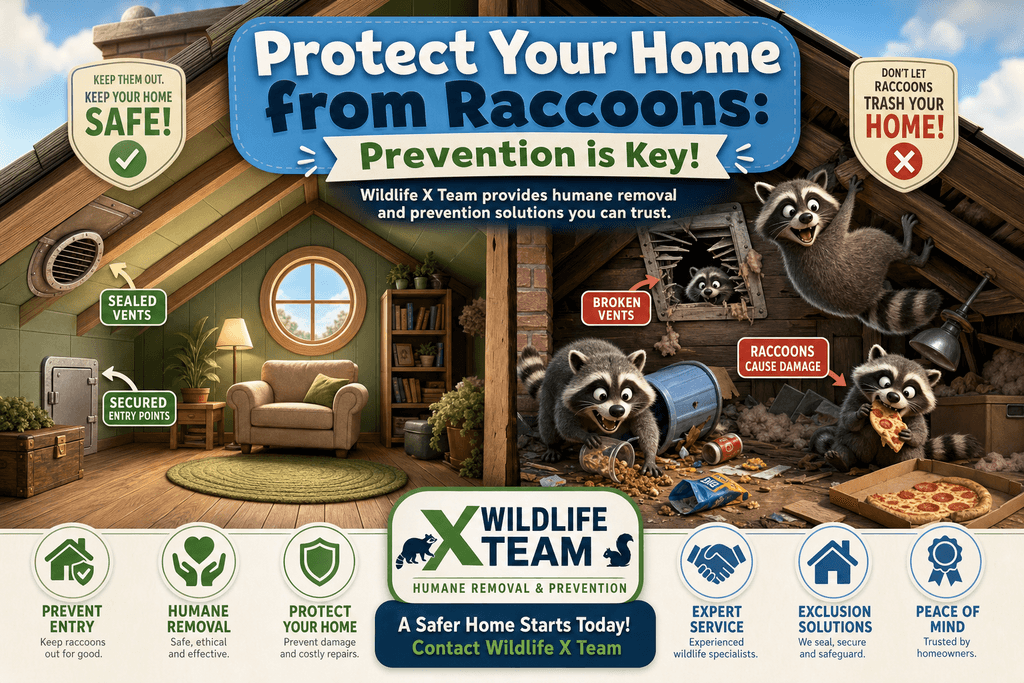
The geography around Granbury practically rolls out the welcome mat for raccoons. Lake Granbury and the Brazos River provide constant water sources that raccoons need to survive. These animals don't travel far from water, which means homes within a few miles of these areas see more activity than properties further out.
Local wildlife experts report that raccoon populations in lakeside communities are three times higher than in areas without nearby water sources. The mix of suburban development and natural habitat creates what biologists call an "edge effect" where wildlife thrives.
$3,500 - Average cost of raccoon damage repair in Texas homes
Here's what draws raccoons to Granbury properties:
- Lake Granbury and Brazos River provide year-round water access
- Mature oak and pecan trees offer natural food sources and climbing routes to roofs
- Suburban neighborhoods have trash cans and pet food that raccoons love
- Mild winters mean raccoons stay active almost all year
Attics Provide Everything Raccoons Need
Your attic isn't just storage space. To a pregnant raccoon, it's a safe nursery away from predators like coyotes and bobcats. The insulation makes a soft bed, and the enclosed space protects babies from weather and other animals. Raccoons typically have their babies between March and May in Texas, which is when Wildlife X Team sees the biggest spike in raccoon removal calls in Granbury.
This video shows exactly how raccoons access roofs and find their way into attics. Once you see how easily they climb and squeeze through openings, you'll understand why prevention matters so much.
67% - Percentage of raccoon intrusions that happen during baby season (March-May)
Attics offer raccoons several advantages:
- Temperature stays more stable than outside, especially during summer heat
- Insulation provides nesting material and warmth for babies
- Dark, quiet spaces away from human activity during the day
- Multiple potential entry and exit points for safety
Common Entry Points in Texas Homes
Texas homes have specific weak spots that raccoons exploit. These animals are surprisingly strong and can tear through materials you wouldn't expect. A raccoon only needs a four-inch opening to squeeze inside, and they'll make small gaps bigger if they're motivated enough.
The most common entry points include roof vents, which many builders install without animal-proof screens. Raccoons also love the gap where your roof meets the fascia board, especially if there's any wood rot. Chimneys without caps are basically open doors, and damaged soffit panels give raccoons easy access to crawl spaces that lead to attics.
Here are the weak spots raccoons find first:
- Roof vents without proper screening or damaged vent covers
- Gaps in soffit and fascia boards, especially where wood has rotted
- Uncapped chimneys or chimneys with damaged caps
- Roof-to-wall intersections where flashing has failed
- Gable vents with broken or missing screens
Seasonal Patterns Around Fort Worth
Raccoon activity in the Fort Worth and Granbury area follows predictable patterns throughout the year. Spring brings the baby boom when mother raccoons desperately search for den sites. Summer heat drives raccoons to seek cooler spaces during the day, which often means your air-conditioned attic. Fall sees increased activity as raccoons fatten up before winter, and they're more aggressive about finding food sources.
Winter in North Texas is mild enough that raccoons don't truly hibernate. They might den up during the coldest weeks, but they're still active most of the time. This means Granbury homeowners face potential raccoon problems year-round, unlike northern states where winter provides a break.
4-6 babies - Average litter size for raccoons in Texas
Seasonal activity patterns include:
- March through May sees peak intrusions as mothers seek nesting sites
- June through August brings heat-related attic invasions
- September through November shows increased food-seeking behavior
- December through February has lower but still significant activity
Wildlife X Team tracks these patterns and adjusts our raccoon removal Granbury TX services based on what we're seeing in the field. Understanding when and why raccoons target homes helps us provide better prevention strategies that actually work long-term.
Professional Inspection and Assessment
Raccoons can squeeze through openings as small as four inches, which means your Granbury home probably has more entry points than you realize. When you hear scratching sounds in your attic at night, that's usually a sign that raccoons have already moved in and made themselves comfortable. The first step in any effective raccoon removal granbury tx process is figuring out exactly how they got in and what damage they've already caused. This isn't something you can do with a quick peek into the attic.
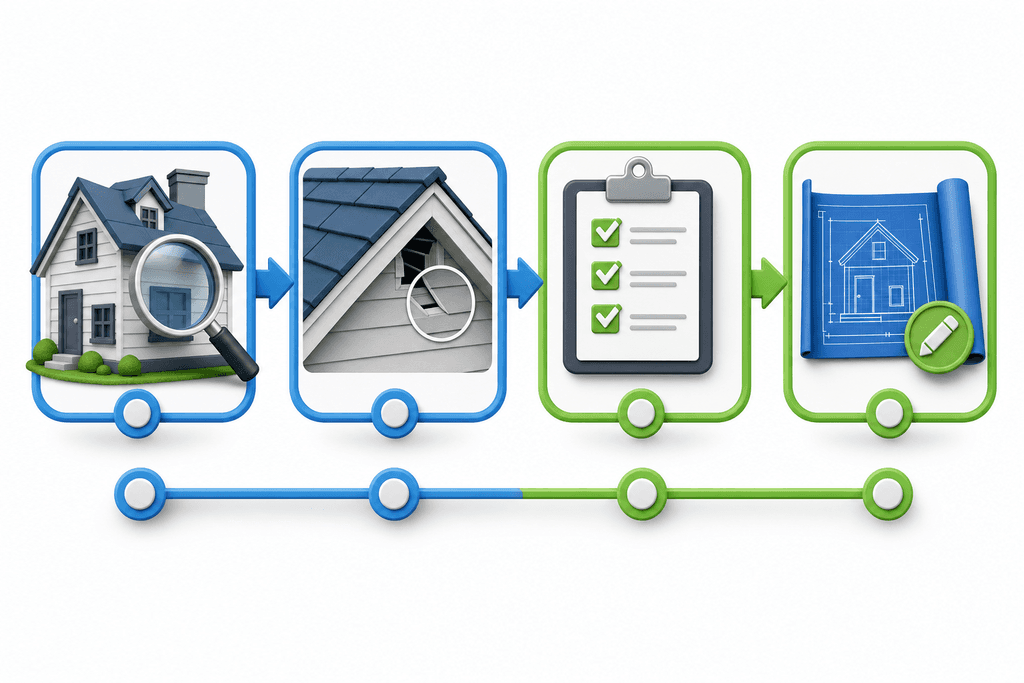
Wildlife X Team uses a detailed Wildlife Inspection Report® to examine every vulnerable spot on your property. The inspection covers your roof line, soffits, fascia boards, vents, chimneys, and even foundation areas where raccoons might be getting access. Most homeowners are surprised to learn they have multiple entry points, not just the obvious hole they spotted.
- Primary entry points where raccoons are actively coming and going
- Secondary access areas that could become problems later
- Damage assessment to insulation, wiring, and structural components
- Contamination levels from droppings and urine
- Signs of babies which require special handling during certain seasons
The inspection also determines whether you're dealing with a single raccoon or a family. If there are babies involved, the removal process changes completely because separating mothers from their young creates bigger problems down the road. A customized plan gets created based on what the inspection reveals, which is why cookie-cutter approaches from some companies often fail.
Humane Trapping and Removal Process
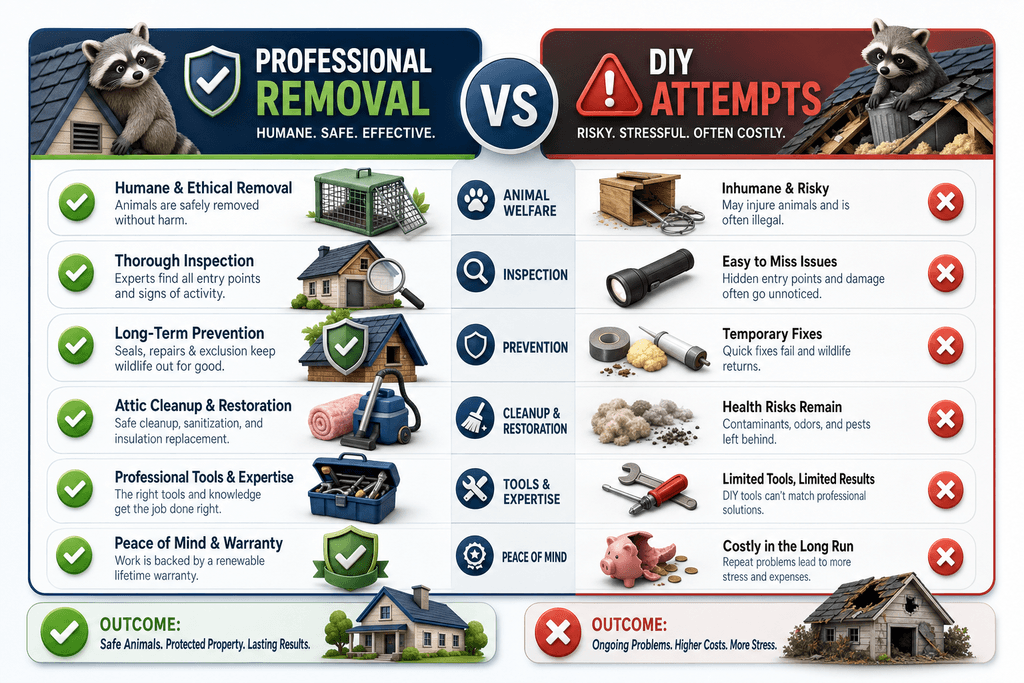
Once the inspection is complete, the actual removal work begins using methods that follow Texas wildlife regulations. The goal is to get the raccoons out safely without causing them harm or creating orphaned babies in your attic. Live trapping is the standard approach, but the techniques vary depending on whether you have adult raccoons, nursing mothers, or juveniles that haven't left the nest yet. Timing matters more than most people think.
This video shows how professionals handle raccoon removal from various areas of your home. The process requires patience and understanding of raccoon behavior patterns.
Mother raccoons with babies need special consideration during spring and early summer months. If babies are present, they need to be located and removed by hand before the mother can be trapped. Otherwise, you end up with orphaned raccoons dying in your walls, which creates an entirely different nightmare. The mother won't abandon her babies, so she'll fight hard to get back in if they're still inside.
Professional removal typically takes between three days to two weeks depending on how many raccoons are present. DIY attempts usually drag on for months because homeowners don't have access to proper equipment or knowledge of raccoon behavior. Some folks try using ammonia-soaked rags or loud music to drive raccoons out, but these methods rarely work and sometimes make raccoons more aggressive about defending their territory.
- Humane live traps positioned at active entry points
- Daily monitoring and removal of captured animals
- Hand removal of any babies found in the attic
- Relocation following state guidelines
- Verification that all raccoons have been removed before sealing
Exclusion and Prevention Repairs
Getting the raccoons out is only half the job. If you don't seal up every possible entry point with materials that raccoons can't tear through, you'll have new tenants within weeks. Raccoons have excellent memory and will return to locations where they've successfully denned before. They also communicate with other raccoons, so your attic can become a known shelter spot in the local raccoon community if it's not properly secured.
Heavy-duty materials are essential because raccoons have incredibly strong paws and can rip through standard hardware cloth or thin metal. The exclusion work needs to address roof edges, soffit intersections, plumbing vents, attic vents, and chimney openings. Each area requires different materials and techniques.
- Galvanized steel mesh for larger openings
- Professional-grade chimney caps that raccoons can't remove
- Reinforced vent guards on all roof and gable vents
- Fascia and soffit repairs using materials raccoons can't chew through
- Foundation sealing to prevent ground-level access
Wildlife X Team backs their exclusion work with a Renewable Lifetime Warranty, which means if raccoons find a way back in through a repaired area, they'll come back and fix it. This warranty only works because the repairs are done right the first time using commercial-grade materials. Some companies in the Fort Worth and Granbury area use cheaper materials that fail within a year or two.
Attic Cleanup and Restoration
Raccoon waste carries diseases that can affect humans, including raccoon roundworm which remains infectious in dried droppings for years. Your attic insulation has likely been contaminated, compressed, and damaged beyond repair if raccoons have been living there for more than a few weeks. The smell alone will attract new wildlife even after the raccoons are gone, which is why cleanup isn't optional. Walking into an attic that's been used as a raccoon latrine is something you won't forget.
Contaminated insulation needs complete removal and proper disposal following health department guidelines. Simply covering it up or spot-cleaning doesn't eliminate the health risks or the odors. The entire affected area gets treated with professional-grade disinfectants that kill pathogens raccoons leave behind.
- Safe removal of all contaminated insulation materials
- Disinfection of wooden beams, flooring, and surfaces
- Odor elimination treatments that prevent wildlife attraction
- New insulation installation to restore energy efficiency
- Final inspection to verify complete restoration
The restoration process also helps your energy bills get back to normal. Raccoons destroy insulation by compressing it, tearing it apart for nesting material, and soaking it with urine. Your heating and cooling costs probably went up without you realizing why. Fresh insulation brings your attic back to proper R-value ratings.
For homeowners in Granbury and surrounding areas like Glen Rose and Weatherford, dealing with raccoon problems quickly prevents thousands in additional damage. Wildlife X Team at 11833 Katy Rd in Keller handles the entire process from inspection through final restoration, so you're not coordinating between multiple contractors. The comprehensive approach means your raccoon problem gets solved once instead of becoming a recurring issue every few months.
Protecting Your Granbury Home Long-Term
Getting raccoons out of your attic isn't just about removing the animals you can see today. The real work happens when professionals inspect every inch of your roof and attic space, remove the raccoons safely, seal up all the entry points they used, and then clean up the mess they left behind. Each of these steps matters because skipping even one can mean you're dealing with the same problem again in a few months.
The difference between a quick fix and lasting protection comes down to how thorough the exclusion work is. Most homeowners don't realize raccoons can squeeze through openings as small as four inches, which means that obvious hole in your soffit might not be the only way they're getting in.
Wildlife X Team handles raccoon removal granbury tx cases across the entire area, from Glen Rose to Weatherford and everywhere in between. Our team at 11833 Katy Rd in Keller serves all of Granbury and the surrounding communities with the same four-step process that keeps raccoons out for good.
The best part about professional exclusion work is the peace of mind that comes with it. You're not just hoping the raccoons won't come back, you're making it physically impossible for them to return to the same spots.
If you're hearing scratching sounds in your attic right now or you've spotted raccoons on your roof after dark, waiting usually makes the problem worse. You can reach the team at (817) 799-8686 to schedule an inspection and get answers to your specific situation.
Common Questions About Raccoon Removal in Granbury
Dealing with raccoons in your attic brings up a lot of questions, especially when you're trying to figure out costs, timelines, and what happens next. Most Granbury homeowners want to know if they're making the right choice before calling in professionals. Here are the answers to the most common questions we hear from folks dealing with these masked bandits.
How much does professional raccoon removal cost in Granbury?
Professional raccoon removal granbury tx services typically range from $300 to $600 for basic removal, but the total cost depends on how many raccoons you have and how much damage they've caused. If you need attic cleanup, insulation replacement, or extensive repairs to seal entry points, you're looking at anywhere from $1,500 to $4,000 for a complete job. Wildlife X Team provides a detailed Wildlife Inspection Report® upfront so you know exactly what you're paying for before any work begins.
How long does the complete removal process take?
The actual trapping and removal usually takes 3 to 7 days depending on how many raccoons are living in your attic. After the animals are gone, sealing entry points and doing repairs can take another 1 to 3 days. Attic cleanup and restoration work might add another few days to the timeline, but most homeowners have their raccoon problem completely resolved within two weeks.
What happens if raccoons return after removal?
This is where choosing the right company matters because not all wildlife removal services stand behind their work. Wildlife X Team offers a Renewable Lifetime Warranty, which means if raccoons find a way back in through the areas we've sealed, we come back and fix it at no additional cost. Companies like fortworthwildlife.com and critterstop.com may offer warranties too, but the terms vary widely across the industry.
Can I remove raccoons myself legally in Texas?
Texas law allows homeowners to trap raccoons on their own property, but there are strict rules about what you can do with them afterward. You cannot relocate raccoons to public land or someone else's property, and in most cases, trapped raccoons must be humanely euthanized. Most people find that hiring professionals for raccoon removal granbury tx is easier and more humane than dealing with the legal requirements and ethical concerns themselves.
Does homeowners insurance cover raccoon damage?
Most standard homeowners insurance policies don't cover wildlife damage or the cost of removing animals because it's considered a maintenance issue. Some policies might cover sudden damage like a raccoon tearing through your roof to get inside, but they won't pay for the removal itself or damage that happened over time. It's worth checking your specific policy, but plan on paying for removal and repairs out of pocket in most cases.
When is raccoon season in the Granbury area?
Raccoons are active year-round in Granbury, but you'll notice more activity during two key times. Spring (March through May) is baby season when mother raccoons look for safe den sites in attics to raise their young. Fall and winter bring increased attic invasions as raccoons search for warm shelter. If you hear noises in your attic during these peak seasons, don't wait to call for an inspection because the problem only gets worse as time goes on.