
Get Squirrels Out of Your Attic Without Repeat Infestations
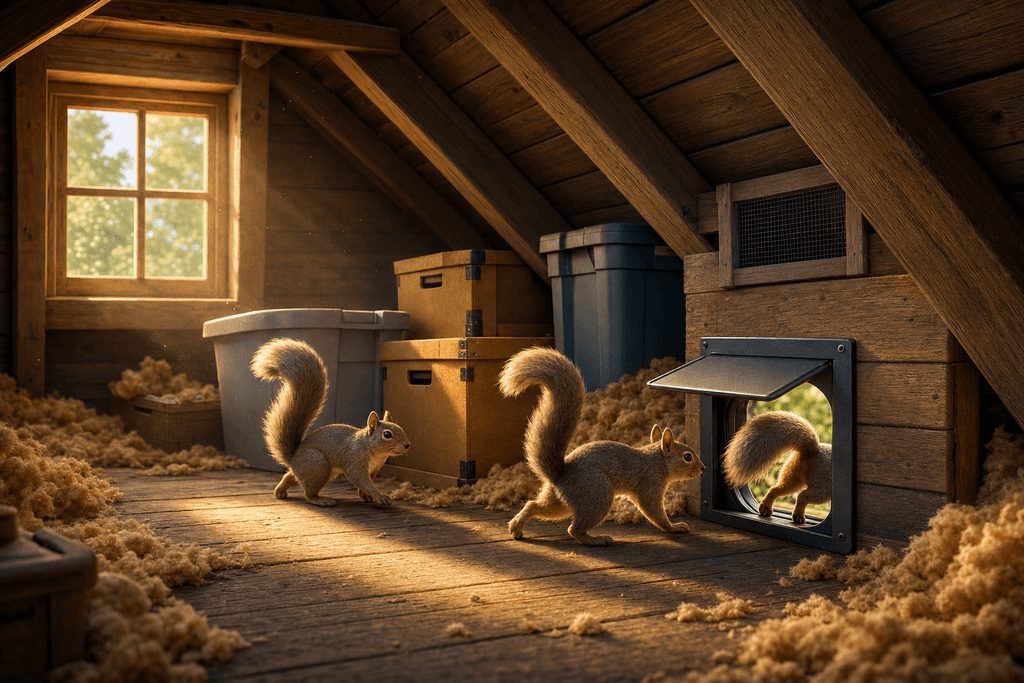
That scratching sound in your ceiling at dawn isn't your imagination, and it's probably costing you more than sleep. Squirrels treat attics like luxury apartments, and once they move in, they chew through wiring, destroy insulation, and invite their entire family to stay. Learning how to get squirrels out of attic spaces permanently requires understanding why they chose your home in the first place and what actually works to keep them from coming back.
Table of Contents
The Real Cost of Squirrel Damage
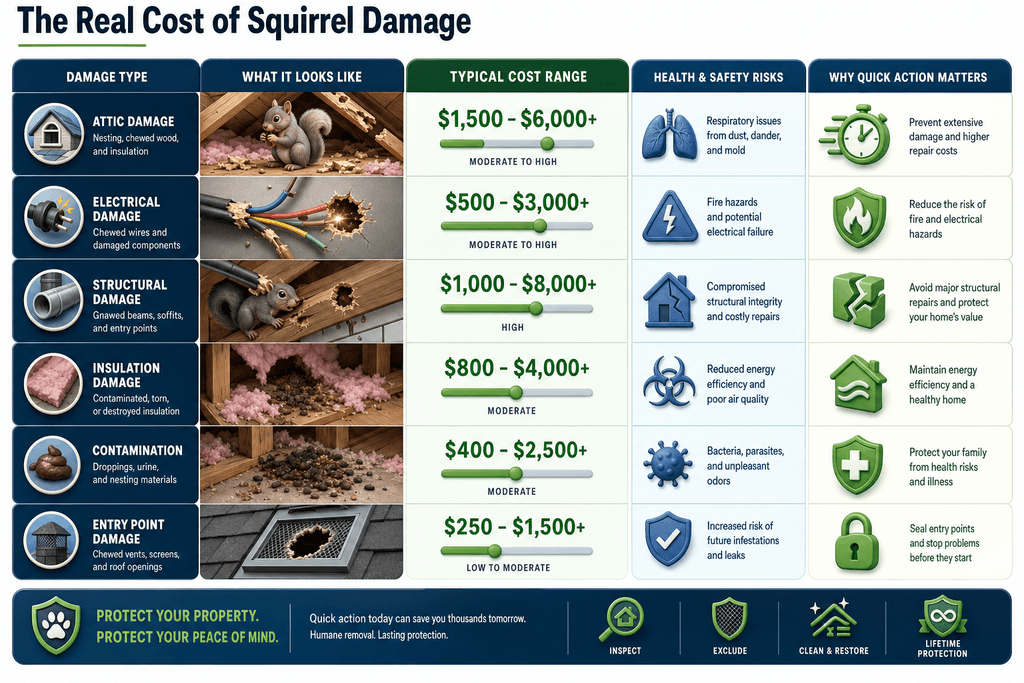
A single squirrel can chew through half an inch of wood in just a few hours, and when they move into your attic, they don't stop there. Most homeowners don't realize the extent of damage until it's already cost them thousands of dollars. Squirrels aren't just noisy houseguests - they're destructive forces that can turn your safe home into a hazard zone. Understanding what these critters actually do once they're inside helps explain why learning how to get squirrels out of attic spaces quickly matters so much for your wallet and your family's safety.
Fire Hazards from Electrical Damage
Squirrels have teeth that never stop growing, which means they need to chew constantly to keep them filed down. Unfortunately, your attic's electrical wiring looks like the perfect chew toy to them. When squirrels gnaw through wire insulation and expose the copper underneath, they create serious fire risks that most homeowners never see coming.
The numbers tell a scary story. According to fire safety experts, rodents cause an estimated 25,000 house fires each year in the United States. Here's what makes squirrel damage to wiring so dangerous:
- Exposed wires can spark and ignite nearby insulation or wood beams
- Damaged electrical systems often short circuit without warning
- Most homeowner insurance policies don't cover rodent damage unless you have specific riders
- Electrical repairs in attics typically cost between $1,000 to $3,000
This video shows exactly what you're dealing with when figuring out how do you get rid of squirrels in attic spaces and why acting fast matters.
Insulation Destruction and Energy Costs
Beyond the fire risks, squirrels absolutely destroy your attic insulation. They tear it apart to build nests, compress it by running across it constantly, and contaminate it with urine and droppings. Damaged insulation can reduce your home's energy efficiency by up to 30%, which means your heating and cooling bills shoot up month after month.
The financial impact adds up faster than most people expect:
- Replacing contaminated insulation costs between $1,500 and $4,000 for an average attic
- Energy bills can increase by $50 to $150 per month with damaged insulation
- Compressed insulation loses its R-value permanently and won't bounce back
Companies like Wildlife X Team see this damage daily across the Dallas-Fort Worth area. Their Wildlife Inspection Report® helps identify not just the squirrels but all the damage they've caused, which is crucial for eliminating squirrels in the attic completely.
Health Risks and Contamination
Squirrel droppings and urine create serious health hazards that linger long after the animals leave. Their waste carries diseases like leptospirosis and salmonella, while their nesting materials attract parasites including fleas, ticks, and mites. Every day squirrels stay in your attic, the contamination gets worse.
The health dangers include:
- Airborne particles from dried droppings can cause respiratory problems
- Parasites spread throughout your home via air ducts and wall cavities
- Squirrel urine soaks into wood and drywall, creating permanent odors
- Professional attic cleanup and disinfection typically costs $2,000 to $5,000
Structural Damage to Your Home
Squirrels don't just mess up insulation and wires - they actually damage the structure of your house. They chew through roof vents, fascia boards, and even wooden support beams. A family of squirrels can create multiple entry holes ranging from 2 to 6 inches wide, and each hole is an invitation for water damage, other pests, and heat loss.
Here's what structural repairs typically involve when learning how get rid of squirrels in attic spaces:
- Replacing damaged roof vents and soffit panels ($300 to $800 per vent)
- Repairing chewed fascia boards and trim ($500 to $1,500)
- Fixing damaged roof decking where squirrels created entry points ($800 to $2,000)
- Sealing and reinforcing all potential entry points ($1,000 to $3,000)
The total cost of squirrel damage often reaches $5,000 to $15,000 when you factor in everything from electrical repairs to structural fixes. That's why Wildlife X Team's approach includes not just removal but also their Animal Proofing & Exclusion Services to prevent repeat infestations. Their Renewable Lifetime Warranty means you won't face these costs again down the road.
Finding Every Entry Point
Squirrels can squeeze through holes the size of a golf ball, which means your attic probably has more entry points than you think. Most homeowners spot the obvious damage, like a chewed-up soffit or a missing roof vent cover, but squirrels are sneaky. They create backup entrances that stay hidden until you've sealed up what you thought was the only way in. That's when you realize the scratching sounds haven't stopped, and you're back to square one.
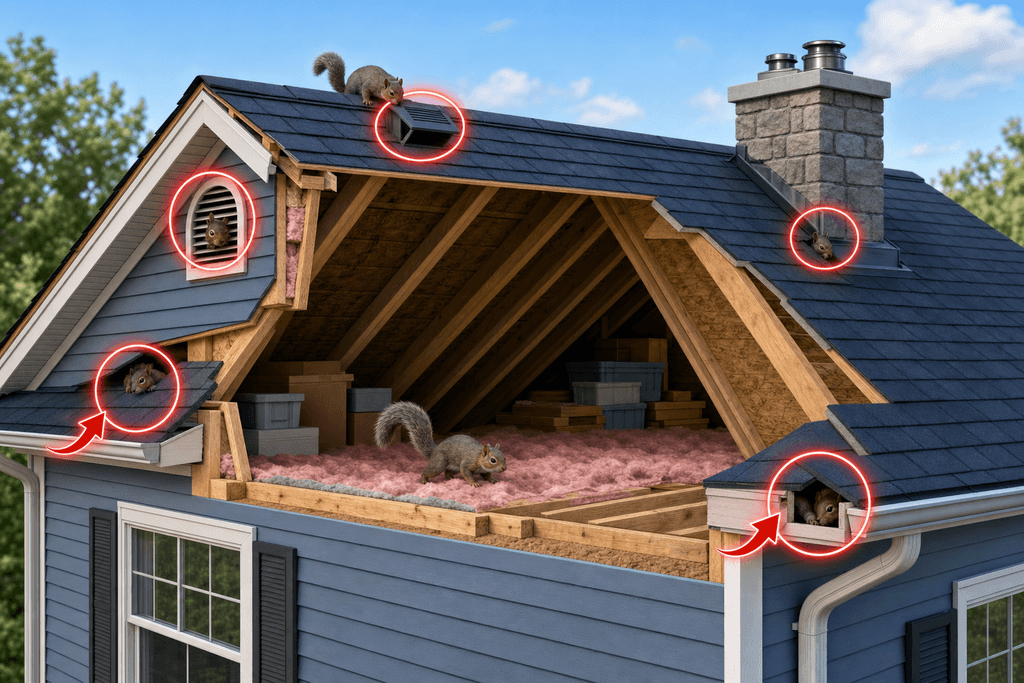
The most common entry points include roof vents that have lost their screens, gaps in the fascia boards where wood has rotted, and soffits with small openings that squirrels expand by chewing. But here's what catches people off guard: squirrels don't just use existing holes. They create secondary entry points by gnawing through weak spots in your roof structure, and these spots aren't always visible from the ground.
- Roof vents and turbine vents with damaged or missing screens
- Soffits and fascia boards, especially where wood meets metal
- Gaps around chimneys and where different roof lines meet
- Attic fan openings and gable vents
- Construction gaps where builders left small openings
This is where professional inspections make a real difference. The Wildlife Inspection Report® process involves checking every vulnerable area of your home's exterior, including spots you'd need a ladder and a lot of patience to reach yourself. When Wildlife X Team inspects a property in Fort Worth, Denton, or surrounding areas, they're looking for both active entry points and weak spots that could become problems later.
- Walk the entire roofline looking for chew marks or gaps
- Check all vents for damaged screens or missing covers
- Inspect soffits and fascia for holes or rotted wood
- Look for staining around potential entry points (indicates regular use)
- Examine trees within 8 feet of the roof for branch access
- Check the chimney cap and flashing condition
DIY inspections miss things because you're not trained to spot the subtle signs. A small gap that looks harmless might be a squirrel highway, and that secondary hole hidden under a shingle could explain why your first repair didn't work.
Humane Removal That Actually Works
Getting squirrels out of your attic isn't just about making them leave. It's about making sure they can't come back, and doing it in a way that doesn't harm the animals or put you at risk legally. Texas has specific regulations about wildlife removal, and the wrong approach can actually make your problem worse. Traps sound like a quick fix, but they often catch only some of the squirrels, leaving others to breed and continue the cycle.
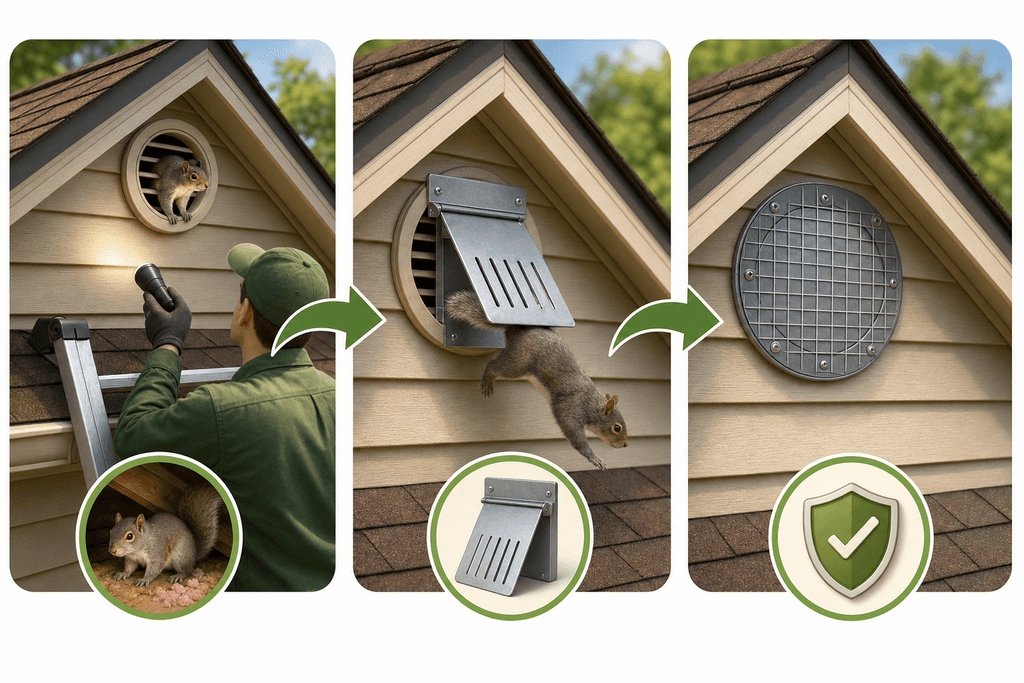
One-way exclusion doors are the method that actually solves the problem. These devices let squirrels exit through their usual entry points but prevent them from getting back in. The squirrels leave on their own schedule to find food and water, and when they try to return, they can't. No poison, no traps, no stressed animals dying in your walls.
Timing matters more than most people realize. If you seal up entry points during baby season (typically spring and late summer), you could trap infant squirrels inside who can't leave on their own. They'll die in your attic, which creates a whole different nightmare. Professional removal services know how to check for nests and handle situations where babies are present, either by waiting until they're mobile or using specialized techniques to reunite families outside the structure.
The Wildlife X Team process ensures complete removal by monitoring the exclusion devices and confirming all squirrels have left before permanently sealing entry points. This takes a few days to a week usually, but it's the difference between solving the problem once and dealing with it repeatedly. Some companies seal holes immediately and hope for the best, but that approach fails when squirrels are still inside or when secondary entry points weren't found.
Average Timeline: Most complete squirrel removals take 3-7 days from initial exclusion door installation to final sealing, with a success rate above 95% when all entry points are properly identified.
Permanent Prevention Strategies
Once the squirrels are out, the real work begins. Temporary fixes like stuffing steel wool in holes or nailing a board over a gap might hold for a few weeks, but squirrels are persistent. They'll chew through wood, pull away loose materials, and find new weak spots if you haven't properly secured the structure. Permanent prevention means using materials squirrels can't defeat and addressing every vulnerable area, not just the spots where they got in this time.
Metal flashing and heavy-gauge screening are your best defense for roof vents, soffits, and fascia repairs. Squirrels can chew through plastic, thin aluminum, and even some types of wood, but properly installed metal barriers stop them cold. Chimney caps with mesh screening prevent entry while still allowing proper ventilation, and vent guards protect attic fans and turbine vents without blocking airflow.
- Install metal flashing around vulnerable roof edges and joints
- Add heavy-gauge screening to all vents and openings
- Secure chimney caps with mesh small enough to exclude squirrels
- Repair foundation gaps and roof damage that creates access points
- Trim tree branches to at least 8 feet away from the roofline
Tree management is something homeowners often overlook when thinking about how to get squirrels out of attic spaces for good. Squirrels are incredible jumpers, but they need a launching point. Branches within 8 feet of your roof are basically bridges, and cutting them back removes the easiest access route. This doesn't mean you have to remove trees entirely, just maintain proper clearance.
The Renewable Lifetime Warranty offered by Wildlife X Team backs up their prevention work. This isn't just a feel-good promise. It means if squirrels find a way back in through areas that were repaired, they'll come back and fix it. That kind of guarantee only makes sense when the company is confident in their exclusion methods and materials.
Cleaning Up After Squirrels
Getting the squirrels out is only half the job. What they leave behind in your attic can cause health problems and attract new wildlife if it's not properly addressed. Squirrel droppings and urine carry diseases like leptospirosis and salmonella, and the smell alone can draw other animals looking for a place to nest. Contaminated insulation loses its effectiveness, which means higher energy bills even after the squirrels are gone. Most people don't realize how much damage has been done until they actually look at the affected areas.
Proper disinfection requires more than spraying some cleaner around. Professional decontamination involves removing soiled insulation, treating all surfaces with appropriate disinfectants, and ensuring the space is safe before new insulation goes in. The attic needs to be completely cleaned because squirrel pheromones can linger and signal to other wildlife that this is a good spot to move in.
- Remove all contaminated insulation and nesting materials
- Disinfect all surfaces with professional-grade products
- Treat the space to eliminate pheromones and odors
- Replace damaged insulation to restore energy efficiency
- Seal all entry points to prevent future wildlife attraction
Sometimes the insulation damage is so extensive that partial replacement won't cut it. If squirrels have been living in your attic for months, they've likely compressed insulation in high-traffic areas, soiled large sections, and created nests that have destroyed the material's integrity. Complete insulation replacement might sound extreme, but it's often the only way to restore your attic to proper condition and ensure you're not living above a contaminated space.
DIY Approach: Limited to surface cleaning, risk of disease exposure, incomplete odor removal, potential to miss contaminated areas, no guarantee of proper disinfection.
Professional Service: Complete contamination removal, proper protective equipment, thorough disinfection, insulation replacement when needed, elimination of attractant odors that draw new wildlife.
The cleanup phase is what prevents future infestations as much as the physical barriers do. Wildlife X Team's attic cleanup and restoration service addresses both the visible damage and the invisible problems that could bring squirrels or other animals back. When you're trying to figure out how do you get rid of squirrels in attic spaces permanently, remember that elimination and prevention work together, and neither is complete without proper cleanup.
Why DIY Squirrel Removal Usually Fails
About 73% of homeowners who try to handle squirrel problems themselves end up calling professionals within three months. The reason is simple but frustrating. When you're trying to figure out how to get squirrels out of attic spaces, you're dealing with animals that have spent thousands of years perfecting their survival skills. Most people spot the obvious hole where squirrels are coming and going, seal it up, and think the problem is solved. But squirrels rarely use just one entrance.
The Hidden Entry Point Problem
The biggest mistake in DIY squirrel removal is missing the secondary access points. Squirrels create backup entrances that most untrained eyes never spot. These hidden gaps might be under roof shingles, behind fascia boards, or in areas you can't even see without proper equipment.
- Roof-to-wall intersections where materials meet at odd angles
- Ventilation gaps that look too small but squirrels can squeeze through
- Deteriorated wood around chimneys that blends in with normal wear
- Foundation gaps hidden by landscaping or debris
Wildlife X Team's inspection process includes checking over 30 common entry points that homeowners typically miss. A single overlooked gap means your entire effort was wasted because squirrels will find their way back in within days.
The Trap and Repeat Cycle
Many people buy traps thinking that's how you get rid of squirrels in attic spaces for good. They catch one or two squirrels and feel accomplished. Then more show up.
- You trap the current squirrels but leave entry points open
- New squirrels move into the now-vacant territory within weeks
- You buy more traps and bait, spending money repeatedly
- The cycle continues because the root problem wasn't addressed
Trapping without exclusion work is like bailing water from a boat without plugging the hole. The average homeowner spends $200-400 on traps, bait, and supplies over several months, only to still have squirrels.
Safety Risks Nobody Talks About
Attic work is dangerous even without wildlife involved. You're dealing with unstable footing, poor lighting, insulation that irritates skin and lungs, and tight spaces. Add in squirrels that might be cornered and defensive, and the risk goes up significantly.
- Squirrel bites can transmit diseases and require medical attention
- Falls through ceiling joists cause serious injuries every year
- Exposure to contaminated insulation creates respiratory problems
The Real Cost Comparison
When eliminating squirrels in the attic, most DIY attempts cost $300-600 in materials and still fail. Professional services like those from Wildlife X Team include inspection, removal, exclusion, and warranty protection. The one-time investment prevents the endless cycle of buying more supplies and dealing with return visits from squirrels who found the entries you missed.
Your Next Steps to a Squirrel-Free Home
Getting squirrels out of your attic is only half the battle. The real trick is making sure they never come back. Most homeowners who try DIY methods end up dealing with the same problem a few months later because they miss hidden entry points or don't properly seal everything up. That's why knowing how to get squirrels out of attic spaces the right way matters so much.
The key things to remember are pretty simple. Act fast before the damage gets worse, because squirrels can chew through wiring and insulation in just weeks. Get a professional inspection that finds every single entry point, not just the obvious ones. And make sure whoever does the work combines humane removal with proper exclusion work.
Wildlife X Team handles all of this for homes in Fort Worth, Denton, Granbury, and surrounding areas. We find the entry points you'd never spot on your own, remove the squirrels without harming them, and seal everything up so they can't get back in. Our Wildlife Inspection Report shows you exactly what's going on in your attic and what needs to happen next.
The longer you wait, the more damage those squirrels cause. But once you understand how eliminating squirrels in the attic actually works, you can make a smart choice about fixing the problem for good. You can reach us at (817) 799-8686 or stop by our office at 11833 Katy Rd Keller, TX 76244.
Still have questions about the whole process? Let's cover some of the most common things people ask us.
Common Questions About Attic Squirrels
Dealing with squirrels in your attic brings up a lot of questions, especially if it's your first time facing this problem. Most homeowners want to know what to expect during the removal process and how to make sure those furry intruders don't come back. The answers below cover the most common concerns we hear from people trying to figure out how to get squirrels out of attic spaces for good.
How long does squirrel removal take?
Most professional squirrel removal jobs take between 1-3 days for the initial removal, but the complete process including exclusion work can take up to a week. The timeline depends on how many squirrels are present, how many entry points need sealing, and whether there are babies in the nest. Wildlife X Team typically starts work the same day as the inspection and completes most residential jobs within a few days.
Will squirrels leave on their own?
Squirrels won't leave your attic voluntarily because they've chosen it as their home. Your attic provides shelter from predators, weather protection, and a safe place to raise babies. Waiting for squirrels to leave on their own usually makes the problem worse since they'll continue breeding and causing damage. Professional removal is the only reliable way to eliminate squirrels in the attic permanently.
What sounds indicate squirrels vs other animals?
Squirrels make scratching and scurrying sounds mostly during daylight hours, especially early morning and late afternoon. You'll hear them running across the ceiling and gnawing on wood. Raccoons are much heavier and louder, usually active at night. Rats make lighter scratching sounds throughout the night. The daytime activity pattern is the biggest clue that you're dealing with squirrels rather than nocturnal pests.
How much does professional removal cost?
Professional squirrel removal typically costs between $300-$1,500 depending on the severity of the infestation and how much exclusion work is needed. This includes trapping, removal, sealing entry points, and prevention measures. While some companies like Terminix offer basic removal, comprehensive services that include attic restoration and lifetime warranties cost more upfront but prevent repeat problems. Getting multiple quotes helps you understand what's included in each price.
Can squirrels come back after removal?
Squirrels can absolutely return if entry points aren't properly sealed. That's why exclusion work matters just as much as removal. Professional animal proofing identifies and seals every potential entry point, not just the obvious holes. Wildlife X Team's renewable lifetime warranty covers this because proper exclusion prevents future infestations when done correctly.
Is it safe to go in my attic with squirrels present?
You shouldn't enter your attic while squirrels are present. Cornered squirrels can bite and scratch when they feel threatened, and their droppings carry diseases like leptospirosis and salmonella. The insulation contaminated by their urine and feces also poses health risks. Let professionals handle the removal since they have the proper equipment and training to work safely around wildlife.