
Fort Worth Snake Removal Guide for Homes and Yards

Fort Worth homeowners spot snakes in their yards more than 3,000 times each year, with most encounters happening between April and October when temperatures climb. Whether you're dealing with a harmless rat snake near your garden shed or a venomous copperhead by your back porch, knowing how to respond can protect your family and pets. This guide walks you through identifying common Fort Worth snakes, understanding why they're attracted to your property, and when to call professionals like Wildlife X Team at (817) 799-8686 for safe snake removal.
Table of Contents
Common Snakes Found in Fort Worth
Texas has more snake species than just about any other state, with over 70 different types slithering around. The Fort Worth area is home to about 15 of these species, and most of them are completely harmless to people and pets. In fact, many of these snakes actually help keep your property free from rodents and other pests that can cause real problems. Understanding which snakes live in your area and how to tell them apart can save you a lot of worry when you spot one in your yard.
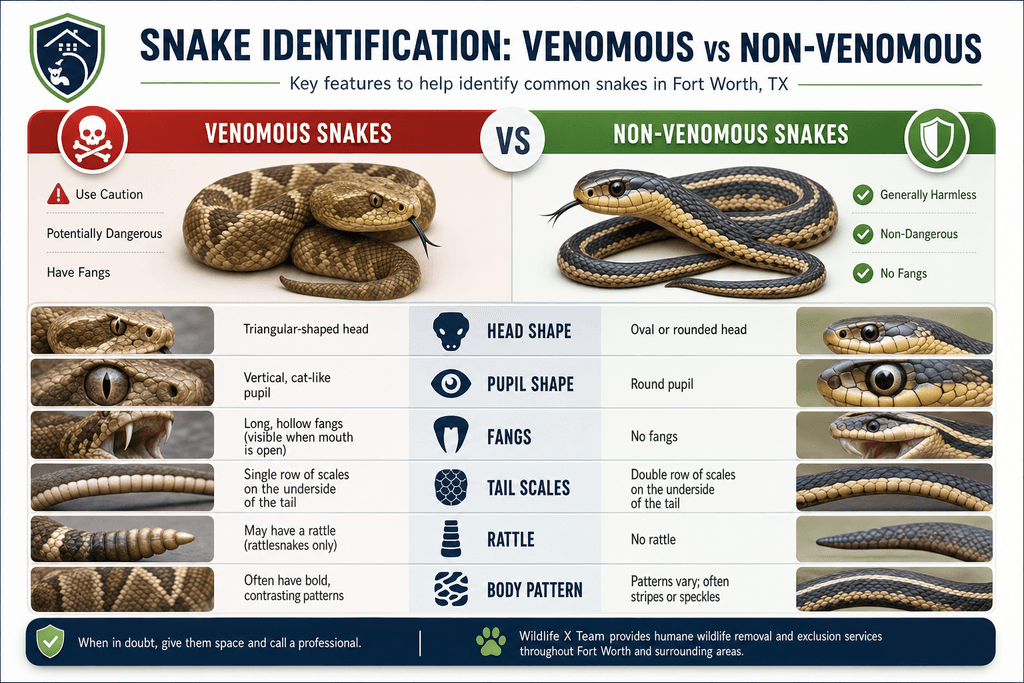
The Venomous Ones You Need to Know
Out of all the snakes in the Fort Worth area, only four species are venomous and potentially dangerous. These are the ones that require professional snake removal Fort Worth services if they show up near your home. Copperheads are the most common venomous snake you'll encounter, followed by cottonmouths (also called water moccasins), rattlesnakes, and the rare coral snake.
Here's what makes these snakes dangerous:
- Copperheads have hourglass-shaped bands and blend in perfectly with leaves and mulch
- Cottonmouths are thick-bodied water snakes with white mouths they show when threatened
- Rattlesnakes have the obvious rattle on their tail and diamond-shaped patterns
- Coral snakes have red, yellow, and black bands (remember: red touches yellow, kills a fellow)
The Helpful Harmless Ones
Most snakes you'll see around Fort Worth are completely harmless. Rat snakes, garter snakes, and rough green snakes are actually doing you a favor by eating mice, rats, and insects that would otherwise invade your home. These beneficial snakes don't want anything to do with people and will usually slither away if given the chance.
Common harmless species include:
- Texas rat snakes that can grow up to 6 feet long but are gentle giants
- Garter snakes with their distinctive stripes running down their bodies
- Rough green snakes that live in trees and bushes
- Western coachwhips that are super fast but totally harmless
How to Tell Venomous from Harmless Snakes
Knowing the difference between dangerous and harmless snakes can help you decide whether you need immediate professional help or can just let the snake move along. The shape of the head and eyes are your biggest clues, though you should never get close enough to examine a snake in detail. Wildlife X Team provides expert snake removal Fort Worth services when you're not sure what you're dealing with or when venomous snakes are too close to your home.
Here are the key differences to look for from a safe distance:
Venomous vs Non-Venomous Snake Features
Venomous Snakes:
- Triangle-shaped heads that are wider than their necks
- Vertical slit pupils like a cat's eyes
- Heat-sensing pits between the eye and nostril
- Thick, heavy bodies with short tails
- Single row of scales on the underside of the tail
Non-Venomous Snakes:
- Narrow heads that blend smoothly with their necks
- Round pupils like human eyes
- No pits on the face
- Slender bodies with longer, thinner tails
- Double row of scales on the underside of the tail
Remember that even harmless snakes will bite if they feel threatened, so it's always best to keep your distance. If you're dealing with any snake near your home and aren't sure what it is, calling professionals who specialize in safe, humane removal is the smartest move.
Why Snakes Come to Your Property
North Texas sees more than 40 species of snakes, and about a dozen of them regularly show up in Fort Worth yards. Your property isn't attracting snakes by accident. These reptiles follow a simple formula when choosing where to hang out, and understanding what draws them in is the first step to keeping them away. Most homeowners don't realize their yard is basically a snake buffet until they spot one sunning itself on the back patio.
Food sources are the number one reason snakes visit residential properties. If you have mice, rats, frogs, or insects around your home, you're rolling out the welcome mat for snakes. They're not picky eaters, and a yard with plenty of prey means they'll stick around for weeks or even months.
- Rodent populations near bird feeders, compost bins, or pet food bowls
- Frogs and toads attracted to water features and damp areas
- Insects and grubs in mulch beds and under landscaping
- Small lizards that hide in rock walls and garden areas
Water is another major draw. Leaky outdoor faucets, standing water in flower pots, and decorative ponds create the perfect environment for snakes to thrive. Even a dripping air conditioning unit can provide enough moisture to keep snakes comfortable during hot Texas summers. The Keller and Fort Worth areas see increased snake activity near creeks and drainage areas, especially after heavy rains.
Shelter spots are everywhere in most yards, even though you might not see them as snake hideouts. Wood piles stacked against the house, overgrown grass, and piles of leaves or yard debris give snakes exactly what they need to feel safe. Rock walls and stone landscaping look great but create dozens of small gaps where snakes can slip in and out without being noticed.
Foundation gaps and crawl space vents are like open doors for snakes looking for a cool place to escape the heat. A gap as small as a quarter inch is enough for many snake species to squeeze through. Seasonal patterns matter too. Spring and fall bring the most snake activity as they search for mates and prepare for temperature changes.
Snake-Proofing Your Fort Worth Home
Making your property less appealing to snakes doesn't require a complete yard overhaul. Simple changes to how you maintain your outdoor spaces can make a huge difference in whether snakes decide to move in or move on. The goal is to eliminate the three things snakes need most, which are food, water, and shelter. Once you remove these attractants, your property becomes just another place they'll pass through instead of calling home.
Yard maintenance is your first line of defense. Keep grass cut short, ideally under three inches, and clear away leaf litter and debris regularly. Snakes love tall grass because it gives them cover while they hunt, and piles of leaves create warm spots where they can hide during cooler months.
This video walks through practical steps you can take right away to make your yard less inviting to snakes. The techniques shown work especially well in the Fort Worth and Denton areas where we see the most common snake species.
- Move firewood piles at least 20 feet from your house and elevate them off the ground
- Seal foundation cracks and gaps larger than a quarter inch with caulk or foam
- Install door sweeps on exterior doors, including garage doors
- Cover crawl space vents with quarter-inch hardware cloth
- Remove bird feeders or place them far from the house to avoid attracting rodents
- Trim bushes and shrubs away from the foundation
Sealing entry points requires a careful inspection of your home's exterior. Check where pipes enter the house, around AC units, and along the foundation where settling may have created gaps. Many homeowners in Southlake and Grapevine find that older homes have multiple entry points they never knew existed.
Proper storage matters more than most people think. Building materials, garden supplies, and outdoor equipment should be organized and elevated when possible. Rodent control is actually your most important snake prevention strategy because it removes their primary food source. If mice and rats have nothing to eat around your property, they leave, and the snakes follow them.
Wildlife X Team's exclusion services at 11833 Katy Rd in Keller provide long-term protection by identifying and sealing every potential entry point. The inspection process covers areas most homeowners miss, and the repairs come with a renewable lifetime warranty. This approach works better than trying to handle snake problems after they've already moved in.
Safe Snake Removal Methods
Finding a snake in your garage or curled up near your back door creates an immediate problem that needs solving. The first rule is simple but critical: never attempt to handle or kill a snake you cannot positively identify. North Texas has several venomous species including copperheads, cottonmouths, and rattlesnakes, and they can look surprisingly similar to harmless snakes if you don't know what to watch for. Even non-venomous snakes will bite when they feel threatened, and those bites can still cause infections or allergic reactions.
Professional removal ensures safety for everyone involved, including the snake. Trying to catch or kill a snake yourself often makes the situation worse. Snakes can strike faster than most people expect, and cornering one in a shed or under a deck puts you at serious risk.
Humane removal techniques focus on capturing and relocating snakes to appropriate habitats away from residential areas. This approach works better than killing snakes because it doesn't create a gap in the local ecosystem that other snakes will just fill. Plus, many snake species in Texas are protected, and killing them can result in fines.
- Professional assessment of the snake species and risk level
- Safe capture using specialized tools and techniques
- Relocation to suitable habitat at least several miles from residential areas
- Documentation and reporting for venomous species encounters
When you call Wildlife X Team for snake removal in Fort Worth or surrounding areas like Trophy Club and Flower Mound, the process starts with a quick response to assess the situation. The team identifies the snake species, determines the best removal method, and safely captures the animal. Emergency response for venomous snake encounters gets priority scheduling because these situations can't wait.
The service doesn't stop once the snake is gone. A follow-up inspection identifies how the snake got onto your property and where it might have been hiding. This inspection often reveals entry points into crawl spaces, gaps under doors, or holes in foundation walls that need sealing. Many customers in Granbury and Weatherford discover that fixing these access points prevents future snake problems completely.
Real situations show why professional help matters. One homeowner in North Richland Hills found a copperhead in their child's playroom and tried to trap it with a trash can. The snake escaped into the wall, and it took professionals with thermal imaging to locate and remove it safely. Another family in Azle had rat snakes returning to their attic every spring until Wildlife X Team sealed the entry points and removed the rodent population that was attracting them.
The combination of removal and prevention creates lasting results. You can reach the Keller location at (817) 799-8686 for snake removal throughout the service area, which covers everywhere from Possum Kingdom Lake to Argyle. The approach focuses on solving the immediate problem while making sure it doesn't happen again next month or next season.

The Cost of Ignoring Snake Problems
A single venomous snake bite can cost anywhere from $20,000 to $100,000 in medical treatment, and that's before you factor in lost wages or long-term complications. When homeowners in Fort Worth spot a snake and decide to "wait and see" if it goes away on its own, they're gambling with much more than just their peace of mind. The financial and legal consequences of ignoring snake problems can pile up fast, turning what could have been a simple removal into a nightmare scenario that affects your wallet, your property value, and potentially your legal standing.
The Real Price of Venomous Encounters
Medical bills from snake bites don't just cover the emergency room visit. The costs multiply quickly when you need antivenom, which can run $10,000 per vial, and most bites require multiple vials.
- Emergency room treatment and observation typically costs $15,000-$30,000 minimum
- Antivenom treatment adds another $20,000-$70,000 depending on severity
- Follow-up care, physical therapy, and potential tissue damage repair can exceed $50,000
- Lost income during recovery periods ranging from weeks to months
- Permanent nerve damage or disability in severe cases leads to ongoing medical expenses
If someone gets bitten on your property, you could be held liable for their medical costs and suffering. Homeowner's insurance might not cover wildlife-related injuries if you knew about the problem and didn't address it.
Property Value Takes a Hit
Real estate agents will tell you that known snake problems can knock 10-20% off your home's value. Buyers get spooked when they hear about reptile issues, and disclosure laws in Texas require you to mention ongoing pest problems.
- Potential buyers often walk away entirely when snakes are mentioned during inspections
- Properties with documented snake issues sit on the market 40% longer on average
- Home appraisals drop when inspectors find evidence of wildlife intrusion
- Neighboring properties can also see value decreases if your snake problem spreads
DIY Removal Versus Professional Services
Many Fort Worth homeowners try to handle snake removal themselves to save money. The problem is that DIY approaches usually fail because they don't address why snakes showed up in the first place.
- DIY Approach: Costs seem lower upfront at $50-200 for traps and repellents, but snakes keep coming back because entry points remain open and food sources aren't eliminated
- DIY Approach: Risk of misidentifying venomous species leads to dangerous encounters and potential bites
- DIY Approach: Store-bought repellents rarely work and waste money on repeated purchases
- Professional Services: Wildlife X Team's snake removal fort worth services include identification, safe removal, and exclusion work that prevents future problems
- Professional Services: Comprehensive inspections find the root causes like rodent infestations that attract snakes
- Professional Services: Renewable Lifetime Warranty means you're protected long-term, not just for one removal
The Secondary Pest Connection
Snakes don't just randomly pick your yard. They're following the food, which usually means you've got a rodent problem you might not even know about yet. Ignoring the snake means ignoring the mice, rats, or other pests that brought it there.
- Rodent populations can double every few months when left unchecked
- Mice and rats cause structural damage by chewing through wiring and insulation
- Disease transmission from rodent droppings poses serious health risks to families
- Addressing only the snake without fixing the pest problem guarantees more snakes will arrive
The companies that focus only on snake removal fort worth without investigating what attracted them are missing half the problem. That's why comprehensive wildlife services that look at the whole picture save you money in the long run.
Protecting Your Fort Worth Property from Snakes
Dealing with snakes around your Fort Worth home doesn't have to be scary if you know what you're looking at. Being able to tell the difference between a harmless rat snake and a venomous copperhead can save you a lot of stress and keep your family safe. Most snakes you'll see in your yard are actually helpful because they eat rodents and other pests, but that doesn't mean you want them living under your deck or in your garage.
The best way to handle snake problems is to stop them before they start. Keeping your grass short, removing brush piles, and sealing up gaps around your foundation makes your property way less attractive to snakes looking for a place to hide or hunt.
But sometimes prevention isn't enough, especially if you've already got snakes showing up regularly or you're not sure what kind you're dealing with. That's when calling professionals for snake removal fort worth services makes sense. Wildlife X Team handles snake situations throughout Fort Worth, Keller, Denton, and surrounding areas with humane methods that actually work long-term.
The renewable lifetime warranty means you're not just paying for a one-time fix. You're getting ongoing protection that covers you if snakes find their way back, which gives you actual peace of mind instead of just crossing your fingers and hoping.
If you're seeing snakes more than once or twice a season, or if you've spotted venomous species near your home, it's worth getting a professional inspection. You can reach Wildlife X Team at (817) 799-8686 or visit their location at 11833 Katy Rd, Keller, TX 76244.
Snake Removal Questions Answered
Finding a snake on your property brings up a lot of questions fast. Most Fort Worth homeowners aren't sure what kind of snake they're dealing with or what steps to take next. These answers cover the most common concerns people have when they spot a snake in their yard or home.
How can I tell if a snake is venomous?
Venomous snakes in Fort Worth typically have triangular-shaped heads, vertical slit pupils, and heat-sensing pits between their eyes and nostrils. The four venomous species in our area are copperheads, cottonmouths, coral snakes, and rattlesnakes. That said, identifying snakes from a distance is tricky, and many harmless snakes flatten their heads when threatened to look more dangerous. If you're not completely certain, treat every snake as potentially dangerous and call a professional for snake removal fort worth services.
What should I do if I find a snake inside my house?
Stay calm and keep people and pets away from the area. Don't try to catch or kill the snake yourself, as this is when most snake bites happen. Close the door to contain it in one room if possible, and call Wildlife X Team right away. We respond quickly to snake calls and can safely remove the snake while identifying how it got inside in the first place.
Will snakes come back after removal?
Snakes don't have a homing instinct like some animals, so the individual snake won't return once removed. However, if your property has the conditions that attracted the first snake, others might show up. This includes things like rodent populations, water sources, tall grass, and gaps under foundations. Wildlife X Team offers exclusion services that seal entry points and address the conditions bringing snakes to your property, backed by our renewable lifetime warranty.
When is the best time for snake-proofing services?
Late winter or early spring is ideal, right before snakes become active as temperatures warm up. Snakes in Fort Worth are most active from April through October. Getting your property snake-proofed before this period gives you protection during peak season, though we provide exclusion services year-round whenever you need them.
How quickly does Wildlife X Team respond to snake calls?
We treat snake removal as a priority service because we understand the concern it causes. Most calls receive same-day or next-day service depending on your location and our current schedule. When you call, we'll give you a specific timeframe and safety tips to follow while waiting for our team to arrive.
What areas do you cover for snake removal?
Wildlife X Team provides snake removal fort worth services throughout the Dallas-Fort Worth area, including Fort Worth, Denton, Granbury, and surrounding communities. If you're not sure whether we service your specific location, just give us a call and we'll let you know right away.