
Find Dead Animal Removal Near You for Fast Odor and Cleanup Help

A dead animal hidden in your walls or attic doesn't just smell bad for a day or two—the odor gets worse as decomposition spreads bacteria and fluids into your insulation, ductwork, and living spaces. What starts as a faint unpleasant scent quickly becomes unbearable, and waiting even a few days can turn a simple removal job into a costly restoration project. If you're searching for dead animal removal near me in Keller, Fort Worth, or surrounding areas, understanding why professional help matters can save you from weeks of lingering smells and potential health risks.
Table of Contents
Why Dead Animals End Up in Your Home
Every year, thousands of North Texas homeowners search for "dead animal removal near me" after discovering a terrible smell in their house. The truth is, your home looks like a perfect shelter to wildlife, especially during our scorching summers and occasional cold snaps. Animals don't plan to die in your walls or attic, but once they get inside, nature takes its course. Understanding why this happens can help you spot the warning signs before a small problem becomes a smelly nightmare.
Animals Seeking Shelter in Extreme Weather
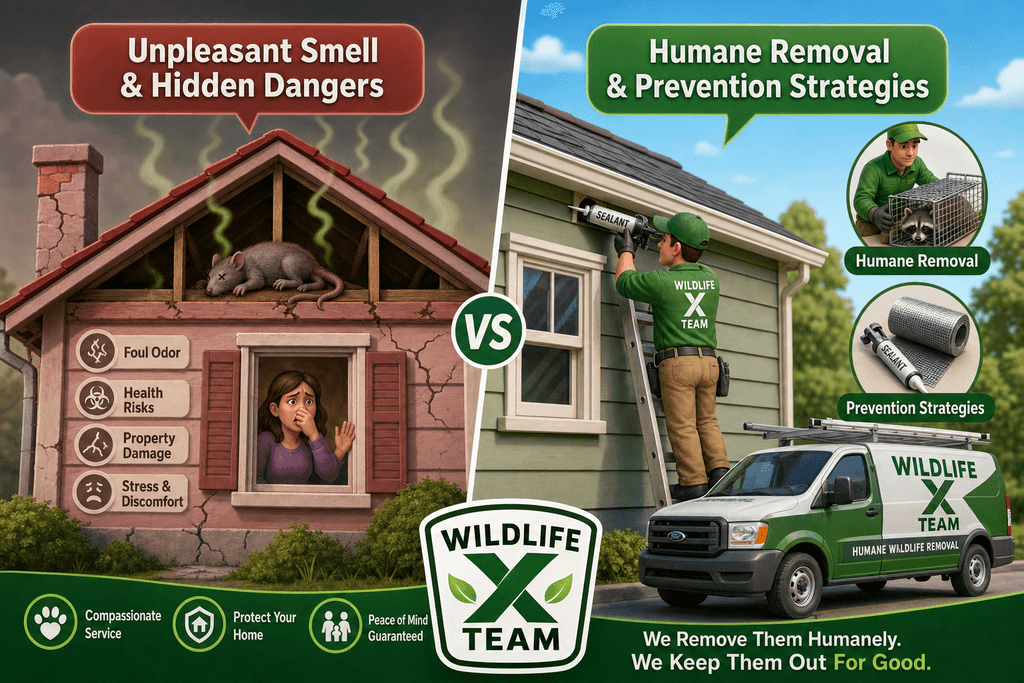
When temperatures hit triple digits or drop below freezing, wildlife does exactly what we do - they look for climate-controlled spaces. Your attic stays cooler in summer and warmer in winter than the outdoors. Squirrels, raccoons, and opossums don't need much of an opening to squeeze inside, sometimes just a gap the size of a quarter.
Once inside, these animals face new dangers they wouldn't encounter in nature. They can get trapped between walls, fall into vents, or simply get disoriented in the dark spaces of your home. Wildlife X Team has found that most dead animal calls spike during the first cold snap of fall and the hottest weeks of summer, when animals are most desperate for shelter.
78% of dead animal removal calls in the Dallas-Fort Worth area involve rodents or small mammals that entered through preventable entry points.
Poison and Natural Causes
Many homeowners try to solve rodent problems with poison, not realizing this often makes things worse. Rats and mice that consume poison don't conveniently die outside. They crawl into the deepest, most hidden parts of your home before the poison takes effect. This means they often die inside your walls, under insulation, or in crawl spaces where you can't easily reach them.
Natural causes also play a role. Animals living in your attic might die from disease, old age, or injuries sustained while navigating your home's structure. Unlike outdoor deaths where scavengers quickly remove the carcass, indoor deaths create a contained decomposition situation that concentrates odors.
Older Homes Have More Vulnerabilities
Homes in Fort Worth, Keller, and surrounding areas that were built before 1990 have significantly more entry points for wildlife. Building codes have changed, and older construction methods left gaps that modern homes avoid. Common problem areas include:
- Deteriorating roof soffits and fascia boards that create openings
- Unscreened attic vents and gable vents with damaged screens
- Foundation cracks and gaps around utility penetrations
- Chimney caps that have rusted away or were never installed
- Worn weatherstripping around garage doors and entry doors
Even newer homes aren't immune. Construction gaps, damaged siding from hail storms, and improperly sealed roof penetrations all create opportunities. Wildlife X Team's inspection process identifies these vulnerabilities before they become entry points.
Homes over 30 years old average 12-15 potential wildlife entry points, compared to just 3-5 in homes built after 2010.
Secondary Pest Problems
A dead animal inside your home doesn't just smell bad - it becomes a magnet for other pests. Within 24-48 hours of death, flies discover the carcass and begin laying eggs. These eggs hatch into maggots that feed on the decomposing tissue. The problem multiplies quickly because a single fly can lay hundreds of eggs.
Other scavengers get attracted too. Beetles, ants, and even other rodents are drawn to the smell. Some homeowners dealing with one dead mouse end up with an infestation of carpet beetles or dermestid beetles that arrived to feed on the carcass. This is why fast removal matters so much - every day you wait allows the secondary pest problem to grow.
The decomposition process also releases bacteria and pathogens into your home's air. These microscopic particles circulate through your HVAC system, spreading the odor and potential health risks throughout your living spaces. Professional removal and cleanup addresses both the source and the contamination it creates.
Signs You Have a Dead Animal Problem
That smell hit you the moment you walked through the front door, and it's not going away. Dead animals create one of the most distinctive and unpleasant odors you'll ever encounter in your home. The smell of decomposition is sweet, sickly, and impossible to ignore once it starts. Many homeowners in Keller and Fort Worth mistake it for sewer problems or spoiled food at first, but this odor has a unique quality that gets worse by the day. Understanding what you're dealing with can help you act fast before the problem spreads throughout your entire house.
The smell itself tells a story about what's happening inside your walls or attic. Fresh decomposition smells different than a carcass that's been there for weeks. You might notice the odor is strongest in one room or near specific vents where air circulates from hidden spaces.
- Stains appearing on ceilings or walls from bodily fluids seeping through drywall
- Sudden increase in flies, maggots, or beetles concentrated around certain areas
- Scratching or scurrying sounds that abruptly stopped after being a nightly occurrence
- Your pets obsessively sniffing or pawing at particular walls, vents, or floor areas
- Dark spots or discoloration that weren't there before on your ceiling
The visual signs often appear after the smell has already taken hold. By the time you see staining, the decomposition process is well underway and fluids have saturated insulation or wood. Flies don't lie either - if you're seeing an unusual number of them indoors during cooler months, they've found something.
Quick Checklist: Do You Have a Dead Animal?
- Persistent foul odor that gets worse over several days
- Smell is localized to one area of your home
- Increased insect activity, especially flies or beetles
- Visible stains on walls or ceilings
- Wildlife sounds that suddenly ceased
- Pets acting unusually interested in specific spots
What Professional Dead Animal Removal Includes
Finding a dead animal is only half the battle. Most homeowners who try the DIY route quickly realize they're in over their heads. The carcass might be buried deep in insulation, wedged between wall studs, or tucked in a crawl space you can barely access. Professional removal starts with a thorough inspection using tools and experience that pinpoint exactly where the animal died. At Wildlife X Team, we've pulled dead raccoons from chimneys, squirrels from wall cavities, and possums from under decks that homeowners never would have found on their own.
The removal process follows strict health and safety protocols because decomposing animals carry serious risks. We don't just grab the carcass and toss it in a bag. Every step matters when you're dealing with bacteria, parasites, and potential disease transmission.
This video shows some effective methods for tackling dead animal odors, though professional removal addresses the source rather than just masking the smell.
Professional-grade odor elimination goes beyond air fresheners and vinegar. We use enzymatic cleaners and specialized deodorizers that break down the organic compounds causing the smell. The contaminated area gets completely sanitized and disinfected, not just wiped down. Insulation that's been soaked with bodily fluids often needs replacement because the smell has permanently absorbed into the material.
- Inspection with thermal imaging and moisture detection equipment
- Safe extraction using protective gear and proper tools
- Complete odor neutralization with commercial-grade products
- Deep sanitization of all affected surfaces and materials
- Proper disposal following Texas environmental regulations
- Attic cleanup and restoration if insulation was damaged
The difference between basic removal and what Wildlife X Team provides comes down to completeness. Some companies pull out the carcass and call it done. We address every aspect - from the initial smell to preventing the next animal from getting in. Our approach includes sealing entry points and identifying how the animal accessed your home in the first place.
Health Risks and Property Damage from Delayed Removal
Waiting even a few extra days to remove a dead animal can create problems that last for months or years. Decomposition doesn't pause while you're deciding whether to call someone. The bacteria spreading from the carcass multiplies rapidly, and if your HVAC system pulls air from the contaminated space, you're circulating pathogens throughout your entire home. Families in Denton and Granbury have dealt with respiratory issues that started right after a dead animal situation went unaddressed for too long.
The health risks extend beyond just the unpleasant smell. Decomposing animals release harmful bacteria like salmonella and E. coli into the surrounding environment. These pathogens can become airborne or contaminate surfaces that you and your family touch daily.
- Disease transmission through direct contact with contaminated insulation or surfaces
- Airborne bacteria spreading through ventilation systems to every room in your house
- Permanent odor absorption in porous materials like drywall, wood, and fabric
- Secondary infestations of flies, beetles, and mites that feed on the carcass
- Decreased home value and mandatory disclosure requirements when selling
- Allergic reactions and respiratory problems in children and sensitive individuals
Property damage compounds quickly once fluids start seeping into building materials. Ceiling drywall can become so saturated it needs complete replacement. The smell penetrates deep into wooden beams and subflooring where it's nearly impossible to remove without professional intervention. Homeowners who wait too long often face repair bills that are five times higher than if they'd called for dead animal removal near me right away.
The secondary pest problem creates its own nightmare. Flies lay eggs in the carcass, leading to maggot infestations that spread to other areas. Beetles and mites arrive next, and some of these insects stick around long after the animal is gone, infesting your living spaces.
Finding Reliable Dead Animal Removal in Keller and Fort Worth
Not all wildlife removal companies handle dead animal situations with the same level of care or expertise. When you're searching for dead animal removal near me, you need someone who can respond quickly and do the job right the first time. The smell isn't going to wait for a convenient appointment slot next week. Companies that specialize in this work understand the urgency and have systems in place for same-day or next-day service in emergency situations.
Asking the right questions before hiring saves you from subpar service. You want to know if they're licensed and insured, because working in confined spaces with biohazards carries real risks. A company without proper insurance leaves you liable if something goes wrong on your property.
Questions to Ask Before Hiring
- Are you licensed and insured for wildlife removal in Texas?
- What's your typical response time for dead animal emergencies?
- Do you provide odor elimination and sanitization, or just removal?
- Will you identify and seal entry points to prevent future problems?
- What warranty or guarantee do you offer on your work?
- Can you provide references from recent customers in my area?
Wildlife X Team operates from 11833 Katy Rd in Keller, TX, serving Fort Worth, Denton, Granbury, and surrounding communities including Southlake, Grapevine, and Trophy Club. Our response time for emergency situations typically gets a technician to your property within 24 hours. We don't just remove the carcass - we provide complete odor elimination, sanitization, and entry point sealing to prevent the next animal from getting in.
Warranty and follow-up services separate professional companies from the rest. Our renewable lifetime warranty means you're protected long-term against wildlife invasions. If another animal gets in through an area we've sealed, we come back and fix it. Transparent pricing means you know what you're paying before work begins, with no surprise charges after the job is done.
The peace of mind that comes with professional removal is worth every penny when you consider the alternative. Trying to handle it yourself often leads to incomplete removal, lingering odors, and health risks that could have been avoided. When you need dead animal removal near me in the Fort Worth area, choosing a company with proven experience and comprehensive services protects both your home and your family's health.
Prevention Strategies After Removal
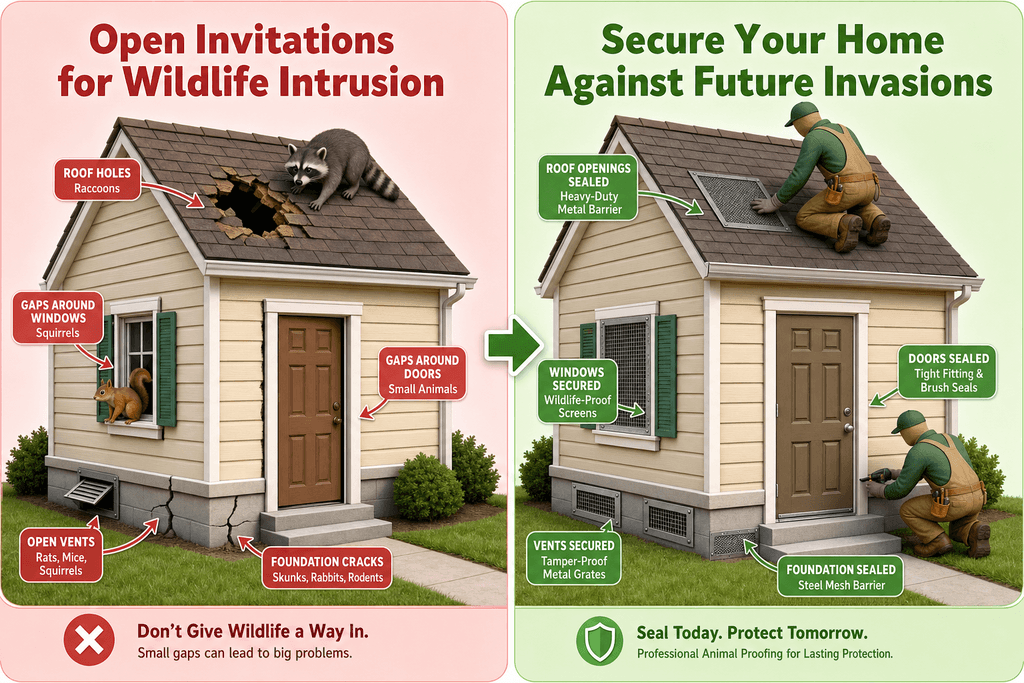
Most homeowners think their problem is solved once the dead animal is removed and the smell fades away. But here's what many people don't realize: if wildlife got in once, they'll get in again unless you fix the entry points. The same holes, gaps, and vulnerable spots that let the first animal in are like open invitations for the next one. Dead animal removal near me searches spike every spring and fall because property owners keep dealing with the same issue over and over. The real solution isn't just removing the carcass, it's making sure no other animals can get inside in the first place.
Sealing Entry Points the Right Way
During a professional removal, the technician should identify every possible entry point on your property. Wildlife X Team's Wildlife Inspection Report® does exactly this, mapping out vulnerabilities most homeowners would never spot on their own. Sealing these entry points requires more than just stuffing some steel wool in a hole. It needs proper materials and techniques that animals can't chew through or push aside.
- Foundation cracks and gaps where pipes enter the home
- Roof vents without proper screening or guards
- Chimney openings that lack protective caps
- Soffit and fascia damage from weather or previous animal activity
Long Term Protection Through Exclusion
Exclusion services work because they address the root cause rather than just treating symptoms. Installing vent guards and chimney caps blocks common access points that raccoons and squirrels love to exploit. Regular attic and crawl space inspections catch new vulnerabilities before they become full-blown infestations.
Wildlife X Team's approach combines immediate exclusion work with their Renewable Lifetime Warranty, which means the protection continues year after year. Seasonal maintenance matters too, since different animals look for shelter during different times of the year.
Case Example: Prevention Success
Jesse Bernard's experience shows how thorough exclusion works. After finding multiple entry points beyond the obvious one, the team sealed everything properly. Months later, still no squirrels. That's because they didn't just fix what was visible, they found and secured every potential access point.
Compare this to basic pest control companies that might remove the dead animal but skip the detailed inspection and exclusion work. You end up calling for dead animal removal near me again in six months because nothing actually changed about your property's vulnerabilities.
Get Help Before the Problem Gets Worse
A dead animal in your home isn't something that fixes itself over time. The smell gets stronger, bacteria spreads faster, and the damage to your property keeps adding up with each passing day. What starts as a bad odor can turn into stained ceilings, contaminated insulation, and health risks for everyone in your house.
Professional removal does more than just get rid of the smell. It protects your family's health, keeps your property value intact, and gives you back the peace of mind you had before this whole mess started. The difference between handling it yourself and calling someone who knows what they're doing can mean the difference between a quick fix and weeks of lingering problems.
Wildlife X Team handles the entire process from finding and removing the dead animal to cleaning up the contamination and making sure no other animals can get in the same way. Our team serves Keller, Fort Worth, Denton, Granbury, and surrounding areas with the same thorough approach every time.
If you're dealing with a dead animal situation right now, waiting won't make it easier. You can reach the Keller location at (817) 799-8686 or visit the office at 11833 Katy Rd, Keller, TX 76244. The sooner you call, the sooner you can breathe easy again.
Still have questions about the removal process or what to expect? The answers below cover the most common concerns people have when searching for dead animal removal near me.
Common Questions About Dead Animal Removal
Finding a dead animal in your home brings up a lot of questions, especially when that smell hits you. Most people have never dealt with this situation before and aren't sure what to expect. Here are the answers to the most common questions we hear about dead animal removal near me services.
How long does the smell last after removal?
The odor usually fades within a few days after the dead animal is removed, but it depends on how long it was there. If the animal decomposed for weeks, the smell might linger for up to two weeks even after removal. Professional services like Wildlife X Team also clean and disinfect the area, which speeds up the process significantly.
Can I remove a dead animal myself safely?
You can technically remove a dead animal yourself if it's easily accessible and you have proper protective gear. However, dead animals carry diseases like hantavirus, leptospirosis, and parasites that can make you sick. Most dead animals in walls or attics require cutting into your home, which means you could cause expensive damage if you're not experienced. Professional removal ensures safe handling and proper disposal without the health risks.
How much does professional dead animal removal cost?
Professional dead animal removal typically costs between $150 and $500 depending on the location and difficulty of access. Animals in open areas like yards cost less, while those inside walls or under foundations cost more because they're harder to reach. The price usually includes removal, disposal, cleaning, and deodorizing the affected area.
How quickly can someone respond to my call?
Most professional wildlife removal companies offer same-day or next-day service for dead animal removal. Wildlife X Team understands that the smell gets worse every hour, so they prioritize these calls. Some companies even offer emergency services if you call early enough in the day.
What if you can't find the dead animal?
Sometimes the exact location isn't obvious, especially in large attics or wall cavities. Professional technicians use their nose, moisture meters, and years of experience to track down hidden carcasses. If the animal absolutely can't be located, they'll treat the area with enzyme-based deodorizers that break down the smell until natural decomposition finishes.
Does homeowners insurance cover dead animal removal?
Most standard homeowners insurance policies don't cover dead animal removal because it's considered a maintenance issue rather than sudden damage. However, if the animal caused structural damage before dying, that damage might be covered. It's worth checking your specific policy or calling your insurance agent to ask about your coverage.