
Do Possums Come Out in Daylight and When to Get Help
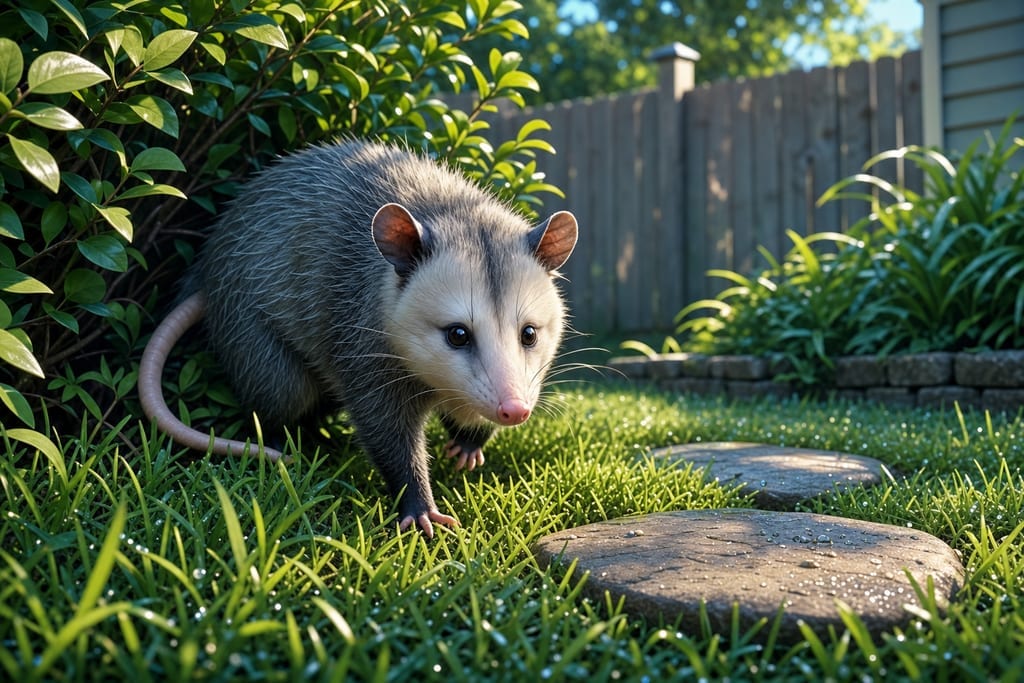
Yes, possums do come out in daylight sometimes, and most of the time it means nothing is wrong. A possum might be out at noon because its den got too crowded, too hot, or too close to something noisy. Mothers carrying babies often need extra food and will forage whenever they get the chance, day or night.
That said, a daytime possum isn't always a non-issue. Sometimes it points to illness, an injury, or a den that got disturbed by construction, a dog, or another animal moving in. Figuring out which one you're looking at comes down to how the possum is acting, not just what time it is.
Table of Contents
What's Normal for a Possum's Daily Schedule
Possums are nocturnal by design. Their eyes, their slow metabolism, and their habit of denning up in dark, enclosed spots all point to a schedule built around darkness, not daylight.
Here's what a typical 24 hours looks like for a healthy adult possum:
- Dawn to late morning: tucked into a den, sleeping
- Midday: still resting, rarely moving unless disturbed
- Dusk: wakes up and starts moving toward food sources
- Night: most active hours, foraging, traveling, feeding
- Pre-dawn: heading back to a den before sunrise
Juvenile possums and nursing mothers don't always follow this pattern as closely. Young possums still learning to forage sometimes wander at odd hours because they haven't settled into adult routines yet.
Knowing this baseline matters because it's the measuring stick for everything else. Once you know when a possum should be active, you can judge whether a daytime sighting fits a reasonable exception or signals something worth a closer look.
Why Possums Usually Stick to the Night
Possums build their whole schedule around darkness because their bodies aren't made for bright conditions. Their eyes have more rod cells than cone cells, which gives them sharp low-light vision but leaves them squinting and slow to react in direct sun. That's part of why a possum caught outside at midday often looks dazed or clumsy, it's working with eyes tuned for a different setting.

Staying hidden during the day also keeps them away from hawks, owls, dogs, and coyotes, most of which hunt on sight. Darkness is their main defense, since possums can't outrun much and rely on avoidance over speed. Cooler night air suits their body temperature too; possums run a lower internal temperature than most mammals, and Texas afternoon heat can push them toward dehydration fast.
A few things work together to keep possums on a night shift:
- Weak daytime vision that makes bright light uncomfortable
- Fewer predators actively hunting after dark
- Cooler temperatures that match their low body heat
- Food sources like insects and fallen fruit that are easier to find at night
Harmless Reasons You Might Spot One by Day
A possum out in daylight usually isn't a red flag. The most common reason is food, a dog bowl left on a porch, an unsecured trash can, or fruit dropped from a tree can pull a possum out hours before its normal schedule starts. Once it finds an easy meal, it may not wait for sunset to go get it.
Mother possums are another common explanation. A female carrying babies in her pouch or on her back needs more calories than usual, so she'll forage during extra hours, day or night, until the litter is weaned. The third reason is a disturbed den, lawn mowers, construction crews, or another animal moving into the same space can push a possum out mid-morning or early afternoon looking for a new spot.
Before worrying, check for these more likely explanations:
- Pet food, bird seed, or trash left accessible overnight
- A female possum that looks like she's carrying young
- Recent yard work, digging, or construction near a den site
- Another animal, like a raccoon, that may have pushed it out
Here's a short look at how possums act when something unusual is pulling them out during the day.
Signs a Daytime Possum Might Be in Trouble
A possum that's stumbling, circling, or moving in tight, confused loops is giving you a real warning sign, not just an odd habit. Healthy possums move with purpose even when startled; one that can't walk a straight line is likely sick or hurt. Visible wounds, swelling, or discharge from the nose or mouth point the same direction.
Drooling or strange movement often gets blamed on rabies, but that's rarely the cause. Possums have a body temperature too low for the rabies virus to survive well, so illness or injury is a far more likely explanation than rabies. One more sign worth watching for is a possum that stays frozen in one spot for hours, unresponsive to noise, people, or pets nearby, since that's outside normal defensive behavior.
Watch for these specific red flags:
- Circling, stumbling, or dragging a limb
- Open wounds, swelling, or fluid near the nose or mouth
- No reaction to loud noise or close movement
- Staying in the open for hours without moving on
Deciding to Watch From a Distance or Call for Help
If the possum you spot is walking normally and eventually wanders off on its own, the right move is simple: keep kids and pets back and let it go about its business. Most daytime sightings end this way within an hour or two. Problems start when the possum shows any of the warning signs above or refuses to leave an area near your home.
In that case, keep your distance and reach out to a wildlife professional instead of handling it yourself. If a possum has set up under a porch, deck, shed, or inside an attic, Wildlife X Team handles that kind of removal across Fort Worth, Denton, Granbury, and nearby communities, using humane methods that get the animal out without harming it. Their Wildlife Inspection Report also identifies the exact entry point so the same problem doesn't repeat once the possum is gone.
A quick way to decide which path fits your situation:
- Moving normally, no den nearby: watch and let it leave on its own
- Showing warning signs: keep distance, call a professional
- Denning under a structure: schedule an inspection and exclusion work
Overreacting Versus Overlooking a Pattern
Two mistakes happen just as often as each other. One homeowner sees a possum at noon and assumes rabies, calls animal control in a panic, and stresses over an animal that was only hunting for dropped fruit. The other sees a possum near the same shed three or four times over two weeks and shrugs it off each time because none of those sightings looked scary on their own.
The second mistake costs more. A single daytime sighting is just a data point, but repeat sightings in the same spot usually mean a den has settled in, not that one possum wandered through. That difference changes what you should do next.
If it's a one-off, there's nothing to act on beyond watching from a distance. If it's a pattern tied to one location, that's a den, and dens under a porch or in an attic only get harder to deal with the longer they sit there. Waiting on a repeat sighting usually means more insulation damage, more cleanup, and higher repair costs once exclusion work finally happens.
What to Do With What You Just Saw
Look at how the possum is moving, not the clock. A possum walking with purpose and heading off on its own needs nothing from you but space. A possum circling, dragging a limb, or frozen in the open for hours needs the opposite response: back away, keep pets inside, and call someone trained to handle it. If this is the second or third sighting near the same shed or porch, you're not watching a possum anymore, you're watching a den, and that calls for an inspection rather than another night of waiting. Wildlife X Team covers Fort Worth, Denton, Granbury, and the surrounding towns for exactly that situation, removing the animal humanely and closing off whatever let it in.
Possum Sightings Around Your Home
Should I feed a possum I see wandering my yard during the day?
No, feeding it will only teach it to come back at the same spot looking for more. Possums that find a steady food source stick around and can end up denning closer to your house. If you want it gone for good, pick up pet food and secure trash instead of offering a handout.
Is it safe to let my dog outside if a possum is nearby in daylight?
Keep your dog inside or on a leash until the possum moves on. A possum that feels cornered may hiss, bare its teeth, or play dead, and a dog that gets too close can get bitten or scare the possum into defensive behavior. Once it wanders off, your yard is fine again.
Can a daytime possum sighting mean there's a den under my house?
One sighting alone usually doesn't mean that, but a possum that keeps showing up near the same crawl space, deck, or vent is a different story. That pattern points to a den close by, not a possum just passing through. Wildlife X Team can run a Wildlife Inspection Report to check crawl spaces and foundation gaps for signs of denning.
What if the possum plays dead right in front of me during the day?
Leave it alone and back away slowly. Playing dead is an automatic defense response, not a choice, and the possum can stay frozen like that for a few minutes up to several hours before it recovers and moves off on its own. Pulling it, poking it, or moving it will not speed up the process.